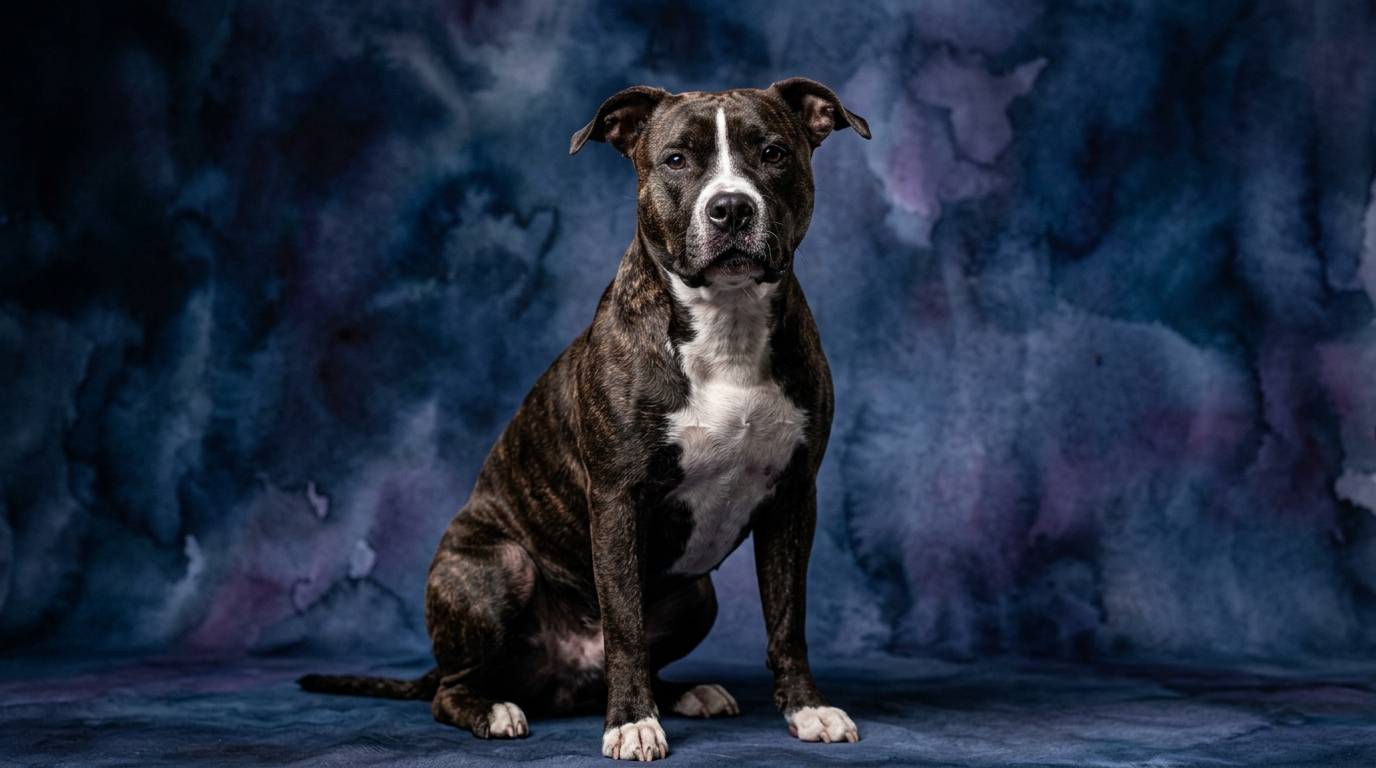
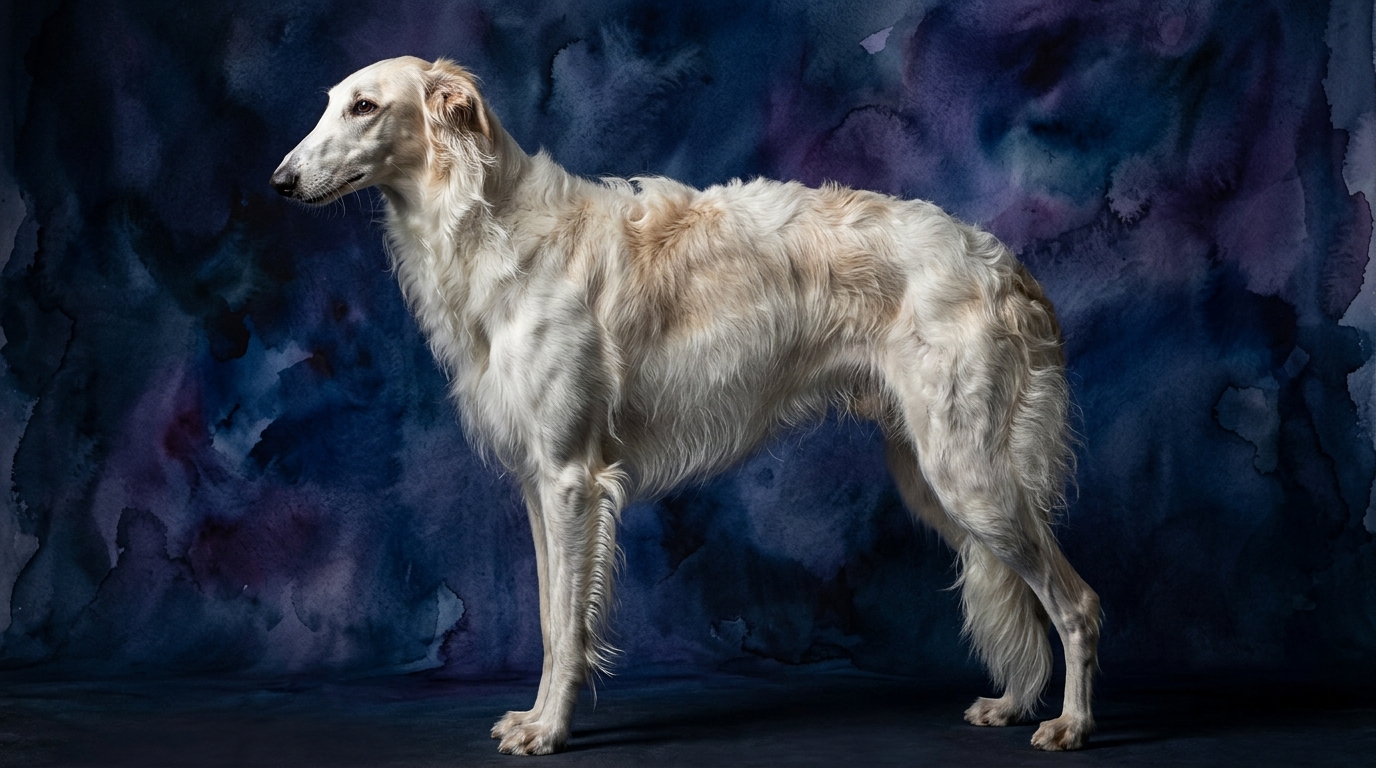
Side-by-side IQ profile
The Cosmic Pet Pet IQ Lab assesses canine intelligence across five critical dimensions, revealing the nuanced cognitive landscapes of each breed. For the American Staffordshire Terrier, we observe a Problem Solving score of 3/5, indicating a resourceful approach to immediate environmental challenges, often marked by their characteristic tenacity. Their Training Speed also stands at 3/5, suggesting a steady learning curve where consistent effort yields predictable results. Social Intelligence registers at 3/5, reflecting an adequate ability to read and respond to human cues, fostering strong family bonds. Instinctive Drive is noted at 3/5, encompassing a moderate prey drive alongside protective tendencies that require mindful channeling. A standout trait for the AmStaff is their Memory, scoring an impressive 4/5, which underpins their capacity for retaining complex command sequences and routines over extended periods. This strong recall contributes significantly to their reliability once a behavior is established.
In contrast, the Borzoi presents a distinct cognitive blueprint. Their Problem Solving ability is also rated at 3/5, but this manifests differently, often emphasizing rapid, independent decision-making in dynamic, open environments, crucial for their sighthound heritage. Training Speed, like the AmStaff, is 3/5, yet their independent nature means motivation often needs to be rooted in self-interest or the thrill of the chase rather than pure biddability. Social Intelligence is also 3/5, showing a capacity for deep connection with their chosen family, though they can be reserved and discerning with strangers. Their Instinctive Drive, rated 3/5, is powerfully geared towards sight-based pursuit, a fundamental aspect of their breed identity that dictates specific management strategies. The Borzoi's Memory score is 3/5, indicating good retention of routines and familiar experiences, but perhaps less emphasis on rote memorization of intricate command sequences compared to a breed with higher memory scores. The Coren rank difference, with the AmStaff at #48 and the Borzoi at #75, broadly reflects differences in perceived working intelligence or responsiveness to traditional obedience tasks.
Where American Staffordshire Terrier wins cognitively
The American Staffordshire Terrier clearly excels in the domain of Memory, boasting a 4/5 score compared to the Borzoi's 3/5. This superior recall profoundly impacts their capacity for learning and consistency. An AmStaff can reliably retain a wider repertoire of commands, remember specific rules, and adhere to established routines with greater precision over time. This cognitive strength makes them adept at learning complex sequences of behaviors, such as those required in dog sports like agility or advanced obedience, where remembering multiple steps and cues is paramount. Their strong memory also aids in problem-solving related to learned experiences; they can recall past successful strategies to navigate new, similar challenges. This consistent memory contributes to their perceived biddability and reliability, as they are more likely to remember what is expected of them, even after a lapse in practice. Furthermore, their memory allows for more effective habit formation, making house-training and good manners more ingrained and less prone to regression. This consistent retention means an AmStaff often requires fewer repetitions to solidify a behavior and maintains that behavior for longer.
Where Borzoi wins cognitively
While the Borzoi matches the AmStaff in several cognitive dimensions, their Problem Solving (3/5) and Instinctive Drive (3/5) are specialized strengths that provide them a unique cognitive advantage, particularly in contexts relevant to their sighthound heritage. The Borzoi's problem-solving is less about abstract puzzles and more about real-time, dynamic spatial reasoning. They demonstrate exceptional cognitive processing for identifying and pursuing moving targets across varied terrain, making split-second decisions about trajectory, speed, and obstacles. This involves rapid assessment of their environment and independent strategic thinking, a crucial skill developed for hunting over vast distances. Their instinctive drive, while rated similarly, is profoundly different in its manifestation; it's a powerful, inherent motivation for sight-based chase. This drive isn't just a physical urge, but a cognitive framework that prioritizes visual input and rapid motor planning. This specialized cognitive focus means a Borzoi can exhibit remarkable single-mindedness and efficiency when engaging with tasks that align with their deep-seated pursuit instincts. They excel at independent decision-making when a target is in sight, showcasing a nuanced understanding of physics and movement in their environment, a cognitive strength often underestimated in traditional intelligence metrics.
Which is easier to train and why
When evaluating ease of training, the American Staffordshire Terrier generally presents as a more straightforward candidate due to their higher Memory score (4/5) and the typical manifestation of their Social Intelligence (3/5) and Instinctive Drive (3/5). An AmStaff's superior recall means that once a command or behavior is learned, it tends to stick. They are more likely to remember what is being asked of them consistently, reducing the need for constant re-teaching. Their social intelligence often translates into a desire to engage with and please their handler, making them receptive to positive reinforcement-based methods. While their instinctive drive requires channeling, it can be readily directed into structured activities like obedience or agility, where their tenacity and memory combine to make them eager participants. The training speed of 3/5 for both breeds might seem equal, but the AmStaff's stronger memory acts as a force multiplier, solidifying learned behaviors more effectively.
The Borzoi, despite also having a 3/5 Training Speed, often requires a different approach. Their independent sighthound nature means they are less inherently motivated by pleasing and more by their own assessment of a situation or the thrill of the chase. Their instinctive drive (3/5) is intensely focused on pursuit, which, while manageable, can override other learned behaviors if not carefully addressed. Training a Borzoi often involves understanding their intrinsic motivations and making tasks intrinsically rewarding or highly relevant to their interests. While they are capable of learning, their memory (3/5) is good but not outstanding, meaning consistency and repetition are vital, and lapses in training might require more effort to re-establish behaviors. Their social intelligence, while present, often leads to a more reserved demeanor, meaning they may not always display the same eagerness to work for you as an AmStaff might. Therefore, while both breeds learn at a similar rate, the AmStaff's cognitive profile makes the process of training often feel more cooperative and less challenging for the average owner.
Which suits active owners vs relaxed owners
The choice between an American Staffordshire Terrier and a Borzoi significantly hinges on an owner's lifestyle, particularly their activity level and approach to engagement. An American Staffordshire Terrier typically thrives with active owners who enjoy consistent interaction and structured activities. Their combination of a 3/5 instinctive drive, 3/5 problem-solving, and notably 4/5 memory means they require both physical exercise and ample mental stimulation to prevent boredom and channel their energy constructively. Owners who enjoy dog sports, long walks, hiking, or even regular puzzle toys and training sessions will find the AmStaff a willing and capable partner. Their strong memory allows them to excel in learning complex tasks, making them suitable for owners who want to actively engage in advanced obedience or trick training. They are not content to be mere couch potatoes; their cognitive profile demands engagement and purpose, making them ideal for owners who are consistently hands-on and enjoy a dog that wants to be involved in their daily activities.
Conversely, the Borzoi, with its specialized cognitive strengths and lower memory score, often suits owners who understand and respect their unique needs. While they require intense bursts of physical activity—sprinting in a securely fenced area to satisfy their 3/5 instinctive drive for pursuit—they are remarkably calm and relaxed indoors. Their problem-solving (3/5) leans towards independent, rapid decision-making in open spaces, not necessarily constant engagement in structured tasks within the home. This makes them suitable for owners who can provide dedicated outlets for their sighthound instincts, such as lure coursing, but also appreciate a quiet, elegant companion for the majority of their time. They are not typically demanding of constant mental work in the same way an AmStaff might be, preferring to observe and enjoy their surroundings. A relaxed owner who can provide a secure, large space for running and is content with a more independent, less overtly eager to please indoor companion would find a Borzoi a fitting match.
The Verdict
Choose American Staffordshire Terrier if: You desire a companion with robust memory for consistent learning and a keenness to engage in varied, structured activities, offering a cooperative training experience and a strong desire to participate in family life.
Choose Borzoi if: You appreciate a dog with specialized independent problem-solving skills for dynamic environments and a profound, quiet elegance indoors, provided you can accommodate their specific need for intense, secure running opportunities.
🧠 Find Your Pet's IQ Score
Our Pet IQ Lab assessment covers 25+ tests across 5 cognitive dimensions — personalized to your breed.
Take the Full IQ Test →Frequently Asked Questions
Does a higher Coren rank mean a dog is smarter?
The Coren rank primarily assesses a breed's ability to learn and obey commands from humans, reflecting aspects like biddability and working intelligence. It doesn't encompass all forms of canine intelligence, such as independent problem-solving or specialized instinctive drives, meaning a lower rank doesn't equate to a lack of cognitive capacity.
How does the Borzoi's independent nature affect its trainability compared to the AmStaff?
While both breeds have a 3/5 training speed, the Borzoi's independence means they often require more intrinsic motivation or highly engaging rewards, as they are less driven by a desire to please. The AmStaff's higher memory and social engagement typically lead to a more cooperative and consistent training experience.
Is the AmStaff's higher memory score only useful for obedience training?
The AmStaff's superior memory extends beyond obedience, aiding in house-training, remembering household rules, understanding routines, and excelling in activities like agility or trick training where recalling sequences is crucial. It contributes to their overall adaptability and reliability in various situations.