Side-by-Side Pet IQ Lab Profile
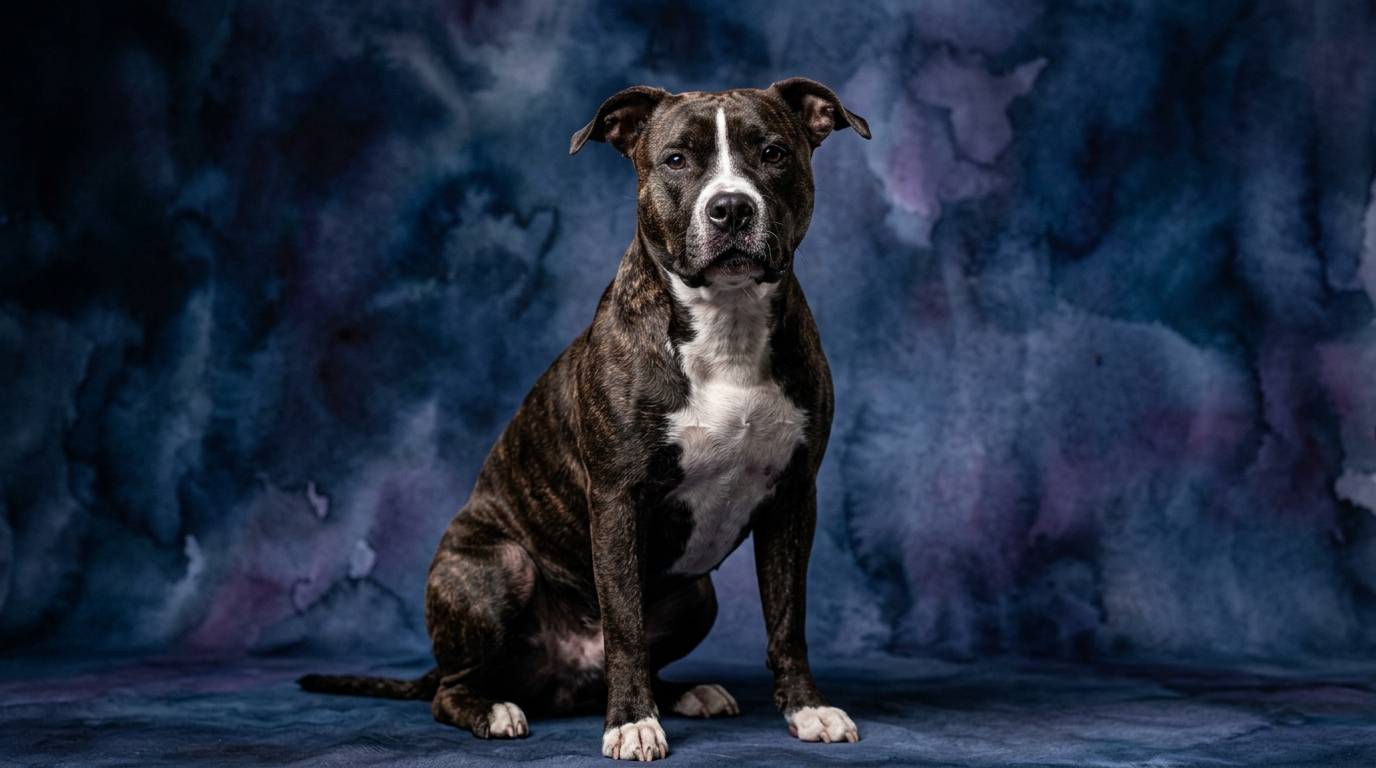
The American Staffordshire Terrier, often recognized for its strength and loyalty, is ranked #48 by Coren for working and obedience intelligence. Its Pet IQ Lab profile details a Problem Solving score of 3/5, indicating a capacity for navigating moderately complex challenges with a methodical approach. Training Speed is also 3/5, meaning they absorb new commands at a consistent pace, thriving on clear instruction. Social Intelligence registers at 3/5, reflecting their moderate ability to interpret human cues and adapt to social situations. An Instinctive Drive of 3/5 suggests a balanced expression of natural dog behaviors, while their Memory stands out at 4/5, demonstrating a robust capacity for retaining learned behaviors and past experiences over extended periods.
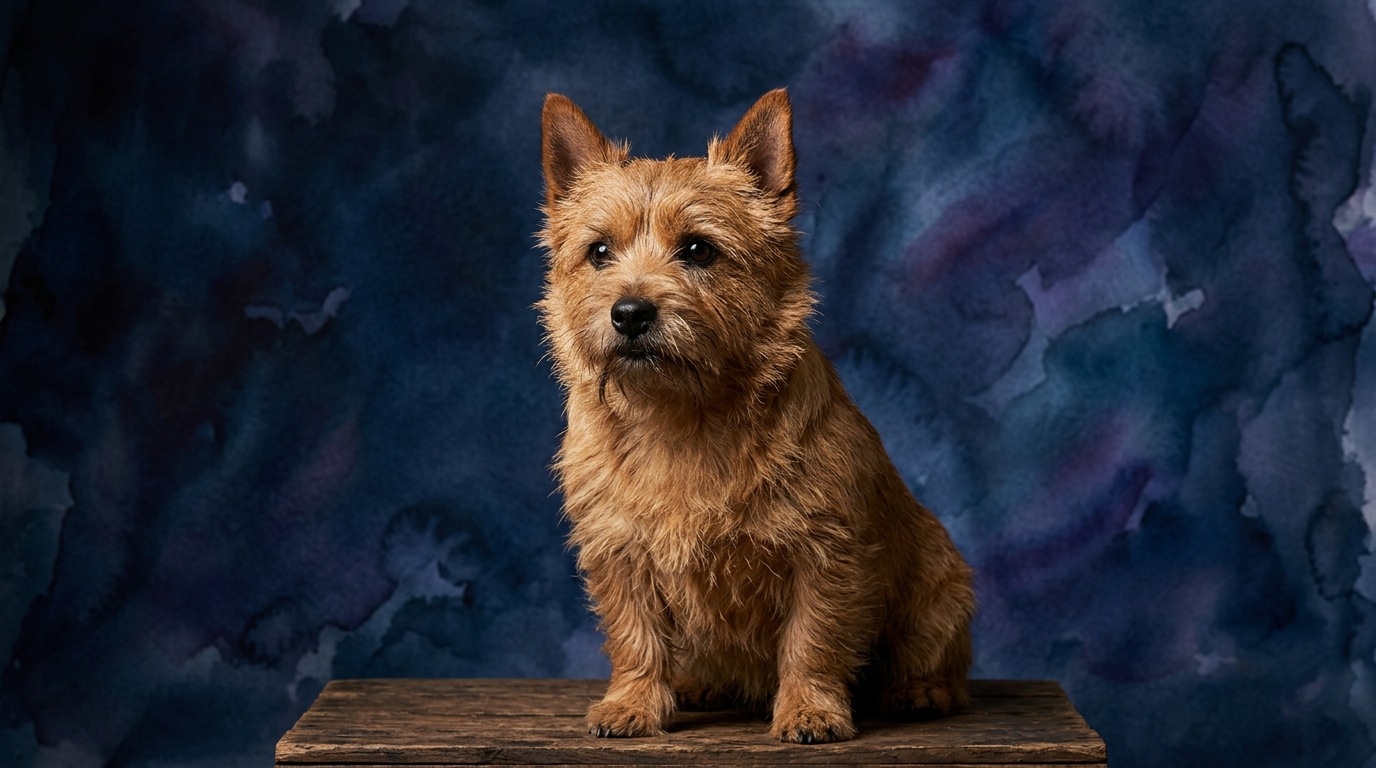
The Norwich Terrier, a smaller, spirited companion, is not included in Coren's ranking but presents a distinct cognitive blueprint. Its Problem Solving is rated 3/5, indicating an aptitude for overcoming obstacles with characteristic terrier determination. Training Speed also sits at 3/5, suggesting they acquire new skills at a moderate rate, often benefiting from engaging, positive reinforcement. Social Intelligence matches at 3/5, reflecting an average understanding of social dynamics within their environment. Their Instinctive Drive is 3/5, encompassing a typical terrier's zest for exploration and chasing. Lastly, their Memory is 3/5, indicating adequate but perhaps less profound retention compared to the AmStaff.
Where the American Staffordshire Terrier Wins Cognitively
Examining the Pet IQ Lab data, the American Staffordshire Terrier's cognitive profile shines most brightly in its superior Memory, scoring 4/5 compared to the Norwich Terrier's 3/5. This single point difference translates into a significant practical advantage: AmStaffs tend to retain learned information, commands, and routines with greater tenacity. Owners often report that once an AmStaff masters a concept, whether it's a complex obedience sequence or a specific household rule, it tends to stick for the long haul, minimizing the need for repetitive re-teaching. This robust recall supports more reliable long-term obedience and the capacity to build upon a foundation of knowledge, allowing for progression into more intricate training exercises or dog sports that demand consistent application of learned skills.
Where the Norwich Terrier Wins Cognitively
While the raw Pet IQ Lab scores show the Norwich Terrier achieving 3/5 across problem solving, training speed, social intelligence, and instinctive drive—matching the American Staffordshire Terrier in these specific aspects—its cognitive profile offers distinct advantages in particular contexts. The Norwich's 3/5 instinctive drive, for instance, is expressed within a compact, agile frame, meaning its innate drive to chase, dig, or explore, while present, is often more easily managed and channeled into constructive, smaller-scale activities. Owners can direct this drive towards engaging scent work or agility challenges in limited spaces, making it a practical fit for various living situations. Similarly, their problem-solving (3/5) is frequently coupled with a tenacious, independent spirit, allowing them to navigate their world with a self-assured curiosity. This can be a delight for owners who appreciate a dog with a strong sense of self, capable of making clever, albeit sometimes stubborn, decisions within reasonable boundaries, offering a unique blend of spirit and adaptability.
Which Is Easier to Train and Why
When considering ease of training, the American Staffordshire Terrier generally holds an edge, primarily due to its superior Memory score of 4/5 compared to the Norwich Terrier's 3/5. Both breeds share an identical 3/5 rating for Training Speed, indicating a similar pace in initially grasping new commands. However, the AmStaff's enhanced memory means that once a behavior is learned and consistently reinforced, it is retained with greater permanence, requiring less frequent refreshers. This cognitive strength allows for more consistent long-term obedience and the ability to build a comprehensive repertoire of skills over time. For example, an AmStaff might reliably perform a multi-step command after a period of inactivity, whereas a Norwich Terrier, while capable of learning, might need more consistent practice to solidify those same behaviors, reflecting its slightly less tenacious retention of information. The AmStaff’s Coren ranking of #48 further underscores its general responsiveness to working and obedience tasks, providing a framework for its trainable nature.
Which Suits Active Owners vs. Relaxed Owners
For active owners seeking a dynamic partner, the American Staffordshire Terrier often proves a more fitting companion. Its robust physical build, combined with a balanced instinctive drive (3/5) and a solid social intelligence (3/5), means it thrives on structured activities, consistent engagement, and opportunities to expend its considerable energy. They appreciate vigorous walks, demanding training sessions that challenge their problem-solving (3/5), and interactive play that leverages their physical prowess and endurance. Their superior memory (4/5) also makes them suitable for advanced training or dog sports that require reliable recall and the execution of complex sequences. Conversely, for relaxed owners, the Norwich Terrier presents a compelling choice. While possessing a similar instinctive drive (3/5) and problem-solving capacity (3/5), its smaller size and typically more contained energy output make it better suited for less intense exercise routines. They enjoy daily walks, engaging playtime, and mental enrichment, but their needs are generally satisfied with moderate activity. Their social intelligence (3/5) allows them to integrate well into family life without demanding constant, high-octane interaction, making them a delightful, spirited companion for those who prefer a more sedate pace but still appreciate a lively presence.
The Verdict
Choose the American Staffordshire Terrier if you are an active owner seeking a devoted, trainable companion for a dynamic lifestyle, valuing a dog with robust memory for consistent long-term obedience and an aptitude for engaging in structured physical and mental activities.
Opt for the Norwich Terrier if you desire a spirited, compact, and tenacious companion that offers manageable energy levels, appreciates independent problem-solving within a smaller frame, and fits seamlessly into a less demanding daily routine while still bringing plenty of lively character.
🧠 Find Your Pet's IQ Score
Our Pet IQ Lab assessment covers 25+ tests across 5 cognitive dimensions — personalized to your breed.
Take the Full IQ Test →Frequently Asked Questions
Do American Staffordshire Terriers and Norwich Terriers have similar problem-solving abilities?
Yes, according to the Pet IQ Lab, both breeds score 3/5 in problem solving. This indicates they possess a comparable capacity for navigating moderately complex challenges, often employing persistence and determination to achieve their goals. The manifestation of this ability might differ due to their physical attributes and breed-specific tendencies, but the underlying cognitive capacity is rated similarly.
Is the American Staffordshire Terrier truly better at remembering things than the Norwich Terrier?
Based on the Pet IQ Lab scores, yes. The American Staffordshire Terrier has a memory score of 4/5, while the Norwich Terrier scores 3/5. This suggests AmStaffs tend to retain learned behaviors and experiences with greater long-term consistency, potentially making them more reliable in recall and routine adherence over time.
How do their training speeds compare despite one being Coren-ranked and the other not?
Both breeds are rated 3/5 for training speed, indicating they learn new commands at a moderate pace. The Coren ranking (AmStaff #48, Norwich unranked) primarily reflects working and obedience intelligence in a broader context, but the specific Pet IQ Lab metric for 'training speed' suggests their initial acquisition rates for new skills are quite similar, requiring consistent, positive reinforcement for both.