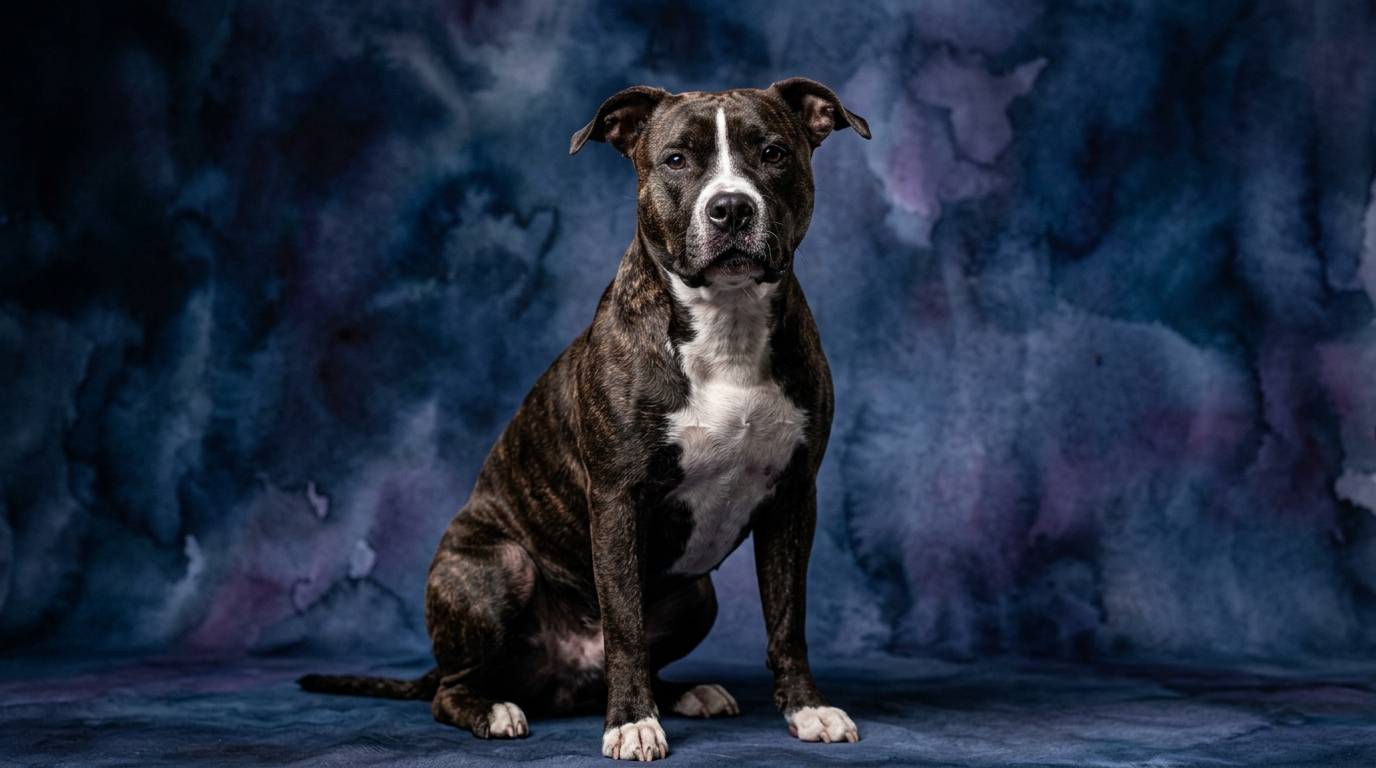
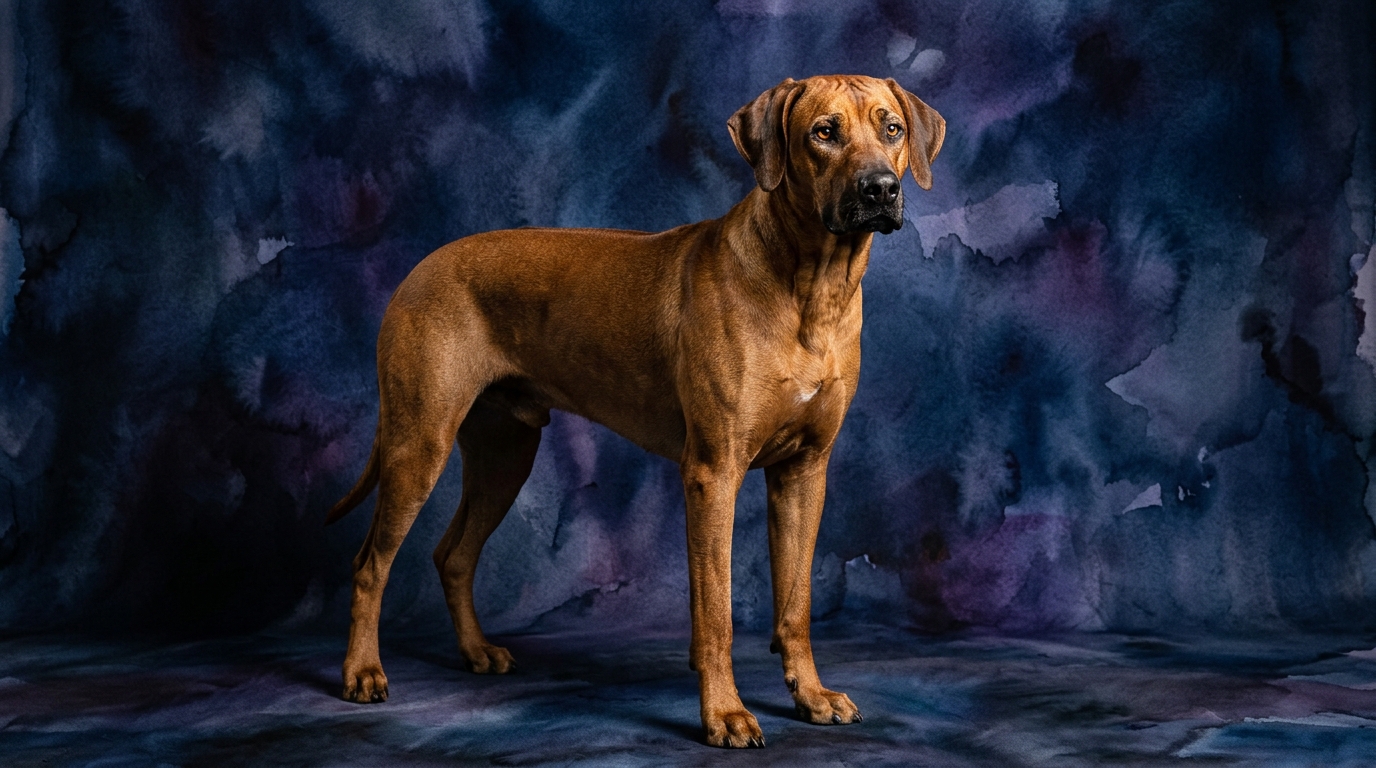
Side-by-Side IQ Profile: AmStaff vs. Ridgeback
The Cosmic Pet Pet IQ Lab offers a detailed look into the cognitive makeup of our canine friends. For the American Staffordshire Terrier (Coren rank #48), its profile reveals a moderate Problem Solving ability (3/5), indicating they can navigate basic puzzles but often seek handler guidance for complexity. Their Training Speed is also moderate (3/5), meaning consistency is key as their determination can manifest as stubbornness. Social Intelligence stands at 3/5, adapting to dynamics but thriving with early, consistent socialization. A moderate terrier-based Instinctive Drive (3/5) for prey and tenacity requires mindful management. Notably, their Memory is a strong 4/5, aiding robust recall of commands, routines, and experiences.
The Rhodesian Ridgeback (Coren rank #52) shares several scores, beginning with moderate Problem Solving (3/5). They assess situations and devise solutions, especially in environmental navigation or scent pursuit, though not actively seeking complex mental challenges. Learning at a moderate speed, their sighthound independence contributes to thoughtful responses, necessitating patient, consistent Training Speed (3/5). Moderate Social Intelligence (3/5) means they are reserved with strangers but deeply bonded with family, reading their cues within established circles. Their hound lineage grants a moderate, powerful Instinctive Drive (3/5) for tracking and pursuit, particularly strong with scents. Their Memory, however, is a moderate 3/5, retaining commands but potentially requiring more frequent reinforcement compared to breeds with higher scores.
Where the American Staffordshire Terrier Wins Cognitively
Examining the specific cognitive dimensions, the American Staffordshire Terrier clearly distinguishes itself in the realm of memory, scoring a 4/5 compared to the Rhodesian Ridgeback's 3/5. This superior recall means an AmStaff is often quicker to solidify learned commands and routines, making training efforts potentially more efficient in the long run regarding retention. An AmStaff's robust memory translates into a better ability to recall past experiences, whether positive or negative, which can influence their future behavior and reactions to specific stimuli or environments. For an owner, this means less reteaching of established rules and a dog that more consistently remembers boundaries and expectations. This enduring memory also contributes to their adaptability within a structured home environment; once a routine is established, an AmStaff is likely to adhere to it with greater consistency, reflecting their strong retention of learned patterns and associations. This cognitive advantage in memory can be a significant benefit for owners seeking a companion that builds upon its learned experiences with noticeable consistency.
Where the Rhodesian Ridgeback's Cognitive Profile Shines
While the provided scores indicate no direct numerical 'win' for the Rhodesian Ridgeback over the AmStaff in the listed cognitive dimensions, its unique application of an equivalent 'Instinctive Drive' (3/5) offers a distinct cognitive strength rooted in its breed purpose. For the Ridgeback, this drive is intrinsically linked to its heritage as a lion hunter and tracker. This means their problem-solving and social intelligence, though rated 3/5, are often channeled through a lens of independent, scent-driven pursuit and watchful guardianship. Their cognitive processes excel in scenarios requiring sustained focus on a target, whether it’s a scent trail or monitoring their environment for perceived threats. This specialized instinctive drive, while numerically equivalent, manifests as a profound cognitive aptitude for independent decision-making in the field, a trait less pronounced in the AmStaff's terrier-focused drive. A Ridgeback's mental faculties are finely tuned for observation and strategic, often solitary, action in response to environmental stimuli, demonstrating a distinct cognitive specialization that, while not a higher *score*, is a unique and powerful expression of intelligence for its specific role.
Which is Easier to Train and Why
Both the American Staffordshire Terrier and the Rhodesian Ridgeback share a 'Training Speed' score of 3/5, suggesting they absorb new information at a moderate pace. However, the nuance lies in how their other cognitive traits influence the *overall* training experience. The AmStaff’s superior memory (4/5) gives it a distinct advantage in *retention*. While it might take a similar initial effort to teach a command, an AmStaff is more likely to remember it consistently over time, requiring less frequent refreshers. Their 'Instinctive Drive' (3/5), while present, is often more handler-focused or easily redirected, making them generally eager to please and work alongside their human companions. Conversely, the Ridgeback's equally rated 'Training Speed' and 'Instinctive Drive' (both 3/5) are coupled with a moderate memory (3/5) and a more independent streak inherent to sighthounds. Their instinct often directs them towards following a scent or observing their surroundings with a certain self-reliance, which can sometimes be perceived as stubbornness during training. While they are certainly capable of learning, an owner might find themselves needing to be more creative and persistent in motivating a Ridgeback, ensuring the training appeals to their independent nature rather than relying solely on rote repetition. Therefore, while both require consistency, the AmStaff's stronger memory makes the *long-term consolidation* of training potentially smoother, whereas the Ridgeback demands a more nuanced approach to engage its independent spirit effectively.
Which Suits Active Owners vs. Relaxed Owners
When considering lifestyle compatibility, both breeds lean towards owners who can provide more than just basic care, but their energy outlets differ. The American Staffordshire Terrier, with its moderate instinctive drive and robust physique, thrives with active engagement. They require consistent physical exercise to burn off energy, but also mental stimulation that leverages their strong memory and desire to work with their handler. Activities like obedience, agility, or even trick training can be incredibly fulfilling for an AmStaff, appealing to their trainable nature and strong owner bond. They are well-suited for owners who enjoy structured activities and can integrate their dog into a dynamic, interactive routine. Conversely, the Rhodesian Ridgeback, while also requiring significant exercise, often prefers activities that tap into its sighthound heritage. Long, open-field runs where they can stretch their powerful legs, or scent work that engages their keen nose, are ideal. Their independent problem-solving and instinctive drive mean they appreciate opportunities to explore and make their own decisions within safe boundaries. A relaxed owner might struggle with either breed's exercise needs, but a Ridgeback might be particularly challenging for someone who prefers sedentary activities, as their independent drive for exploration and physical exertion is less easily contained or redirected than an AmStaff's. Active owners who appreciate a partner for outdoor adventures and independent exploration will find the Ridgeback a rewarding companion, while those who prefer structured, cooperative activities will likely find the AmStaff a more aligned partner.
The Verdict
Choose the American Staffordshire Terrier if you value a companion with strong memory for consistent training reinforcement and a cooperative spirit in structured activities.
Opt for the Rhodesian Ridgeback if you appreciate a dog with independent thought, a profound instinctive drive for exploration, and a reserved, watchful demeanor.
🧠 Find Your Pet's IQ Score
Our Pet IQ Lab assessment covers 25+ tests across 5 cognitive dimensions — personalized to your breed.
Take the Full IQ Test →Frequently Asked Questions
Do American Staffordshire Terriers and Rhodesian Ridgebacks require similar amounts of mental stimulation?
Both breeds benefit from consistent mental engagement to prevent boredom and destructive behaviors. While the AmStaff might enjoy structured puzzle toys and obedience drills that leverage its memory, the Ridgeback might prefer scent games or opportunities for independent observation and problem-solving in its environment.
Is one breed more prone to separation anxiety based on their social intelligence scores?
Both breeds have a social intelligence score of 3/5, indicating a moderate capacity for understanding social cues. Neither score inherently points to a higher or lower predisposition for separation anxiety; instead, individual temperament, early socialization, and training play a much larger role in how each dog copes with being alone.
How does the 'Instinctive Drive' score of 3/5 manifest differently in these two breeds?
For the American Staffordshire Terrier, the 3/5 instinctive drive often appears as a tenacious spirit and a moderate prey drive requiring management. In the Rhodesian Ridgeback, this same 3/5 score translates into a powerful, independent drive for tracking and pursuit, deeply rooted in its sighthound heritage, making it highly responsive to scents and distant movements.