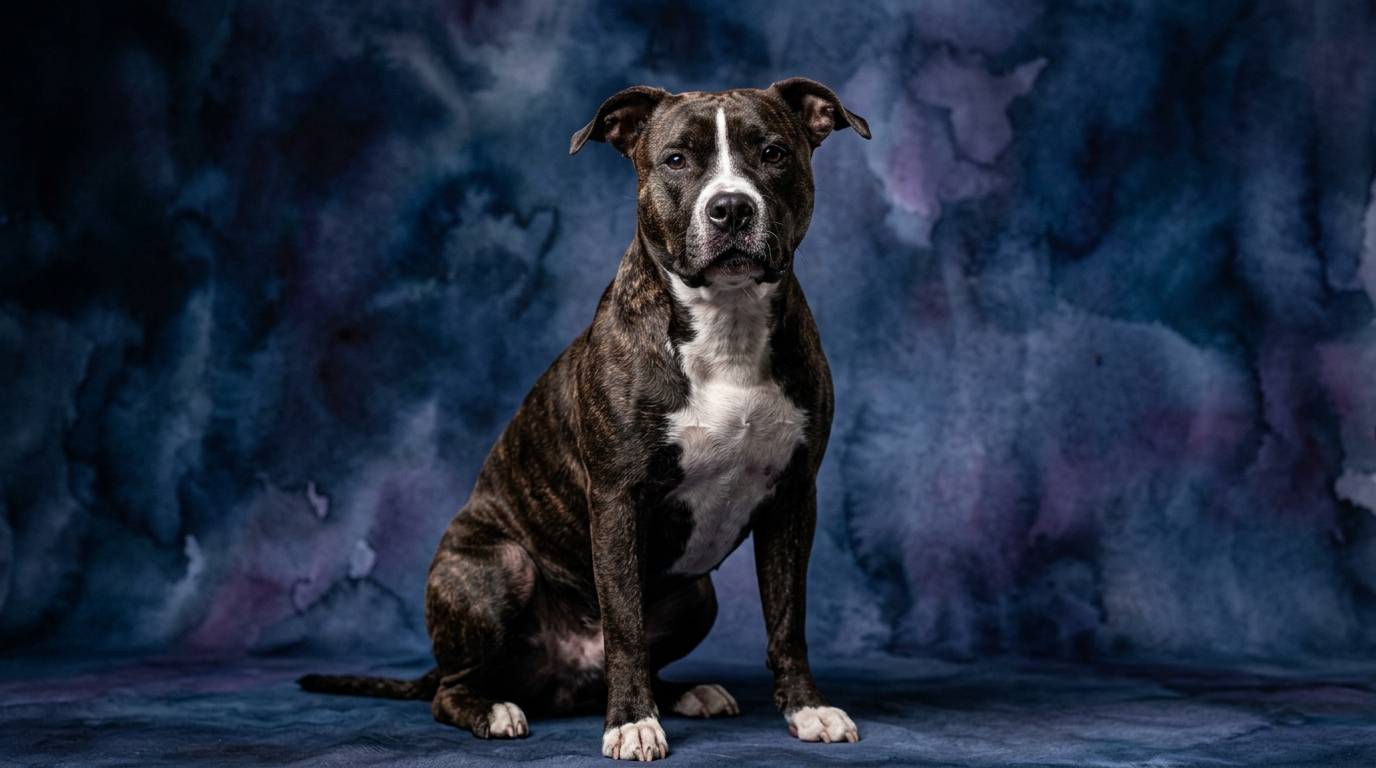
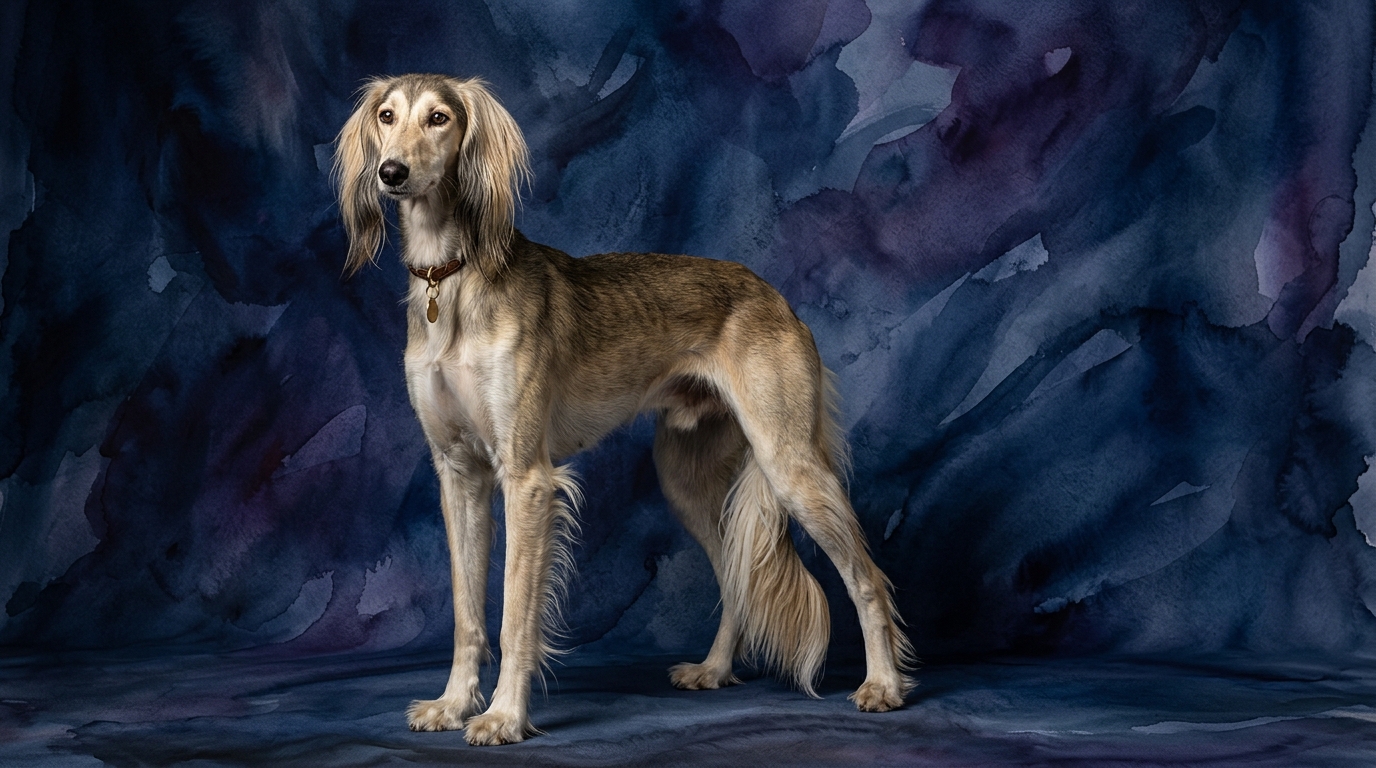
Side-by-Side IQ Profile: American Staffordshire Terrier vs. Saluki
The American Staffordshire Terrier, a breed with a Coren ranking of #48, presents a balanced yet tenacious cognitive profile. Their Problem Solving is rated at 3/5, indicating an ability to navigate moderate challenges and figure out solutions, often through persistent effort rather than immediate insight. Training Speed also sits at 3/5; they are receptive to learning and enjoy engagement, but their determined nature means they require consistent, positive methods to ensure compliance rather than mere understanding. Social Intelligence, at 3/5, reflects their capacity to read human cues and form strong, affectionate bonds, often displaying a clear desire to please their primary caregivers. Instinctive Drive, also 3/5, suggests a moderate prey drive and protective instincts that are present but generally manageable with appropriate training and socialization. A standout trait is their Memory, rated at a robust 4/5, allowing them to recall commands, routines, and past experiences with impressive accuracy, making them reliable in established patterns.
The ancient Saluki, a sighthound not featured in Coren's rankings, offers a distinct intellectual landscape shaped by millennia of independent hunting. Their Problem Solving is 3/5, applied in a highly specialized manner; they excel at evaluating dynamic environments and making quick, instinctual decisions in pursuit, rather than solving human-centric puzzles. Training Speed is 3/5, meaning they are capable of learning but demand compelling motivation and novel approaches, as their independent spirit can lead to disinterest in repetitive tasks. Social Intelligence, at 3/5, manifests as a keen observation of their human companions, forming deep but often reserved and dignified attachments, rather than overt displays of eagerness. Their Instinctive Drive, also 3/5, is profoundly rooted in their sighthound heritage, signifying a powerful chase instinct for moving objects, necessitating secure environments. Their Memory is 3/5, allowing them to retain routines and spatial awareness, especially concerning their hunting grounds or familiar territories, but perhaps with less emphasis on granular command recall compared to breeds bred for close partnership.
Where the American Staffordshire Terrier Wins Cognitively
The American Staffordshire Terrier exhibits a clear cognitive advantage in areas demanding consistent retention and cooperative engagement. Their Memory score of 4/5 is a significant differentiator, meaning they learn and retain commands, routines, and past experiences with impressive effectiveness. This superior recall makes them particularly reliable in structured environments and adaptable to new learning once established. For instance, an AmStaff is more likely to consistently execute a complex series of tricks learned weeks ago or reliably adhere to a household routine without frequent reminders. While both breeds score 3/5 in Problem Solving, the AmStaff's approach is often more direct and persistent, especially when motivated by a clear reward or the desire to achieve a specific outcome, like figuring out a puzzle toy. Their social intelligence, while matching the Saluki's score, often translates into a more overt eagerness to engage and please their human partners, which can facilitate learning and cooperation in training contexts. This foundational reliability in memory and a more overt cooperative drive often positions the AmStaff as more readily responsive in typical companion dog roles.
Where the Saluki Wins Cognitively
The Saluki's cognitive strengths are deeply rooted in their ancient purpose, manifesting as specialized intelligence rather than general obedience. Their instinctive drive, rated 3/5, is a profound asset when viewed through the lens of their sighthound heritage. This drive isn't just a simple urge to chase; it encompasses an intricate, almost preternatural ability to independently assess, track, and react to rapidly moving targets across vast distances, making split-second decisions based on visual cues and an innate understanding of physics and trajectory. This specialized form of Problem Solving (3/5) allows them to navigate complex, dynamic outdoor environments with unmatched efficiency, a cognitive skill far beyond what is typically tested in a domestic setting. While their memory score is 3/5, it's particularly acute for recalling complex visual landscapes, hunting strategies, and the layout of their environment, crucial for their historical role. Their social intelligence (3/5) is often subtle, characterized by a keen, almost regal observation of their surroundings and human companions, allowing them to process social dynamics without necessarily seeking direct, boisterous interaction. This reserved yet aware cognitive style allows them to function with remarkable autonomy and self-possession.
Which is Easier to Train and Why
Both the American Staffordshire Terrier and the Saluki share a Training Speed score of 3/5, yet the nature of their trainability diverges significantly due to their inherent temperaments and historical roles. The AmStaff, with their superior memory (4/5) and a general desire to engage with their human counterparts, often proves more straightforward for structured obedience training. They respond well to consistent, positive reinforcement methods, enjoying the mental stimulation of learning new commands and the interactive bond it fosters. While they possess a determined streak, their retention makes repetition effective, and they are generally motivated by praise, treats, and the opportunity to work alongside their owner. Their social intelligence often translates into a willingness to please, making them eager participants in training sessions.
Conversely, the Saluki's training journey is characterized by their independent spirit and sighthound heritage. While capable of learning, their 3/5 training speed is coupled with a propensity for boredom and a disinterest in tasks they deem arbitrary. They require a patient, creative trainer who understands their need for compelling motivation and novelty. Repetitive drills are likely to result in disengagement rather than mastery. A Saluki might learn a command quickly but choose not to perform it if the motivation isn't high enough or if they perceive a more interesting distraction. Their problem-solving is geared towards independent action in the field, not necessarily following human directives without question. Training a Saluki often involves finding ways to make the task intrinsically rewarding or linking it to their natural instincts, such as incorporating chase games into recall practice, rather than expecting eager compliance from a desire to please. The AmStaff's cognitive wiring, particularly their memory and cooperative leanings, generally makes them the easier breed to train for conventional obedience and structured activities.
Which Suits Active Owners vs. Relaxed Owners
Defining "active" and "relaxed" owners is crucial when considering these two breeds, as neither thrives in a truly sedentary environment. For the American Staffordshire Terrier, an active owner is one who enjoys structured engagement, consistent training, and regular physical exercise that challenges both their body and mind. This might involve agility, obedience classes, long hikes, or vigorous play sessions. AmStaffs thrive when given a "job" or a clear purpose, channeling their energy and problem-solving skills into productive outlets. A "relaxed" owner for an AmStaff would need to be prepared for consistent mental stimulation through puzzle toys, training games, and clear boundaries, even if physical activity is moderate. Without sufficient engagement, their moderate instinctive drive and persistent nature can lead to boredom-induced behaviors.
The Saluki requires a different kind of active owner. This owner understands and respects the breed's profound need for vast, secure spaces where they can gallop freely and express their innate sighthound drive. Their exercise is less about structured tasks and more about pure, uninhibited running, requiring specific, safe off-leash environments away from roads or distractions that could trigger their chase instinct. Indoors, Salukis are often calm and enjoy lounging, making them appear "relaxed." However, this indoor tranquility is contingent upon their outdoor exercise needs being met. A "relaxed" owner for a Saluki is someone who appreciates quiet companionship and their independent nature, but critically provides the specific, intense bursts of physical activity they require. They are not a breed for casual park visits or short leashed walks as their primary exercise. Neither breed is suited for a purely hands-off, couch-potato lifestyle, but their activity requirements manifest in distinctly different ways, catering to owners with differing preferences for engagement style.
The Verdict
Choose the American Staffordshire Terrier if you seek a canine companion who thrives on consistent interaction, structured learning, and a clear bond built through shared activities, appreciating their strong memory for commands and routines.
Opt for the Saluki if you admire independent thinkers, value quiet companionship indoors, and can provide ample opportunities for their unique sighthound instincts to flourish in safe, open spaces, understanding their more subtle approach to social engagement.
🧠 Find Your Pet's IQ Score
Our Pet IQ Lab assessment covers 25+ tests across 5 cognitive dimensions — personalized to your breed.
Take the Full IQ Test →Frequently Asked Questions
Do American Staffordshire Terriers forget commands easily?
With a memory score of 4/5, AmStaffs generally retain commands and learned behaviors very well, especially with consistent practice and positive reinforcement. They are quite reliable in remembering what they have been taught.
Are Salukis difficult to train for basic obedience?
Salukis can learn basic obedience, but their independent nature and tendency to bore quickly (training speed 3/5) mean training requires patience, creativity, and high-value rewards. Repetitive drills are often ineffective with them.
How do their social intelligence scores compare in daily life?
Both breeds score 3/5 in social intelligence, but manifest it differently; AmStaffs often show a more direct desire to engage with their human family, while Salukis tend to be more reserved observers, forming deep but often subtle bonds.