Side-by-Side IQ Profile: Unpacking the Dimensions
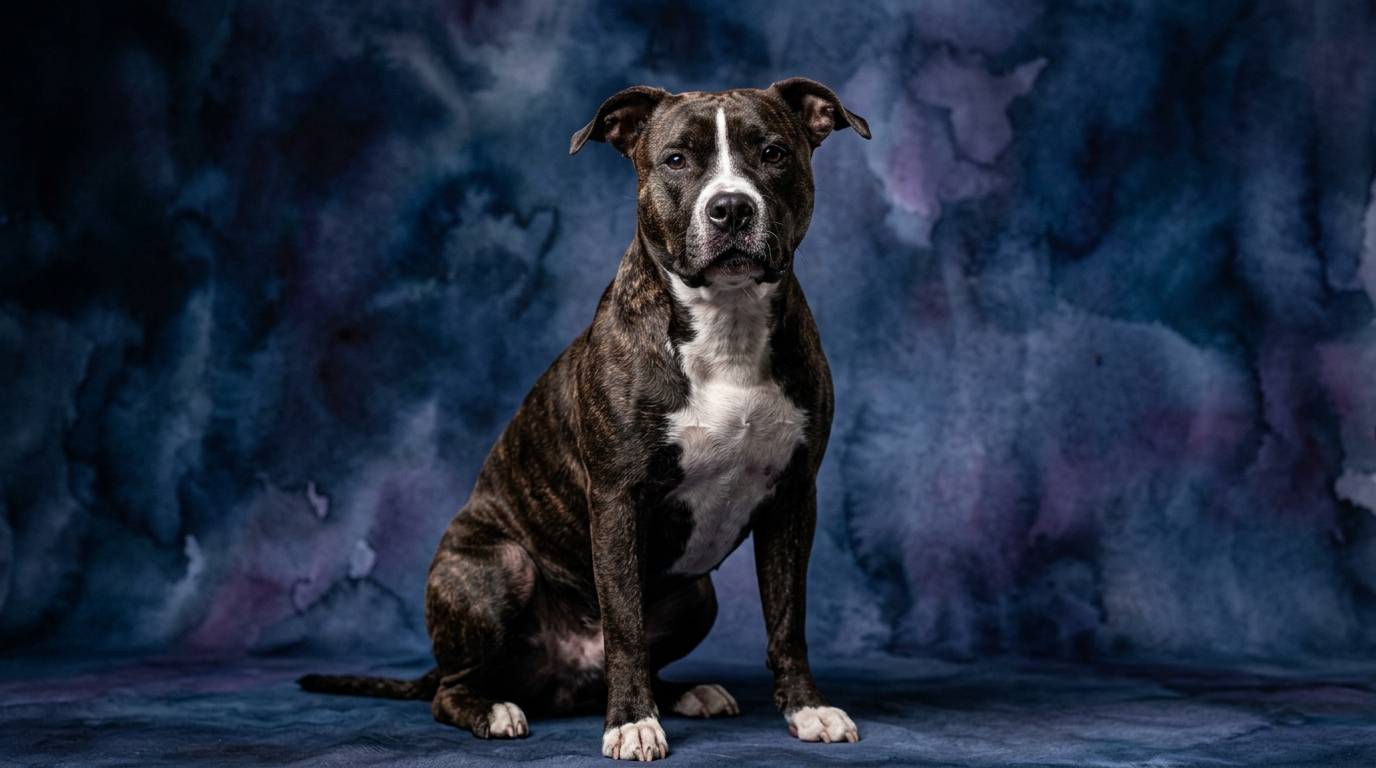
The Cosmic Pet Pet IQ Lab employs a five-dimensional framework to assess canine cognition, offering a granular view beyond generic labels. For the American Staffordshire Terrier, a breed with a Coren ranking of #48, we observe a balanced cognitive toolkit. Their Problem Solving is rated at 3/5, indicating a solid capacity to navigate challenges, though perhaps not always with the most innovative solutions. Training Speed also stands at 3/5, suggesting they absorb commands at an average pace, requiring consistent reinforcement. Social Intelligence, at 3/5, points to a reasonable understanding of human cues and pack dynamics, making them adaptable companions. Instinctive Drive, also 3/5, reflects a moderate expression of their terrier heritage, often channeled into play or sport rather than intense hunting. Crucially, their Memory scores a notable 4/5, signifying a strong ability to retain learned behaviors and past experiences.
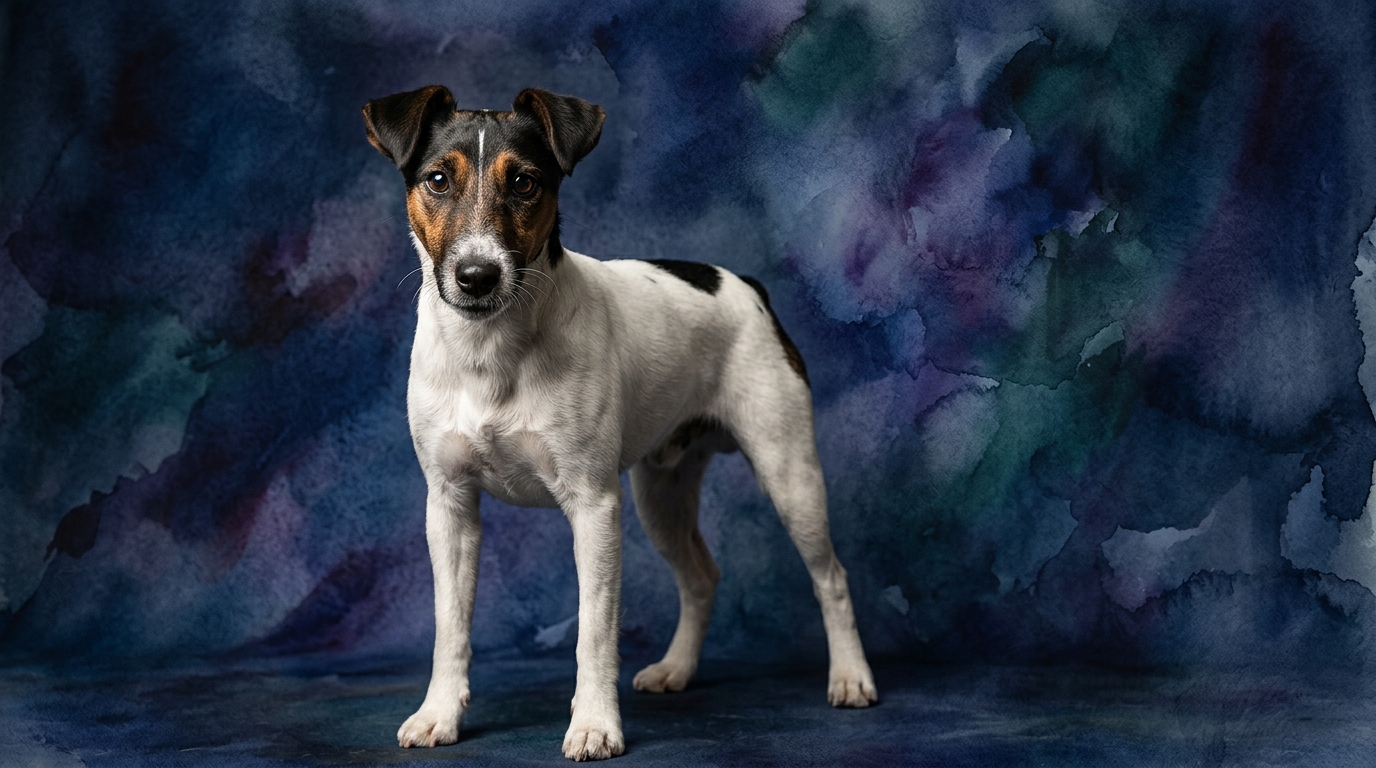
In contrast, the Smooth Fox Terrier, which is not Coren-ranked, presents a slightly different cognitive emphasis. Their Problem Solving matches the AmStaff at 3/5, but this often manifests as clever resourcefulness in pursuit of a goal, rather than deliberate contemplation. Training Speed is also 3/5; while capable of learning, their independent nature can sometimes make them appear less eager to comply immediately. Social Intelligence holds at 3/5, indicating they can read situations, but their focus might often be on their environment rather than nuanced human interaction. Instinctive Drive, predictably 3/5 for a traditional terrier, is robust, fueling their desire to explore, chase, and dig. Their Memory, however, is rated at 3/5, suggesting they retain information adequately, but perhaps with less long-term recall or depth than their AmStaff counterparts.
Where the American Staffordshire Terrier Wins Cognitively
The most significant cognitive advantage for the American Staffordshire Terrier lies in its superior Memory, rated at 4/5 compared to the Smooth Fox Terrier's 3/5. This higher retention capacity means that AmStaffs are generally better at remembering complex sequences of commands, routines, and the consequences of their actions over time. For owners, this translates to training efforts yielding more enduring results; once a behavior is learned and consistently reinforced, it is less likely to be forgotten. This strong memory also applies to their understanding of house rules, social etiquette within the family, and even specific cues from their owners.
Furthermore, the AmStaff's Coren ranking of #48, while not a direct measure of individual IQ dimensions, broadly places them in a category of dogs demonstrating a good capacity for working and obedience intelligence. This ranking often correlates with a breed's willingness and ability to understand and execute human commands in a structured environment. While the Smooth Fox Terrier's lack of a Coren ranking doesn't imply a lack of intelligence, the AmStaff's inclusion suggests a more pronounced aptitude for cooperative learning and adherence to established rules, making them generally more predictable in response to instruction.
Where the Smooth Fox Terrier Wins Cognitively
While the numerical scores for Problem Solving, Training Speed, Social Intelligence, and Instinctive Drive are identical (3/5) for both breeds, the Smooth Fox Terrier's 'win' is often found in the *application* and *intensity* of these traits, particularly concerning their historical purpose. Their 3/5 in Instinctive Drive, combined with their terrier heritage, often manifests as a heightened, independent drive to investigate, explore, and 'solve' environmental puzzles on their own terms. This can make them incredibly resourceful and tenacious in situations demanding self-reliance, such as navigating varied terrain or locating hidden objects.
Their Problem Solving at 3/5, in the context of a breed not Coren-ranked, often points to a type of practical street smarts or 'terrier wit.' They might not be pondering complex ethical dilemmas, but they are adept at finding creative, often physical, solutions to immediate challenges like escaping a yard, reaching a perceived 'prey' item, or manipulating objects to their advantage. This independent problem-solving, driven by a keen instinctive drive, allows them to excel in scenarios where human direction is less present, showcasing a self-sufficient cognitive approach unique to their working background.
Training Dynamics: AmStaff vs. Smooth Fox Terrier
When it comes to trainability, the American Staffordshire Terrier generally presents a more straightforward path for the dedicated owner, primarily due to their 4/5 Memory score. Their ability to retain learned information efficiently means that once a command or behavior is understood, it is less likely to be forgotten. This makes repetitive training sessions more effective, and the consistency required for successful training yields more lasting results. Their Coren ranking also suggests a predisposition towards working cooperatively with humans, which can translate into a greater eagerness to please and respond to instruction. While they still require patience and positive reinforcement, their cognitive architecture is well-suited for structured obedience and skill acquisition.
The Smooth Fox Terrier, with a 3/5 Memory and a strong independent streak inherent to traditional terriers, can be more challenging to train. While they are certainly capable of learning (3/5 Training Speed), their inherent drive to act on their own impulses or investigate their environment can sometimes override their desire to comply. Training requires significant creativity, consistency, and motivation to keep their attention and channel their energy productively. Owners might find that while a Smooth Fox Terrier understands a command, they may choose to execute it only if it aligns with their immediate interest or if the reward is sufficiently enticing. Their problem-solving abilities are often directed towards achieving their own goals, which can sometimes be at odds with an owner's training objectives, requiring a more nuanced and persistent approach.
Matching Breeds to Lifestyles: Active vs. Relaxed Owners
Both the American Staffordshire Terrier and the Smooth Fox Terrier are active breeds that thrive with engaged ownership, making neither truly suited for overly relaxed or sedentary lifestyles. However, their cognitive differences subtly shift their ideal owner profiles. The American Staffordshire Terrier, with its higher memory and Coren ranking, often excels in structured activities. Owners who enjoy dog sports like obedience, agility, or even weight pulling, and who are committed to consistent training and mental enrichment, will find the AmStaff a rewarding partner. They require significant physical exercise but also thrive on mental challenges that leverage their capacity for learning and retention, making them a good fit for active owners who prefer a dog that works alongside them.
The Smooth Fox Terrier, with its robust instinctive drive and independent problem-solving, is better suited for highly active owners who appreciate a dog with a strong will and a zest for exploration. These dogs need ample opportunity to run, chase, and investigate, often requiring secure yards and leashed walks to prevent them from following their instincts. Owners who enjoy hiking, long walks in varied environments, or even earthdog trials will find a spirited companion in the Smooth Fox Terrier. They are less about structured cooperation and more about engaging their environment with gusto, making them ideal for owners who embrace a dog's independent spirit and can provide consistent outlets for their boundless energy and curiosity.
The Verdict
Choose the American Staffordshire Terrier if you value a companion with strong memory, a cooperative spirit for structured training, and a desire to engage deeply with their human family.
Opt for the Smooth Fox Terrier if you appreciate an independent, resourceful companion with robust instinctive drives, ideal for active owners who enjoy boundless energy and a dog that approaches the world with spirited curiosity.
🧠 Find Your Pet's IQ Score
Our Pet IQ Lab assessment covers 25+ tests across 5 cognitive dimensions — personalized to your breed.
Take the Full IQ Test →Frequently Asked Questions
Do American Staffordshire Terriers make good family pets?
Yes, with their 3/5 Social Intelligence and strong memory, American Staffordshire Terriers can be wonderful family members. They thrive on companionship and consistent guidance, requiring early socialization and training to channel their loyalty and strength appropriately.
What kind of exercise is best for a Smooth Fox Terrier?
Smooth Fox Terriers, with their 3/5 Instinctive Drive, benefit from varied and vigorous exercise that engages both their bodies and minds. Long walks, secure off-leash running in safe areas, digging opportunities, and games of fetch are excellent for channeling their energy and predatory instincts.
How significant is a Coren ranking for understanding a dog's intelligence?
A Coren ranking, like the AmStaff's #48, primarily indicates a breed's capacity for obedience and working intelligence in structured tasks. It's a useful benchmark for trainability in traditional contexts, but it doesn't encompass the full spectrum of canine cognition, such as problem-solving or independent resourcefulness, which breeds like the Smooth Fox Terrier excel at in different ways.