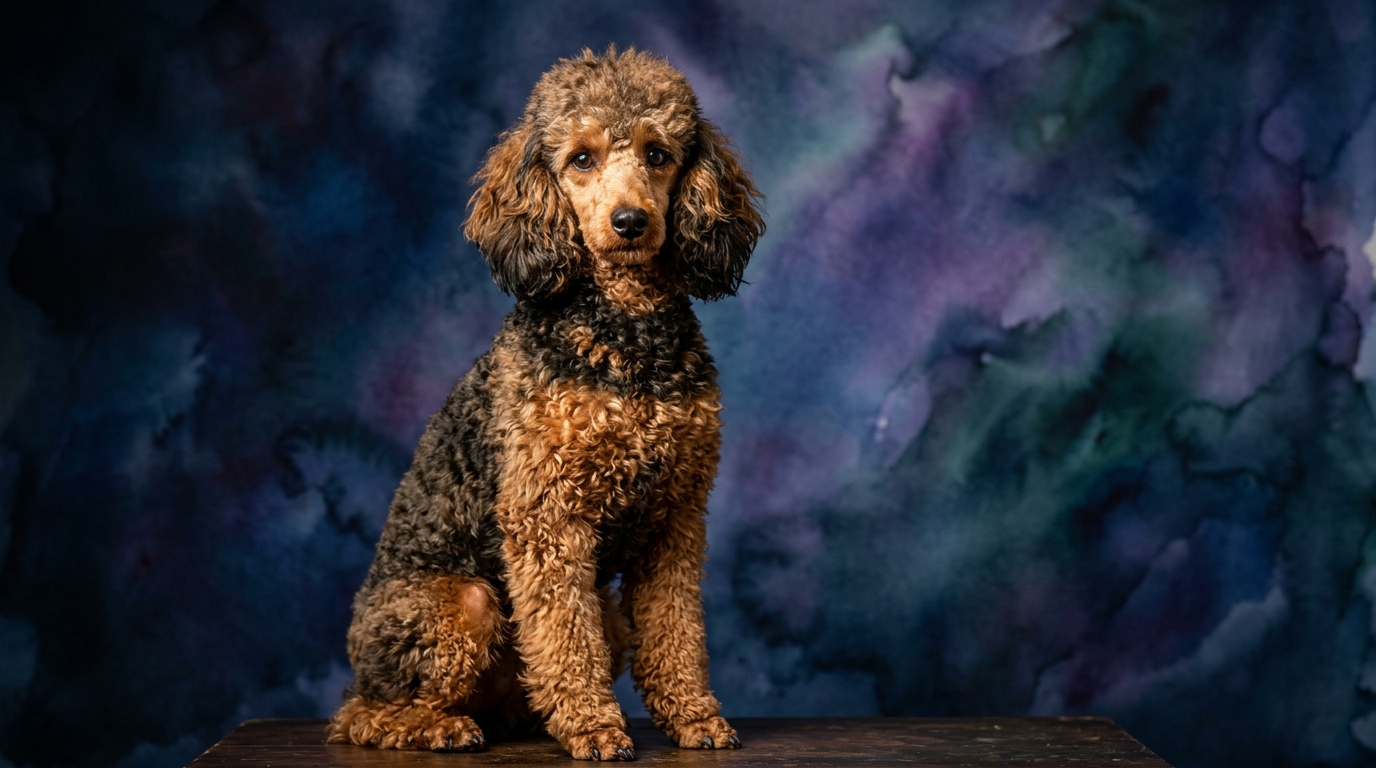
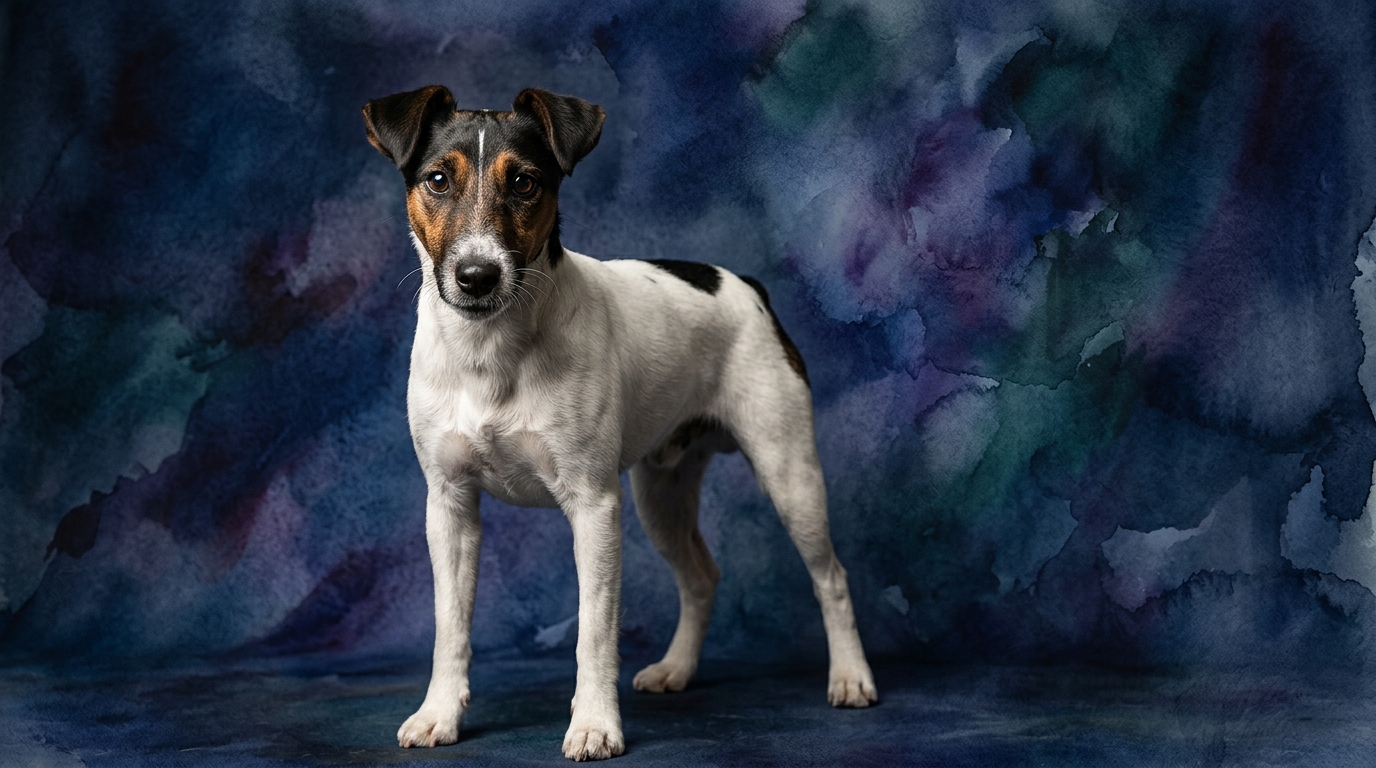
Side-by-Side Cognitive Profiles: Poodle (Standard) vs. Smooth Fox Terrier
To truly understand the mental landscape of these two distinct breeds, we turn to The Cosmic Pet Pet IQ Lab's five-dimensional intelligence framework. This allows us to move beyond anecdotal observations and delve into specific cognitive strengths and inclinations.
The **Poodle (Standard)**, often lauded for its mental capabilities, holds an impressive Coren rank of #2, indicating it is among the breeds most likely to understand new commands in fewer than five repetitions and obey them 95% of the time or more. Its IQ profile reflects this with exceptional scores across the board. Its Problem Solving is a perfect 5/5, signifying an outstanding capacity to analyze complex situations, understand cause-and-effect, and independently devise solutions to novel challenges, often demonstrating abstract reasoning. Training Speed is also 5/5, meaning Poodles grasp new commands and routines with astonishing rapidity, requiring minimal repetition and quickly mastering intricate sequences. Social Intelligence stands at 5/5, highlighting their profound ability to interpret human emotions, intentions, and subtle cues, fostering deep, empathetic connections and responding appropriately to social contexts. While not purely a working breed in the traditional sense, their Instinctive Drive is a strong 4/5, channeled into a desire for engagement and purpose, making them eager participants in structured activities like agility, obedience, or even their original role as water retrievers. Finally, their Memory is 5/5, allowing for outstanding recall of learned behaviors, commands, and spatial information, enabling them to apply past lessons to future scenarios with remarkable precision and consistency.
In stark contrast, the **Smooth Fox Terrier**, while certainly intelligent, presents a different cognitive blueprint. This breed is Not Coren-ranked, which often implies that while highly capable, their intelligence might lean more towards instinctual behaviors and independent problem-solving rather than human-directed obedience in the Coren study's specific framework. Their IQ profile reflects a more balanced, yet distinct, set of mental attributes. Problem Solving scores 3/5, indicating they are adept at practical, often physical, problem-solving, particularly those related to their terrier instincts like locating hidden objects or navigating complex terrains. However, they may require more explicit guidance for abstract or multi-step, human-designed puzzles that don't directly tap into their innate drives. Training Speed is 3/5, meaning they learn new commands at a moderate pace, requiring consistent repetition and patience. Their independent nature can sometimes make them appear less eager to please, but they are absolutely trainable with the right approach. Social Intelligence is 3/5; they understand basic human cues and form strong attachments, yet they might be more focused on their immediate environment or independent pursuits, not always seeking to interpret complex human emotional states as deeply as some other breeds. Their Instinctive Drive is 3/5, a powerful, inherent terrier impulse for hunting, digging, and exploring. This drive is a significant motivator but can sometimes override a desire to follow human commands if an instinctual pursuit arises. Memory is also 3/5; they retain learned behaviors and routines, especially those that are consistent and reinforced, but their memory might be more selective, prioritizing experiences relevant to their innate drives over purely human-initiated tasks.
Where the Poodle (Standard) Excels Cognitively
The Standard Poodle's cognitive strengths lie in its exceptional capacity for complex thought and rapid learning. Its 5/5 Problem Solving means it can master intricate multi-step tasks, often demonstrating an uncanny ability to generalize concepts and apply them to new situations, far beyond simple rote memorization. This breed excels at abstract reasoning, making them adept at puzzle toys that require strategy and sequence, or understanding complex verbal commands that involve multiple components. Their 5/5 Training Speed allows them to absorb new information with astonishing efficiency, meaning fewer repetitions are needed for them to grasp and internalize a command, even for highly nuanced behaviors. This cognitive agility translates into a dog that is incredibly adaptable to various learning environments and new routines. Furthermore, their 5/5 Social Intelligence provides a profound emotional attunement, allowing them to pick up on subtle human cues, anticipate needs, and respond with remarkable empathy. This deep understanding of human intentions and feelings makes them exceptionally responsive companions, often appearing to intuit what their owners desire or feel. Their superior Memory ensures that once a behavior is learned, it is retained with impressive consistency, making them reliable performers in any discipline.
Where the Smooth Fox Terrier Shows Unique Cognitive Strengths
While the Smooth Fox Terrier's IQ scores may not reach the Poodle's peaks, its cognitive profile highlights a distinct and equally valuable form of intelligence, particularly in areas requiring independence and instinctual prowess. Their 3/5 Problem Solving, though lower, is uniquely geared towards practical, often physical challenges. This breed excels at tasks requiring self-reliance, keen observation, and quick, decisive action, especially when driven by their innate terrier instincts. They are brilliant at figuring out how to navigate challenging physical environments, track elusive scents, or locate hidden objects using their senses, often without direct human instruction. Their resilience is another cognitive strength; this independent nature means they are less reliant on constant human validation and possess an inherent ability to figure things out for themselves in situations where a more dependent breed might falter. Smooth Fox Terriers exhibit a remarkable focus on environmental cues, making them highly attuned to their surroundings and adept at detecting subtle changes or movements that might escape other breeds. This practical application of intelligence is often expressed through their ability to react swiftly to stimuli, showcasing their quick reflexes and situational awareness. Finally, their tenacity, driven by their Instinctive Drive, means that once they set their mind to a task, especially one rooted in their natural drives, they demonstrate remarkable perseverance and focus until the goal is achieved.
Trainability: Poodle (Standard) vs. Smooth Fox Terrier
When it comes to ease of training, the Standard Poodle holds a significant advantage. Their 5/5 scores in Training Speed, Social Intelligence, and Memory mean they grasp commands rapidly, understand human intentions with remarkable clarity, and retain lessons with impressive consistency. They are eager to please, highly focused on their handler, and thrive on structured learning and mental stimulation. Real behavioral differences are evident in their ability to quickly master complex sequences for competitive obedience, excel in dog sports like agility, or perform intricate tasks as service dogs, often requiring very few repetitions to perfect a new skill. Their strong desire to engage and their relatively lower instinctive drive (compared to a terrier) means fewer distractions from innate urges, allowing them to remain highly attentive during training sessions.
The Smooth Fox Terrier, while intelligent, presents a more challenging training experience. Their 3/5 scores in Training Speed, Social Intelligence, and Memory, combined with a potent 3/5 Instinctive Drive, necessitate a different approach. They learn at a moderate pace, often requiring more patience, consistency, and creative methods to keep them engaged. Their independent nature means they are intelligent but often choose to act on their own terms, especially if an instinctual pursuit, like the sight of a squirrel, presents itself. This independence can sometimes be misinterpreted as stubbornness, but it's more about their self-directed problem-solving and strong inner drive. Real behavioral differences include a terrier's propensity to follow a captivating scent over a 'stay' command, or their tendency to investigate a rustling bush rather than maintain heel position. Training a Smooth Fox Terrier often involves making it a compelling game, appealing to their prey drive in controlled ways, and maintaining a high level of engagement to redirect their focus from environmental distractions to human directives.
Ideal Owners: Active vs. Relaxed Lifestyles
Both the Standard Poodle and the Smooth Fox Terrier thrive with active owners, but their needs stem from different cognitive and physical requirements. The **Standard Poodle** requires owners who can consistently provide significant mental stimulation. While physically capable, their primary need is for their brilliant minds to be challenged through advanced training, dog sports like agility or rally, puzzle toys, and engaging activities that allow them to use their problem-solving and memory skills. They are not satisfied with just physical exercise; they need a 'job' or a purpose that exercises their cognitive abilities. They can adapt to a slightly less physically active owner if mental engagement is consistently high, but they are far from being a sedentary breed.
The **Smooth Fox Terrier** absolutely requires active owners who are prepared for a dynamic lifestyle that caters to their robust physical energy and strong prey drive. They need ample physical exercise, including long walks, varied environments for exploration, and games that simulate hunting or tracking to satisfy their instinctive drives. Owners must be ready to manage their independent nature and channel their energy productively. This breed is definitely not for relaxed owners who prefer minimal engagement; their boundless energy and tenacious spirit demand an owner who is prepared for an active partnership, consistent boundaries, and creative management of their terrier instincts to prevent boredom and destructive behaviors. Neither breed is truly suited for a purely 'relaxed' or sedentary owner who desires a low-maintenance companion.
The Verdict
Choose a Standard Poodle if you seek a highly trainable companion eager for complex mental challenges, deep emotional connection, and consistent performance in various activities. They excel with owners who enjoy structured learning and can provide ample mental engagement.
Opt for a Smooth Fox Terrier if you appreciate an independent, spirited companion with a keen instinctual drive, and you are prepared for an active lifestyle that channels their natural prey drive and requires patient, consistent training methods.
🧠 Find Your Pet's IQ Score
Our Pet IQ Lab assessment covers 25+ tests across 5 cognitive dimensions — personalized to your breed.
Take the Full IQ Test →Frequently Asked Questions
Are Smooth Fox Terriers difficult to train?
Smooth Fox Terriers are not inherently difficult to train, but they require a different approach than breeds like the Poodle. Their independent nature and strong prey drive mean training requires high consistency, patience, and making learning engaging and rewarding to overcome their self-directed tendencies.
Do Standard Poodles need a lot of exercise?
Standard Poodles do require regular physical exercise to maintain their health and happiness, but their primary need is often for mental stimulation. Daily walks, playtime, and opportunities for dog sports or advanced training are crucial to satisfy their active minds and bodies.
Which breed is better for first-time dog owners?
The Standard Poodle is generally a more forgiving and adaptable choice for first-time dog owners due to its high trainability and eagerness to please. The Smooth Fox Terrier, with its independent streak and strong instincts, might pose more challenges for an inexperienced owner, requiring a dedicated commitment to consistent training and management.