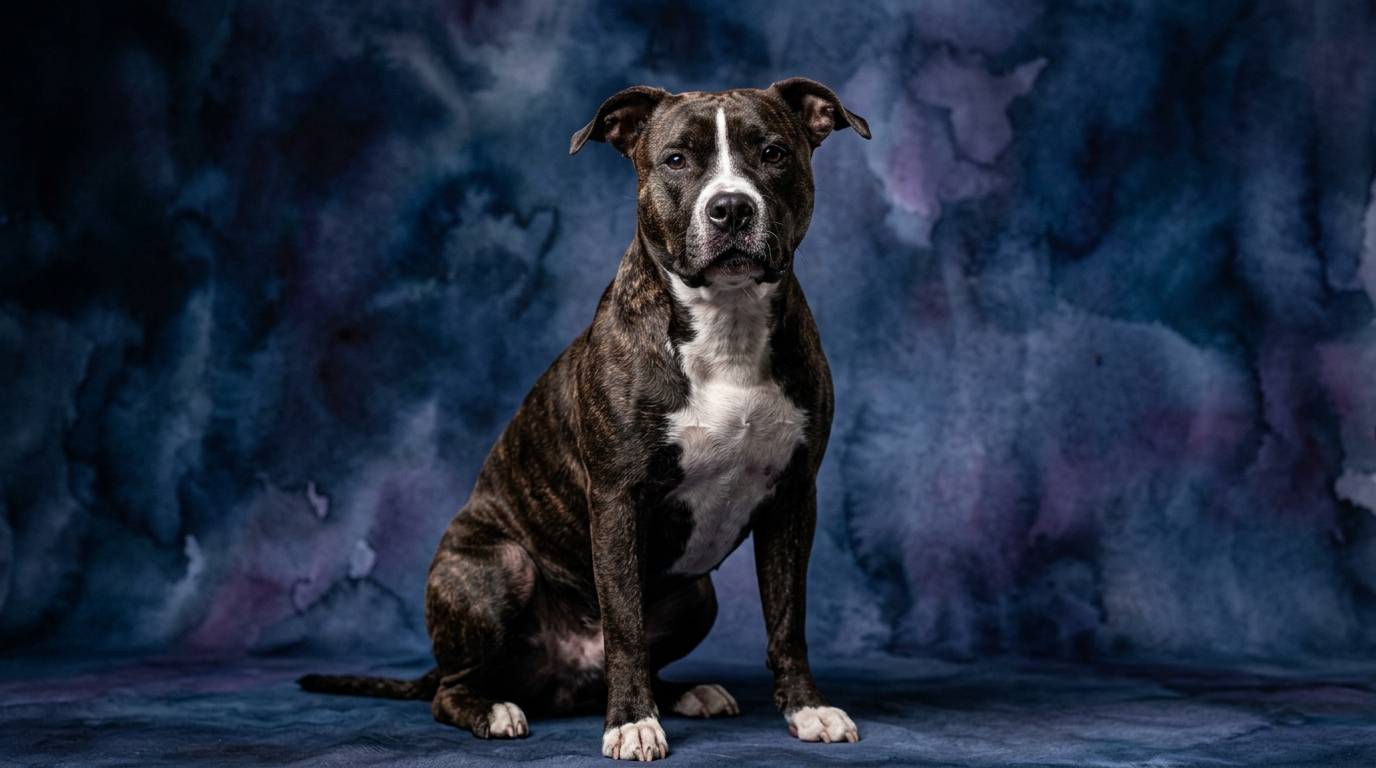
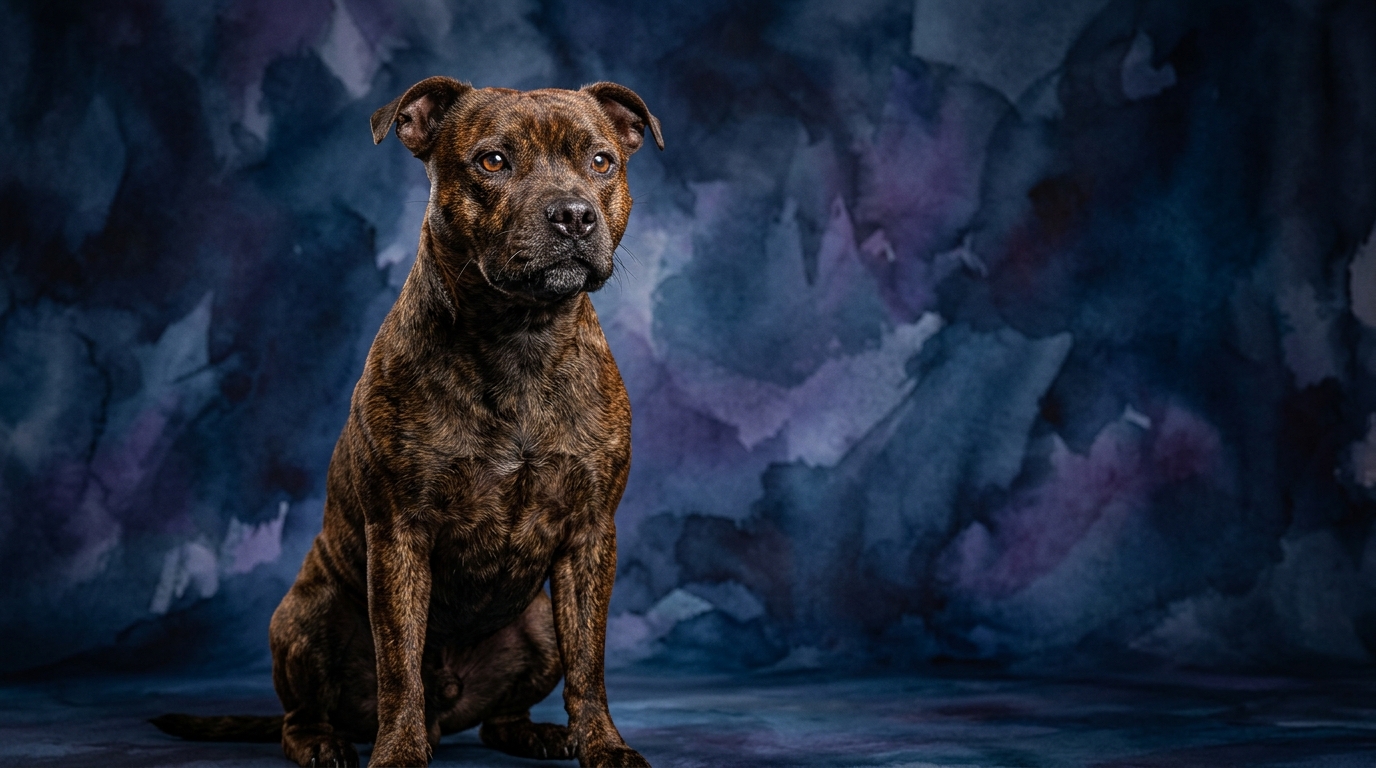
Side-by-side IQ profile
The Cosmic Pet Pet IQ Lab employs five core dimensions to assess canine intelligence, offering a granular view beyond general perceptions. For the American Staffordshire Terrier, we observe a balanced cognitive profile: Problem Solving at 3/5, Training Speed at 3/5, and Social Intelligence also at 3/5. Its Instinctive Drive registers at 3/5, indicating a robust, purpose-driven nature, while its Memory stands out at a notable 4/5. This breed's cognitive prowess is further evidenced by its inclusion in Stanley Coren's ranking, placing at a respectable #48 among working breeds.
In contrast, the Staffordshire Bull Terrier presents a very similar, yet subtly distinct, cognitive makeup. Its Problem Solving, Training Speed, Social Intelligence, and Instinctive Drive all align with the AmStaff at 3/5. However, its Memory score is slightly lower at 3/5. Notably, the Staffordshire Bull Terrier is not included in Coren's traditional ranking, which often focuses on obedience and working intelligence, but this does not diminish its distinct intellectual capabilities. These scores highlight that both breeds possess solid foundational intelligence, with the AmStaff showing a slight edge in recall and retention.
Where American Staffordshire Terrier wins cognitively
The American Staffordshire Terrier’s cognitive advantage primarily lies in its superior Memory score of 4/5, compared to the Staffordshire Bull Terrier’s 3/5. This enhanced capacity for recall means an AmStaff is likely to retain complex command sequences, learned routines, and past experiences with greater precision and for longer durations. For owners, this translates into potentially fewer repetitions needed during advanced training and a greater ability for the dog to remember multi-step tasks, such as agility courses or intricate scent work. Its higher memory score also contributes to its Coren ranking of #48, reflecting its capacity for consistent performance in learned behaviors over time. This robust memory system supports its adaptability and capacity to learn and apply solutions based on prior experiences, making it particularly effective in structured environments that demand consistent recall and execution.
Where Staffordshire Bull Terrier wins cognitively
While the Staffordshire Bull Terrier’s individual cognitive scores largely parallel the AmStaff’s, its unique blend of these attributes creates distinct strengths. Its solid 3/5 in Problem Solving, Training Speed, Social Intelligence, and Instinctive Drive, combined with its slightly lower 3/5 Memory, can lead to a more 'in-the-moment' focus, less prone to dwelling on past negative training experiences or minor setbacks. This resilience, while not a direct "win" in a score, is a practical cognitive advantage, allowing for quicker recovery from errors and a persistent, enthusiastic approach to new challenges. The Staffy's powerful instinctive drive (3/5) combined with its robust social intelligence (3/5) also makes it exceptionally attuned to human companionship and interaction, often leading to a profound, intuitive understanding of family dynamics and emotional states. This emotional perceptiveness, while not numerically superior, is a hallmark of its unique cognitive appeal, fostering incredibly deep and loyal bonds.
Which is easier to train and why
When considering ease of training, the American Staffordshire Terrier holds a slight edge due to its superior Memory score of 4/5. This means an AmStaff is generally quicker to internalize and retain new commands, cues, and complex sequences, requiring fewer repetitions to achieve mastery. Its Coren ranking of #48 further supports its capacity for obedience and working intelligence, indicating a breed that can excel in structured training environments and advanced disciplines. While both breeds share a 3/5 Training Speed, the AmStaff's memory aids in consolidating learned behaviors more effectively, making it a strong candidate for owners interested in competitive obedience, agility, or other canine sports that demand consistent recall and execution.
The Staffordshire Bull Terrier, with its 3/5 Training Speed and 3/5 Memory, is still a very trainable breed, but owners might find that it benefits from more consistent reinforcement and slightly more repetition to solidify learned behaviors. Its strong Instinctive Drive (3/5) means it can be highly motivated, but this drive needs to be channeled constructively through positive reinforcement methods to prevent stubbornness. The Staffy's social intelligence (3/5) makes it eager to please its human companions, which is a significant asset in training, but its slightly shorter memory might require a more patient and persistent approach, focusing on clear, concise commands and rewarding desired behaviors immediately.
Which suits active owners vs relaxed owners
Both the American Staffordshire Terrier and the Staffordshire Bull Terrier are active breeds, sharing an Instinctive Drive of 3/5, meaning neither is suited for a truly sedentary lifestyle. However, their physical and cognitive nuances cater to slightly different types of active owners. The American Staffordshire Terrier, with its larger size and superior memory, thrives with owners who enjoy structured, mentally stimulating activities beyond just physical exercise. They often excel in dog sports like agility, obedience, and rally, which demand complex problem-solving and excellent recall, appealing to owners who desire a partner for advanced training and competitive endeavors.
The Staffordshire Bull Terrier, while equally active and possessing the same instinctive drive, is a more compact and often described as a "velcro dog" due to its intense desire for human companionship. Its social intelligence (3/5) makes it highly responsive to family interaction, making it an excellent fit for active owners who prioritize daily interactive play, consistent walks, and a devoted companion for adventures, rather than necessarily focusing on advanced competitive training. They are perfectly content with vigorous daily exercise followed by snuggles on the couch, making them suitable for active families who appreciate a robust yet affectionate presence without the constant demand for complex mental tasks that an AmStaff might thrive on.
The Verdict
Choose the American Staffordshire Terrier if you seek a partner for advanced training, competitive dog sports, or complex tasks where its superior memory and structured intelligence can truly shine.
Opt for the Staffordshire Bull Terrier if you desire a robust, affectionate companion who thrives on consistent interactive play, daily exercise, and deep family bonds, valuing resilience and intuitive companionship over advanced cognitive recall.
🧠 Find Your Pet's IQ Score
Our Pet IQ Lab assessment covers 25+ tests across 5 cognitive dimensions — personalized to your breed.
Take the Full IQ Test →Frequently Asked Questions
Does the AmStaff's Coren ranking make it definitively "smarter" than the Staffy?
The AmStaff's Coren ranking (#48) reflects its strong working and obedience intelligence, particularly its capacity for retaining commands. While the Staffy isn't ranked, it doesn't mean it lacks intelligence; rather, Coren's methodology emphasizes specific types of learned behaviors, where the AmStaff's memory gives it an edge. Both breeds possess practical intelligence and trainability.
Given their similar scores, how noticeable are the cognitive differences in daily life?
The differences are often subtle but become more apparent in specific scenarios. The AmStaff's 4/5 memory might mean it remembers a hidden toy's location longer or picks up a new trick with fewer repetitions. The Staffy's 3/5 memory means consistent practice is key, but its strong drive ensures enthusiasm and persistence in learning.
Are these breeds suitable for first-time dog owners?
Both breeds possess strong personalities and instinctive drives (3/5), benefiting from experienced owners who understand positive reinforcement and consistent boundaries. While trainable, their robust nature and need for engagement mean a first-time owner must be committed to proactive training and socialization to ensure a well-adjusted companion.