Side-by-Side IQ Profile: American Water Spaniel vs. Kooikerhondje
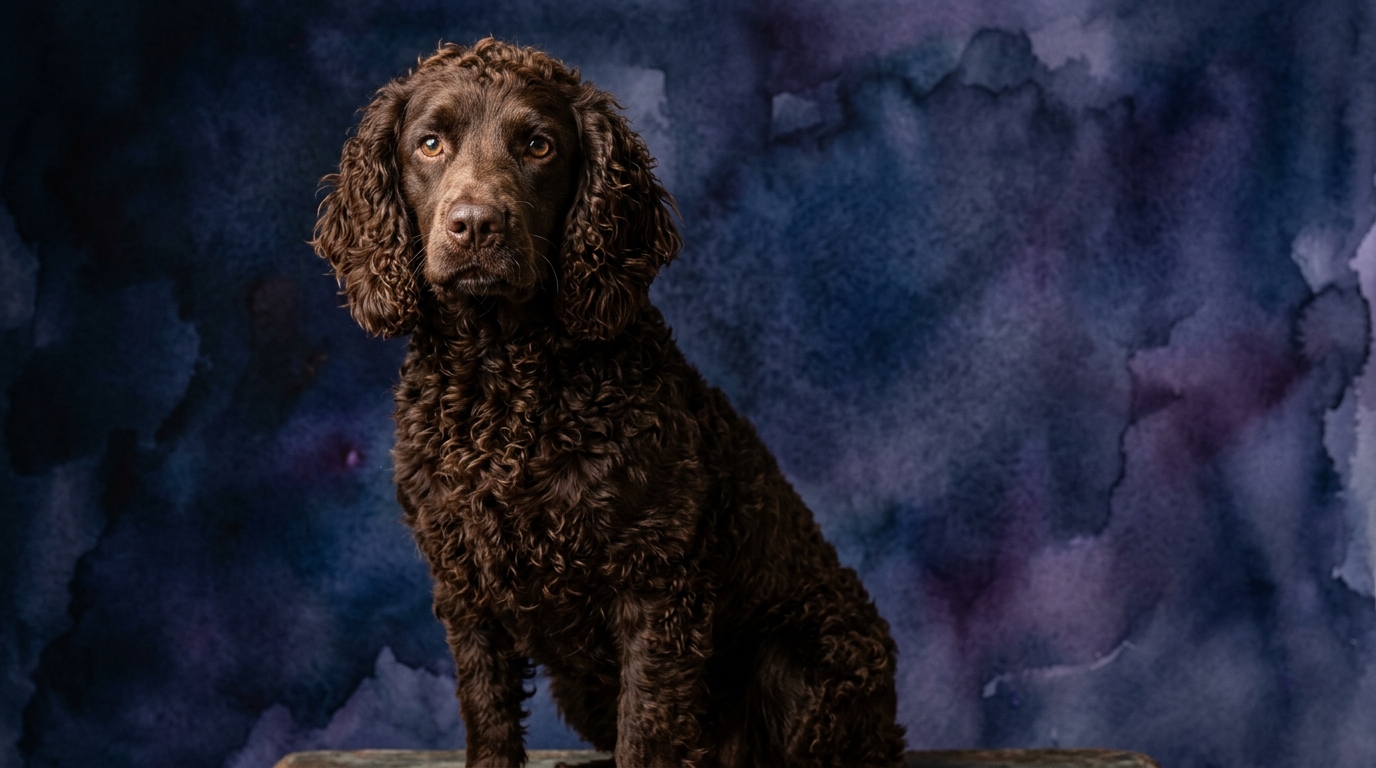
The American Water Spaniel (AWS), a charming and versatile retriever, holds a respectable Coren rank of #44 among working dog breeds, indicating a solid capacity for obedience and understanding of human direction. Its cognitive profile, according to The Cosmic Pet Pet IQ Lab, reveals balanced abilities across most dimensions: Problem Solving 3/5, Training Speed 3/5, Social Intelligence 3/5, and Instinctive Drive 3/5. However, its standout trait is Memory, scoring an impressive 4/5.
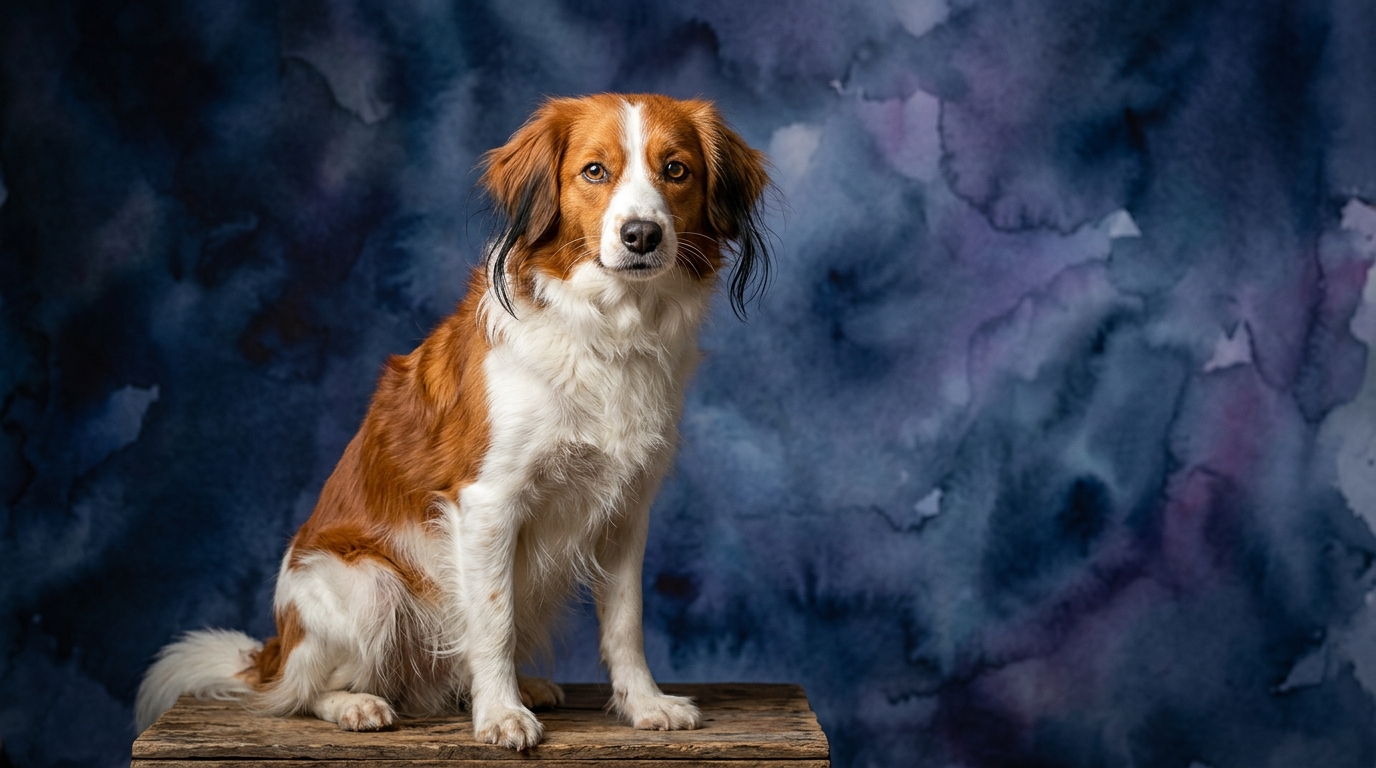
In contrast, the Kooikerhondje, a Dutch duck luring dog, is not Coren-ranked, suggesting its intelligence may express itself in ways less focused on traditional obedience measures. Its IQ profile presents a remarkably consistent picture: Problem Solving 3/5, Training Speed 3/5, Social Intelligence 3/5, Instinctive Drive 3/5, and Memory 3/5. This consistency paints a portrait of a well-rounded but perhaps less specialized cognitive makeup in the context of these specific metrics.
The most notable distinction between these two breeds, based on the provided IQ data, lies in their memory capabilities. The American Water Spaniel's superior Memory score of 4/5 suggests a greater capacity for retaining learned information, complex sequences, and past experiences compared to the Kooikerhondje's 3/5. All other cognitive dimensions—Problem Solving, Training Speed, Social Intelligence, and Instinctive Drive—are rated identically for both breeds at 3/5, indicating similar moderate aptitudes in these areas.
Where the American Water Spaniel Shines Cognitively
The American Water Spaniel's primary cognitive advantage is its robust Memory, rated at 4/5. This trait is invaluable for a working retriever, enabling it to efficiently recall complex commands, remember multi-step retrieving patterns, and navigate familiar territories with precision. An AWS is more likely to retain learned behaviors over longer periods, requiring less frequent reinforcement to maintain skills, which is a significant asset in field work or competitive dog sports.
Its Coren ranking of #44 further underscores its capacity for consistent performance and understanding within structured environments. This isn't just about quick learning, but about reliable retention and application of knowledge. For an owner, this translates to a dog that can master intricate tasks and remember them, making it an excellent candidate for advanced obedience, agility courses with complex sequences, or demanding hunting scenarios where remembering marks and handling directions is crucial.
Where the Kooikerhondje Holds its Own Cognitively
While the Kooikerhondje's IQ scores are consistently 3/5 across all dimensions, this indicates a balanced and capable intellect rather than a deficiency. Its Problem Solving at 3/5 means it can adapt to novel situations and figure out solutions with moderate efficiency, a critical trait for its historical role as a duck lurer. This involved more than simple fetching; it required understanding the behavior of waterfowl and subtly manipulating them into nets, a task demanding observational skills and strategic thinking.
Its Social Intelligence, also 3/5, would have been key to its luring success, enabling it to interpret the nuances of both human handler and duck behavior. This isn't just about bonding with people, but about a practical application of social cognition in a working context. The Kooiker's Instinctive Drive, rated 3/5, is specifically geared towards this luring behavior, suggesting a focused, deliberate drive that combines physical action with mental strategy, rather than a purely high-energy chase.
Training Ease: American Water Spaniel vs. Kooikerhondje
Both breeds share a Training Speed score of 3/5, suggesting they will learn new commands and behaviors at a similar, moderate pace. Neither is a lightning-fast learner, but neither is particularly slow either. Consistency and clear communication will be effective for both during initial training phases.
However, the American Water Spaniel's superior Memory (4/5) gives it an edge in long-term training and reliability. Once an AWS learns a command or a routine, it is more likely to retain that information with less frequent review. This means complex sequences, advanced obedience routines, or detailed field work protocols will stick better, leading to a more consistent and predictable performance over time.
The Kooikerhondje, with its 3/5 Memory, will require more regular reinforcement to keep its training sharp. While it learns new things at a moderate speed, ensuring those lessons are deeply ingrained will necessitate ongoing practice. Its historical role as an independent lurer might also mean it responds best to training methods that feel collaborative and engaging, rather than purely repetitive. Owners might find success by framing training as a series of puzzles or games that tap into its problem-solving and social intelligence.
Matching Breeds to Lifestyles: Active vs. Relaxed Owners
It's important to note that both the American Water Spaniel and the Kooikerhondje are Sporting breeds, and as such, neither is suited for a truly relaxed or sedentary owner. Both possess an Instinctive Drive of 3/5, indicating a moderate to high need for physical activity and mental engagement. Prospective owners should be prepared to provide consistent outlets for their energy and intellect.
The American Water Spaniel, with its strong retrieving drive and affinity for water, thrives with owners who can provide vigorous exercise, especially involving swimming, fetching, or field activities. Its excellent memory makes it an ideal partner for advanced dog sports like competitive obedience, agility, or field trials that demand precise, remembered sequences. Owners who enjoy an active, structured outdoor lifestyle will find the AWS a dedicated companion.
The Kooikerhondje, while also active, might particularly benefit from owners who appreciate mental stimulation alongside physical exercise. Its luring background suggests a need for engaging, puzzle-like activities, scent work, or trick training that taps into its problem-solving and nuanced social intelligence. While it needs good walks and play, its activities might lean more towards strategic interaction than purely physical endurance. Neither breed is content with minimal exercise; both require dedicated owners committed to their well-being.
The Verdict
For owners seeking a dog with robust memory for complex tasks, consistent obedience, and a strong drive for retrieving, especially in water, the American Water Spaniel is an excellent match.
For those who appreciate a balanced cognitive profile, moderate training speed, and a dog whose social intelligence and problem-solving shine in nuanced, independent work, the Kooikerhondje offers a rewarding companionship.
🧠 Find Your Pet's IQ Score
Our Pet IQ Lab assessment covers 25+ tests across 5 cognitive dimensions — personalized to your breed.
Take the Full IQ Test →Frequently Asked Questions
Are American Water Spaniels difficult to train?
With a Training Speed of 3/5, American Water Spaniels learn at a moderate pace, meaning they are not inherently difficult but require consistent effort. Their Memory score of 4/5 means they retain lessons well once learned, making long-term training effective and reliable.
What kind of mental stimulation do Kooikerhondjes need?
Kooikerhondjes, with their 3/5 Problem Solving and Social Intelligence, thrive on activities that engage their minds, such as puzzle toys, scent work, or trick training. Their historical role as luring dogs suggests they enjoy tasks requiring observation and strategic interaction, making mental challenges crucial for their well-being.
How do their social intelligence scores compare in real life?
Both breeds possess a Social Intelligence score of 3/5, indicating a similar moderate capacity to understand and respond to human and environmental cues. The American Water Spaniel might apply this in cooperative retrieving and handler-focused tasks, while the Kooikerhondje uses it for nuanced interactions in luring and reading subtle environmental signals.