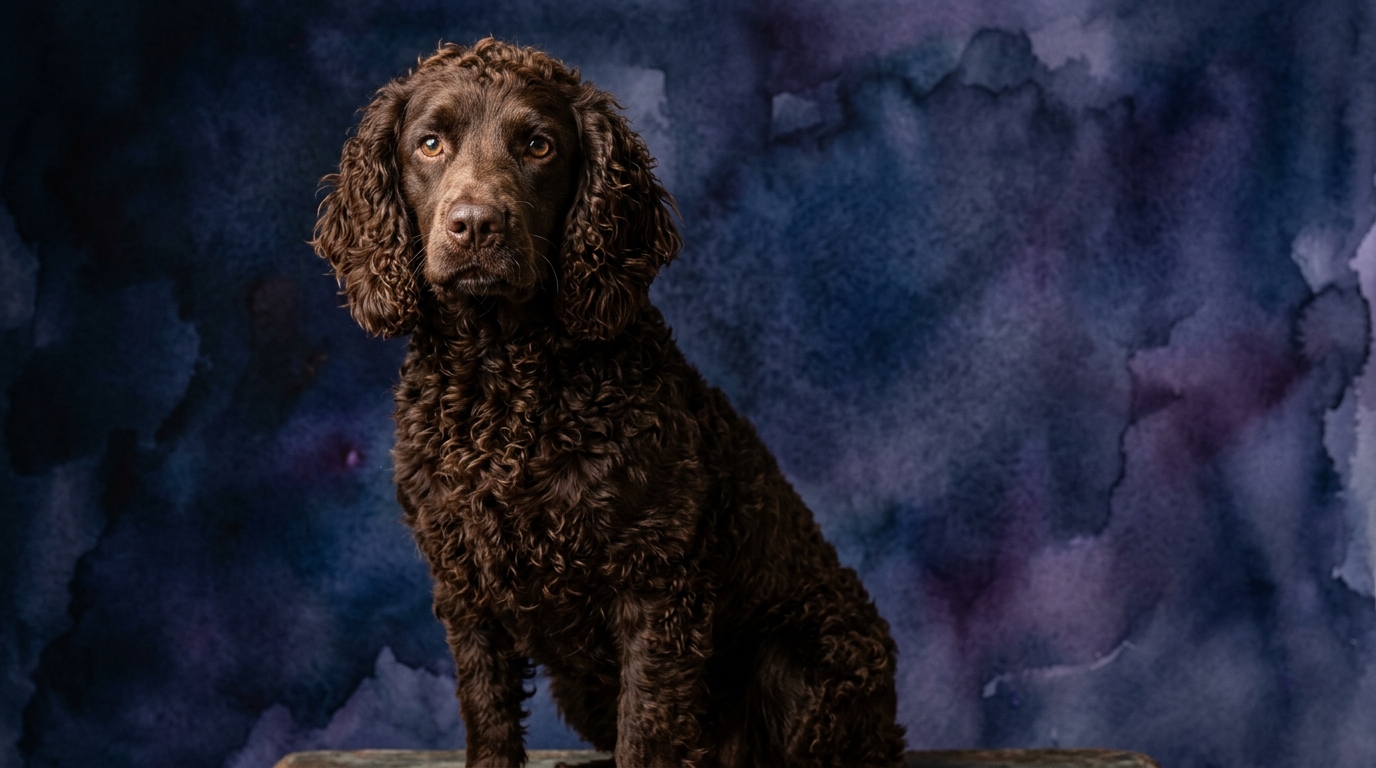
American Water Spaniel at a glance
| IQ Rank / Score | #44 |
|---|---|
| Trainability | ★★★☆☆ (3/5) |
| Social Intelligence | ★★★☆☆ (3/5) |
| Lifespan | 11-14 years |
| Shedding | Low to moderate |
| Exercise Needs | High (60+ min/day + training) |
| Origin | USA |
The Cognitive Core: Adaptive Aquatic Problem-Solving
The American Water Spaniel's intelligence is fundamentally defined by its role as a versatile gundog, particularly adept at retrieving waterfowl from the icy, dense marshes of the Great Lakes region. Unlike many breeds that rely heavily on constant handler direction, the AWS was bred for a unique blend of cooperation and self-reliance. Their cognitive primary angle is 'Adaptive Aquatic Problem-Solving,' a sophisticated ability to independently strategize and execute retrieval tasks in dynamic, often unpredictable, water-based environments. This means they're not just following commands; they're actively assessing complex variables such as water currents and their impact on scent dispersal, identifying the most efficient path through dense reeds and submerged obstacles, and precisely marking the location of fallen game, often multiple birds, amidst challenging visual and olfactory clutter. Their mental fortitude allows them to persist in cold, physically demanding conditions, making complex decisions on the fly to successfully bring game back to hand.
This specialized intelligence encompasses exceptional spatial reasoning to navigate complex terrains both on land and in water, superior olfactory discrimination to pinpoint game amidst various environmental scents (like decaying vegetation or other animals), and remarkable focus to maintain their objective despite myriad distractions in a busy hunting environment. Their decision-making process is rapid and iterative, constantly adjusting their approach based on real-time environmental feedback, whether it’s a shifting wind or a strong current. This independent streak, while invaluable in the field for a dog expected to work slightly out of sight, sometimes translates into a perception of 'stubbornness' in traditional obedience settings if their unique drive isn't properly channeled. However, when engaged with tasks that tap into their innate problem-solving and retrieving instincts, the American Water Spaniel demonstrates an impressive capacity for learning and adaptation, showcasing a deep understanding of their working purpose and a keen desire to please their handler through successful task completion.
A Glimpse into AWS History: The Dual Coat's Cognitive Link
One of the most surprising scientific insights into the American Water Spaniel's cognition is how intrinsically linked it is to a specific physical adaptation: their unique 'dual coat.' This isn't just about keeping warm; it's a profound evolutionary enabler of their working intelligence. The AWS possesses a dense, waterproof undercoat combined with a coarser, longer outer coat designed for shedding water and insulating against extreme cold. While many water-retrieving breeds have double coats, the particular structure, oiliness, and effectiveness of the AWS coat meant they could endure prolonged exposure to frigid North American waters and icy conditions without their core body temperature plummeting. This exceptional physical resilience directly translated into enhanced cognitive endurance and sustained mental acuity.
A dog constantly shivering, fighting hypothermia, or expending massive amounts of energy simply to stay warm cannot effectively engage in complex cognitive tasks such as accurately marking multiple falls, remembering intricate retrieval patterns, or navigating treacherous icy patches and dense thickets. The AWS's superior thermoregulation, a direct benefit of its specialized coat, freed up vital mental resources. It allowed them to maintain focus, problem-solve efficiently, and execute intricate retrieval strategies over extended periods in conditions that would quickly incapacitate less-adapted breeds. This meant they could dedicate more mental energy to the nuanced demands of the hunt rather than the basic survival instinct of staying warm. Thus, their distinctive coat isn't merely a physical trait; it's a foundational element that allowed their specialized 'Adaptive Aquatic Problem-Solving' intelligence to fully develop and manifest, solidifying their niche as an unparalleled cold-water retriever capable of sustained, high-level cognitive function in extreme environments.
Unmasking the Myth: 'AWS are Stubborn and Untrainable'
The most common myth surrounding the American Water Spaniel's intelligence is the claim that 'they are stubborn and difficult to train for anything beyond hunting.' This misconception often arises when AWS are approached with conventional obedience training methods that don't fully appreciate their working dog heritage and independent problem-solving nature. Handlers who expect a 'yes-sir' attitude, where the dog immediately complies without question, akin to some highly biddable breeds like the Golden Retriever, might find the AWS's independent thought process and occasional questioning of commands frustrating, misinterpreting it as defiance.
This myth persists because their strong instinctive drives and self-reliance, which are invaluable in the field for an independent retriever, can be misinterpreted as willful disobedience or a lack of intelligence. An AWS tasked with a retrieval, for example, might momentarily prioritize completing that perceived mission over an unrelated 'sit' command from a handler not attuned to their focus, leading owners to believe they are 'stubborn' or difficult. The truth is, American Water Spaniels are highly intelligent, quick learners, and possess a deep desire to please their handler, but they thrive on engaging, positive reinforcement training that appeals to their innate drives and turns learning into a game. They require a handler who understands how to channel their energy, keen intellect, and problem-solving skills into constructive activities that satisfy their working dog mentality. When motivated correctly, often through play, treats, or access to water, AWS excel not only in hunting but also in diverse canine sports like agility, dock diving, rally obedience, and scent work, proving their versatility and trainability extends far beyond their initial perceived limitations and challenging the notion of inherent stubbornness.
IQ Lab Tests for the American Water Spaniel
To accurately assess the unique cognitive strengths of the American Water Spaniel, The Cosmic Pet’s Pet IQ Lab would focus on tests that challenge their instinctive drives, problem-solving abilities in complex environments, and their precision in scent work. These selected tests will highlight the 'Adaptive Aquatic Problem-Solving' intelligence that defines this remarkable breed, providing insights into how they navigate their world and tackle challenges.
3 At-Home Tests to Measure Your American Water Spaniel's IQ
These tests are adapted from peer-reviewed ethology research. No equipment is needed beyond items you have at home. Run each test 5–10 times for reliable results.
The Myth: "American Water Spaniels are stubborn and difficult to train for anything beyond hunting."
✅ AWS are highly intelligent and eager to please, but they require engaging, positive reinforcement training that understands and channels their working dog instincts into constructive activities; they excel in various canine sports and obedience when motivated correctly with methods that tap into their innate drives and intelligence.
American Water Spaniel vs. Similar Breeds
🧠 What's Your Dog's IQ Score?
Our full Pet IQ Lab assessment includes 12+ tests across 5 cognitive dimensions, calibrated for American Water Spaniels specifically.
Take the Full IQ Test →Frequently Asked Questions
How smart is a American Water Spaniel?
Our Pet IQ Lab framework scores cognition across five dimensions (max 25). The American Water Spaniel totals 17/25 — high for a domestic dog. The full article breaks down each dimension with at-home tests.
Are American Water Spaniels easy to train?
American Water Spaniels can learn most cues, but expect to repeat lessons and keep sessions short. They score 3/5 on Training Speed in our breed profile.
Are American Water Spaniels good with children and other pets?
American Water Spaniels can live well with families when socialized early. Their Social Intelligence scores 3/5, so supervise interactions with small children and introduce new pets gradually.
Do American Water Spaniels need a lot of mental stimulation?
Absolutely. With Problem Solving 4/5 and Instinctive Drive 4/5, American Water Spaniels need daily mental work — puzzle feeders, scent games, training sessions, or nose-work — to avoid boredom.
How much exercise does a American Water Spaniel need?
American Water Spaniels need active engagement. Plan for 45-60 minutes of exercise and training per day, plus mental stimulation.
How good is a American Water Spaniel's memory?
American Water Spaniels score 3/5 on memory. They remember high-value associations well; less-used cues fade without refresher sessions.
What is the typical lifespan of a American Water Spaniel?
Expect a lifespan of 11-14 years for a healthy American Water Spaniel.
The American Water Spaniel is a breed whose intelligence is a finely tuned instrument, perfectly adapted for the demanding and complex work of a cold-water retriever. Understanding their 'Adaptive Aquatic Problem-Solving' allows us to appreciate their profound cognitive abilities beyond simple obedience, celebrating a uniquely American intelligence forged in the marshes and lakes.