Side-by-Side Cognitive Profile
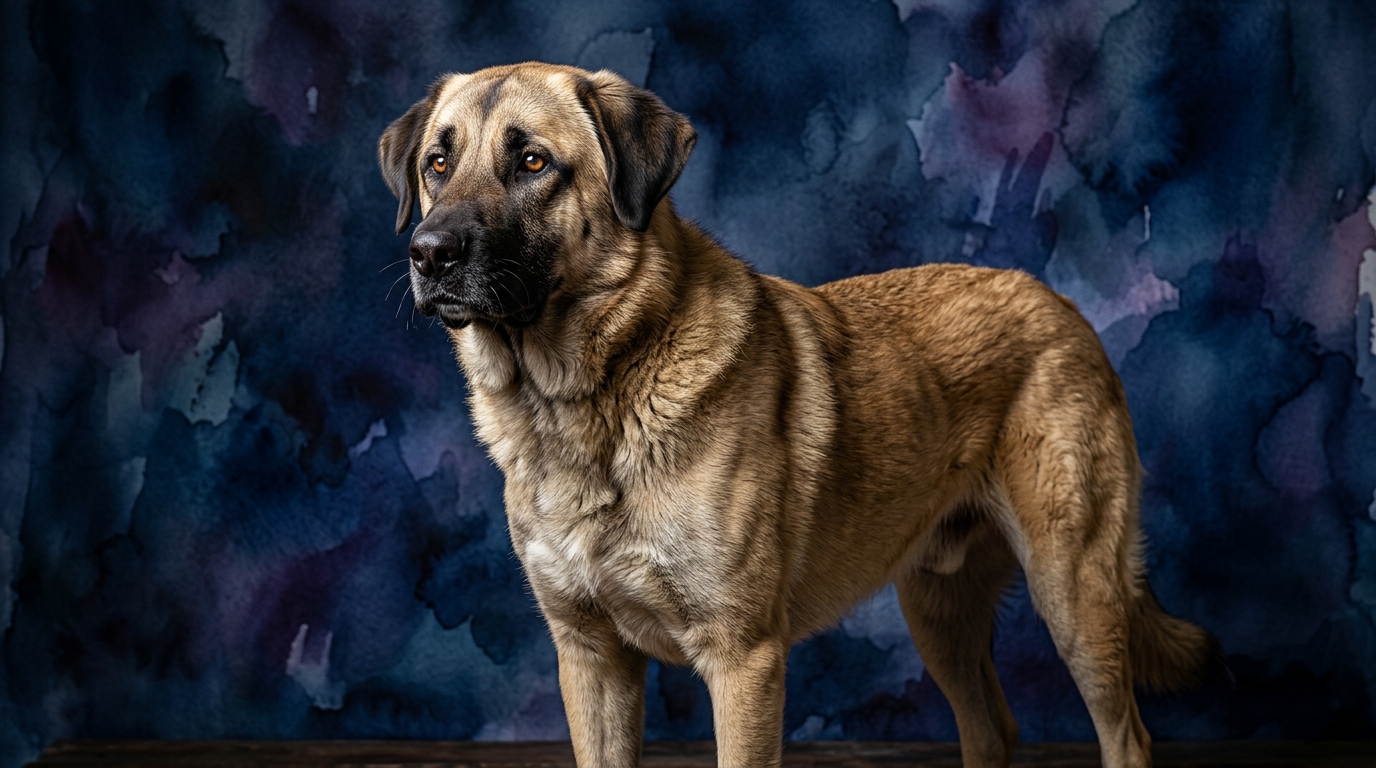
The Cosmic Pet Pet IQ Lab provides a unique lens through which to examine breed-specific cognitive traits, breaking down intelligence into five core dimensions. For the Anatolian Shepherd Dog, a working breed primarily developed for livestock protection, its profile reflects its purposeful heritage. Its Problem Solving is rated 3/5, suggesting a capacity for practical solutions often employed in its guarding duties, but perhaps less inclined towards complex, abstract puzzles. Training Speed also sits at 3/5, indicating a steady learning pace that requires consistent, patient guidance rather than rapid assimilation of commands. Social Intelligence is 3/5, reflecting an ability to understand and navigate social cues, particularly within its established family unit or flock, though perhaps with a reserved approach to strangers. Its Instinctive Drive is 3/5, signifying a solid foundation of natural behaviors like guarding and territoriality. Finally, Memory is 3/5, suggesting it retains learned information and experiences reliably over time.
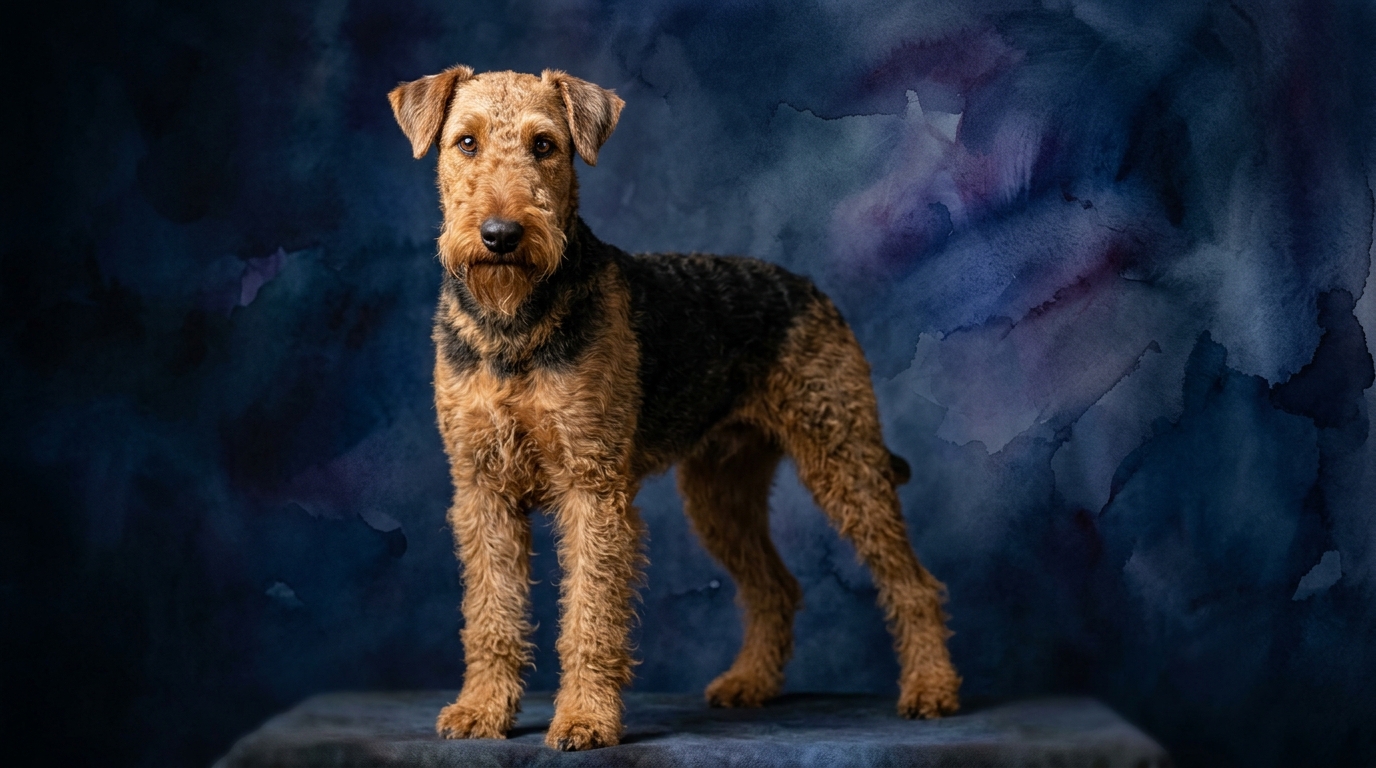
In contrast, the Airedale Terrier, a breed from the Terrier group and ranked #29 in Stanley Coren's broader assessment of canine intelligence, presents a profile geared towards versatility and engagement. Its Problem Solving is rated 4/5, pointing to a stronger aptitude for figuring out novel situations and overcoming obstacles, a trait valuable in its historical roles as a hunter and all-around working dog. Training Speed is also 4/5, indicating a quicker grasp of new commands and procedures, making it generally more responsive to structured lessons. Its Social Intelligence matches the Anatolian at 3/5, suggesting a similar capacity for understanding social dynamics, though often expressed with more outward enthusiasm. Instinctive Drive is likewise 3/5, reflecting its inherent terrier traits such as prey drive and determination. The Airedale's Memory stands at 4/5, demonstrating a superior ability to recall past events, commands, and learned associations, which supports its higher training speed and problem-solving capabilities.
Where the Anatolian Shepherd Dog Excels Cognitively
While the Anatolian Shepherd Dog's individual cognitive scores might appear modest compared to the Airedale's, their strength lies in their holistic application to its specialized role. Its 3/5 in Problem Solving, for instance, manifests not as a desire to solve abstract puzzles but as a deep-seated ability to assess and respond to real-world threats to its charges independently. This isn't about rapid-fire obedience but about making sound, protective decisions without constant human intervention, a critical trait for a lone guardian. This independent thought process, while sometimes perceived as stubbornness in conventional training, is a cognitive triumph in its working context, allowing it to act decisively when a shepherd might be absent.
The Anatolian's 3/5 Social Intelligence is another example of its specialized cognitive strength. It develops profound bonds and an acute awareness of its family or flock's well-being, reading subtle cues to anticipate needs or potential dangers. This social awareness is highly focused and deeply ingrained, enabling it to differentiate between familiar and unfamiliar, friend and potential foe, with a quiet discernment. Its Memory, also 3/5, ensures that once it learns which individuals belong and which territories are its to protect, that knowledge is steadfast, forming the bedrock of its reliable guardianship. This consistent memory contributes to its dependable nature and its ability to maintain its protective duties over long periods and changing circumstances.
Where the Airedale Terrier Excels Cognitively
The Airedale Terrier's cognitive profile, particularly its higher scores in Problem Solving (4/5), Training Speed (4/5), and Memory (4/5), positions it as a highly adaptable and capable learner. Its superior problem-solving ability means it can quickly analyze new situations, devise strategies to achieve goals, and often figure out how to manipulate its environment, whether that's opening a gate or discerning the steps required for a complex trick. This cognitive flexibility allows the Airedale to excel in diverse activities, from agility to scent work, where innovative thinking is rewarded.
The Airedale's elevated Training Speed and Memory ratings are directly linked to its capacity for absorbing and retaining a wide range of commands and behaviors efficiently. This breed can pick up new cues with fewer repetitions and recall them accurately over extended periods, making it highly rewarding for owners who enjoy engaging in advanced obedience or specialized dog sports. This cognitive advantage means the Airedale can build a larger repertoire of learned behaviors and apply them reliably, showcasing a keen mental agility that sets it apart. Its ability to remember complex sequences and associations contributes to its reputation as a versatile working partner, capable of mastering various tasks.
Which is Easier to Train and Why
Based on the IQ metrics, the Airedale Terrier is generally easier to train compared to the Anatolian Shepherd Dog. The Airedale’s Training Speed of 4/5 and Memory of 4/5 indicate a dog that grasps concepts quickly and retains them effectively. This means an Airedale will typically learn new commands with fewer repetitions and will recall those commands more reliably over time. Their higher Problem Solving (4/5) also contributes, as they are often more engaged in the learning process, actively trying to figure out what is expected of them, and adapting their behavior accordingly. For owners seeking a dog that will readily engage in obedience classes, learn tricks, or participate in dog sports, the Airedale’s cognitive makeup is more aligned with these goals.
The Anatolian Shepherd Dog, with a Training Speed of 3/5 and Memory of 3/5, requires a more patient and nuanced approach to training. Their 3/5 Problem Solving often manifests as independent decision-making, a trait crucial for a livestock guardian but one that can be misinterpreted as stubbornness in a conventional training setting. They are not necessarily slow learners, but their motivation often stems from purpose rather than pleasing. They learn best when tasks have a clear, practical application, and they may question commands that seem arbitrary. Training an Anatolian requires an understanding of their inherent independence and a willingness to build trust and respect through consistent, fair methods, rather than expecting immediate, eager compliance. Their behavioral differences stem from their deep-seated instinct to guard and make their own judgments, which can make them less inclined to follow every human directive without question.
Which Suits Active Owners vs. Relaxed Owners
For owners with an active lifestyle who enjoy engaging their dogs in varied activities and mental challenges, the Airedale Terrier is often a more suitable companion. Its higher Problem Solving and Training Speed mean it thrives on mental stimulation, readily participating in activities like agility, advanced obedience, hiking, or even competitive dog sports. An Airedale requires consistent engagement and varied tasks to prevent boredom, which can lead to inventive, sometimes mischievous, problem-solving in undesirable ways. Their cognitive profile suggests they are at their best when their minds are as active as their bodies, making them ideal for individuals or families who can dedicate time to structured training, games, and outdoor adventures.
The Anatolian Shepherd Dog, while physically capable and requiring sufficient exercise, is better suited for owners who appreciate a more relaxed, yet deeply responsible, canine presence. Their independence and focus on observation rather than constant engagement means they don't demand the same level of interactive mental stimulation as an Airedale. They thrive in environments where they have a clear purpose, often involving patrolling or overseeing a property, and appreciate routine. Owners who understand and respect their independent nature, providing ample space and a secure environment for them to fulfill their inherent guardian instincts, will find the Anatolian to be a steadfast, calm, and protective companion. They are not dogs that demand constant 'work' in the conventional sense, but rather a consistent, watchful presence, making them a fit for owners who value a more self-sufficient partner.
The Verdict
Choose the Anatolian Shepherd Dog if you seek a steadfast, independent guardian with a reserved demeanor, valuing its natural protective instincts and robust, self-reliant decision-making.
Opt for the Airedale Terrier if you desire an engaging, versatile, and highly trainable companion eager to participate in diverse activities and readily master new skills with enthusiasm.
🧠 Find Your Pet's IQ Score
Our Pet IQ Lab assessment covers 25+ tests across 5 cognitive dimensions — personalized to your breed.
Take the Full IQ Test →Frequently Asked Questions
Do Anatolian Shepherd Dogs make good family pets despite their independence?
Yes, Anatolian Shepherd Dogs can be devoted family pets, especially when raised with consistent socialization and training from a young age. Their 3/5 Social Intelligence means they form strong bonds with their immediate family, but their protective instincts require owners to manage interactions with strangers and other animals carefully to ensure harmonious coexistence.
How much mental stimulation does an Airedale Terrier need daily?
An Airedale Terrier, with its 4/5 Problem Solving and Memory, thrives on daily mental stimulation, ideally 30-60 minutes of structured engagement beyond physical exercise. This could include training sessions, puzzle toys, scent games, or participation in dog sports to keep their active minds occupied and prevent boredom-related behaviors.
Can an Anatolian Shepherd Dog live in an urban environment?
An Anatolian Shepherd Dog's independent nature and strong territorial instincts, combined with its need for space, make urban living challenging. While adaptable, they are generally better suited to rural or suburban homes with large, securely fenced yards where they can fulfill their natural desire to observe and protect their domain, aligning with their 3/5 Instinctive Drive.