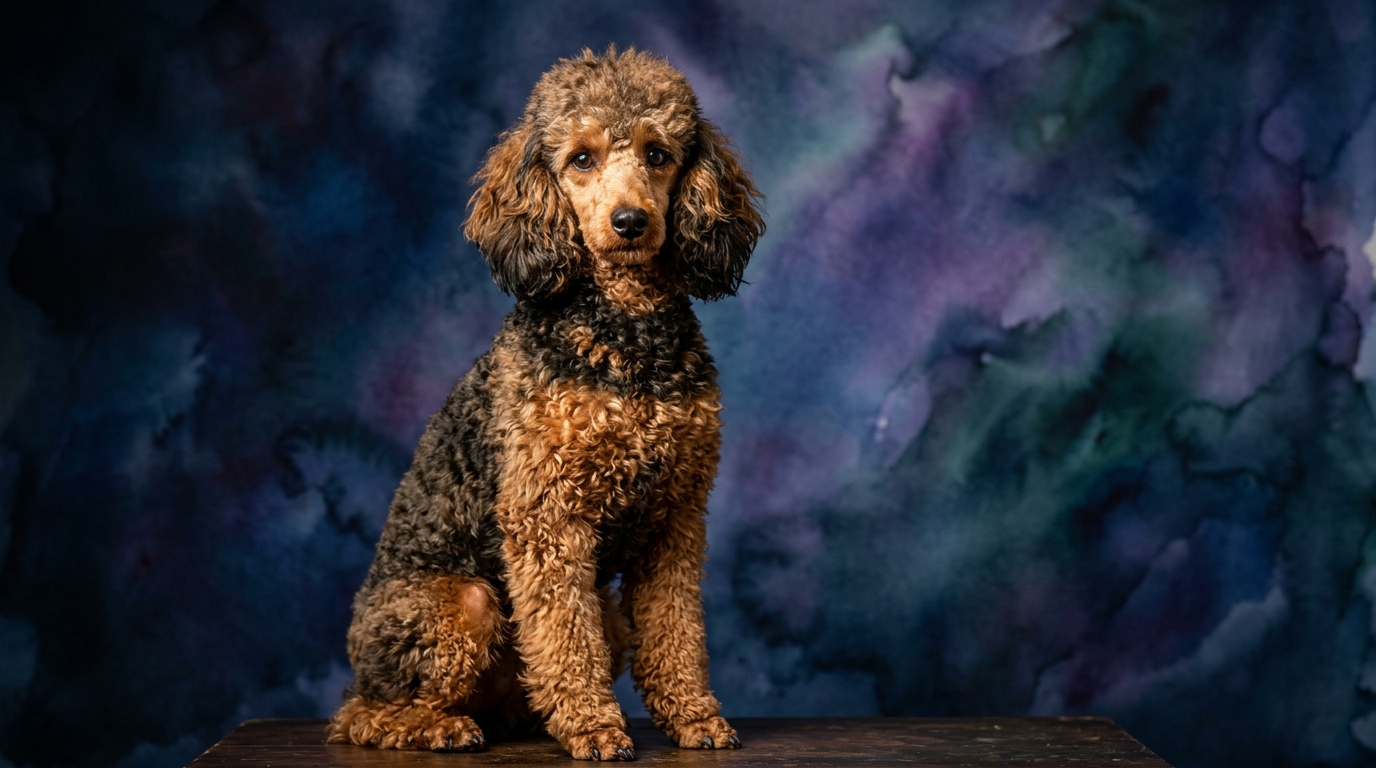
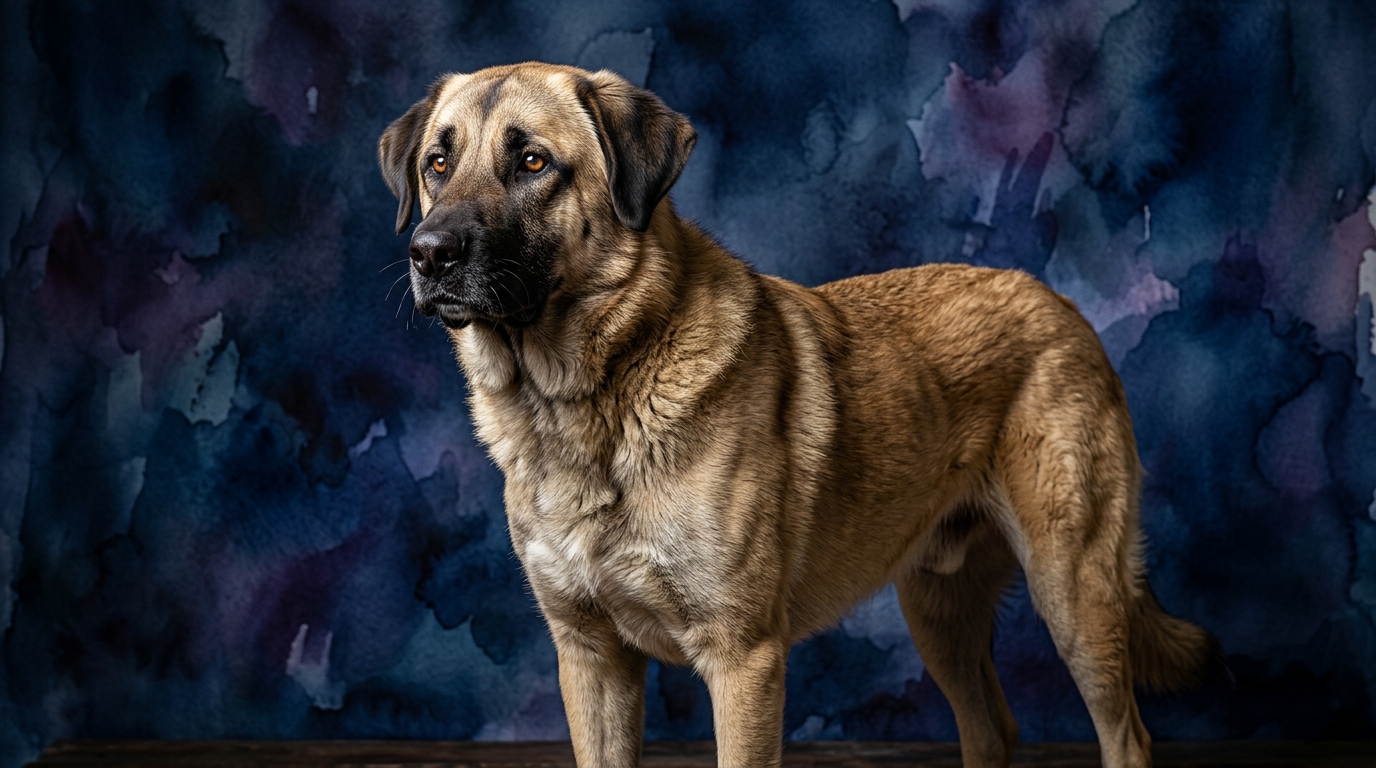
Side-by-Side IQ Profile: Poodle (Standard) vs. Anatolian Shepherd Dog
The Cosmic Pet Pet IQ Lab assesses canine intelligence across five critical dimensions, providing a nuanced understanding of each breed's cognitive strengths. The Standard Poodle, a breed renowned for its versatility and historical roles from water retriever to circus performer, consistently demonstrates a broad spectrum of cognitive excellence, reflected in its Coren rank of #2 among working dogs.
In contrast, the Anatolian Shepherd Dog, an ancient livestock guardian breed, exhibits a specialized intelligence tailored to its millennia-old purpose. While not included in Coren's traditional ranking, its IQ profile reveals a distinct set of cognitive priorities that emphasize independent judgment and protective instincts over human-directed obedience.
For the Poodle (Standard): Problem Solving 5/5 – these dogs excel at figuring out novel challenges, adapting strategies, and mastering complex tasks, whether it’s navigating an agility course or deciphering a puzzle toy. Training Speed 5/5 – they pick up new commands and routines with exceptional rapidity, often requiring very few repetitions to achieve mastery. Social Intelligence 5/5 – Poodles possess a profound ability to interpret human emotions, intentions, and subtle social cues, making them remarkably empathetic and responsive companions. Instinctive Drive 4/5 – while not a primary scent hound or retriever in the traditional sense, their drive is strongly channeled into engagement, play, and participation in human-led activities, often manifesting as a keen desire to work alongside their people. Memory 5/5 – their capacity for recall is outstanding, allowing them to retain vast repertoires of commands, routines, and experiences over long periods, facilitating advanced training and complex behavioral patterns.
For the Anatolian Shepherd Dog: Problem Solving 3/5 – their problem-solving is primarily geared towards independent decision-making within their guardian role, such as assessing threats to their flock or territory and devising appropriate responses without constant human direction. Training Speed 3/5 – these dogs learn at a moderate pace, often requiring more patience and consistency; they are less driven by a desire to simply 'please' and more by an understanding of the command's purpose and its relevance to their duties. Social Intelligence 3/5 – their social intelligence focuses on understanding the dynamics of their 'flock' (be it livestock or family), discerning friend from foe, and maintaining order, rather than overtly seeking human approval or companionship outside their trusted circle. Instinctive Drive 3/5 – their predominant drive is their deep-seated guardian instinct – patrolling, watching, and protecting their charges with unwavering dedication, a drive that is self-directed and less about engaging in human-initiated games. Memory 3/5 – they possess a functional memory for their territory, their charges, and established routines, remembering who belongs and who does not, which is crucial for their protective duties, though not necessarily for learning a wide array of tricks.
Where Poodle (Standard) Wins Cognitively
The Standard Poodle's cognitive superiority is evident in its comprehensive adaptability and rapid learning across diverse scenarios. Its 5/5 Problem Solving allows it to excel in canine sports like obedience, agility, and rally, where complex sequences and novel obstacles require quick, strategic thinking. For example, a Poodle can quickly learn to navigate a multi-stage obstacle course, remember the order, and adjust its approach if a mistake is made, showcasing its dynamic cognitive flexibility. This breed's exceptional 5/5 Training Speed means it can master a new command, such as 'weave poles' or a complex scent discrimination task, in significantly fewer repetitions than many other breeds. They absorb information quickly, eager to process and execute new directives, which is invaluable for advanced training and service work. Furthermore, their 5/5 Social Intelligence allows them to pick up on subtle human cues, anticipate needs, and adapt their behavior to different social contexts, whether comforting a patient in a therapy setting or performing alongside a handler in a competitive arena. This deep understanding of human interaction, combined with their 5/5 Memory, enables them to build a vast repertoire of learned behaviors and social etiquette, making them incredibly versatile companions and working partners.
Where Anatolian Shepherd Dog Wins Cognitively
While the Anatolian Shepherd Dog's IQ scores may appear lower in a human-centric comparison, their cognitive strengths are profoundly specialized for their ancient role. Their 3/5 Problem Solving is highly effective in real-world guardian scenarios; an Anatolian can independently assess a potential threat to its flock, determine the best course of action—whether to bark, posture, or intervene—and execute it without awaiting human instruction. This isn't about solving a puzzle box, but about making life-or-death decisions in an autonomous manner. The 3/5 Instinctive Drive is not a deficit, but a deeply ingrained, self-directed motivation for vigilance and protection. This drive means they are constantly aware of their surroundings and their charges, operating on an internal compass that prioritizes safety and security above all else. Their 3/5 Social Intelligence, though not focused on charming humans, is adept at understanding the dynamics within a flock or family unit, discerning normal behavior from unusual patterns, and recognizing who belongs and who does not. This discernment is critical for their guardian duties, allowing them to form strong, protective bonds with their designated family or livestock while maintaining a wary distance from strangers. Their 3/5 Memory, while not geared toward remembering countless tricks, is robust for recalling territory boundaries, routines of their charges, and past encounters, which is essential for consistent, long-term guardianship.
Which Is Easier to Train and Why
Based on their respective IQ profiles, the Poodle (Standard) is unequivocally easier to train for human-directed tasks. Its 5/5 Training Speed and 5/5 Social Intelligence mean it is highly motivated to engage with its handler, quick to understand commands, and eager to please. Real behavioral differences manifest in a Poodle’s willingness to repeat actions for positive reinforcement, its ability to quickly generalize learned behaviors to new environments, and its natural inclination to seek human guidance. They thrive on structured training, often viewing it as a stimulating game, and respond well to varied rewards, from treats to praise to play. For example, teaching a Poodle a complex obedience routine involves breaking it down into smaller steps, which they rapidly grasp and link together, often completing the full sequence with enthusiasm after just a few sessions. In contrast, the Anatolian Shepherd Dog's 3/5 Training Speed and 3/5 Social Intelligence mean training requires a different approach. They are not inherently driven to "please" humans in the same way; instead, they need to understand the *reason* behind a command and perceive its value or necessity. Their independent nature often translates to a perceived stubbornness, but it is more accurately described as self-reliance and a preference for making their own judgments. Consistent, patient training with clear boundaries and positive reinforcement is crucial, but progress will be slower, and they may not always comply with commands if they deem them unnecessary or contrary to their guardian instincts. For instance, teaching an Anatolian to recall away from a perceived threat to its territory will be a far greater challenge than teaching a Poodle to recall from a dog park, as the Anatolian's deep-seated instincts will often override human directives.
Which Suits Active Owners vs. Relaxed Owners
The Poodle (Standard) is far better suited for active, engaged owners who are prepared to provide consistent mental and physical stimulation. Their high Problem Solving, Training Speed, and Instinctive Drive mean they thrive on activities like dog sports (agility, obedience, dock diving), advanced trick training, and even service or therapy work. A Poodle needs daily opportunities to engage its sharp mind and expend its considerable energy; a relaxed owner who provides minimal interaction or stimulation will likely find themselves with a bored, potentially destructive, or anxious companion. They enjoy being an integral part of family activities and require owners who are committed to channeling their cognitive prowess and physical vigor into constructive outlets.
Conversely, the Anatolian Shepherd Dog is not a breed for relaxed owners seeking an easy pet. While their physical activity needs can be moderate once mature, their cognitive and instinctive needs are profound and specific. They require experienced owners who understand the nuances of independent guardian breeds and can provide a clear purpose, whether that's actual livestock guarding or being a vigilant protector of a large property and family. A 'relaxed' owner who expects an Anatolian to be an easily managed, highly obedient companion will be met with frustration due to the breed's self-reliant nature and strong territorial instincts. They need owners who respect their independence, provide consistent leadership without being overbearing, and are prepared for a dog that will often make its own decisions based on its deeply ingrained guardian drive.
The Verdict
Choose the Poodle (Standard) if you seek a highly adaptable, trainable, and engaging companion eager to participate in diverse activities and bond closely through shared mental and physical challenges.
Opt for the Anatolian Shepherd Dog if you are an experienced owner seeking a supremely independent, dedicated guardian with a strong protective instinct, valuing self-reliance and purposeful vigilance over human-directed obedience.
🧠 Find Your Pet's IQ Score
Our Pet IQ Lab assessment covers 25+ tests across 5 cognitive dimensions — personalized to your breed.
Take the Full IQ Test →Frequently Asked Questions
Are Anatolian Shepherd Dogs difficult to train?
Anatolian Shepherd Dogs are not 'difficult' in the sense of being unintelligent, but their training requires patience, consistency, and a deep understanding of their independent, guardian temperament. They learn at a moderate pace and respond best when they understand the purpose of a command, rather than merely wanting to please.
Can a Poodle (Standard) be a good guard dog?
While Poodles possess a respectable instinctive drive and can be alert watchdogs, their primary cognitive strengths lie in adaptability and human-focused engagement rather than independent guardianship. They will certainly alert you to strangers, but they lack the Anatolian's inherent, self-directed protective instincts for deterrence and intervention.
Do Anatolian Shepherd Dogs need a lot of mental stimulation?
Anatolian Shepherd Dogs require mental stimulation, but it differs significantly from a Poodle's needs. Their stimulation comes from patrolling their territory, observing their surroundings, and assessing potential threats. They thrive when they have a job, even if that job is simply being a vigilant presence, rather than through complex puzzle toys or obedience routines.