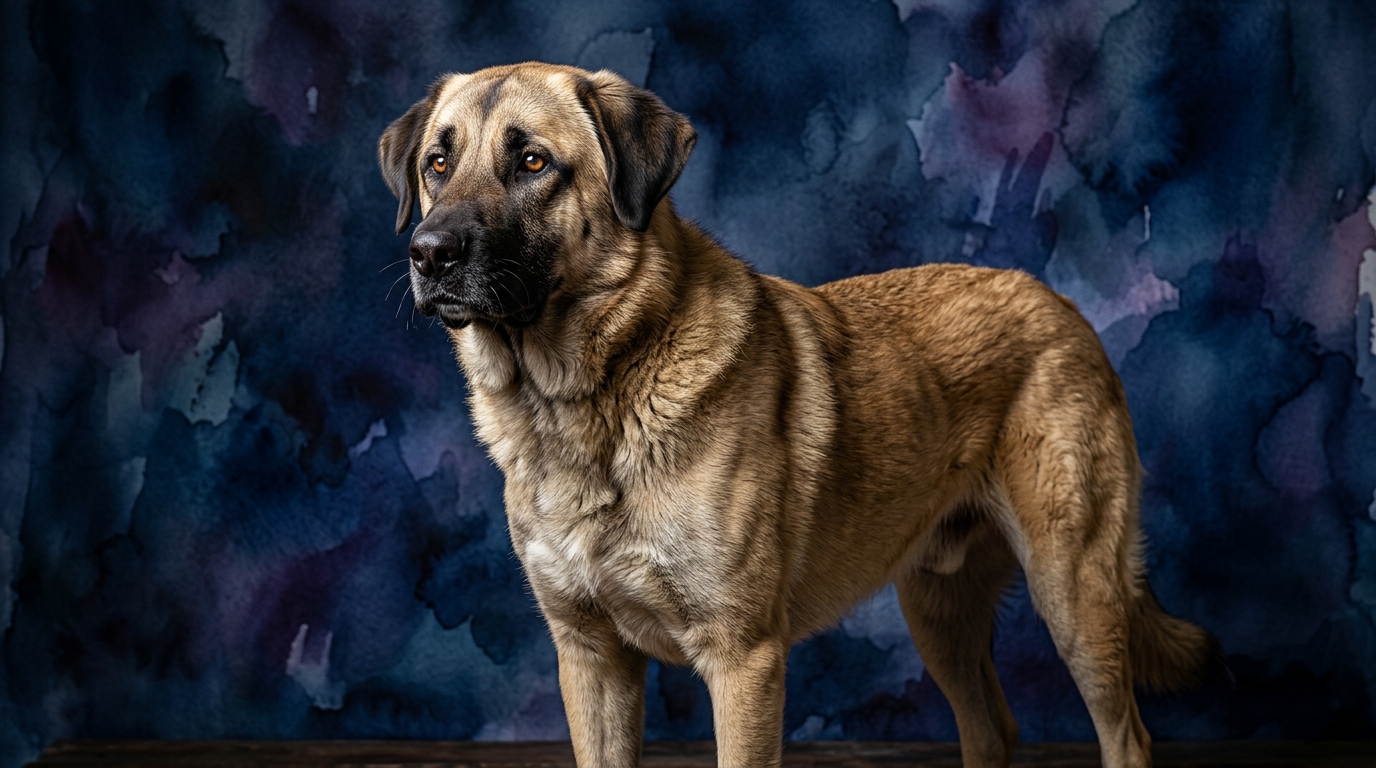
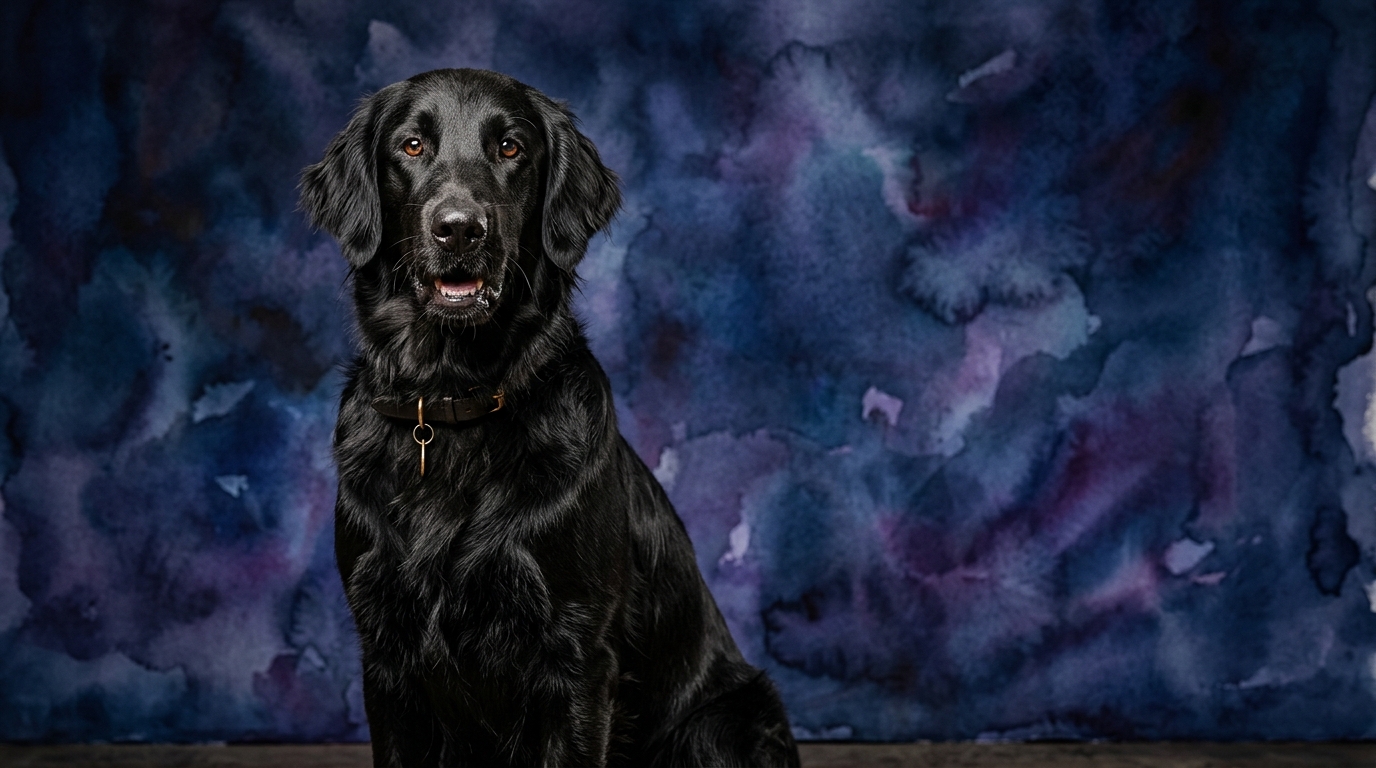
Side-by-Side IQ Profile: Anatolian Shepherd Dog vs. Flat-Coated Retriever
The Cosmic Pet Pet IQ Lab employs five distinct dimensions to map a breed's cognitive landscape, offering a nuanced view beyond simple obedience. For the Anatolian Shepherd Dog (ASD), a working breed, its profile reflects millennia of autonomous guardianship. Its Problem Solving is rated at 3/5, indicating an ability to independently assess environmental challenges and devise solutions, often in the context of threat deterrence. Training Speed is 3/5, suggesting a deliberate learning pace, influenced by its self-reliant nature. Social Intelligence stands at 3/5, demonstrating an astute ability to discern intent and maintain calm within its established group, though often reserved with outsiders. Instinctive Drive is 3/5, rooted in a powerful urge to survey, patrol, and defend its charges. Finally, Memory is 3/5, sufficient for recalling territory, familiar individuals, and practical routines essential for its role.
In contrast, the Flat-Coated Retriever (FCR), a sporting breed with a Coren ranking of #17, presents a profile geared towards cooperative engagement. Its Problem Solving is 4/5, showing a more proactive and collaborative approach to figuring out tasks, often involving human partnership. Training Speed is 4/5, signifying a quicker grasp of new commands and concepts, fueled by a desire to please. Social Intelligence, also 3/5, manifests as an outgoing and friendly demeanor, readily forming bonds and adapting to social situations. Instinctive Drive is 3/5, primarily focused on retrieving, an innate urge to fetch and return objects. The Flat-Coated Retriever truly shines in Memory, scoring an exceptional 5/5, indicating an outstanding capacity to retain complex sequences, locations, and learned behaviors over extended periods.
Where the Anatolian Shepherd Dog Wins Cognitively
The Anatolian Shepherd Dog's cognitive strengths are profoundly shaped by its ancient role as a livestock guardian, making it a master of independent decision-making in high-stakes environments. Its Problem Solving (3/5) is less about performing tricks and more about evaluating genuine threats to its flock or family, then autonomously devising and executing a protective strategy without direct human command. This mental resilience and self-reliance mean they excel at making on-the-spot judgments regarding perceived dangers, often anticipating issues before they fully develop, a critical trait for a guardian operating alone in vast landscapes.
Furthermore, the Anatolian's Instinctive Drive (3/5) and moderate Memory (3/5) combine to create a remarkable strategic vigilance and territorial awareness. They possess an internal map of their domain, coupled with an acute understanding of the regular patterns of their charges. This allows them to swiftly detect anomalies and remember specific threats or safe individuals, shaping their future responses with a deeply ingrained, practical wisdom. Their cognitive prowess lies in their ability to maintain a constant, intelligent vigil, identifying and mitigating risks with an unwavering, self-directed focus that few other breeds can match.
Where the Flat-Coated Retriever Wins Cognitively
The Flat-Coated Retriever excels in cognitive domains that emphasize cooperative work and rapid learning, making them highly adaptable partners. Their superior Training Speed (4/5) and Problem Solving (4/5) are evident in their eagerness to engage with humans to figure out tasks, quickly understanding complex instructions and applying them to new situations. This mental agility allows them to process information rapidly and apply learned principles to novel challenges, making them exceptionally versatile learners in structured environments, whether for retrieving, agility, or advanced obedience.
A standout cognitive advantage for the Flat-Coated Retriever is its exceptional Memory (5/5). This isn't merely about remembering a single command; it extends to recalling intricate sequences of actions, the precise location of multiple fallen retrieves, or retaining learned behaviors over long durations with remarkable consistency. This superior recall is invaluable for tasks demanding precise, error-free execution over time, such as navigating complex field tests or mastering competitive obedience routines. Their ability to reliably remember and retrieve detailed information gives them a significant edge in performance-based roles where precision and consistency are paramount.
Which is Easier to Train and Why
For a typical companion dog owner, the Flat-Coated Retriever is generally easier to train, a direct result of its higher scores in Training Speed (4/5) and its inherently cooperative nature. Flat-Coats were specifically developed to work closely with humans, demonstrating a pronounced desire to please and an eagerness to engage in interactive learning. They swiftly form associations between commands, actions, and rewards, making them highly responsive to positive reinforcement methods and consistent instruction. Their social intelligence, while rated similarly to the Anatolian at 3/5, manifests as a more outgoing and handler-focused demeanor, translating into an attentiveness to human cues that facilitates efficient training.
In contrast, the Anatolian Shepherd Dog's more deliberate Training Speed (3/5) and profound independence present a different training challenge. While certainly capable of learning, Anatolians often evaluate commands through the lens of their guardian instincts, sometimes prioritizing their own judgment and perceived necessities over immediate compliance. Their training demands immense patience, unwavering consistency, and a deep understanding of their inherent self-reliance and protective motivations. This makes them less suited for novice trainers seeking rapid results or a dog that will blindly follow every command. The Flat-Coat's readiness to participate and retain complex information (Memory 5/5) means they typically progress through training stages with greater fluidity and sustained enthusiasm, making the training journey smoother for many owners.
Which Suits Active Owners vs. Relaxed Owners
The ideal owner for each breed is largely dictated by their distinct cognitive profiles and intrinsic drives. The Flat-Coated Retriever is an excellent match for active owners who genuinely enjoy engaging with their dog in a variety of activities. Their strong instinctive drive (3/5) for retrieving, coupled with their cooperative problem-solving (4/5) and exceptional memory (5/5), means they thrive on structured activities such as obedience, agility, field work, or even long, mentally stimulating hikes. These dogs need a 'job,' whether formal or informal, and an owner who is willing to be an active, consistent participant in their daily mental and physical stimulation. Their exuberance and desire for interaction demand consistent engagement; they are not content with a sedentary lifestyle and will actively seek interaction.
Conversely, the Anatolian Shepherd Dog, while needing regular exercise, is better suited for owners who appreciate a more independent and watchful companion, ideally within a larger, rural or semi-rural setting. Their cognitive strengths are rooted in autonomous decision-making and territorial guardianship, rather than constant direct human interaction for task completion. They are not dogs that demand constant boisterous play in the same manner a retriever does; their 'work' often manifests as a quiet, observant patrol. Owners must be prepared for a dog that thinks for itself and may not always be eager for typical games. A 'relaxed owner' in this context isn't someone who is inactive, but rather someone who understands and respects the Anatolian's self-sufficient nature, providing a secure environment where their guarding instincts can be fulfilled without over-stimulation or constant direct supervision. They suit owners who are patient, consistent, and understand the nuances of a working guardian breed's independence.
The Verdict
Select an Anatolian Shepherd Dog if you seek an independent, watchful guardian with a profound sense of territory, and you are prepared for a dog that relies on its own judgment in critical situations. This breed thrives with patient, experienced owners who appreciate their self-reliant nature and can provide a consistent, structured environment for their unique cognitive profile.
Opt for a Flat-Coated Retriever if you desire an enthusiastic, cooperative companion eager to learn and participate in joint activities, offering exceptional memory and a quick grasp of new concepts. This breed is ideal for active owners who can channel their exuberance into engaging training, sports, and outdoor adventures, fostering a close working partnership.
🧠 Find Your Pet's IQ Score
Our Pet IQ Lab assessment covers 25+ tests across 5 cognitive dimensions — personalized to your breed.
Take the Full IQ Test →Frequently Asked Questions
Is the Anatolian Shepherd Dog difficult to train?
While not 'difficult' in the sense of inability, the Anatolian Shepherd's training requires significant patience and consistency due to their independent nature and deliberate training speed. They learn best with an understanding of their guardian instincts and a firm, fair approach that respects their self-reliant decision-making.
How much mental stimulation does a Flat-Coated Retriever need?
Flat-Coated Retrievers require substantial mental stimulation daily to thrive. Their high problem-solving abilities and exceptional memory mean they benefit greatly from activities like puzzle toys, obedience training, scent work, and interactive games that challenge their intellect.
Can an Anatolian Shepherd Dog live in an urban environment?
Living in an urban environment can be challenging for an Anatolian Shepherd Dog due to their strong territorial instincts and need for space. Their cognitive profile is geared towards surveying and protecting a large area, which can lead to stress or behavioral issues if not adequately managed in a confined, high-traffic setting.