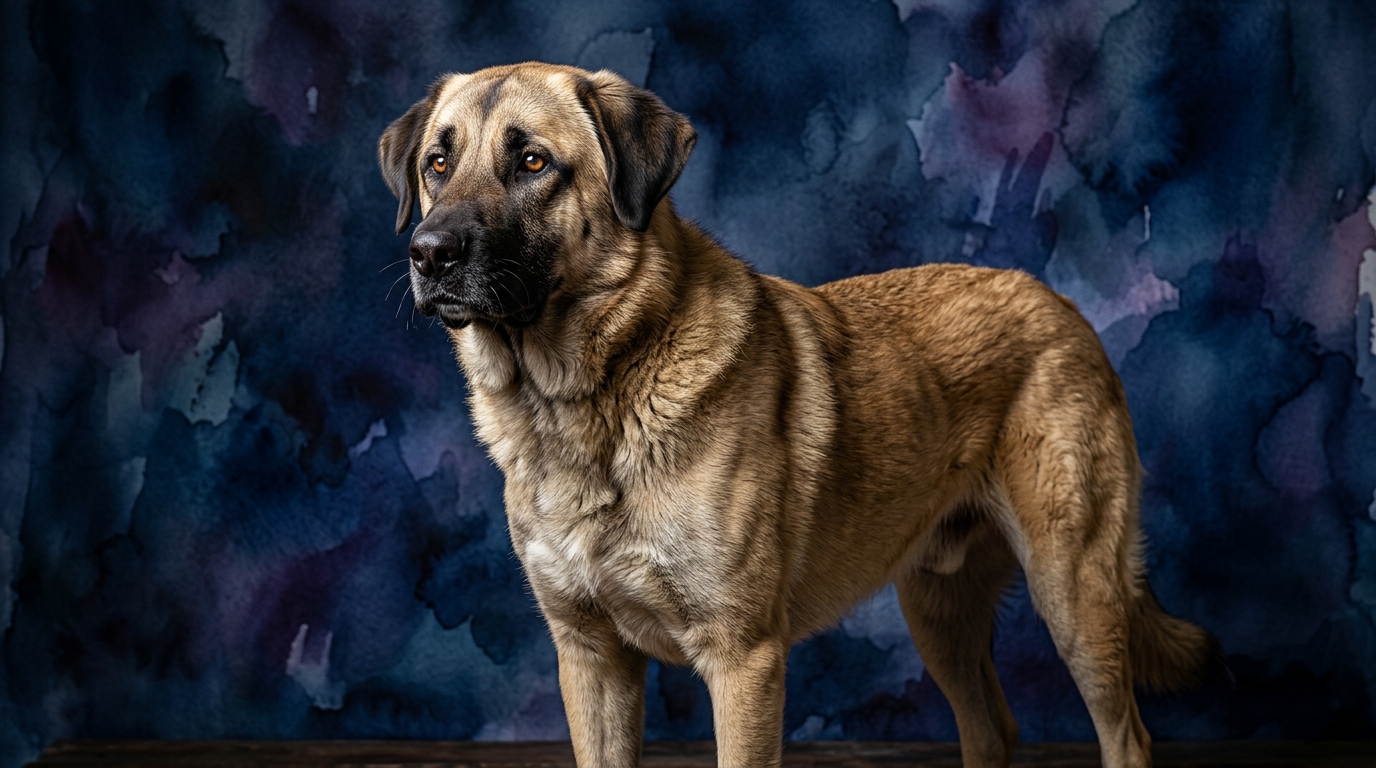
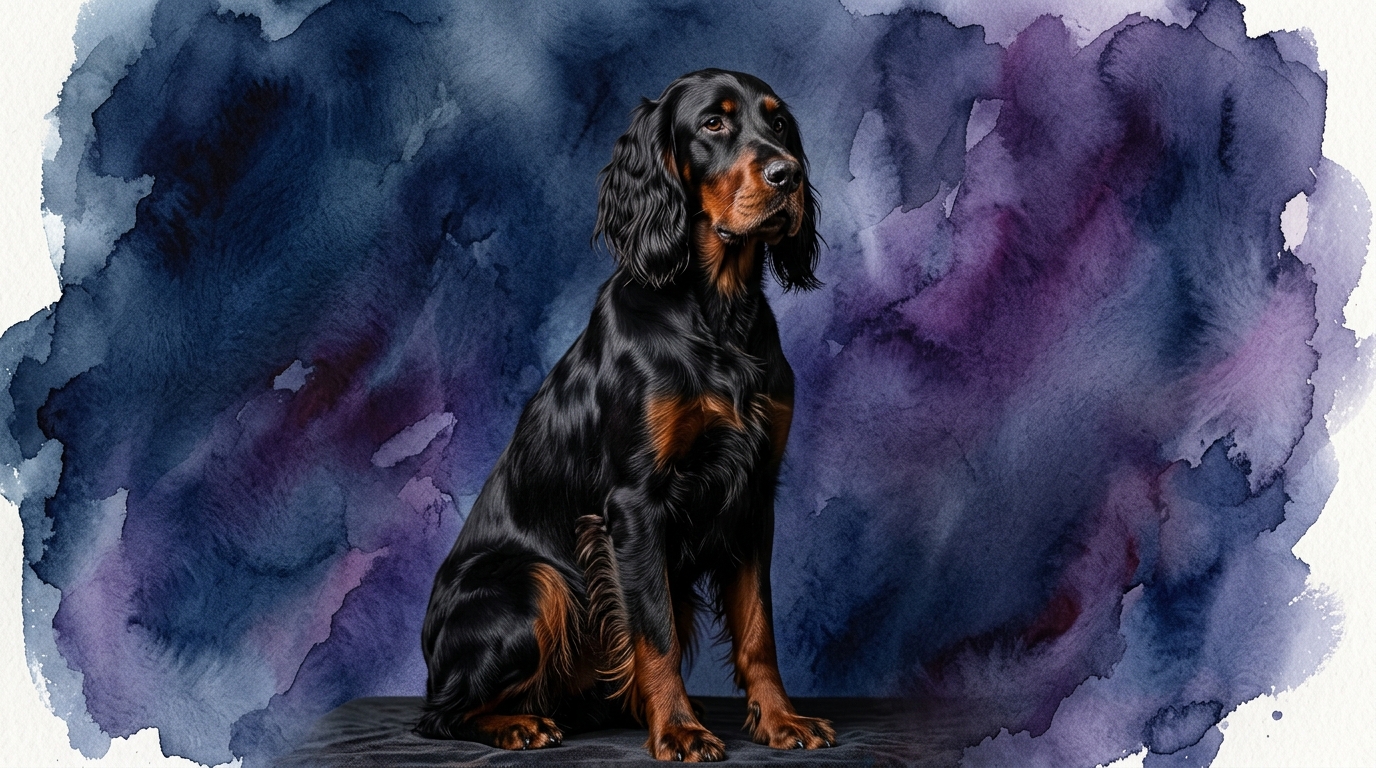
Side-by-side IQ profile
The Cosmic Pet Pet IQ Lab assesses five dimensions of canine intelligence, revealing nuanced cognitive landscapes for each breed. The Anatolian Shepherd Dog, a formidable livestock guardian, demonstrates a Problem Solving score of 3/5, indicating a practical, independent approach to challenges within its protective domain. Its Training Speed stands at 3/5, suggesting it learns at a steady pace but often requires consistent, patient guidance, reflecting its self-reliant nature. Social Intelligence is also 3/5, pointing to a breed that understands its pack (human family and livestock) but is typically reserved or watchful with outsiders. Its Instinctive Drive is a strong 3/5, specifically geared towards territorial defense and livestock protection. Memory, at 3/5, means it retains information adequately for its duties, remembering threats and established routines.
In contrast, the Gordon Setter, a refined sporting dog, showcases an elevated Problem Solving score of 4/5, indicating a greater aptitude for figuring out complex tasks, particularly those involving cooperative effort with a handler. Its Training Speed is 4/5, highlighting a capacity for quicker learning and a generally more eager response to instruction. Social Intelligence matches the Anatolian at 3/5, as it typically forms strong bonds with its family but can be somewhat reserved when encountering new people. The Instinctive Drive for the Gordon Setter is also 3/5, deeply rooted in its gundog heritage—pointing, flushing, and retrieving game. Its Memory score is 4/5, suggesting a superior ability to recall commands, sequences, and specific locations, crucial for its role in the field.
Where Anatolian Shepherd Dog wins cognitively
The Anatolian Shepherd Dog truly shines in cognitive dimensions that demand independent decision-making and self-sufficiency. Its Problem Solving at 3/5, while not the highest, is highly specialized: it excels at assessing potential threats to its flock or territory and formulating a response without direct human command. This breed processes environmental cues to determine the appropriate level of intervention, from a warning bark to a physical confrontation, a complex cognitive chain executed autonomously. Its inherent Instinctive Drive for guardianship means it's constantly "on duty," mentally mapping its territory and the well-being of its charges. The Anatolian's cognitive strength lies in its ability to patiently observe, analyze, and act decisively in solitary situations, making it a master of independent protection, a skill born from centuries of working alone in vast landscapes.
Where Gordon Setter wins cognitively
The Gordon Setter's cognitive strengths are deeply intertwined with its cooperative role as a gundog. Its Problem Solving at 4/5 indicates a superior capacity for tasks requiring strategy and precise execution in partnership with a human. This includes navigating varied terrains to locate game, understanding wind direction, and interpreting subtle handler signals—all requiring active mental engagement. The Gordon Setter's higher Training Speed (4/5) means it can quickly grasp complex chains of commands and apply them efficiently. Its superior Memory (4/5) is particularly advantageous, allowing it to remember specific scent trails, fall locations of birds, and a vast repertoire of trained behaviors. This breed excels at processing and acting upon information received from its environment and its human partner, demonstrating a cognitive agility geared towards collaborative success in demanding field conditions.
Which is easier to train and why
When considering ease of training, the Gordon Setter generally presents a more straightforward path. Their Training Speed of 4/5 and Problem Solving of 4/5 indicate a quicker grasp of new commands and a greater inclination to work cooperatively with their human partners. Gordon Setters were bred to respond to intricate cues and work in tandem with hunters, fostering a strong desire to please and a high level of focus during training sessions. They typically thrive on positive reinforcement and consistent, structured learning, quickly forming associations between actions and rewards.
The Anatolian Shepherd Dog, with a Training Speed of 3/5, requires a different approach. Their historical role as independent livestock guardians means they were not bred to take constant direction from humans but rather to make their own decisions. This translates into a strong-willed nature where they might evaluate a command's necessity before complying. Training an Anatolian demands immense patience, consistency, and an understanding of their deep-seated independence. They learn, but their compliance is often predicated on respect and their own assessment of the situation, rather than an inherent desire to please. Owners must build a strong foundation of trust and demonstrate clear, fair leadership to guide an Anatolian effectively.
Which suits active owners vs relaxed owners
The Gordon Setter is unequivocally suited for active owners. Their Sporting group heritage means they possess considerable stamina and a deep-seated need for both physical exertion and mental engagement. Owners who enjoy long hikes, running, dog sports like agility or obedience, or even hunting will find a Gordon Setter to be an enthusiastic and capable partner. Their cognitive abilities thrive with structured activities that challenge both their bodies and minds, preventing boredom and potential behavioral issues. A "relaxed" owner, in the sense of offering minimal exercise or mental stimulation, would likely find a Gordon Setter restless and potentially destructive.
The Anatolian Shepherd Dog, while a large and powerful breed, doesn't necessarily demand the same type of high-intensity, continuous physical activity as a Gordon Setter. Their activity often involves patrolling, observing, and moving with purpose rather than sustained running. However, this does not mean they are suited for truly "relaxed" owners. They require significant mental stimulation related to their guarding instincts, ample space to observe, and consistent, firm guidance. Owners must be "active" in terms of providing purpose, mental challenges, and consistent training, even if the physical output isn't a daily marathon. An owner without property to guard or a clear job for the Anatolian would need to be very creative in providing suitable outlets for their Instinctive Drive, making them unsuitable for passive companionship in a small urban setting.
The Verdict
For those seeking a highly cooperative, responsive companion eager for structured activities and complex training, the Gordon Setter is the clear choice.
If your lifestyle involves independent guardianship, a need for self-reliant decision-making in a protective role, and you appreciate a dog that thinks for itself, the Anatolian Shepherd Dog is the better match.
🧠 Find Your Pet's IQ Score
Our Pet IQ Lab assessment covers 25+ tests across 5 cognitive dimensions — personalized to your breed.
Take the Full IQ Test →Frequently Asked Questions
Are Anatolian Shepherd Dogs good with children?
Anatolian Shepherds can be good with children in their own family, especially if raised with them, showing a protective instinct. However, their size and independent nature mean careful supervision and early socialization are essential, and they may be wary of unfamiliar children.
How much exercise does a Gordon Setter need daily?
Gordon Setters require substantial daily exercise, typically at least one to two hours of vigorous activity, such as running, brisk walking, or active play. Without adequate outlets for their energy, they can become restless and develop undesirable behaviors.
What kind of mental stimulation benefits an Anatolian Shepherd Dog?
Anatolian Shepherds benefit most from mental stimulation that taps into their guarding instincts, such as patrolling a secure yard, supervised "watchdog" duties, or problem-solving games that allow for independent thought. Consistent, fair obedience training also provides valuable mental engagement.