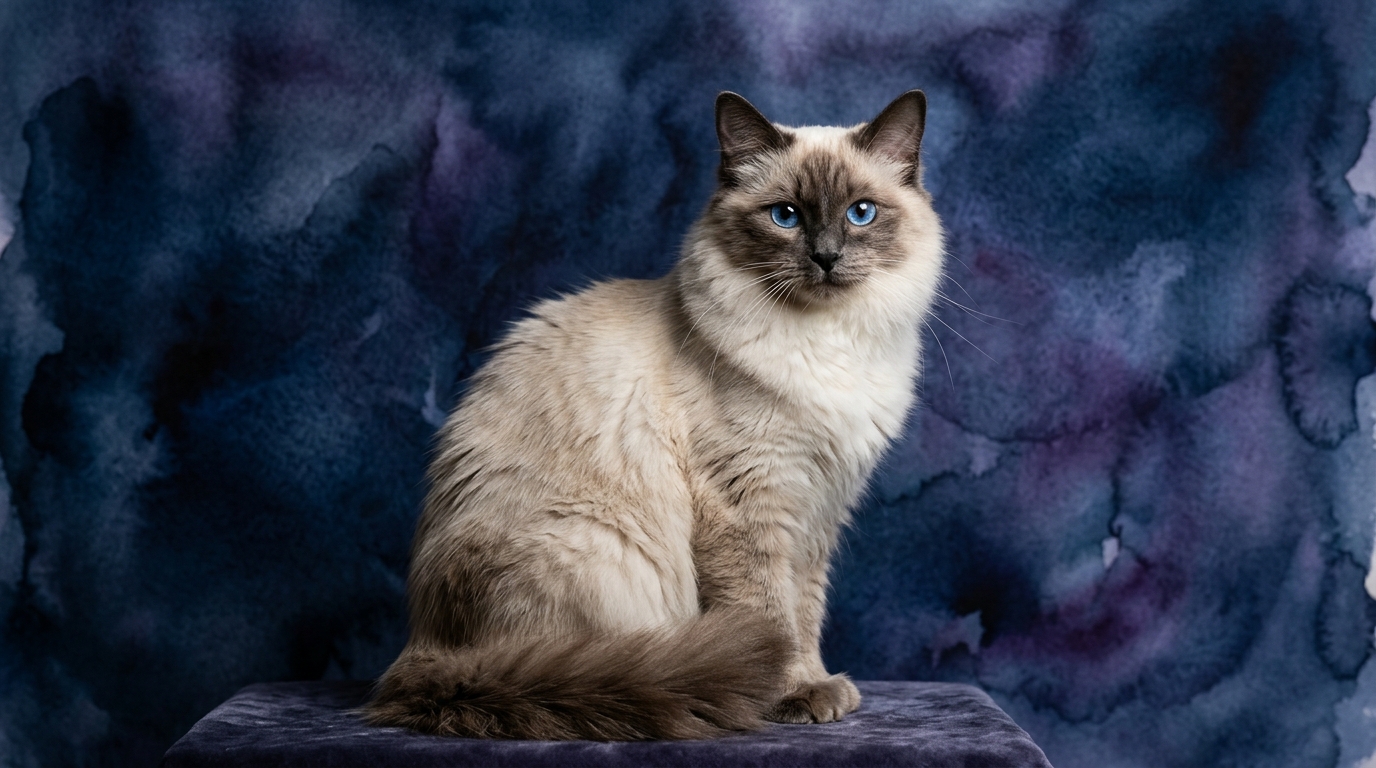

The Cosmic Pet Pet IQ Lab: Balinese vs. Birman Cognitive Profiles
At The Cosmic Pet Pet IQ Lab, we analyze feline intelligence across five key dimensions to provide a nuanced understanding of each breed's mental capabilities. For the Balinese, a graceful and vocal cat, its cognitive scores paint a picture of an engaged and adaptable mind. Its Problem Solving is rated at 4/5, indicating a strong capacity to navigate complex situations and figure out solutions independently. Training Speed, an impressive 5/5, suggests a remarkable aptitude for learning new commands and routines with minimal repetition. Social Intelligence, also 5/5, highlights its profound ability to understand and respond to human emotions and social cues, fostering deep connections. Instinctive Drive stands at 3/5, reflecting a balanced but not overwhelming inclination towards innate hunting or exploratory behaviors. Finally, Memory, at 4/5, points to a solid ability to recall past experiences, learned behaviors, and even specific people or places.
In contrast, the Birman, known for its gentle nature and striking blue eyes, presents a different cognitive landscape. Its Problem Solving scores 3/5, indicating a moderate capacity for tackling novel challenges, often preferring familiar routines. Training Speed, at 3/5, suggests a steady but perhaps less rapid pace of learning compared to its Balinese counterpart, requiring more consistent effort. Social Intelligence also registers 3/5, meaning Birmans connect warmly with their families but might not display the same intricate understanding of human nuances as the Balinese. Instinctive Drive is rated 3/5, matching the Balinese in a moderate expression of natural feline instincts. Memory, like its problem-solving and social scores, sits at 3/5, signifying a competent but not exceptional ability to retain information over time.
Where the Balinese Cognitively Excels
The Balinese cat demonstrates clear cognitive advantages across several critical dimensions, making it a particularly engaging and interactive companion. Its superior Problem Solving score of 4/5 means a Balinese is more likely to independently figure out how to open a cabinet, retrieve a hidden toy, or even manipulate a door handle. This isn't just about curiosity; it's about a sustained mental effort to achieve a goal, suggesting a cat that thrives on mental stimulation and can overcome environmental obstacles. Owners might observe a Balinese systematically trying different approaches to access an interesting item or escape a confined space.
Furthermore, the Balinese's perfect 5/5 in both Training Speed and Social Intelligence sets it apart. This combination means a Balinese not only picks up new tricks and commands at an accelerated rate but also keenly understands and responds to its owner's moods, gestures, and vocalizations. They are adept at reading body language, often anticipating requests or offering comfort when sensing distress. This translates into a cat that can be taught complex routines, participate in interactive games requiring specific actions, and form an exceptionally communicative bond with its human companions, often responding to their name or even short phrases with clear understanding. Their 4/5 Memory reinforces this, allowing them to retain these learned behaviors and social cues over extended periods.
Understanding the Birman's Cognitive Strengths
While the Birman's cognitive scores might not reach the peaks of the Balinese in areas like problem-solving or rapid training, its consistent 3/5 across most dimensions signifies a reliable and harmoniously balanced intellect, which is a strength in itself. A Birman's 3/5 in Problem Solving indicates it's less inclined to constantly test boundaries or invent new ways to interact with its environment. Instead, they often prefer established routines and predictable outcomes, contributing to their reputation as calm and composed companions. This isn't a lack of ability, but rather a preference for a more serene approach to daily life, making them less prone to mischievous 'problem-solving' that might challenge an owner's patience.
The Birman's 3/5 Social Intelligence means they are affectionate and enjoy interaction, forming strong, gentle bonds with their families without necessarily demanding constant, intricate communication. They are content with quiet companionship, offering a comforting presence rather than an overtly demonstrative one. Their moderate Instinctive Drive (3/5) ensures they retain healthy feline curiosity and playfulness without being overly driven by intense hunting urges or territorial behaviors, making them adaptable to indoor living. These scores collectively point to a cat that is intellectually present and responsive, but in a manner that prioritizes comfort, stability, and a less demanding form of engagement, which can be a significant advantage for certain households.
Trainability: Balinese vs. Birman
When it comes to trainability, the distinction between the Balinese and Birman is quite pronounced, rooted in their differing cognitive profiles. The Balinese, with its exceptional 5/5 Training Speed and 5/5 Social Intelligence, is arguably one of the most receptive feline breeds to formal training. This cat not only grasps new concepts and commands with remarkable swiftness but also possesses a keen desire to engage with and please its human companions. Owners can expect to teach a Balinese to fetch, walk on a leash, or perform various tricks relatively quickly, often requiring fewer repetitions than other breeds. Their high social intelligence means they are highly attuned to verbal cues and positive reinforcement, making the training process a collaborative and rewarding experience.
Conversely, the Birman, with a 3/5 Training Speed and 3/5 Social Intelligence, will require more patience and consistency in its training regimen. While capable of learning basic commands and litter box etiquette, a Birman might not pick up new behaviors as rapidly or with the same enthusiastic drive for interaction as a Balinese. Their more moderate social intelligence suggests they respond well to gentle encouragement but might not be as motivated by complex social interactions during training. Training a Birman will focus more on positive reinforcement and building trust through routine, rather than expecting them to quickly master a wide repertoire of tricks. This isn't to say they are untrainable, but rather that their learning style is more deliberate and less overtly performance-oriented.
Matching Cat to Lifestyle: Active vs. Relaxed Owners
The distinct cognitive profiles of the Balinese and Birman naturally align with different owner lifestyles, emphasizing the importance of choosing a companion whose needs match your capacity for engagement. An active owner, someone who thrives on interaction, mental stimulation, and perhaps even teaching their pet new skills, would find the Balinese an ideal match. Its high scores in Problem Solving, Training Speed, and Social Intelligence mean this cat requires consistent mental enrichment through puzzle toys, interactive play sessions, and regular 'conversations.' A Balinese left without sufficient engagement might become bored, potentially leading to inventive (and sometimes inconvenient) ways to entertain itself. They are companions for those who enjoy a lively, communicative, and intellectually stimulating presence in their home.
In contrast, a relaxed owner, someone who appreciates a calm, affectionate presence and a generally predictable home environment, would likely find the Birman more suitable. Its moderate scores across the board indicate a cat that is content with a more serene pace of life. While they enjoy attention and gentle play, Birmans don't typically demand constant mental challenges or intricate social interactions. They are excellent lap cats, happy to observe the household activities from a comfortable perch or curl up for extended periods of quiet companionship. For owners seeking a beautiful, devoted, and low-key feline friend that contributes to a peaceful atmosphere, the Birman offers a perfectly balanced cognitive and temperamental profile.
The Verdict
Choose a Balinese if you desire a highly interactive, quick-witted cat that thrives on mental challenges, enjoys learning, and engages in deep, communicative social bonds with its family.
Opt for a Birman if you prefer a gentle, serene companion that offers quiet affection, adapts well to a calm household, and provides a stable, comforting presence without demanding constant complex stimulation.
🧠 Find Your Pet's IQ Score
Our Pet IQ Lab assessment covers 25+ tests across 5 cognitive dimensions — personalized to your breed.
Take the Full IQ Test →Frequently Asked Questions
Are Balinese cats truly more social than Birmans?
Based on The Cosmic Pet Pet IQ Lab's assessment, Balinese cats score 5/5 in Social Intelligence compared to the Birman's 3/5. This indicates Balinese cats are generally more attuned to human emotions and social cues, often seeking out interaction and 'conversations' with their owners, while Birmans offer a more quietly affectionate and less demanding social presence.
Which breed is better for a first-time cat owner?
For a first-time cat owner seeking an easier entry into cat companionship, the Birman's balanced 3/5 scores in problem-solving and social intelligence might be more manageable. Its less demanding nature and preference for routine can be less overwhelming than the Balinese's high drive for interaction and mental stimulation, which requires a more experienced or dedicated owner to fulfill.
Do Balinese cats require more toys and enrichment than Birmans?
Yes, given the Balinese's 4/5 Problem Solving and 5/5 Training Speed, they typically require a greater variety and complexity of toys, puzzle feeders, and interactive play sessions to keep their minds engaged. Birmans, with their 3/5 scores in these areas, appreciate toys and play but generally don't demand the same level of constant mental challenge to stay content.