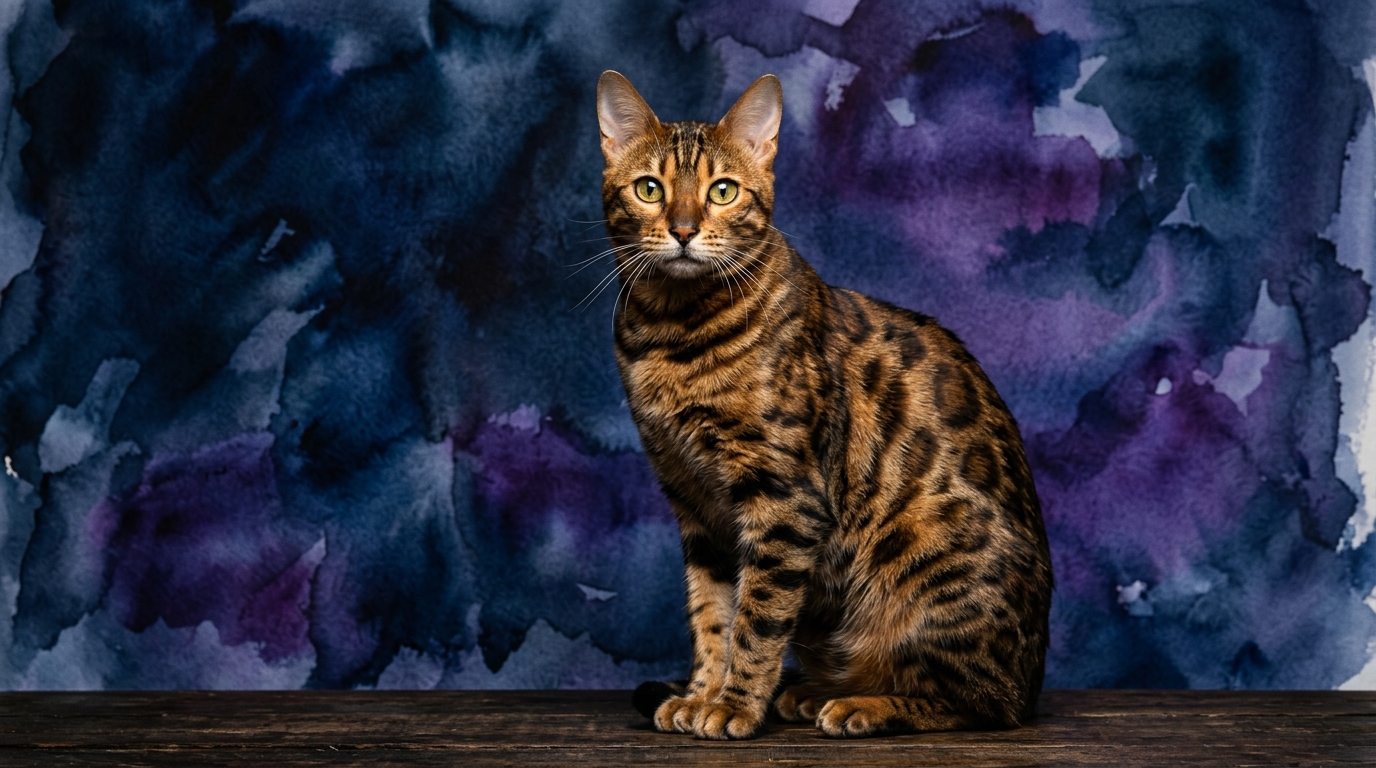

A Side-by-Side Look at Feline Cognition
The Bengal cat consistently demonstrates a remarkable cognitive profile, scoring 5/5 in Problem Solving, 4/5 in Training Speed, 4/5 in Social Intelligence, 5/5 in Instinctive Drive, and a perfect 5/5 in Memory. Their problem-solving prowess is often observed in manipulating complex objects or devising novel ways to access desired items, indicating strong executive function. Training speed is robust, allowing them to quickly grasp and retain commands, often enjoying structured learning.
Social intelligence in Bengals is marked by a sophisticated understanding of human cues and forming deep, interactive bonds, often initiating play. Their instinctive drive is exceptionally strong, reflecting wild ancestry in behaviors like hunting and exploring, demanding environmental enrichment. An outstanding memory enables recall of past experiences, routines, and locations with impressive accuracy, contributing to their complex, adaptable nature.
In contrast, the Birman cat presents a more moderate, yet charming, cognitive blueprint, with scores of 3/5 across all five dimensions: Problem Solving, Training Speed, Social Intelligence, Instinctive Drive, and Memory. Their problem-solving skills are typically less elaborate; Birmans might figure out simpler puzzles but are less inclined to invent intricate solutions. Training speed is steady, meaning they learn commands and routines at a pace requiring consistent reinforcement and patience.
Birman social intelligence shines through their gentle demeanor and capacity for affectionate, less demanding relationships, often preferring calm companionship. Their instinctive drive is moderate, expressed through typical cat behaviors without the intense, persistent focus seen in higher-scoring breeds. Finally, their functional memory allows them to remember routines and people, but perhaps without the intricate detail that characterizes breeds with a 5/5 rating, making them creatures of comfort and predictable habits.
Where the Bengal Excels Cognitively
The Bengal cat's cognitive strengths are particularly evident in their problem-solving and memory capabilities. A Bengal might systematically experiment with different methods to open a cabinet door, rather than simply batting at it, showcasing an advanced ability to analyze situations and apply learned solutions. Their 5/5 problem-solving score means they are adept at navigating complex environments or operating various household objects, reflecting strong mental mapping.
Their exceptional memory (5/5) underpins much of their problem-solving success and training potential. Bengals remember action sequences that led to a reward, allowing them to refine their approach over time. They can recall the exact location of a hidden treat from days prior or specific interactions, contributing to their responsive nature. This robust memory also supports their strong instinctive drive, as they can recall successful strategies, making them incredibly persistent.
Where the Birman Shines Cognitively
While the Birman's cognitive scores are moderate, their strengths lie in a different dimension of intelligence—one prioritizing emotional connection and gentle adaptability. Their 3/5 social intelligence translates into a profound capacity for empathetic interaction within their comfort zone. Birmans are acutely sensitive to their owner's moods, often providing quiet companionship or offering gentle head nudges, demonstrating nuanced understanding of social cues without complex behavioral displays.
Their moderate instinctive drive (3/5) means they are less prone to the intense, sometimes destructive, exploratory behaviors seen in higher-scoring breeds. Instead, their drives manifest in a more manageable, domestic way, such as enjoying a quiet bird-watching session or engaging in gentle play. This balanced instinctive drive, coupled with consistent memory and training speed, makes them exceptionally well-suited for a harmonious home life where predictability and calm interaction are valued over constant mental stimulation. They excel at being present, observant, and subtly responsive.
Training Dynamics: Bengal vs. Birman
Differences in training dynamics between Bengals and Birmans stem from their varied cognitive profiles. Bengals, with 4/5 training speed and 5/5 problem-solving, are eager students thriving on mental challenges. They pick up new commands and tricks rapidly, often enjoying complex tasks like leash training or agility. Their strong instinctive drive means they respond well to reward-based training that taps into their natural curiosity and desire for engagement, often seeking out training sessions as enrichment.
Conversely, Birmans (3/5 training speed) are trainable but require a more patient, consistent approach. They learn best through gentle repetition and positive reinforcement in a calm, predictable environment. While they may not master intricate tricks as quickly as a Bengal, they are perfectly capable of learning basic commands and acceptable household behaviors. Their moderate social intelligence makes them responsive to their owner's voice and demeanor, making training a bonding experience rather than a high-octane intellectual pursuit.
Suitability for Active vs. Relaxed Lifestyles
The Bengal cat is unequivocally suited for active owners who relish providing extensive mental and physical stimulation. Their 5/5 instinctive drive and problem-solving capabilities demand an environment rich with interactive toys, puzzle feeders, climbing structures, and opportunities for exploration, even supervised outdoor adventures. Owners enjoying teaching tricks and daily play sessions will find a Bengal a rewarding, albeit demanding, companion. Their high energy and curiosity mean they can become bored and potentially destructive if needs are not met, ideal for dynamic pet ownership.
The Birman, conversely, is an ideal match for relaxed owners seeking a calm, affectionate, and less demanding feline presence. Their moderate instinctive drive and problem-solving scores mean they are content with a more tranquil home environment, enjoying comfortable resting spots, gentle play, and ample cuddle time. While they appreciate interaction, they don't require constant engagement or complex mental puzzles. Owners preferring quiet companionship and predictable routines will find the Birman’s gentle nature a perfect fit, offering warmth without overwhelming demands.
The Verdict
Choose a Bengal if you are an active, engaged owner ready to provide consistent mental challenges, extensive play, and enjoy a highly interactive, problem-solving companion that thrives on learning and exploration.
Opt for a Birman if you seek a gentle, affectionate cat that offers calm companionship, fits well into a relaxed household, and appreciates predictable routines and quiet interaction without constant stimulation.
🧠 Find Your Pet's IQ Score
Our Pet IQ Lab assessment covers 25+ tests across 5 cognitive dimensions — personalized to your breed.
Take the Full IQ Test →Frequently Asked Questions
Do Bengals need more toys than Birmans?
Yes, Bengals typically require a wider variety and greater quantity of interactive toys, puzzle feeders, and climbing structures to satisfy their high problem-solving drive and strong instinctive need for mental and physical engagement. Birmans are generally content with simpler toys and less intense play.
Can a Birman learn tricks like a Bengal?
While a Birman can certainly learn tricks, their training speed and problem-solving capabilities are more moderate compared to a Bengal. They will respond best to patient, consistent, positive reinforcement for basic commands and simpler tricks, rather than complex sequences or agility work.
Are Bengals and Birmans equally good with other pets?
Bengals, with their high social intelligence and strong instinctive drive, can be good with other pets if properly socialized, often seeking interactive play. Birmans, known for their gentle and adaptable nature, typically integrate well into multi-pet households, preferring harmonious coexistence and calm interactions.