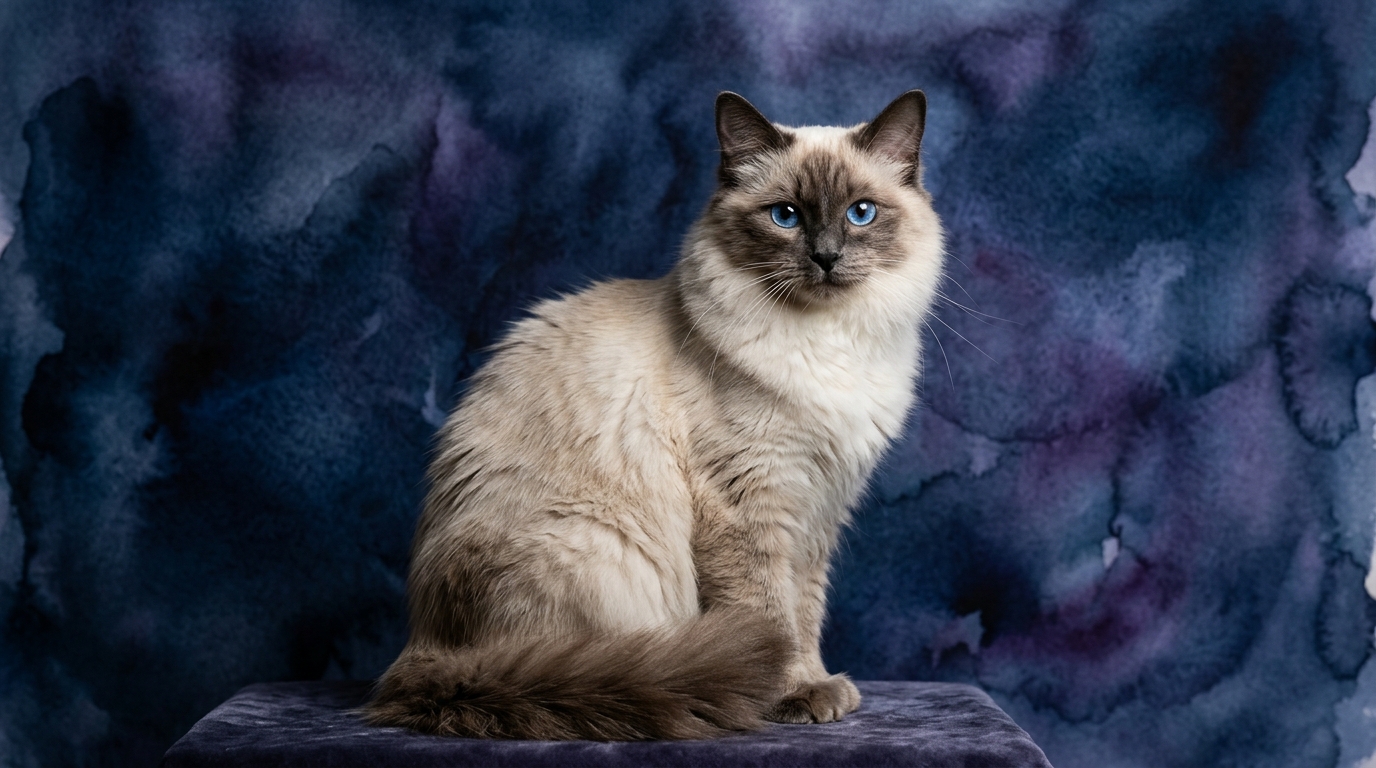
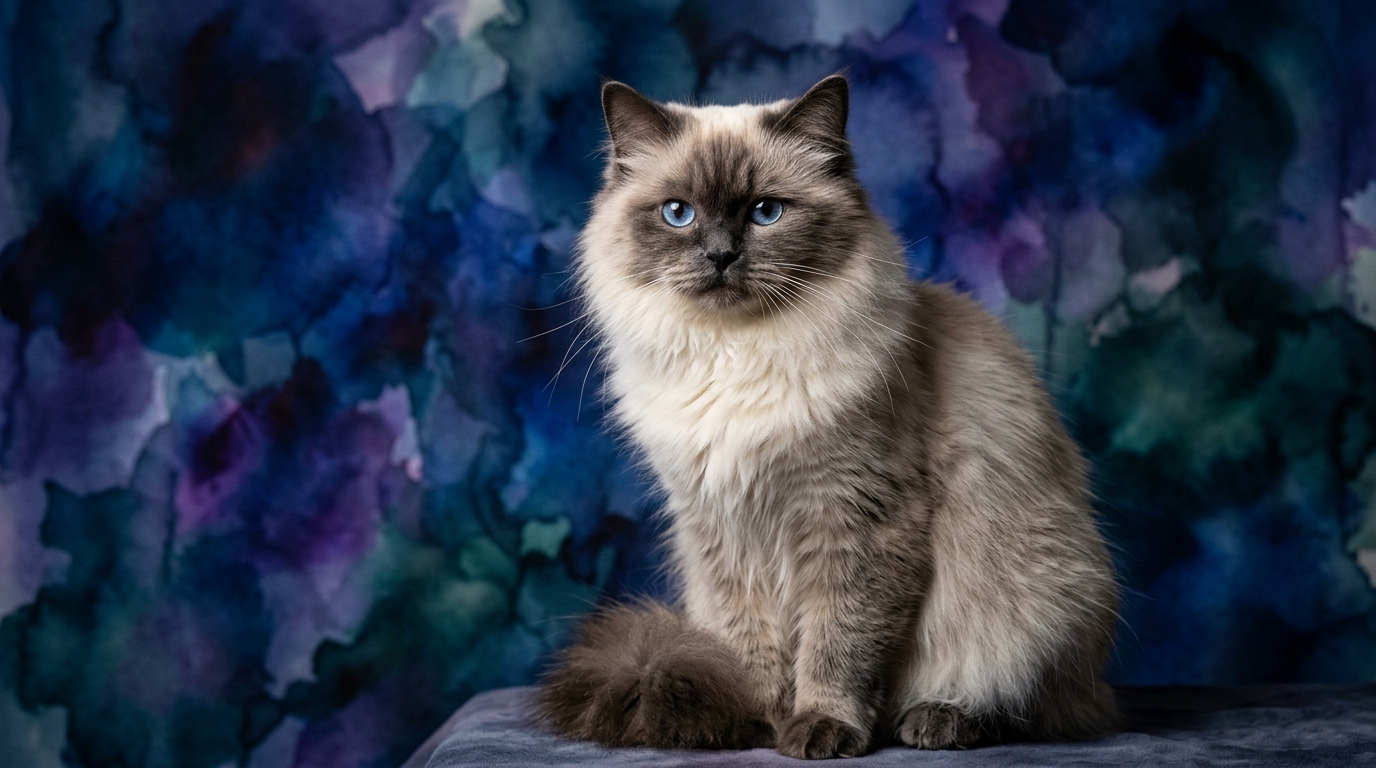
Side-by-Side IQ Profile: Balinese vs. Himalayan
To truly appreciate the cognitive nuances between these two exquisite breeds, it's essential to examine their IQ profiles dimension by dimension, as measured by The Cosmic Pet Pet IQ Lab. The Balinese cat presents a profile of striking mental agility: scoring 4/5 in Problem Solving, indicating a strong capacity for independent thought and environmental manipulation. Its Training Speed is an exceptional 5/5, suggesting a rapid grasp of new concepts and an eagerness to engage in learning. Social Intelligence also reaches a high 5/5, reflecting a profound connection to human companions and a nuanced understanding of social cues. The Balinese maintains a moderate 3/5 in Instinctive Drive, balancing playfulness with a less intense predatory focus, and boasts a solid 4/5 in Memory, allowing it to retain complex information and routines effectively.
The Himalayan cat, while equally charming, exhibits a more balanced and generally moderate cognitive profile. It scores 3/5 in Problem Solving, capable of navigating daily challenges but less inclined towards intricate puzzles. Its Training Speed is 3/5, meaning it can be trained with consistency but may require more patience and repetition than the Balinese. Social Intelligence also stands at 3/5, indicating an affectionate nature that enjoys companionship but often with a more reserved or independent streak. Like the Balinese, its Instinctive Drive is a moderate 3/5, enjoying play without being overly driven by hunting. Finally, its Memory is rated 3/5, sufficient for recalling routines and familiar faces, but perhaps not with the same depth or longevity as its Balinese counterpart. This side-by-side view immediately highlights the Balinese's consistent edge in several key cognitive domains.
Where the Balinese Wins Cognitively
The Balinese cat unequivocally excels in areas demanding active mental engagement and sophisticated social interaction. Their impressive 4/5 score in Problem Solving signifies a breed that doesn't merely react to its environment but actively seeks to understand and manipulate it. This translates into observable behaviors such as quickly mastering complex puzzle feeders, figuring out ingenious ways to open "secure" cupboards, or even devising strategies to access high shelves, all driven by an innate curiosity and a strong desire to explore and learn. They are often observed 'thinking through' challenges rather than just resorting to brute force, showcasing their analytical capabilities.
Coupled with a top-tier 5/5 in Training Speed and an equally remarkable 5/5 in Social Intelligence, the Balinese demonstrates an extraordinary capacity for intricate learning and communication. They are not just responsive to commands; they actively participate in the training process, often anticipating cues, initiating interactions, and even learning through observation of their human companions. This profound social awareness means they quickly pick up on human moods, vocal inflections, and intentions, making them extraordinarily attuned companions who often seem to 'understand' what their humans are thinking and feeling. Their robust 4/5 Memory score further solidifies these cognitive wins, ensuring that learned behaviors, complex associations, and deep social connections are not fleeting but are retained and built upon over extended periods, fostering a truly dynamic and engaging relationship with their owners.
Where the Himalayan Wins Cognitively
While the Balinese shines in high-octane mental pursuits, the Himalayan’s cognitive profile offers a distinct kind of winning proposition, particularly for those seeking a more serene and predictable companion, rather than a constant intellectual sparring partner. Their consistent 3/5 scores across most cognitive dimensions — Problem Solving, Training Speed, Social Intelligence, and Memory — indicate a balanced and less demanding mental landscape. This isn't a cognitive deficit but rather a strength in fostering a calm, harmonious household dynamic, where tranquility often takes precedence over constant mental gymnastics.
The Himalayan’s moderate 3/5 Problem Solving ability means they are perfectly capable of navigating their environment efficiently and adapting to routines without constantly seeking out new intellectual challenges that might lead to unexpected mischief. Their 3/5 Social Intelligence translates to an affectionate, yet often more independent or reserved demeanor, providing deep companionship and gentle affection without the intense, often vocal, need for continuous, high-energy interaction seen in some more demanding breeds. This cognitive balance allows them to be wonderfully present and loving, enjoying quiet moments and a stable routine, without requiring continuous mental stimulation. Their equal 3/5 in Instinctive Drive with the Balinese also means they are playful but not overly driven by intense hunting urges, further contributing to their overall tranquil and easy-going disposition, which many owners find to be a significant 'win' in a companion animal.
Which is Easier to Train and Why
When it comes to trainability, the Balinese clearly holds a significant advantage, directly reflected in its perfect 5/5 Training Speed score. This breed exhibits a remarkable eagerness to learn and a rapid ability to associate commands with actions and consequences. Owners frequently report that Balinese cats pick up basic commands like 'sit,' 'stay,' or 'come' in very few repetitions, often showing genuine enthusiasm for the learning process itself. They are often enthusiastic participants in more complex activities such as leash training, fetching, or even navigating simple agility courses, readily absorbing new information. Their high 5/5 social intelligence further aids this process, as they are deeply motivated by human interaction, praise, and the opportunity to bond, making training a highly rewarding and reciprocal experience for both cat and owner.
In contrast, the Himalayan, with its 3/5 Training Speed, requires a more patient, consistent, and often more reward-driven approach. While certainly trainable for essential behaviors like litter box use, accepting grooming, or understanding household boundaries, they may not possess the same inherent drive or quick grasp for advanced tricks or complex routines. Training a Himalayan often involves more repetition, shorter sessions to maintain focus, and a greater reliance on highly motivating positive reinforcement, such as favored treats, to sustain their engagement. They are capable learners, but their cognitive profile suggests they are less inclined to actively seek out new training opportunities and may reach their learning limits for complex tasks sooner than a Balinese, generally preferring a more laid-back and predictable existence over constant intellectual challenges.
Which Suits Active Owners vs. Relaxed Owners
The distinct cognitive profiles of the Balinese and Himalayan cats naturally align with very different owner lifestyles and expectations. The Balinese, with its high Problem Solving (4/5), exceptional Training Speed (5/5), and profound Social Intelligence (5/5), thrives with active owners who can provide consistent mental stimulation and ample interactive engagement. These cats need a rich environment filled with puzzle toys, engaging play sessions that challenge their predatory instincts, and opportunities to 'work' their minds through training, exploring new safe spaces, or even interactive games. An owner who enjoys teaching tricks, going for walks on a leash, or simply having a highly conversational and responsive companion will find the Balinese to be an exceptionally rewarding and dynamic match. Without sufficient mental engagement, a Balinese might develop undesirable behaviors, such as excessive vocalization or destructive tendencies, out of sheer boredom or a need to expend their considerable cognitive energy.
Conversely, the Himalayan is an ideal companion for relaxed owners who appreciate a tranquil home environment and a cat that offers gentle, undemanding affection. Their moderate scores across all cognitive dimensions mean they are content with predictable routines, a comfortable lap, and occasional, gentle play sessions rather than constant high-energy demands. They are not typically driven to constantly seek out new challenges or demand continuous attention, making them perfect for individuals or families seeking a calm, dignified, and low-maintenance presence. Owners who prefer a less interactive pet that is happy to observe, provide a soothing presence, and enjoy quiet companionship will find the Himalayan's balanced cognitive traits to be a perfect fit, requiring less active mental engagement and more appreciation for their serene demeanor.
The Verdict
Choose the Balinese if you desire a highly interactive, trainable, and mentally agile companion who thrives on consistent engagement, problem-solving opportunities, and a deep, communicative bond.
Opt for the Himalayan if you seek a tranquil, predictable companion who offers gentle affection, a calm presence, and contentment with a more relaxed pace of life without constant mental demands.
🧠 Find Your Pet's IQ Score
Our Pet IQ Lab assessment covers 25+ tests across 5 cognitive dimensions — personalized to your breed.
Take the Full IQ Test →Frequently Asked Questions
Are Balinese cats vocal?
Yes, Balinese cats are generally known for their vocal nature, often engaging in 'conversations' with their owners, a trait linked to their high social intelligence and desire for interaction. They use a wide range of meows, chirps, and trills to express their needs and opinions.
Do Himalayans need a lot of grooming?
Yes, due to their long, dense coats, Himalayans require regular and thorough grooming to prevent mats and tangles. This involves daily brushing to maintain their coat health and comfort, which is an important consideration for potential owners.
Can a Balinese cat be left alone for long periods?
While individual cats vary, Balinese cats, with their high social intelligence and need for interaction, generally do not thrive when left alone for extended periods. They benefit from companionship, whether human or feline, to prevent boredom and loneliness.