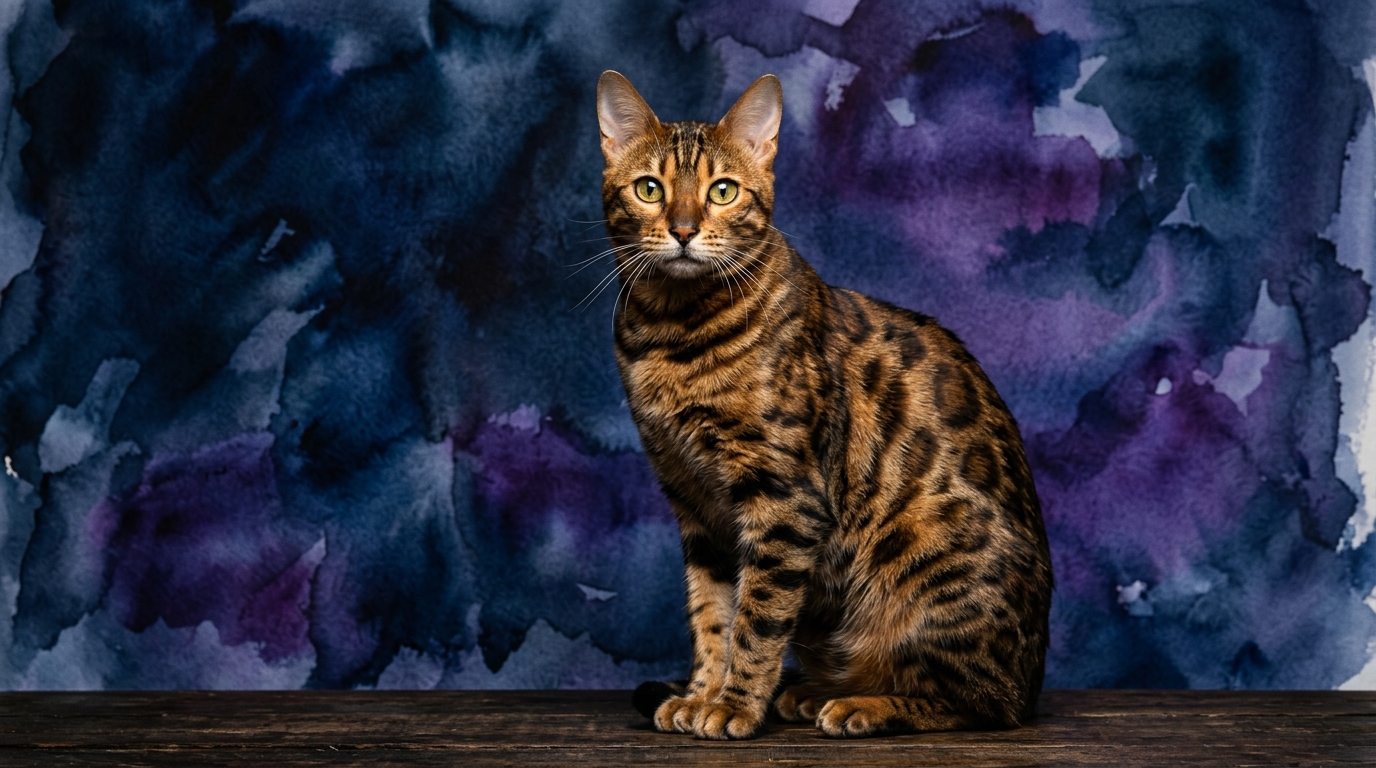
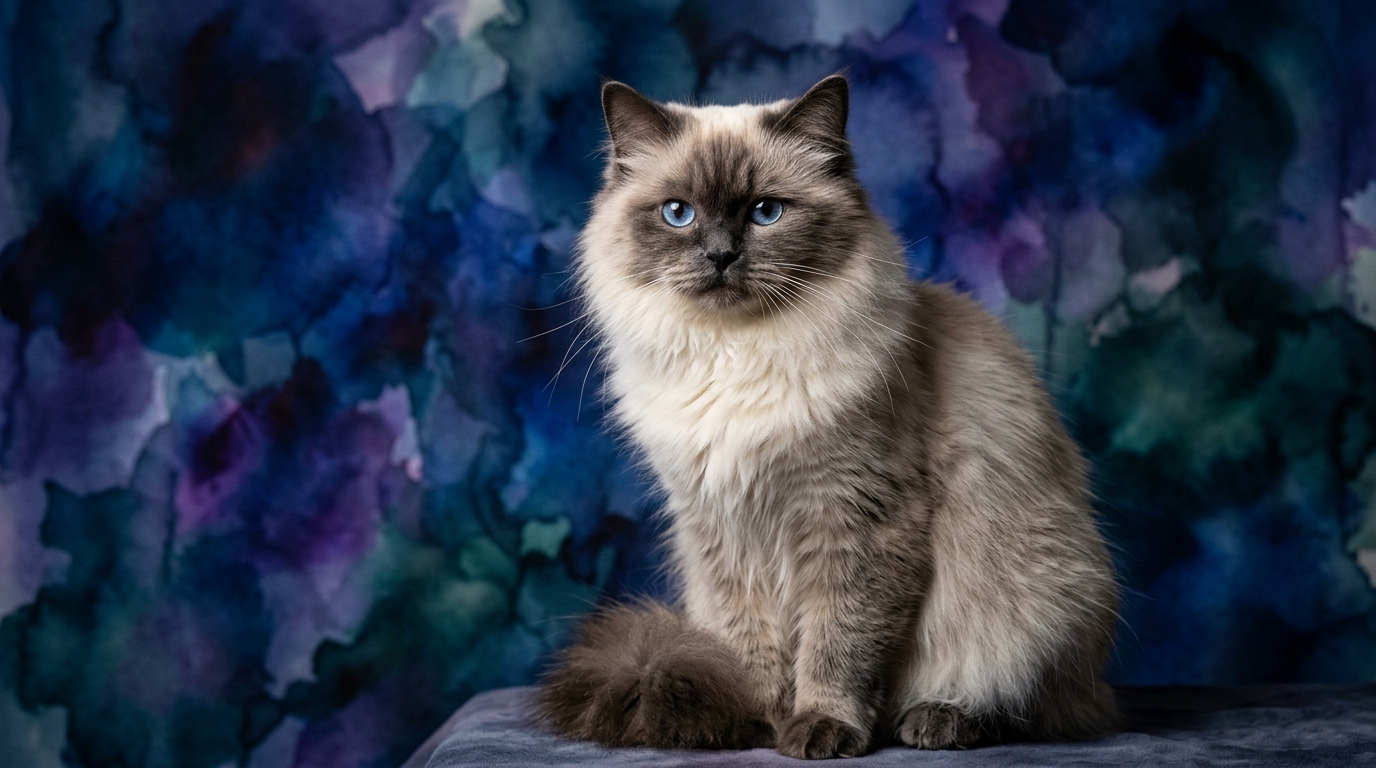
Side-by-Side Cognitive Profiles: Bengal vs. Himalayan
The Cosmic Pet Pet IQ Lab provides a structured framework for understanding the cognitive strengths of various breeds. For the Bengal cat, a breed celebrated for its dynamic nature, these scores paint a picture of a mentally agile and highly engaged feline.
**Bengal Cognitive Profile:** With a Problem Solving score of 5/5, Bengals exhibit exceptional capacity for navigating complex situations, often demonstrating strategic thinking to achieve goals, like figuring out how to open child-proof latches or retrieve hidden toys. Their cognitive agility allows them to quickly assess and manipulate their environment. Their Training Speed of 4/5 means they absorb new commands and routines with remarkable pace; their eagerness to engage and strong observational skills contribute to rapid learning, making them receptive to clicker training, leash walking, and even complex trick sequences. A Social Intelligence of 4/5 indicates these cats display a keen awareness of human cues and emotions, often forming deep bonds and interacting reciprocally, adapting well to multi-pet households by understanding social hierarchies and demonstrating nuanced communication. Reflecting their wild ancestry, Bengals possess a powerful Instinctive Drive of 5/5 for hunting, exploration, and physical activity, manifesting as a strong desire to stalk, pounce, and investigate, requiring significant mental and physical outlets. Finally, their Memory score of 5/5 signifies an impressive recall ability, remembering complex sequences of events, specific object locations, and previously learned commands over extended periods, contributing to their ability to anticipate routines and adapt their behavior based on past experiences.
In contrast, the Himalayan cat presents a cognitive profile geared towards a more tranquil and predictable existence, offering a different set of mental attributes.
**Himalayan Cognitive Profile:** Their Problem Solving score of 3/5 suggests Himalayans demonstrate a moderate ability to solve straightforward problems, such as navigating familiar obstacles or finding clearly visible treats. While they can adapt, they typically don't seek out or engage with complex cognitive challenges as readily as some other breeds. With a Training Speed of 3/5, these cats learn at a steady, deliberate pace. While capable of mastering basic commands and litter box etiquette, they may require more consistent repetition and patience from their human companions to solidify new behaviors. A Social Intelligence score of 3/5 means Himalayans are often described as affectionate and gentle, forming close attachments with their primary caregivers; their social interactions tend to be more reserved and focused, preferring calm environments and familiar faces, and they might not always interpret subtle social cues from strangers or other pets with the same acuity. Their Instinctive Drive of 3/5 indicates a moderate natural drive for hunting and exploration; Himalayans enjoy comfortable, predictable routines and are generally content with less intense play sessions, exhibiting a lower prey drive compared to more active breeds, favoring gentle interaction over vigorous pursuit. Lastly, their Memory score of 3/5 shows a solid capacity for remembering daily routines, preferred sleeping spots, and the location of their food and water; while they retain important information, their recall of specific, intricate events or less frequent interactions might not be as sharp or detailed.
Where the Bengal Excels Cognitively
Bengals truly shine in areas demanding high cognitive horsepower, making them remarkable problem-solvers and explorers. Their Problem Solving score of 5/5 means they are not just curious, but actively analytical, demonstrating an uncanny ability to understand cause and effect. Owners frequently report Bengals figuring out how to open doors, manipulate puzzle toys designed for dogs, or even retrieve specific items on command, showcasing a strategic approach to their environment that extends beyond simple mimicry.
This exceptional problem-solving skill is powerfully supported by their 5/5 in Memory. A Bengal remembers the successful sequence of actions required to achieve a goal, or the specific location of a hidden treat, making them persistent and effective in their pursuits. This powerful memory extends to routines and commands, ensuring that once a behavior is learned, it's firmly embedded, allowing them to anticipate and react to their daily schedule with precision.
Furthermore, their 5/5 Instinctive Drive fuels their cognitive engagement, turning their surroundings into a rich landscape for discovery. This isn't merely about physical energy; it’s a profound drive to explore, investigate, and interact with their environment in a meaningful way. A Bengal’s mind is constantly seeking stimulation, turning everyday objects into cognitive challenges. They don't just exist in a space; they actively process and engage with it, making them highly responsive to novel experiences and changes and ensuring their mental faculties are consistently exercised.
Where the Himalayan's Cognitive Profile Offers Unique Advantages
While the Himalayan’s cognitive scores are generally lower than the Bengal's, their particular blend of traits creates a different kind of cognitive advantage, particularly for owners seeking a calmer companion. Their moderate Problem Solving (3/5) and Instinctive Drive (3/5) mean they are less prone to demanding constant mental challenges or exhibiting behaviors driven by intense curiosity that might lead to mischief. This translates to a cat that is often content with simpler forms of enrichment and less inclined to explore every nook and cranny of the house or attempt to dismantle household items.
Their Social Intelligence (3/5), while not as outwardly expressive or adaptable as a Bengal's, fosters a deep, serene bond with their chosen humans. They excel in providing calm, consistent companionship, preferring predictable interactions over dynamic social games. This cognitive profile means they are less likely to become overstimulated or anxious in quiet home environments, making them ideal companions for those seeking a tranquil presence who appreciate a more subtle form of feline interaction.
Essentially, the Himalayan's cognitive strengths lie in their capacity for peaceful adaptation and their ability to thrive in a stable, less demanding mental landscape. Their moderate memory ensures they recall routines and familiar comforts without necessarily seeking out complex cognitive tasks, making them cognitively self-sufficient in a calm, predictable setting. This unique "win" is about harmonious integration into a relaxed lifestyle, where their mental state perfectly complements a serene domestic environment, offering a gentle yet present companionship.
Training Dynamics: Bengal vs. Himalayan
When it comes to training, the Bengal clearly holds an advantage with a Training Speed of 4/5, supported by their high Problem Solving and Memory scores. Bengals are quick to grasp new concepts and associate actions with rewards, making them excellent candidates for clicker training, learning complex tricks, or even walking on a leash. Their innate curiosity and drive to engage with their environment mean they often view training as another form of stimulating play. They respond well to consistent, positive reinforcement and can rapidly learn sequences of commands, demonstrating a remarkable ability to generalize learned behaviors to new situations. For instance, a Bengal might learn to fetch a specific toy and then quickly adapt to fetching other items, showcasing their flexible cognitive approach to learning.
The Himalayan, with a Training Speed of 3/5, requires a more patient and consistent approach. While they are certainly capable of learning, their learning curve is generally slower, and they may not retain less frequently practiced commands with the same tenacity as a Bengal. Basic commands, litter training, and leash acclimation are achievable, but complex tricks or rapid-fire learning sessions might prove less successful. Their preference for routine and calmer interactions means training sessions should be short, positive, and free from distractions. They may not be as intrinsically motivated by the 'puzzle' aspect of training, but respond well to gentle encouragement and rewards, solidifying behaviors through repetition rather than immediate cognitive leaps.
Matching Cognitive Profiles to Lifestyles: Active vs. Relaxed Owners
For active owners seeking a highly interactive and mentally stimulating companion, the Bengal is an unparalleled match. Their 5/5 Instinctive Drive ensures they thrive on engaging play, exploring new environments, and participating in activities that challenge their intellect and agility. These cats require consistent mental enrichment through puzzle toys, interactive games, and opportunities for climbing and exploration. An owner who enjoys teaching tricks, going for walks (on a leash), or providing a dynamic home environment where the cat can 'hunt' and 'solve' will find the Bengal's cognitive profile perfectly aligned with their lifestyle. Their robust memory and problem-solving skills mean they will actively seek out engagement, making them a constant, lively presence.
Conversely, the Himalayan's cognitive makeup makes them an ideal choice for relaxed owners who appreciate a more tranquil and predictable feline companion. Their moderate Instinctive Drive (3/5) means they are content with gentler play sessions and don't typically demand constant mental challenges to prevent boredom. These cats are often happy observing their surroundings from a comfortable perch, enjoying quiet companionship, and adhering to a consistent daily routine. Their moderate social intelligence allows for affectionate bonds without the intense, often demanding, interaction style of a Bengal. An owner who prefers a calm, serene home environment, where their cat is a gentle presence rather than an energetic explorer, will find the Himalayan's cognitive and behavioral patterns to be a perfect fit. They offer comfort and quiet devotion, their cognitive needs easily met by a stable, loving home.
The Verdict
Choose a Bengal if you are an active individual or family eager to engage with a cat that thrives on mental challenges, interactive play, and learns new behaviors with remarkable speed and retention. They are best suited for dynamic homes that can provide ample stimulation to match their high cognitive drive.
Opt for a Himalayan if you seek a serene, affectionate companion who appreciates a calm, predictable environment and offers gentle, consistent presence without demanding intense mental or physical engagement. They are ideal for relaxed households valuing a tranquil feline friend.
🧠 Find Your Pet's IQ Score
Our Pet IQ Lab assessment covers 25+ tests across 5 cognitive dimensions — personalized to your breed.
Take the Full IQ Test →Frequently Asked Questions
Do Bengals get bored easily if not mentally stimulated?
Yes, Bengals with their 5/5 Problem Solving and Instinctive Drive require significant mental engagement. Lack of stimulation can lead to boredom and potentially destructive behaviors as they seek outlets for their cognitive energy and natural curiosity, often manipulating their environment to create their own challenges.
Are Himalayans good with children or other pets given their social intelligence score?
Himalayans, with their 3/5 Social Intelligence, can be good with children and other pets, especially if introduced calmly and gradually. They prefer predictable, gentle interactions, so a quieter home environment where boundaries are respected and interactions are consistent suits them best, allowing them to form stable, affectionate bonds.
How does the memory difference impact daily life with these breeds?
A Bengal's 5/5 Memory means they'll recall complex routines and object locations, potentially learning to outsmart household barriers or anticipate specific events with precision. A Himalayan's 3/5 Memory ensures they remember vital routines like feeding times and litter box locations, contributing to their preference for consistency and predictability in their daily life.