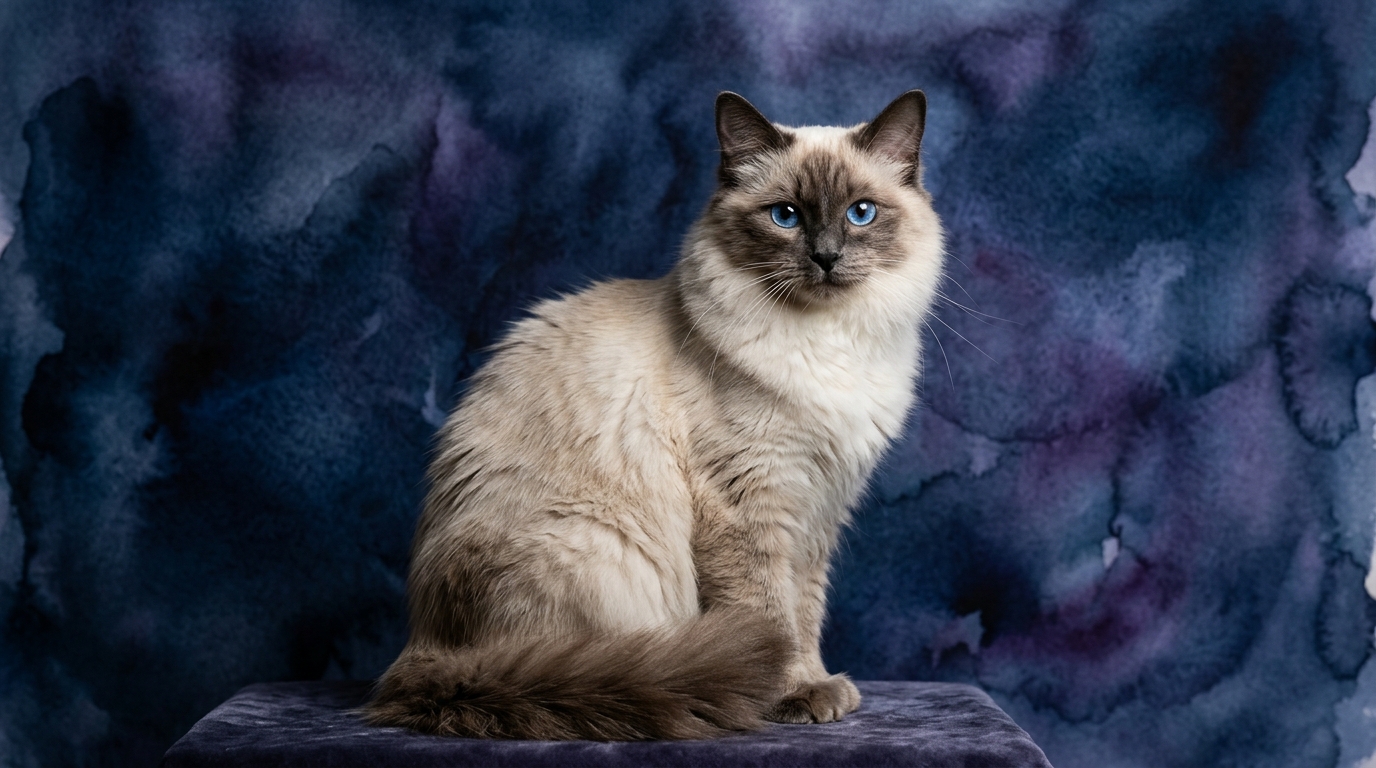
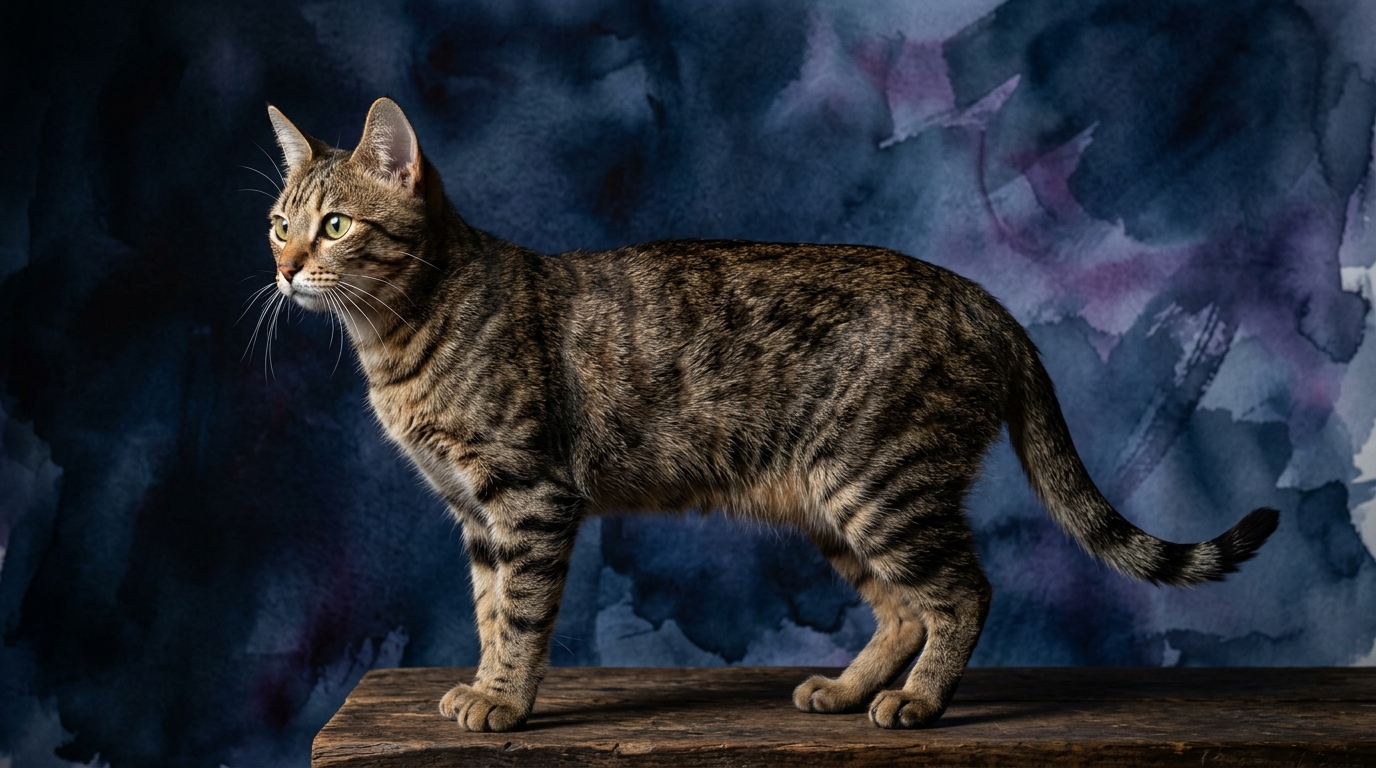
Side-by-Side IQ Profile: Balinese vs. Sokoke
The Balinese cat, a long-haired variant of the Siamese, presents a robust cognitive profile across most dimensions. Its Problem Solving ability stands at 4/5, indicating a capacity for navigating complex environments and figuring out puzzles with relative ease. This breed exhibits a remarkable Training Speed of 5/5, suggesting it picks up new commands and routines with exceptional swiftness. Social Intelligence is also top-tier at 5/5, highlighting its profound ability to understand and respond to human cues and social dynamics within a household. Its Instinctive Drive is rated at 3/5, representing a moderate level of hunting prowess and natural curiosity, while its Memory, at 4/5, allows it to retain learned behaviors and recall past experiences effectively.
In contrast, the Sokoke, a natural breed originating from Kenya, displays a more balanced, mid-range cognitive assessment. Its Problem Solving score is 3/5, meaning it can tackle challenges but might require more time or simpler scenarios than its Balinese counterpart. The Sokoke's Training Speed is also 3/5, indicating an average pace for learning new tricks or adapting to routines, requiring consistent and patient reinforcement. Social Intelligence sits at 3/5, suggesting it connects with humans and other pets, but perhaps with less intensity or nuance than a Balinese. Its Instinctive Drive mirrors the Balinese at 3/5, showing a similar, moderate level of predatory behavior and exploratory urges. Finally, its Memory is rated 3/5, signifying a competent ability to remember, though possibly not with the same depth or longevity as a cat scoring higher in this dimension.
Where the Balinese Excels Cognitively
The Balinese cat demonstrably excels in areas demanding quick comprehension and intricate social engagement. Its 5/5 rating in Training Speed means it rapidly associates actions with consequences, making it particularly adept at learning clicker training, leash walking, or even complex trick sequences. This rapid learning curve is supported by its 4/5 Memory, allowing it to solidify these lessons quickly and retain them over time, reducing the need for constant re-teaching.
Furthermore, the Balinese's superior Social Intelligence (5/5) means it is highly attuned to human emotions and intentions. This cognitive strength allows it to anticipate owner needs, respond to subtle verbal cues, and actively seek out interactive play or comfort. Its 4/5 Problem Solving skill complements this, enabling it to figure out how to access desired spaces, manipulate puzzle toys, or even open cabinets, showcasing a proactive intellectual curiosity that often surprises owners.
Where the Sokoke's Cognitive Profile Shines
While the Sokoke's individual scores might not reach the peaks of the Balinese, its balanced 3/5 across most cognitive dimensions offers a unique advantage for certain environments. Its moderate Problem Solving (3/5) means it's capable of navigating everyday challenges without becoming overly frustrated by complex puzzles, providing a steady and adaptable presence. This mid-range intellectual demand means owners can provide enrichment without needing to constantly escalate the complexity of toys or activities.
The Sokoke's 3/5 Social Intelligence provides a comfortable level of companionship without the intense, often demanding, social needs of a cat with a 5/5 rating. This makes the Sokoke an excellent choice for owners who appreciate affection and interaction but might not be able to dedicate constant, high-energy social engagement. Its consistent 3/5 across the board points to a stable, predictable cognitive companion that is neither overly challenging nor intellectually disengaged, offering a harmonious blend of independence and responsiveness.
Training Ease: Balinese vs. Sokoke
When it comes to ease of training, the Balinese clearly holds an advantage. Its 5/5 Training Speed, coupled with its 5/5 Social Intelligence, means it actively seeks to understand and please its human companions. Balinese cats often pick up basic commands like 'sit' or 'stay' with minimal repetition, and their strong memory (4/5) ensures these lessons stick. They thrive on positive reinforcement and engagement, quickly learning that cooperative behavior leads to rewards and attention.
The Sokoke, with its 3/5 Training Speed and 3/5 Social Intelligence, will require more patience and consistency in its training regimen. While certainly trainable, a Sokoke might take longer to grasp new concepts and may not be as inherently motivated by the desire to interact during training sessions. Owners will find success with short, regular training bursts and by making the process fun and rewarding, understanding that the Sokoke's learning pace is steady rather than rapid.
Matching Cats to Lifestyles: Active vs. Relaxed Owners
The Balinese cat, with its high scores in Problem Solving (4/5), Training Speed (5/5), and Social Intelligence (5/5), is an ideal match for active owners who relish interactive engagement. These cats thrive in environments where they receive consistent mental stimulation through puzzle toys, training sessions, and ample social interaction. Owners who enjoy teaching tricks, going for supervised walks, or simply having a cat that's always 'in the mix' of family activities will find the Balinese incredibly rewarding. Their intellectual curiosity and social nature mean they can become bored or lonely if left without adequate stimulation.
Conversely, the Sokoke's balanced 3/5 ratings across most cognitive dimensions make it well-suited for owners who appreciate a companion that is present and interactive, but perhaps less demanding in its daily intellectual needs. A Sokoke will enjoy playtime and affection, but might be content with simpler enrichment and less constant direct engagement than a Balinese. This makes them a good fit for relaxed owners who want a sociable cat that isn't constantly seeking out complex challenges or requiring intense training efforts, yet still appreciates a loving home with consistent attention.
The Verdict: When to Choose Each Feline
Choosing between a Balinese and a Sokoke ultimately depends on the specific dynamics of your household and your personal preferences for feline companionship. Both breeds offer unique joys, but their cognitive profiles point to different ideal environments. The Balinese is for those who desire a highly interactive, quick-learning, and socially sophisticated cat that thrives on deep engagement and mental challenges, often acting as a true participant in daily life.
The Sokoke is best suited for individuals or families seeking a balanced, moderately independent yet affectionate companion. This cat will appreciate consistent attention and playful interaction without the intense cognitive demands or potential for boredom that a higher-scoring breed might present, making it a wonderfully adaptable and steady presence in the home.
The Verdict
Choose the Balinese if you desire a highly interactive, quick-learning, and socially sophisticated cat eager for deep engagement and mental challenges.
Opt for the Sokoke if you seek a balanced, moderately independent yet affectionate companion that appreciates consistent attention without intense cognitive demands.
🧠 Find Your Pet's IQ Score
Our Pet IQ Lab assessment covers 25+ tests across 5 cognitive dimensions — personalized to your breed.
Take the Full IQ Test →Frequently Asked Questions
Are Balinese cats prone to separation anxiety?
With their high Social Intelligence (5/5), Balinese cats form strong bonds and can become quite attached to their owners. While not guaranteed, they may exhibit signs of distress if left alone for extended periods, making consistent companionship beneficial.
What kind of enrichment does a Sokoke cat need?
A Sokoke, with its 3/5 Problem Solving and Instinctive Drive, benefits from a variety of toys that simulate hunting, such as wand toys and simple puzzle feeders. Regular play sessions and climbing opportunities help satisfy their moderate curiosity and physical needs without requiring overly complex setups.
Can Balinese cats be trained to walk on a leash?
Absolutely. Given their 5/5 Training Speed and 5/5 Social Intelligence, Balinese cats are highly receptive to leash training when introduced gently and consistently from a young age. Their desire for interaction and quick learning curve makes them excellent candidates for supervised outdoor adventures.