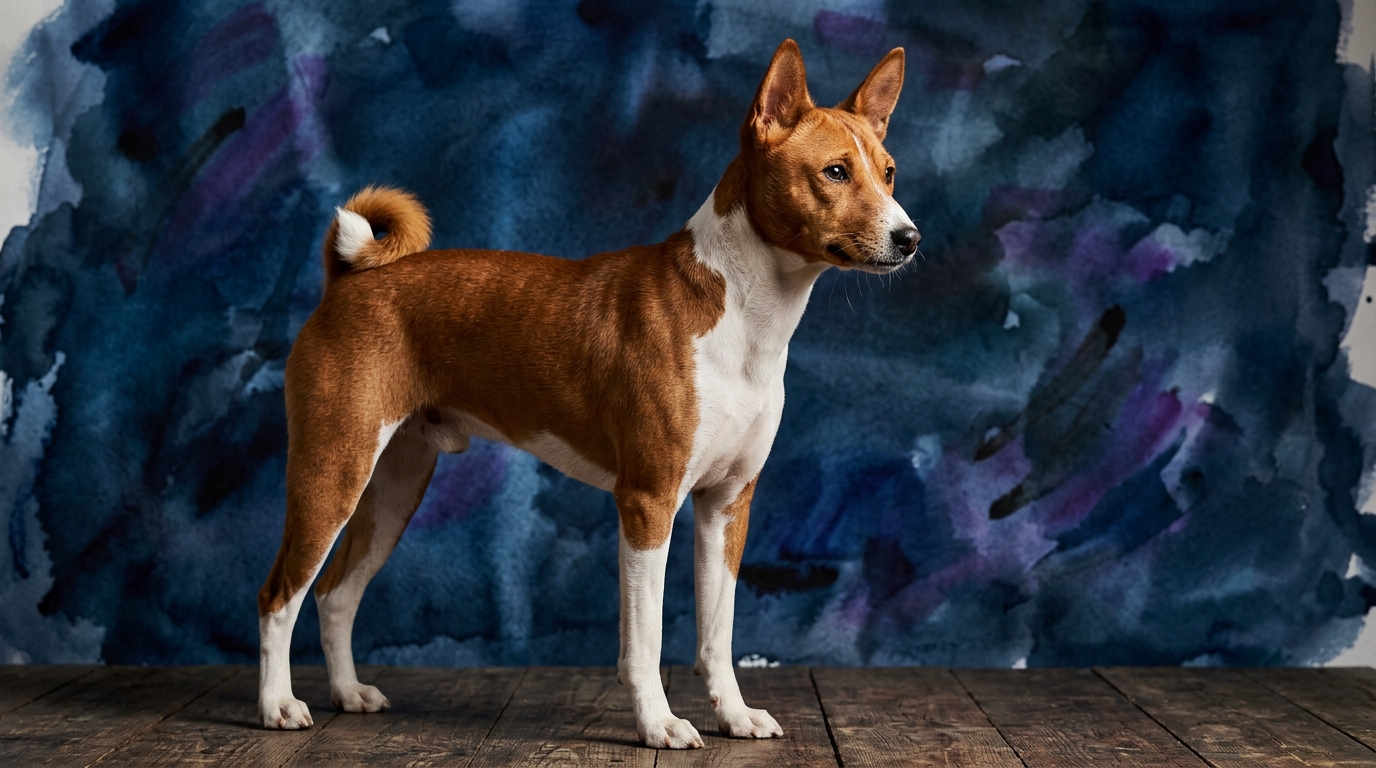

Side-by-Side IQ Profile: Unpacking Canine Cognition
**Problem Solving:** The Basenji’s exceptional 5/5 score highlights a mind that thrives on independent thought and strategic action. This breed is adept at figuring out complex puzzles, bypassing obstacles, and devising creative solutions to achieve its goals, often demonstrating remarkable ingenuity. In contrast, the Boerboel scores 3/5, indicating practical problem-solving skills that are more reliant on established routines or direct human guidance. While capable of addressing challenges, they less frequently initiate novel solutions compared to the Basenji.
**Training Speed:** The Basenji's 1/5 in Training Speed reflects a strong independent streak; they grasp concepts quickly but require significant motivation and consistency to comply. Their willingness to perform often hinges on personal benefit rather than an inherent desire to please. The Boerboel, with a 3/5 score, shows a moderate capacity for learning and retaining commands, responding well to structured training and consistent reinforcement, making them generally more cooperative in learning new behaviors.
**Social Intelligence:** Both breeds share a 3/5 score in Social Intelligence, suggesting an average ability to interpret social cues from humans and other canines. Basenjis can be reserved but form deep bonds with their chosen family, understanding subtle interactions within their trusted circle. Boerboels are typically devoted and attuned to their family’s emotional states but may exhibit wariness or aloofness towards strangers, necessitating careful socialization to ensure appropriate responses.
**Instinctive Drive:** The Basenji’s high 5/5 Instinctive Drive manifests as an intense prey drive, a strong urge for exploration, and a deep need for self-directed activity. This innate motivation fuels their curiosity and resourcefulness, propelling them to investigate and engage with their environment autonomously. The Boerboel, scoring 3/5, possesses a drive primarily geared towards protection and guardianship, less about independent hunting or wandering, but still embodying a strong, inherent purpose to oversee its territory and family.
**Memory:** With a 4/5 score, the Basenji exhibits a robust memory for locations, past experiences, and learned behaviors, even if they choose not to perform them consistently. They recall successful strategies and environmental details with impressive accuracy. The Boerboel's 3/5 memory score indicates a functional capacity for recalling commands, routines, and important individuals. While effective for daily tasks and training, it may not encompass the same nuanced recall of intricate problem-solving sequences as seen in the Basenji.
Where the Basenji Excels Cognitively
The Basenji’s exceptional Problem Solving (5/5) places them among the most resourceful canine thinkers. They are adept at navigating complex environments, figuring out latches, or devising strategies to get what they want, often exhibiting a profound understanding of cause and effect. This ingenuity is amplified by their high Instinctive Drive (5/5), which fuels a persistent pursuit of their objectives, whether it’s tracking a scent or exploring a perceived boundary.
Coupled with a strong Memory (4/5), the Basenji remembers past successes and failures, learning from every interaction to refine their methods. This combination makes them highly self-sufficient and adaptable in novel situations, capable of independent decision-making. Owners often report instances of Basenjis remembering specific commands or routes even after long periods, demonstrating their detailed recall.
Where the Boerboel Demonstrates Cognitive Strengths
The Boerboel's balanced cognitive profile, particularly its Training Speed (3/5) and Social Intelligence (3/5), indicates a cooperative and capable mind that thrives on structure and human interaction. While not scoring as high in independent problem-solving, their moderate training speed suggests a significant willingness to engage with human instruction and a greater capacity for consistent obedience. They learn and retain commands at a steady pace, making them responsive to structured training environments.
Their consistent Social Intelligence (3/5) supports their role as a devoted family guardian, allowing them to accurately interpret family dynamics and intentions. This breed excels in understanding and responding to human guidance, making them reliable partners in tasks requiring adherence to rules and directives, rather than self-initiated exploration. Their strength lies in their predictable responsiveness and loyalty once a bond and clear expectations are established.
Training Dynamics: Basenji vs. Boerboel
Training the Basenji, with its 1/5 Training Speed, requires immense patience, creativity, and a deep understanding of their independent nature. They are not inherently eager to please in the conventional sense; rather, they must be convinced that compliance benefits them, often preferring to follow their own agenda. This makes traditional, repetitive drills less effective, demanding innovative, reward-based methods that tap into their problem-solving abilities and high instinctive drive, often turning training into a game of wits.
Conversely, the Boerboel's 3/5 Training Speed suggests a more straightforward approach. While they are not lightning-fast learners, they possess a greater degree of biddability and a desire to work alongside their human companions, especially within the context of their protective instincts. Their moderate instinctive drive means they are generally less distracted by external stimuli than a Basenji, allowing for more focused training sessions and a more predictable response to commands when consistency and clear leadership are applied.
Matching Breeds to Lifestyles: Active vs. Relaxed Owners
The Basenji’s high Instinctive Drive (5/5) and Problem Solving (5/5) make them suited for highly active owners who can provide constant mental stimulation and physical outlets. They thrive on challenges, exploration, and engaging in self-directed activities, often creating their own entertainment if not adequately stimulated. Owners who appreciate a dog with a strong, independent personality and are prepared for a persistent, resourceful companion will find the Basenji rewarding.
The Boerboel, with its more moderate drives and balanced cognitive scores, suits owners who are active but also value a more structured and predictable companion. While they require regular exercise and mental engagement to prevent boredom, their focus is often on family protection and companionship rather than intense, independent exploration. Owners seeking a devoted, trainable guardian who enjoys routines and consistent interaction will align well with the Boerboel's temperament.
The Verdict
Choose a Basenji if you seek a highly independent, resourceful companion who thrives on intellectual challenges and values self-directed exploration, understanding that training will demand exceptional patience and ingenuity. This breed flourishes with owners who appreciate a canine partner that thinks for itself.
Opt for a Boerboel if you desire a devoted, trainable guardian capable of consistent learning and responsive to clear guidance, appreciating a more structured and family-centric approach to canine companionship. They are best suited for owners who prioritize loyalty and a predictable, protective presence.
🧠 Find Your Pet's IQ Score
Our Pet IQ Lab assessment covers 25+ tests across 5 cognitive dimensions — personalized to your breed.
Take the Full IQ Test →Frequently Asked Questions
Does a Basenji's low training speed mean it cannot be trained?
No, a Basenji's 1/5 training speed signifies their independent nature and preference for self-directed actions, not an inability to learn. Training requires exceptional consistency, high-value rewards, and a willingness to make it engaging and beneficial from the dog's perspective, often through game-like approaches.
Is a Boerboel's 3/5 social intelligence score concerning for a family dog?
A 3/5 social intelligence score indicates an average capacity to interpret social cues, which is functional for a family dog. Boerboels are typically devoted to their immediate family but may be reserved with strangers, emphasizing the importance of early and consistent socialization to foster appropriate interactions and prevent undue suspicion.
How does the 'Not Coren-ranked' status for the Boerboel impact its intelligence assessment?
The 'Not Coren-ranked' status means the Boerboel was not included in Stanley Coren's original intelligence study, often due to breed rarity or lack of widespread participation at the time. Our IQ Lab scores are independently derived from behavioral observations and owner reports, providing a direct assessment of its cognitive dimensions regardless of Coren's ranking.