
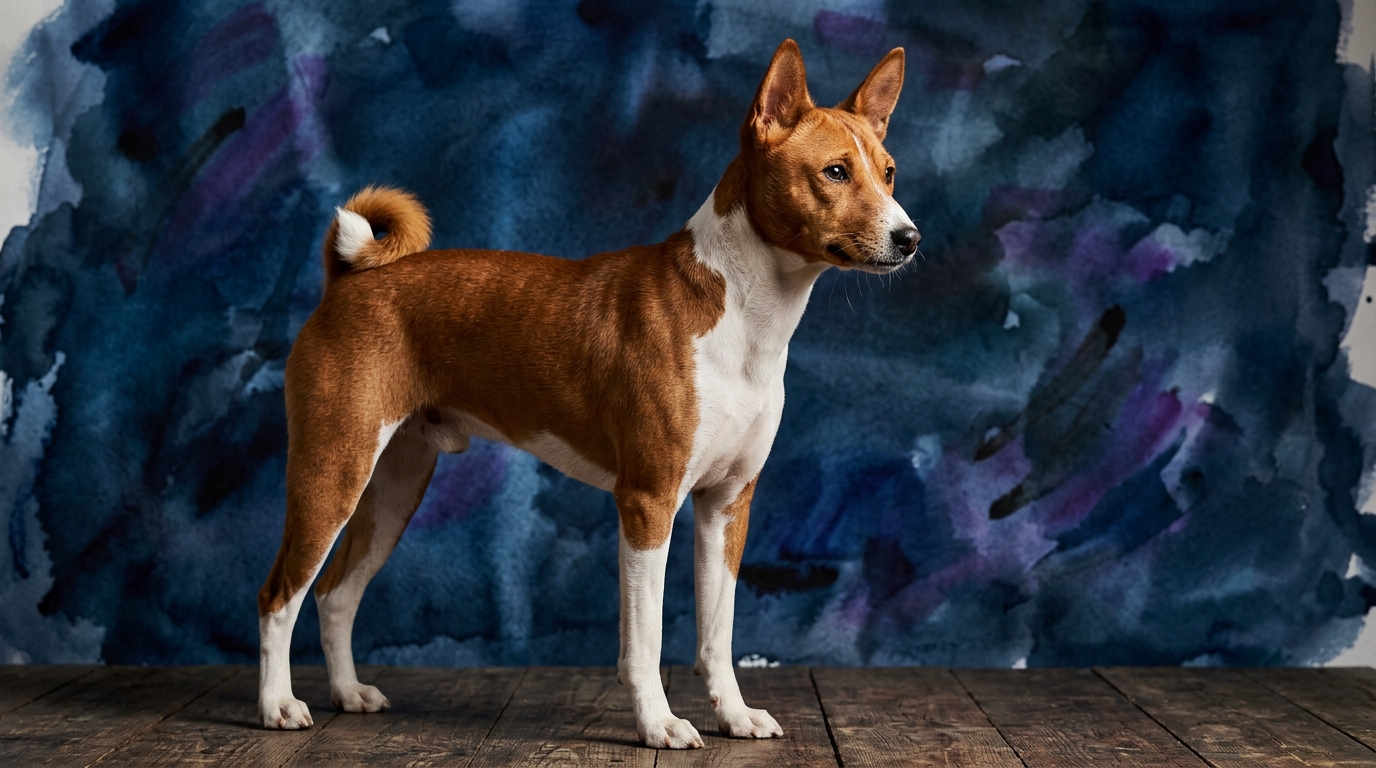
Side-by-Side Cognitive Profiles: German Shepherd vs. Basenji
The Cosmic Pet Pet IQ Lab employs a five-dimensional framework to assess canine intelligence, offering a nuanced view beyond simple obedience. Let's examine how the German Shepherd and Basenji measure up across these crucial cognitive traits.
The German Shepherd, a Herding group dog with a Coren rank of #3, consistently demonstrates exceptional mental faculties. Their Problem Solving is rated 5/5, indicating a profound capacity to analyze and navigate complex situations. Training Speed is also 5/5, meaning they absorb new commands and concepts with remarkable quickness, often requiring minimal repetition. Social Intelligence, at 5/5, highlights their deep attunement to human emotional states and cues, fostering strong collaborative bonds. Their Instinctive Drive, 5/5, is powerful yet highly channelable, directing their protective and herding instincts towards structured tasks. Finally, Memory, also 5/5, ensures they retain learned behaviors and experiences reliably, building a robust foundation of knowledge.
In contrast, the Basenji, a Hound group dog with a Coren rank of #78, presents a unique cognitive blueprint. Their Problem Solving is rated 5/5, showcasing a significant capacity for independent thought and resourceful solutions, though often in pursuit of their own objectives. Training Speed, however, stands at 1/5, reflecting a pronounced independence and a lower intrinsic motivation to comply with human directives. Social Intelligence is 3/5; while they form bonds, their engagement is often on their own terms, less overtly cooperative. Their Instinctive Drive, 5/5, is potent, manifesting as strong prey and exploration drives that are deeply self-serving. Memory, at 4/5, indicates good retention, but this can sometimes be overridden by immediate instinct or a perceived lack of incentive.
Where the German Shepherd Excels Cognitively
The German Shepherd's cognitive strengths primarily lie in their cooperative intelligence and their structured application of innate drives. Their 5/5 Training Speed combined with 5/5 Social Intelligence creates a dog that actively seeks to understand and execute human commands. This isn't just about rote memorization; it's about a deep desire to partner. For instance, a German Shepherd can quickly learn intricate sequences of commands, such as 'find the keys, bring them here, then sit,' not just because they remember each step, but because they comprehend the overall goal and their role in achieving it with their human.
Their Problem Solving at 5/5, coupled with their strong memory, allows them to adapt learned behaviors to novel situations. If a familiar route is blocked, a German Shepherd is more likely to pause, assess the situation, and attempt a different learned approach, often looking to their handler for guidance. This capacity for directed problem-solving makes them exceptional service animals, police dogs, and agility competitors, where precision and responsive adaptation are paramount. Their 5/5 Instinctive Drive is a powerful engine for work, but it's their cognitive framework that allows this drive to be so effectively channeled into complex, human-directed tasks rather than purely self-serving pursuits.
Where the Basenji Shines Cognitively
The Basenji's cognitive brilliance lies in its independent problem-solving and self-reliant ingenuity, often driven by their powerful 5/5 Instinctive Drive. While the German Shepherd solves problems to please, the Basenji solves problems to achieve its own goals. For example, a Basenji with a 5/5 Problem Solving score might figure out how to open a complex latch on a gate, not because it was trained to, but because it wants to explore the other side. This isn't disobedience in the traditional sense; it's a display of profound, self-directed cognitive resourcefulness.
Their cognitive profile allows them to navigate their environment with a remarkable degree of autonomy. A Basenji might remember (4/5 Memory) the location of a hidden treat from days ago or devise a complex route to bypass an obstacle to reach a squirrel. Their 3/5 Social Intelligence means they observe human behavior keenly, not always for cooperation, but to anticipate opportunities or challenges for themselves. This self-sufficiency, born from centuries of independent hunting, means they excel in situations requiring independent thought rather than strict adherence to human direction. Their intelligence allows them to adapt and thrive in environments where they must rely on their own wits.
Trainability: A Tale of Two Temperaments
The most striking difference between these two breeds lies in their Training Speed, a 5/5 for the German Shepherd versus a 1/5 for the Basenji, profoundly impacting their behavioral interactions. The German Shepherd's exceptional trainability stems from a confluence of factors: their high Social Intelligence, innate desire to work, and excellent Memory. They are eager to please and find satisfaction in performing tasks for their human companions. A German Shepherd typically grasps a new command within a few repetitions, motivated by praise, play, or treats, and will reliably execute it due to their strong desire for cooperative engagement.
The Basenji, on the other hand, presents a significant training challenge due to their inherent independence and their approach to problem-solving. While they possess a 5/5 Problem Solving capacity, this is often applied to figuring out how to get what *they* want, not what *you* want. Their 1/5 Training Speed isn't an indicator of a lack of understanding, but rather a preference for self-direction. A Basenji might perfectly understand a command but choose not to comply if a more appealing instinct (like chasing a scent) takes over, or if they simply don't see the immediate benefit to themselves. Training a Basenji requires immense patience, creativity, and a deep understanding of their motivations, often framing training as a game or a challenge rather than a direct command, appealing to their independent spirit rather than demanding obedience.
Matching Owners: Active Engagement vs. Patient Companionship
The cognitive profiles of the German Shepherd and Basenji dictate very different ideal owner types. The German Shepherd thrives with active, engaged owners who are prepared to provide consistent mental stimulation and structured training. Their 5/5 Social Intelligence and Instinctive Drive mean they need a purpose, whether it's obedience, agility, protection work, or simply being a highly involved family member with clear rules and tasks. An owner who enjoys collaborative activities, consistent training sessions, and channeling a dog's natural drives into productive outlets will find the German Shepherd an unparalleled partner. They require an owner who appreciates and can manage a dog that wants to be deeply integrated into all aspects of life and given meaningful work.
Conversely, the Basenji is better suited for owners who appreciate an independent, resourceful companion and possess a deep well of patience. While they require plenty of physical exercise to satisfy their strong 5/5 Instinctive Drive for exploration and chasing, their training style is less about strict obedience and more about building a relationship based on mutual respect and understanding of their unique personality. Owners must be comfortable with a dog that might not always respond immediately to commands, preferring to think for itself. They suit individuals who are active enough to provide outlets for their physical energy but are relaxed in their expectations of constant compliance, valuing a dog with a distinct, self-possessed character over a highly biddable partner.
The Verdict: Choosing Your Canine Companion
The Verdict
Choose a German Shepherd if you seek a highly trainable, protective, and collaborative companion for work, sport, or family life, valuing structure, responsiveness, and a deep partnership. They excel when given clear direction and a role to fulfill.
Choose a Basenji if you desire a spirited, independent, and resourceful companion who brings a unique, ancient charm, suitable for patient owners who appreciate a dog with a mind of its own and enjoy their self-directed ingenuity.
🧠 Find Your Pet's IQ Score
Our Pet IQ Lab assessment covers 25+ tests across 5 cognitive dimensions — personalized to your breed.
Take the Full IQ Test →Frequently Asked Questions
Is a Basenji difficult to live with?
While resourceful, their independent nature and strong drives mean they require consistent management and creative engagement, but they are not inherently "difficult" for owners who understand their unique personality. Their self-serving problem-solving can be challenging without proper outlets and boundaries.
Can a Basenji be trained for advanced obedience?
Yes, but it demands exceptional patience, positive reinforcement, and a deep understanding of their motivations. They learn best when training feels like a game or a self-serving challenge, rather than strict commands, often performing for a perceived benefit to themselves rather than simple compliance.
How do their social needs differ?
German Shepherds thrive on constant human interaction and purpose-driven tasks, forming very close, collaborative bonds and seeking to please. Basenjis also bond deeply with their families but maintain a more aloof, independent demeanor, often content to observe or engage on their own terms, less driven by a need for constant human direction.