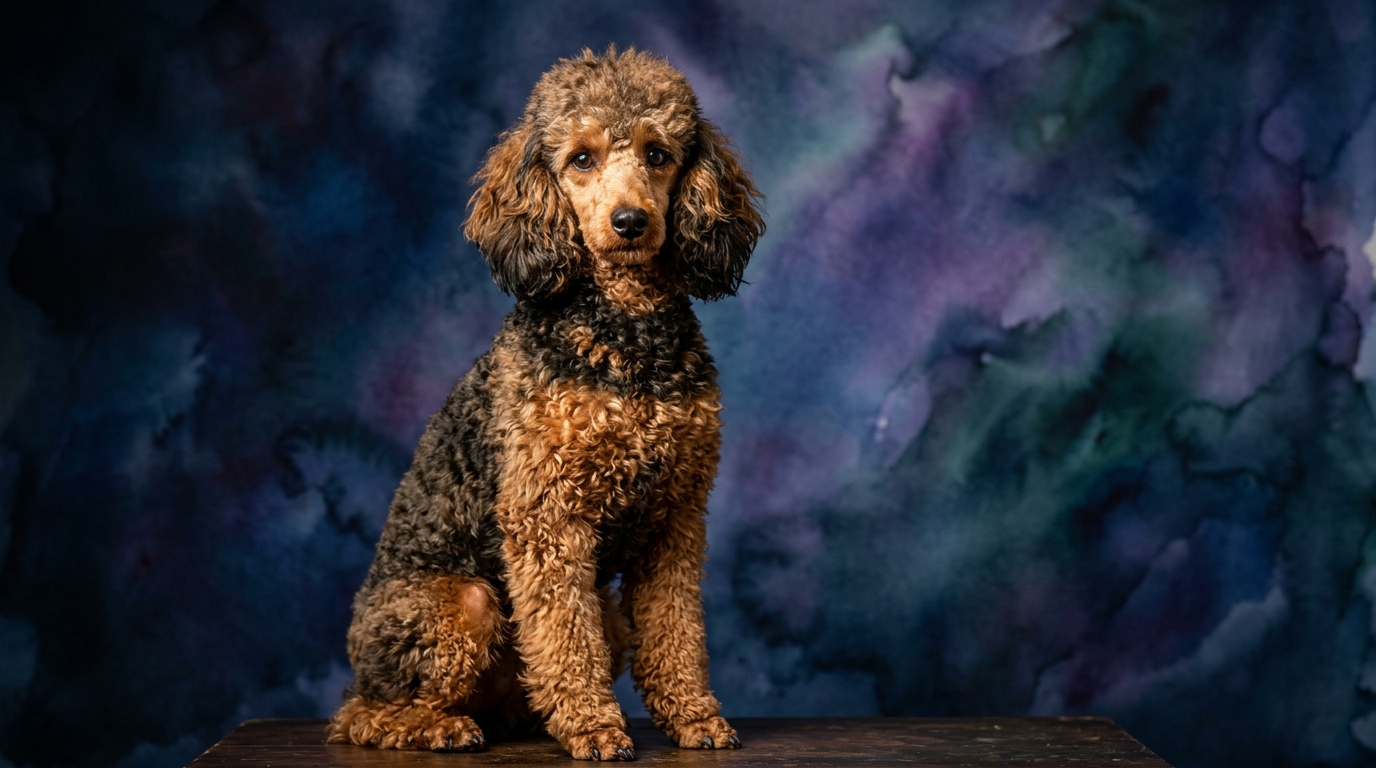
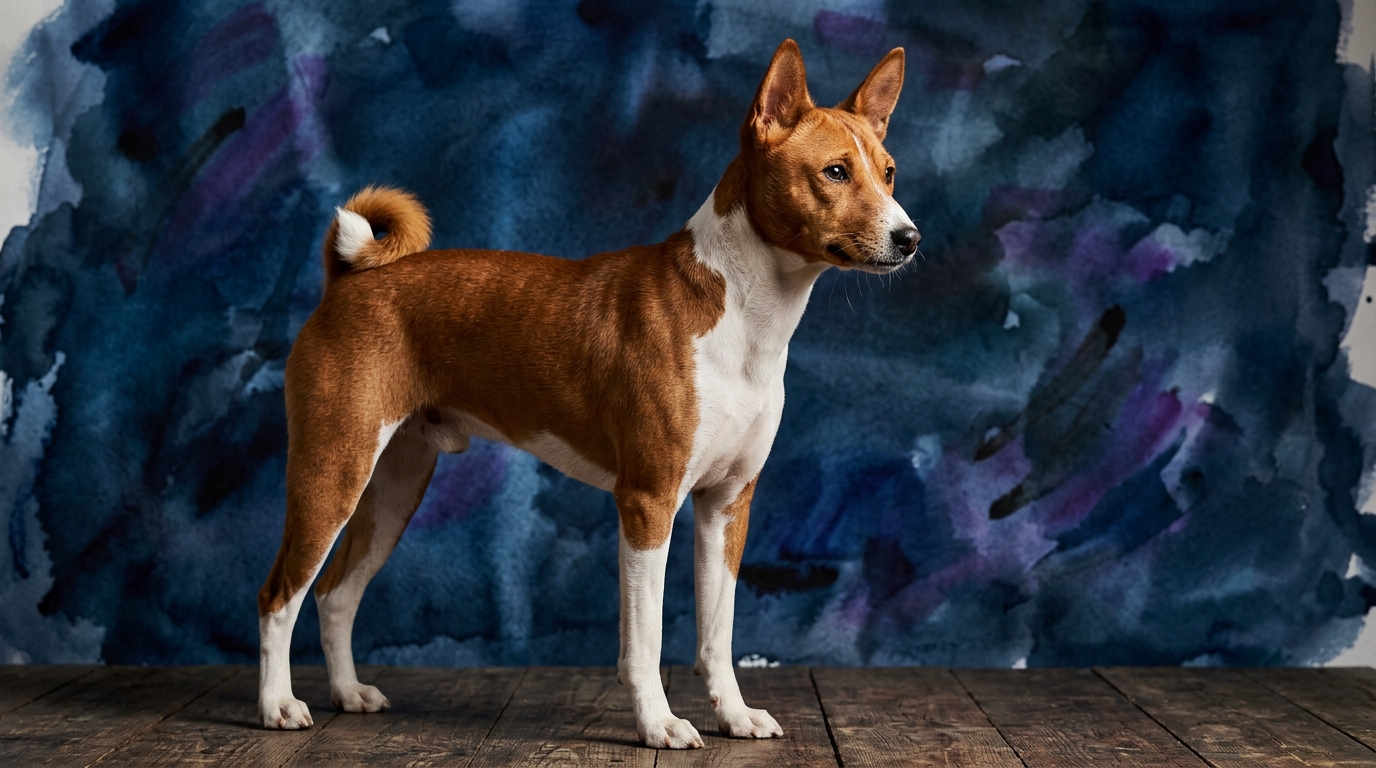
Side-by-Side IQ Profile: Standard Poodle vs. Basenji
The Cosmic Pet Pet IQ Lab provides a nuanced framework for understanding canine cognition, moving beyond simplistic labels. For the Standard Poodle, ranked #2 by Coren, its profile showcases a remarkable balance: Problem Solving 5/5, Training Speed 5/5, Social Intelligence 5/5, Instinctive Drive 4/5, and Memory 5/5. This breed exhibits a profound capacity for processing information and applying it in various contexts, particularly when guided by human interaction.
In contrast, the Basenji, holding a Coren rank of #78, presents a very different cognitive blueprint. Its profile includes: Problem Solving 5/5, Training Speed 1/5, Social Intelligence 3/5, Instinctive Drive 5/5, and Memory 4/5. This combination paints a picture of a clever, self-reliant thinker whose intelligence is often expressed through independent action rather than eager compliance. Both breeds possess exceptional problem-solving acumen, yet their application and motivation differ significantly across other cognitive dimensions.
Where the Standard Poodle Wins Cognitively
The Standard Poodle's primary cognitive victories lie in its unparalleled Social Intelligence and Training Speed, coupled with a perfect Memory score. A 5/5 in Social Intelligence means the Standard Poodle is acutely tuned into human emotional states, body language, and verbal cues. They often anticipate requests and respond with a deep understanding of human intent, fostering a highly communicative partnership. This isn't merely about following commands; it's about a mutual comprehension that allows for complex, nuanced interactions.
Their 5/5 Training Speed is directly influenced by this social attunement and their strong desire to engage with their human counterparts. They acquire new commands and routines with remarkable rapidity, often grasping concepts in just a few repetitions. This makes them exceptionally adaptable to structured learning environments, excelling in activities like obedience, agility, and even service work where intricate tasks are taught and remembered. Their 5/5 Memory ensures that once a lesson is learned, it is retained, allowing for the building of an extensive repertoire of skills and behaviors over time.
Where the Basenji Wins Cognitively
The Basenji’s cognitive strengths are rooted in its profound Instinctive Drive and its independent application of Problem Solving. With a 5/5 in Instinctive Drive, the Basenji operates with an inherent, powerful motivation to explore, hunt, and follow its own sensory inclinations. This drive isn't easily redirected by human wishes; instead, it fuels a self-directed curiosity and resilience. Their problem-solving abilities, also rated 5/5, shine brightest when applied to tasks that align with these intrinsic drives, such as figuring out how to open a gate or track a scent.
Unlike the Poodle, the Basenji's problem-solving isn't typically geared towards pleasing a human, but rather towards achieving its own objectives. This manifests as a resourceful, often cunning, ability to navigate its environment, overcome obstacles, and pursue interests with singular focus. While their Memory score of 4/5 is solid, their recall of 'rules' might be selective, prioritizing their own instinctive goals over learned human expectations. This makes them exceptional at independent exploration and self-sufficiency, thriving in situations where their natural instincts can be leveraged.
Which is Easier to Train and Why
Without question, the Standard Poodle is significantly easier to train due to its 5/5 Training Speed and 5/5 Social Intelligence. They possess an innate desire to cooperate and understand human directives, quickly forming associations between commands and actions. Behavioral differences are stark: a Poodle often looks to its owner for guidance and approval, actively seeking to learn and perform. Their high social intelligence means they are motivated by praise and connection, making positive reinforcement a highly effective tool.
The Basenji, with its 1/5 Training Speed and 3/5 Social Intelligence, presents a considerable challenge for traditional obedience training. Their independent nature and strong instinctive drive mean they are less inclined to comply simply for human approval. Training a Basenji requires immense patience, creative motivation, and an understanding that they will often weigh a command against their own interests. They are not 'stubborn' due to a lack of intelligence, but rather because their cognitive framework prioritizes self-determination. Successful Basenji training often involves making tasks seem like their idea or leveraging their prey drive in a controlled manner, rather than relying on rote repetition.
Which Suits Active Owners vs. Relaxed Owners
The Standard Poodle is an ideal companion for active owners who relish mental engagement and structured activities. Their high Training Speed and Social Intelligence mean they thrive on participation in dog sports like agility, obedience, rally, and even dock diving. They require consistent interaction and mental stimulation, enjoying a 'job' that involves their human partner. While their Instinctive Drive is a respectable 4/5, it is highly adaptable and can be channeled into human-directed tasks, making them versatile for a range of activities from long hikes to complex trick training sessions.
The Basenji, conversely, suits owners who appreciate a physically robust, independent, and perpetually curious companion, but who understand that 'relaxed' doesn't mean sedentary. Their 5/5 Instinctive Drive demands significant outlets for physical activity and mental exploration, often involving secure off-leash running or scent work. While they might not be as overtly 'needy' for constant human interaction as a Poodle, their high drive requires owners who can provide consistent, engaging, and often self-directed forms of stimulation. A Basenji owner needs to be active in facilitating opportunities for their dog to express its natural behaviors, rather than expecting a dog that will passively lounge all day.
The Verdict
Choose a Standard Poodle if you seek a highly communicative, trainable, and adaptable companion eager to share in complex activities and structured routines, forming a deeply cooperative bond.
Opt for a Basenji if you value an independent, curious, and naturally driven companion with a self-possessed character, willing to engage on its own terms and requiring thoughtful outlets for its strong instincts.
🧠 Find Your Pet's IQ Score
Our Pet IQ Lab assessment covers 25+ tests across 5 cognitive dimensions — personalized to your breed.
Take the Full IQ Test →Frequently Asked Questions
Does a Basenji's low training speed mean it isn't intelligent?
Absolutely not; a Basenji's 5/5 problem-solving score confirms its cognitive capacity. Their lower training speed reflects a cognitive style that prioritizes independent thought and self-motivation over eager compliance, making traditional obedience slower to establish.
How does a Standard Poodle's social intelligence manifest in daily life?
Standard Poodles often display a deep understanding of human emotions and non-verbal cues, anticipating needs or responding subtly to changes in mood. This fosters a highly empathetic and communicative companionship, making them exceptionally attuned family members.
Can a Basenji learn complex tricks or tasks?
Yes, despite their training speed, a Basenji's high problem-solving capacity means they are capable of learning complex tasks. Success often comes from leveraging their natural drives through game-based methods, scent work, or making the learning process highly engaging and rewarding from their perspective.