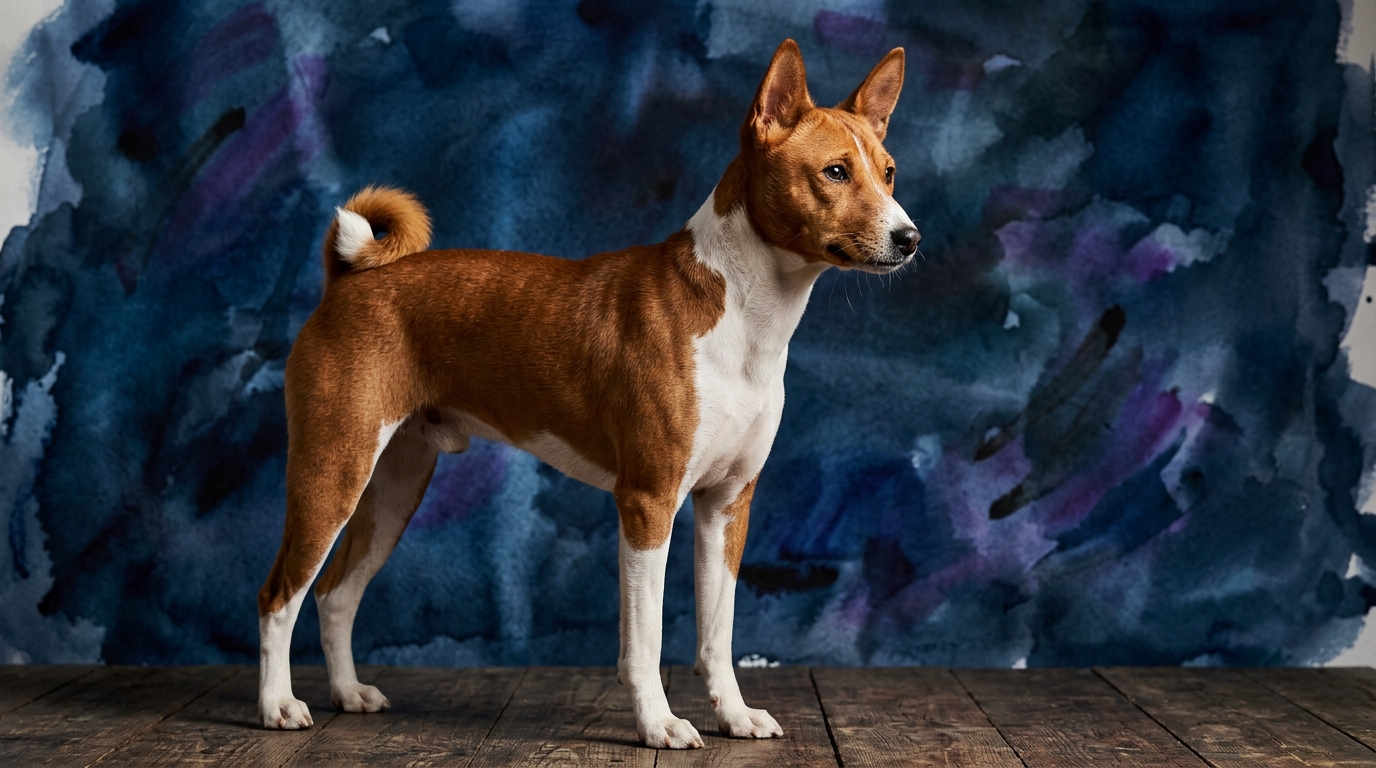

Side-by-Side IQ Profile: Basenji vs. Dogue de Bordeaux
At The Cosmic Pet Pet IQ Lab, we evaluate canine intelligence across five key dimensions, offering a nuanced view beyond simple labels. Let's examine how the Basenji and Dogue de Bordeaux measure up.
**Problem Solving:** This dimension assesses a dog's ability to navigate new situations, figure out solutions independently, and adapt to novel challenges. The Basenji scores an impressive 5/5 here, reflecting their profound capacity for independent thought. These hounds are adept at observing their environment and devising creative, often ingenious, ways to achieve their goals, whether it's opening a child-proof cabinet, unlatching a gate, or outsmarting a puzzle feeder. Their mind is constantly working, analyzing, and strategizing. In contrast, the Dogue de Bordeaux earns a 3/5 for problem-solving. While they are certainly capable of learning and adapting, their approach is generally more direct and less reliant on spontaneous, self-initiated ingenuity. They tend to follow learned patterns and human direction rather than constantly seeking to manipulate their surroundings.
**Training Speed:** This metric measures how quickly a dog grasps and consistently performs new commands and routines. The Basenji scores a challenging 1/5, which often surprises owners given their high problem-solving ability. This low score isn't a reflection of a lack of learning capacity, but rather their strong independence and selective cooperation. A Basenji learns quickly what benefits them, but they may choose to ignore commands if they don't perceive an immediate reward or purpose, making training a consistent act of negotiation. The Dogue de Bordeaux, however, scores a moderate 3/5 in training speed. This indicates a more amenable and receptive nature. Their desire to please their family, coupled with less independent decision-making, makes them generally more willing to engage in learning sessions and respond to commands, though consistency and positive reinforcement are still crucial for their substantial size and strength.
**Social Intelligence:** This dimension evaluates a dog's capacity to understand and respond appropriately to social cues from humans and other animals. Both the Basenji and the Dogue de Bordeaux score 3/5 in social intelligence, but their expressions of it differ. Basenjis, while forming deep, loyal bonds with their chosen humans, often maintain a reserved and discerning approach to strangers and other dogs. Their social interactions are typically on their own terms, reflecting their independent spirit and sometimes aloof nature. They are perceptive but selective in their engagement. The Dogue de Bordeaux also displays a moderate level of social intelligence. They are typically affectionate and devoted within their family unit, often exhibiting a calm, watchful demeanor. They are generally perceptive to human moods and family dynamics, showing a quiet understanding and a protective instinct, but are not usually overly effusive with unfamiliar individuals.
**Instinctive Drive:** This measures the strength of innate behaviors such as hunting, guarding, or herding. The Basenji scores a very high 5/5 in instinctive drive, particularly a powerful prey drive. Their sighthound heritage means they are acutely attuned to movement, making off-leash reliability challenging in unfenced areas. This intense drive fuels their independent exploration and resourcefulness, pushing them to pursue perceived game or interesting scents with remarkable persistence. The Dogue de Bordeaux exhibits a moderate 3/5 in instinctive drive. Their primary instinct manifests as a protective nature towards their family and home. While they can be formidable guardians due to their size and presence, their drive is typically more measured and less prone to independent pursuit or intense, self-directed activities compared to a Basenji's.
**Memory:** This dimension assesses a dog's ability to retain learned information and experiences. The Basenji scores a strong 4/5 for memory, quickly recalling past events, learned routines, and the consequences of their actions—or their humans' reactions. This contributes significantly to their ability to learn complex sequences and remember specific routes or tactics, even if they choose not to perform them on command. The Dogue de Bordeaux has a moderate 3/5 memory. They retain training and experiences well enough to build reliable habits and routines, but perhaps with less granular detail or the long-term recall of intricate, self-discovered solutions that a Basenji might demonstrate. Their memory supports consistent behavior within established parameters.
Where Basenji Wins Cognitively
The Basenji’s cognitive strengths shine brightest in their exceptional problem-solving abilities and powerful instinctive drive. With a 5/5 in problem-solving, these hounds excel at independent thought. They don't just learn; they actively strategize, often bypassing direct instruction to find their own creative, sometimes mischievous, solutions to perceived challenges. For instance, a Basenji might systematically test different methods to open a secure food container or devise an escape route from a seemingly impenetrable yard, demonstrating a profound capacity for trial-and-error learning and spatial reasoning. This isn't about simple rote memorization; it's about active, independent reasoning and an innate drive to understand and manipulate their environment.
Coupled with their 4/5 memory score, Basenjis recall these successful (and unsuccessful) strategies, applying them in future, similar scenarios. They learn from experience with impressive retention, building a repertoire of 'how-to' knowledge that makes them incredibly adaptable and persistent. Their strong instinctive drive (5/5) further fuels this cognitive prowess. This intense internal motivation means they are relentless in pursuing what interests them, whether it's a fascinating scent, a perceived 'escape' opportunity, or a new puzzle to unravel. This drive, combined with their sharp problem-solving skills, creates a highly self-sufficient, resourceful, and often challenging canine mind that thrives on engagement and novelty. They are thinkers who act on their thoughts.
Where Dogue de Bordeaux Wins Cognitively
While not achieving the same peak scores in specific cognitive dimensions as the Basenji, the Dogue de Bordeaux’s cognitive profile demonstrates a significant advantage in its balanced and consistent approach, particularly in areas related to cooperative learning and integration into a family setting. Their training speed of 3/5, notably higher than the Basenji's 1/5, indicates a greater willingness and capacity to absorb and respond to human instruction without the independent 'negotiation' often seen in Basenjis. This translates to a more predictable and generally less challenging learning curve for basic obedience, house manners, and adapting to household routines. Owners typically find Dogue de Bordeaux more straightforward to teach foundational commands and establish desired behaviors.
The Dogue de Bordeaux's more moderate instinctive drive (3/5) is another cognitive strength for many owners. It means they are less likely to be independently driven by external stimuli like prey, making them more attentive to human cues and less prone to bolting during walks. This moderation allows for a calmer, more focused presence, which is invaluable in a large breed. Their consistent 3/5 across problem-solving, social intelligence, instinctive drive, and memory suggests a reliable, steady cognitive temperament that prioritizes consistency and cooperation over independent, often self-serving, ingenuity. This balanced profile makes them inherently more agreeable and straightforward for owners seeking a responsive, devoted companion who thrives on stable routines and human companionship rather than constant intellectual challenges they devise themselves.
Which Is Easier to Train and Why
When evaluating ease of training, the Dogue de Bordeaux holds a distinct advantage over the Basenji, primarily due to fundamental differences in their inherent motivations and approach to cooperation. The Dogue de Bordeaux’s training speed is rated at 3/5, indicating a moderate but consistent receptiveness to learning new commands and routines. They generally possess a calm temperament and a desire to please their family, which makes them more inclined to cooperate during training sessions. Their motivation often stems from a desire for positive interaction and companionship with their human. Furthermore, their lower instinctive drive (3/5) means they are less likely to be intensely distracted by environmental stimuli, allowing them to focus more effectively on the task at hand and remain attentive to their trainer.
In stark contrast, the Basenji scores a mere 1/5 for training speed. This isn't due to a lack of capacity to learn, as their 5/5 problem-solving score demonstrates a highly capable mind, but rather an independent and often strong-willed nature. Basenjis are frequently described as "cat-like" in their independence; they learn quickly what benefits them and may choose to ignore commands if they don't perceive an immediate reward or purpose. Their powerful instinctive drive (5/5) also means they are easily diverted by fascinating scents, movement, or the lure of independent exploration, making sustained focus on human-led training a significant challenge. Training a Basenji demands immense patience, creativity, and a consistent understanding of their "what's in it for me?" mentality, requiring trainers to make lessons feel like a game or a puzzle they want to solve. A Dogue de Bordeaux, while still needing firm and consistent guidance due to their size, is generally a more willing and eager student, making the training process smoother and more predictable for most owners.
Which Suits Active Owners vs. Relaxed Owners
The Basenji is unequivocally better suited for active owners who relish a dynamic and engaging partnership. Their high problem-solving capacity (5/5) and intense instinctive drive (5/5) mean they require substantial mental stimulation and consistent physical activity to prevent boredom and potential destructive behaviors. These are dogs that thrive on having a 'job' or a constant stream of new challenges. Owners who enjoy dog sports like agility, lure coursing, scent work, or advanced trick training, and are prepared for a dog that constantly seeks out new adventures and independent exploration, will find a rewarding companion in a Basenji. Their innate curiosity demands varied experiences and opportunities to exercise both their body and their sharp mind. Without adequate engagement, a Basenji can become frustrated, leading to behaviors like incessant vocalizations, chewing, or attempts to escape.
In contrast, the Dogue de Bordeaux is a far better fit for more relaxed owners who appreciate a loyal, calm, and devoted presence. While they are a large breed requiring regular walks to maintain health and prevent obesity, their energy levels are generally moderate, and they are typically content with a comfortable home environment and consistent, gentle companionship. Their more balanced instinctive drive (3/5) means they are less prone to the relentless pursuit of self-directed activities that characterize the Basenji. This makes them easier to integrate into a quieter, more predictable lifestyle. Owners seeking a formidable yet gentle companion for leisurely strolls, cozy evenings on the couch, and a steady, affectionate presence will find the Dogue de Bordeaux a wonderful match. They appreciate comfort and routine, thriving in an environment where their primary 'job' is to be a cherished family member.
The Verdict
Opt for a Basenji if you are an experienced, active owner seeking a truly independent, highly intelligent problem-solver who thrives on mental challenges and consistent engagement, understanding that their strong will requires immense patience and creative training.
Select a Dogue de Bordeaux if you desire a devoted, calm, and affectionate companion with a more balanced cognitive profile, appreciating their cooperative nature and willingness to please in a relaxed home environment.
🧠 Find Your Pet's IQ Score
Our Pet IQ Lab assessment covers 25+ tests across 5 cognitive dimensions — personalized to your breed.
Take the Full IQ Test →Frequently Asked Questions
Is the Basenji truly untrainable due to its 1/5 training speed?
No, the Basenji is not untrainable; their 5/5 problem-solving score confirms their capacity to learn, but they require a different approach. Training a Basenji demands creativity, high-value rewards, and making lessons feel like a game, as they are less inclined to obey simply to please unless they perceive a clear benefit.
Does the Dogue de Bordeaux's moderate IQ mean they are not smart?
Not at all. A Dogue de Bordeaux's moderate IQ scores across the board indicate a balanced and consistent cognitive profile, making them reliable, trainable, and perceptive companions. Their intelligence is expressed through loyalty, calm judgment, and receptiveness to human guidance, rather than independent ingenuity or extreme specialized aptitudes.
How do their instinctive drives impact daily life for owners?
A Basenji's very strong instinctive drive (5/5) means a powerful prey drive and a constant need for mental and physical stimulation, requiring secure fencing and vigilant supervision outdoors to prevent escapes. A Dogue de Bordeaux's moderate instinctive drive (3/5) primarily manifests as a protective instinct, making them watchful guardians who are generally less prone to independent pursuits, allowing for a calmer, more predictable home life.