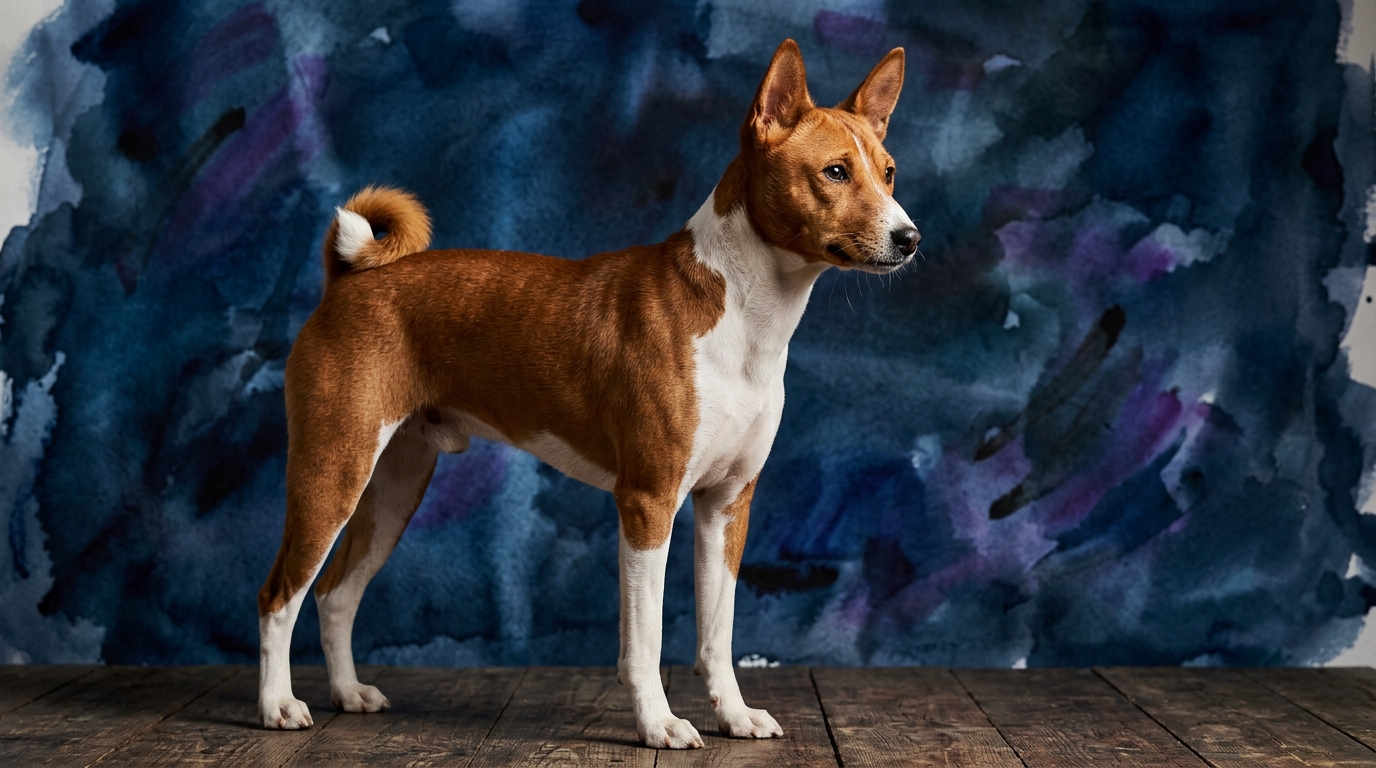
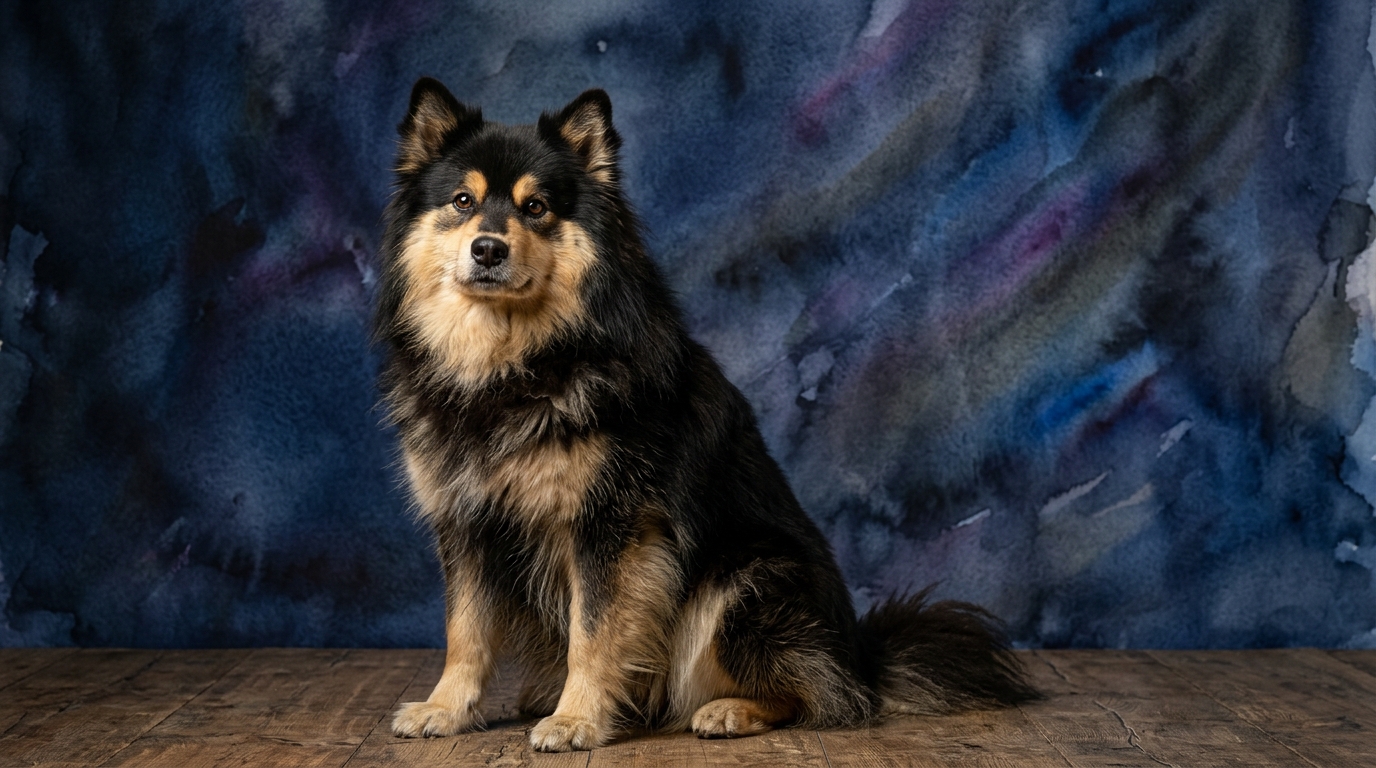
Side-by-Side IQ Profile: Basenji vs. Finnish Lapphund
The Basenji, historically a hunter from the Congo, exhibits a unique cognitive profile reflecting its ancient lineage and independent hunting role. Their Problem Solving is rated an exceptional 5/5, indicating a remarkable capacity for devising creative, often self-serving solutions to obstacles, such as opening latches or outsmarting enclosures. However, this cleverness comes with a Training Speed of 1/5; they learn quickly but are notoriously difficult to motivate for human-directed tasks, often choosing their own agenda over compliance. Social Intelligence stands at 3/5, as they form deep bonds but often display an aloofness, selective in their interactions and sometimes appearing to disregard subtle human cues. Their Instinctive Drive is a powerful 5/5, fueled by an intense prey drive and boundless curiosity, constantly exploring with their senses. Finally, their Memory is strong at 4/5, allowing them to recall complex spatial layouts, past experiences, and successful strategies for achieving their goals.
The Finnish Lapphund, a Nordic herding breed, presents a more balanced and cooperative cognitive makeup, shaped by centuries of working closely with Sami people and their reindeer. Their Problem Solving is rated 3/5, meaning they are capable of figuring out tasks, particularly those related to their herding instincts or daily routines, but are less inclined towards the mischievous, independent problem-solving seen in Basenjis. Their Training Speed is a moderate 3/5; they are generally willing learners, responsive to positive reinforcement and eager to engage in structured training sessions. Social Intelligence also scores 3/5, manifesting as a friendly and attentive nature within their family unit, adept at reading familiar human social cues and enjoying companionship. Instinctive Drive is a balanced 3/5, primarily focused on herding behaviors, with a curious yet controlled approach to their environment and generally lower prey drive compared to hounds. Their Memory is also a moderate 3/5, allowing them to retain commands, routines, and social interactions effectively over time.
Where the Basenji Wins Cognitively
The Basenji’s cognitive strengths are undeniably rooted in its self-sufficient heritage. Their exceptional 5/5 Problem Solving isn't about following a pre-set sequence of steps; it’s about innovative, often out-of-the-box thinking to achieve desired outcomes. This breed will analyze a situation – be it a closed door or a treat hidden on a high shelf – and systematically attempt various methods until success is achieved, demonstrating a remarkable capacity for trial-and-error learning and environmental manipulation. This independent ingenuity is a defining characteristic of their mental prowess. Furthermore, their 5/5 Instinctive Drive fuels an unparalleled sensory engagement with the world. A Basenji’s nose and eyes are constantly at work, processing information, tracking scents, and identifying potential prey or interesting new territories. This relentless drive for exploration and investigation means they are perpetually learning from their environment, mapping out their surroundings with a keen, almost primal awareness. Their 4/5 Memory supports this, allowing them to retain complex spatial information, remember where specific scents led them, and recall successful strategies for navigating their world, whether it’s finding a hidden toy or circumventing a previously encountered barrier.
Where the Finnish Lapphund Wins Cognitively
While the Basenji excels in independent ingenuity, the Finnish Lapphund’s cognitive strengths lie in its cooperative and biddable nature, making it a more harmonious partner in many human-centric activities. Their moderate 3/5 Training Speed, contrasted with the Basenji's 1/5, signifies a crucial advantage in learnability and responsiveness. Lapphunds genuinely enjoy engaging with their human companions in structured learning, readily absorbing commands and routines. This willingness to learn and please stems from their historical role as herders, where clear communication and cooperation with their human counterparts were essential for survival and success. Their Social Intelligence, while rated the same 3/5 as the Basenji, manifests differently; it's geared towards understanding and responding to human cues in a collaborative context. A Lapphund is more likely to actively seek to understand what its owner wants and adjust its behavior accordingly, rather than pursuing its own agenda. This makes them significantly easier to guide and integrate into a family structure, as they naturally orient towards human interaction for direction and validation, fostering a strong, reciprocal learning environment.
Which is Easier to Train and Why
Without question, the Finnish Lapphund is considerably easier to train than the Basenji, a difference profoundly rooted in their core behavioral drivers. The Lapphund’s moderate Training Speed (3/5) indicates a balanced aptitude for learning, coupled with an inherent desire to work alongside humans. They respond well to positive reinforcement, are motivated by praise and treats, and possess a cooperative spirit honed over centuries of herding. Their social intelligence helps them to interpret human intentions and expectations, making them receptive students who genuinely aim to please. This biddability translates into a more straightforward training experience, where commands are generally accepted and integrated into their behavioral repertoire with consistency. The Basenji, conversely, presents a formidable training challenge, marked by its 1/5 Training Speed. This isn't a lack of intelligence; rather, it’s a profound independence and a lack of intrinsic motivation to comply with human directives unless it serves their immediate interest. They learn commands quickly but will often choose to ignore them, leveraging their 5/5 Problem Solving to find alternatives to compliance. Their strong instinctive drives frequently override any learned obedience, making consistent recall or impulse control particularly difficult. Training a Basenji requires immense patience, creativity, and an understanding that you are negotiating with a keen, self-willed intellect rather than simply instructing.
Which Suits Active Owners vs. Relaxed Owners
Both Basenjis and Finnish Lapphunds require engaged owners, but the nature of that engagement differs significantly. For truly active owners who enjoy structured activities and a cooperative partner, the Finnish Lapphund is an excellent fit. They thrive on interactive pursuits like agility, obedience, or long hikes where they can work alongside their owner. Their moderate energy levels are sustained, making them ideal companions for consistent, shared adventures. They appreciate mental stimulation that involves teamwork and problem-solving within a human-directed context. A 'relaxed' owner, meaning one who prefers a generally biddable dog that enjoys calm companionship after sufficient exercise, would also find the Lapphund more suitable. They are typically content to settle down indoors once their physical and mental needs are met, integrating smoothly into family life. The Basenji, while also requiring active engagement, suits a different kind of owner – one who embraces a challenge and values a highly independent, intellectually stimulating companion. Their high instinctive drive (5/5) and problem-solving acumen (5/5) mean they need constant mental enrichment that taps into their cunning and curiosity, such as complex puzzle toys, scent work, or exploring varied, secure environments. Physical activity for a Basenji often means managing their powerful prey drive and escape artistry. A 'relaxed' owner seeking a low-maintenance dog would likely find a Basenji profoundly frustrating, as their boredom can quickly manifest as destructive behavior, incessant 'baroo-ing,' or clever escape attempts. They demand an owner who is actively engaged in outsmarting and managing their unique intellect, rather than simply guiding it.
The Verdict
Choose the Basenji if you are an experienced dog owner seeking a highly independent, intellectually challenging, and often mischievous companion, prepared to invest significant time in creative training and management for a dog that marches to the beat of its own drum.
Choose the Finnish Lapphund if you desire a cooperative, friendly, and biddable family companion for interactive activities, valuing a dog that enjoys working alongside you and readily integrates into a structured, harmonious household.
🧠 Find Your Pet's IQ Score
Our Pet IQ Lab assessment covers 25+ tests across 5 cognitive dimensions — personalized to your breed.
Take the Full IQ Test →Frequently Asked Questions
Are Basenjis really untrainable?
Basenjis are not untrainable, but their training speed is very low (1/5) due to their independent nature and lack of desire to please. They learn quickly but often choose not to comply, requiring immense patience and highly motivating, creative training methods.
Do Finnish Lapphunds have strong herding instincts?
Yes, Finnish Lapphunds possess a moderate herding instinct (3/5), which can manifest as gentle nudging or gathering behaviors. This instinct is generally manageable and can be channeled into appropriate activities like herding games or dog sports.
Which breed is better for a first-time dog owner?
The Finnish Lapphund is generally a better choice for a first-time dog owner due to its cooperative nature and moderate training speed (3/5). Basenjis, with their extreme independence and challenging training speed (1/5), are typically recommended for experienced owners.