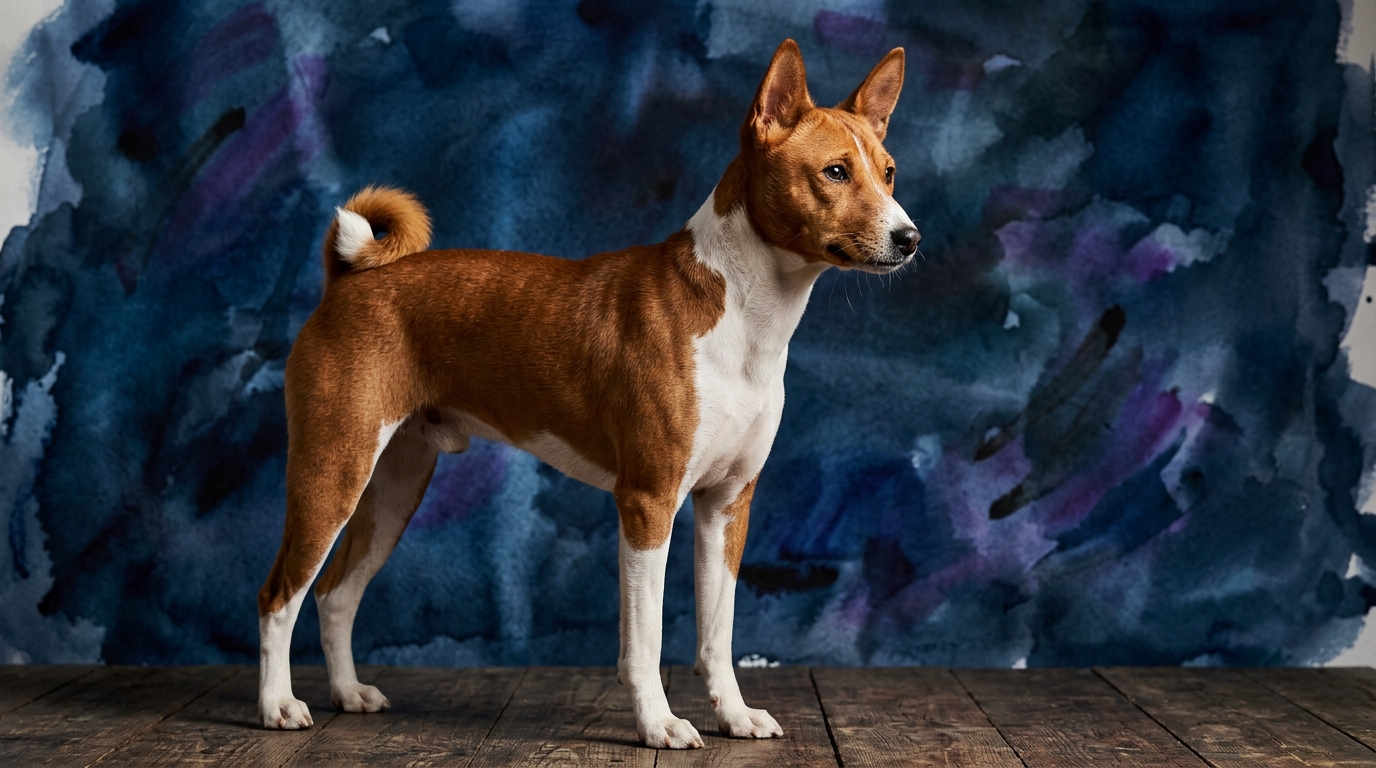
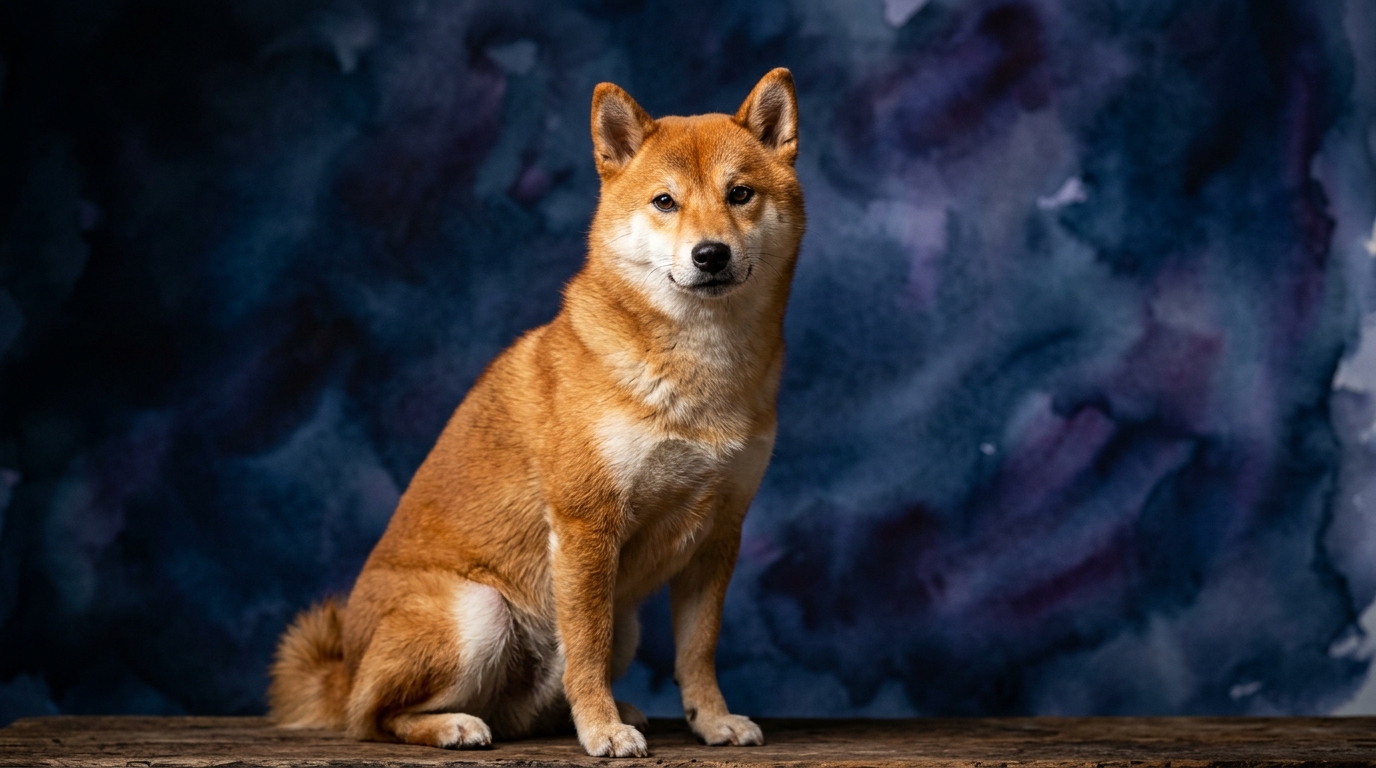
Side-by-Side Cognitive Profiles: Basenji vs. Shiba Inu
The Basenji, often referred to as the 'barkless dog,' presents a fascinating cognitive makeup, reflected in its Coren ranking of #78, indicating a placement within the average working/obedience intelligence category. Our IQ Lab assessment places its Problem Solving at an exceptional 5/5, showcasing a breed that thinks deeply and creatively to navigate its environment. However, its Training Speed sits at a challenging 1/5, meaning consistent instruction requires significant effort and patience, with new commands taking extensive repetition to solidify. Social Intelligence registers at 3/5, suggesting an ability to interpret human cues but often coupled with a preference for selective engagement rather than eager participation. An Instinctive Drive score of 5/5 highlights a powerful internal compass, often expressed through strong prey instincts and an independent hunting mentality. Finally, a Memory score of 4/5 means Basenjis retain complex sequences and prior experiences, both positive and negative, with considerable fidelity.
The Shiba Inu, hailing from Japan, is not explicitly ranked by Coren, but its cognitive profile offers a compelling parallel to the Basenji. Its Problem Solving ability is rated at a strong 4/5, indicating competence in figuring out situations, though perhaps with less elaborate strategizing than its African counterpart. Training Speed comes in at a 2/5, making it marginally more receptive to instruction than the Basenji, but still requiring a dedicated approach to ensure new behaviors are adopted. Like the Basenji, the Shiba Inu exhibits a Social Intelligence of 3/5, demonstrating an understanding of social dynamics while maintaining a distinct sense of personal space and selective affection. Its Instinctive Drive matches the Basenji at a 5/5, reflecting a powerful prey drive, vigilance, and a keen awareness of its surroundings. The Shiba Inu's Memory score also matches at 4/5, allowing it to remember routines, past events, and learned associations effectively.
Where the Basenji Excels Cognitively
The Basenji's most pronounced cognitive strength lies in its exceptional Problem Solving ability, rated a perfect 5/5 compared to the Shiba Inu's 4/5. This translates into a remarkable capacity for strategic thinking and resourcefulness. A Basenji isn't just reacting; it's often analyzing and devising unique, sometimes elaborate, solutions to environmental challenges. This might manifest as skillfully manipulating latches to open doors, meticulously planning an escape route from a confined space, or even orchestrating ways to acquire a desired item that appears out of reach. Their high instinctive drive, paired with this cognitive ingenuity, often means they'll apply their problem-solving prowess towards fulfilling those deep-seated urges, such as hunting or exploration. This sophisticated level of cognitive manipulation can be both impressive and challenging for owners, requiring constant vigilance to anticipate their next clever move.
Where the Shiba Inu Holds a Cognitive Edge
While both breeds present training challenges, the Shiba Inu demonstrates a slight cognitive advantage in Training Speed, scoring 2/5 compared to the Basenji's 1/5. This marginal difference signifies that while the Shiba is still independently minded and can be stubborn, it generally requires fewer repetitions and slightly less effort to grasp new commands and behavioral expectations. Owners might find the Shiba Inu a touch more amenable to structured learning sessions, provided the motivation is compelling and consistent. Their problem-solving abilities (4/5) are still formidable, allowing them to comprehend tasks, but their slightly quicker uptake in training means they might integrate learned behaviors into their repertoire with a bit less friction than the Basenji.
Training Dynamics: Which is More Receptive?
When evaluating ease of training, the Shiba Inu, despite its own reputation for independence, presents itself as the marginally more receptive student compared to the Basenji. The Basenji's 1/5 Training Speed score is a stark indicator of the significant commitment required. Their exceptional problem-solving (5/5) often means they aren't just slow to learn; they're actively assessing whether a command serves their own interests or if they can find a workaround. This can result in a Basenji appearing to 'outsmart' its owner, selectively complying or creatively ignoring instructions when more compelling distractions arise. Consistency, extremely high-value rewards, and a keen sense of humor are absolute necessities for Basenji training; they learn best when they believe it was their idea, or the reward outweighs any perceived imposition.
The Shiba Inu, with a 2/5 Training Speed, still embodies a strong will but typically exhibits a slightly greater willingness to engage in structured learning. Their independence often manifests as stubbornness rather than outright defiance or strategic avoidance. Positive reinforcement methods work well, but owners must be prepared for sessions that require patience and creative motivation to maintain the Shiba's interest. While they won't always comply with enthusiasm, their slightly quicker uptake means that with dedication, a well-socialized Shiba Inu can achieve a reasonable level of obedience, albeit often on their own terms. Both breeds demand proactive socialization from a young age to mitigate their strong instinctive drives and selective social intelligence, but the Shiba offers a slightly less arduous path for an owner committed to consistent guidance.
Family Companions: Active vs. Relaxed Lifestyles
For active owners seeking a companion that thrives on engagement and mental stimulation, both the Basenji and Shiba Inu can be fitting, yet demanding, choices. Their high instinctive drives (5/5) mean they require significant outlets for exploration, scent work, and vigorous exercise. Active owners who enjoy hiking, agility, or engaging in problem-solving games will find these breeds capable partners. The Basenji's unparalleled problem-solving makes them excellent candidates for puzzle toys and complex enrichment activities, but this intellect also means fences must be escape-proof and leashes consistently used. Shiba Inus, with their vigilance and slightly improved trainability, can also excel in active households that prioritize consistent training and boundary setting, providing a lively and watchful companion who appreciates their independent adventures.
However, neither breed is well-suited for relaxed owners seeking a low-maintenance, cuddly pet. Their social intelligence (3/5) indicates they understand human interaction but prefer to do so on their own terms, often valuing personal space over constant physical affection. A relaxed home without ample physical and mental stimulation will likely lead to boredom-driven behaviors such as digging, chewing, or excessive vocalization (the Shiba scream, or the Basenji's yodel). Both breeds demand owners who are prepared to meet their profound need for activity and consistent, firm yet positive, guidance to integrate successfully into a family dynamic. They are loyal but independent spirits, not inherently predisposed to being passive observers of household life.
The Verdict
Choose a Basenji if you are an experienced owner prepared for a truly cunning, independent, and endlessly resourceful companion who will challenge your expectations of dog ownership daily. You must be ready to manage a master escape artist and invest heavily in mental enrichment.
Opt for a Shiba Inu if you appreciate a vigilant, spirited, and somewhat independent dog that is capable of building strong bonds on its own terms, and you are ready for a strong-willed but slightly more receptive student in training.
🧠 Find Your Pet's IQ Score
Our Pet IQ Lab assessment covers 25+ tests across 5 cognitive dimensions — personalized to your breed.
Take the Full IQ Test →Frequently Asked Questions
Which breed exhibits more independence?
Both the Basenji and Shiba Inu are fundamentally independent breeds, scoring 3/5 in Social Intelligence, meaning they appreciate their own space. However, the Basenji's 5/5 Problem Solving combined with its independent nature can make it appear more self-sufficient and less inclined to seek human direction compared to the Shiba Inu.
Are Basenjis or Shiba Inus typically better with children?
Neither breed is universally recommended as 'easy' with children due to their independent nature and preference for personal space, both scoring 3/5 in Social Intelligence. Both require early and extensive socialization with children, careful supervision during interactions, and children must be taught to respect the dog's boundaries to foster a positive relationship.
Which breed is more prone to escaping or wandering?
The Basenji, with its 5/5 Problem Solving and 5/5 Instinctive Drive, is arguably more prone to strategic escapes and wandering. Their cognitive ability allows them to meticulously plan and execute getaways, driven by strong hunting instincts. While Shiba Inus also have a strong instinctive drive and can be escape artists, their methods might be less overtly calculated than a Basenji's.