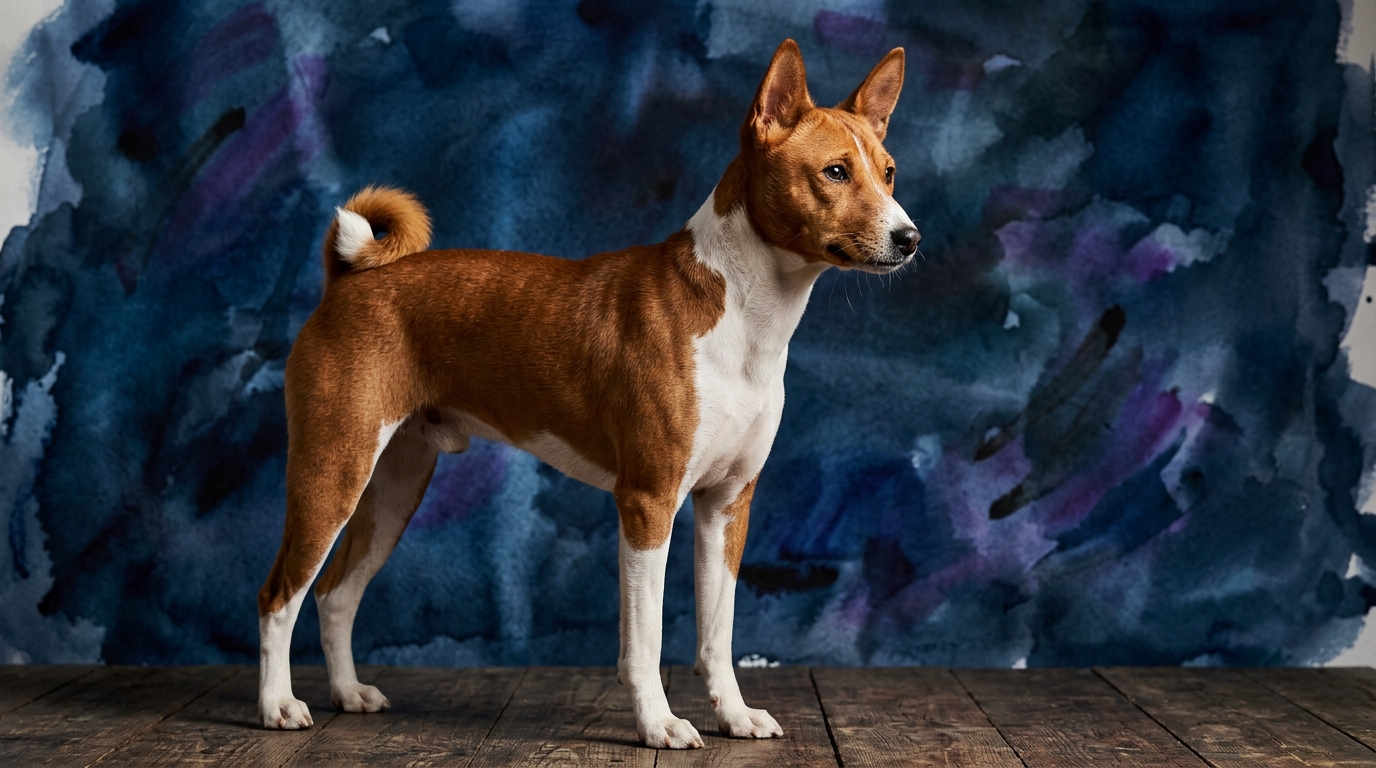
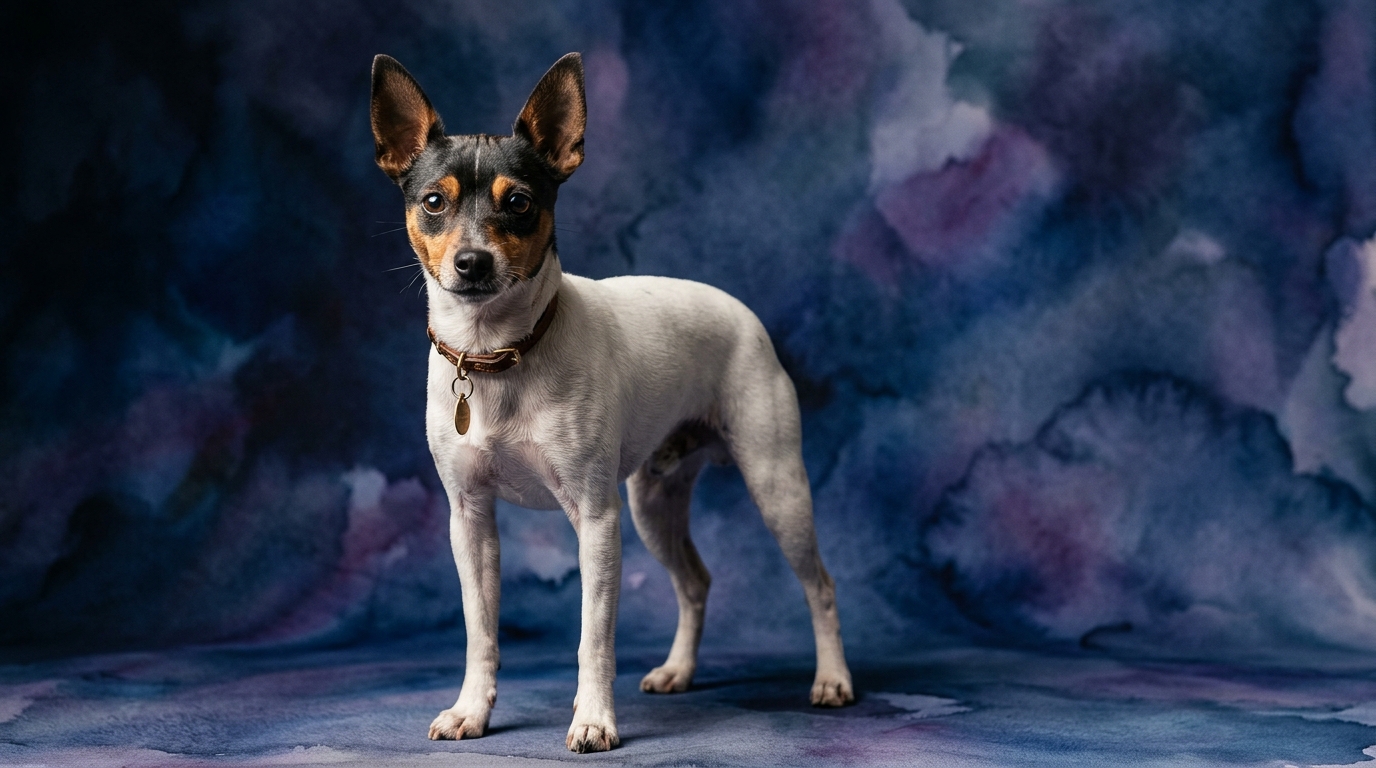
Side-by-Side IQ Profile: Basenji vs. Toy Fox Terrier
The Cosmic Pet Pet IQ Lab employs a five-dimensional framework to assess canine intelligence, offering a nuanced look beyond mere obedience. This framework evaluates problem-solving, training speed, social intelligence, instinctive drive, and memory, providing a comprehensive cognitive blueprint for each breed.
The Basenji, often called the "barkless dog," showcases a cognitive profile deeply rooted in its ancient sighthound heritage. It earns a top-tier 5/5 for Problem Solving, reflecting profound independent ingenuity in devising solutions to achieve its own goals. Its Training Speed is a notably low 1/5, indicating a strong-willed nature that often prioritizes self-interest over human directives. Social Intelligence stands at 3/5, suggesting a moderate ability to understand social cues, though often with a degree of aloofness. A powerful Instinctive Drive of 5/5 highlights its deep-seated hunting impulses, complemented by a solid 4/5 Memory for retaining complex environmental information.
In contrast, the Toy Fox Terrier, a breed known for its spirited demeanor, offers a more balanced cognitive spread. Its Problem Solving is rated 3/5, indicating competence in figuring things out, often through observation or trial and error. Training Speed is a moderate 3/5, demonstrating a willingness to learn and respond to cues, though occasional terrier tenacity may emerge. Social Intelligence is also 3/5, reflecting a capacity for connection and responsiveness to human interaction. Instinctive Drive is 3/5, a clear terrier trait for chasing small prey, but less overwhelming than the Basenji's. Finally, its Memory is 3/5, sufficient for retaining commands and routines, yet perhaps less detailed than the Basenji's environmental recall.
Where the Basenji Wins Cognitively
The Basenji's cognitive superiority shines brightest in its remarkable Problem Solving capabilities, scoring a perfect 5/5 against the Toy Fox Terrier's 3/5. This isn't about solving puzzles for human approval, but rather an innate cleverness in independently navigating its environment, such as figuring out how to open latches, scale fences, or access forbidden areas. Owners often describe them as "escape artists" due to this profound ability to independently strategize and execute solutions to achieve their self-determined objectives.
Furthermore, the Basenji possesses an unparalleled Instinctive Drive, rated 5/5 compared to the Toy Fox Terrier's 3/5. This manifests as a powerful, ancient urge to hunt, track, and chase, providing an intense focus and endurance when engaged in activities that tap into these deep-seated instincts. Their memory, at 4/5 versus 3/5 for the TFT, also contributes to their cognitive edge in understanding complex environments and retaining information about successful (or unsuccessful) attempts at problem-solving or escaping, making them formidable learners of their surroundings.
Where the Toy Fox Terrier Wins Cognitively
The Toy Fox Terrier's cognitive strengths become evident when considering Training Speed, where it scores a 3/5 against the Basenji's challenging 1/5. This breed is generally more eager to please and responsive to human guidance, making the process of teaching new commands and routines significantly more straightforward. Their willingness to cooperate and engage in training sessions translates into quicker learning and more reliable responses, particularly with positive reinforcement.
While both breeds score 3/5 in Social Intelligence, the *nature* of the Toy Fox Terrier's social interaction often presents a cognitive advantage for typical pet ownership. TFTs tend to be more overtly communicative and engaged with their human companions, readily interpreting social cues and seeking interaction, which fosters a more direct and reciprocal bond. This contrasts with the Basenji's more independent and often aloof social style. This responsiveness to human social dynamics makes them generally more adaptable to varied household environments and social expectations, as they are more inclined to integrate into complex family routines and respond to nuanced human communication.
Which is Easier to Train and Why
Without question, the Toy Fox Terrier is the easier breed to train, a direct consequence of its 3/5 Training Speed compared to the Basenji's challenging 1/5. The Toy Fox Terrier typically approaches training with enthusiasm and a desire to interact with its owner, making it more receptive to learning new commands and routines through positive reinforcement. Their natural vivacity and agility make them excellent candidates for various dog sports and obedience work, where their willingness to engage and moderate instinctive drive can be effectively channeled.
The Basenji, on the other hand, presents a significant training challenge due to its extreme independence and self-directed problem-solving. While capable of understanding commands, their compliance is often optional; they weigh whether a request aligns with their current interests or perceived benefits. This is not a lack of cognitive capacity, but rather a profound self-will, requiring immense patience, creativity, and a deep understanding of canine motivation from their owner. Training a Basenji means making the process a highly rewarding game, consistently demonstrating why cooperation is more beneficial than pursuing their own agenda, and accepting that perfect obedience may never be their hallmark.
Which Suits Active Owners vs. Relaxed Owners
For owners seeking a highly active and mentally stimulating partnership, the Basenji presents a compelling, albeit demanding, choice. Its high instinctive drive and superior problem-solving capabilities mean it thrives with consistent mental and physical engagement, requiring structured outlets for its natural hunting instincts, such as scent work, lure coursing, or extensive exploration in secure environments. An owner who is committed to providing daily, varied activities that challenge both its body and its clever mind will find a deeply rewarding, if independent, companion.
Neither breed is truly suited for a "relaxed" owner in the sense of a sedentary lifestyle, but the Toy Fox Terrier is generally a better fit for those seeking a more manageable level of activity and a dog more inclined to settle indoors. While energetic and playful, their exercise needs can often be met with regular walks, yard play, and interactive indoor games, after which they are generally content to cuddle and relax with their family. They offer a lively presence without the Basenji's relentless demand for independent mental stimulation, making them a good option for individuals who enjoy activity but also appreciate a dog that can transition easily into a calmer home environment.
The Verdict
Choose the Basenji if you are an experienced, patient owner who values an independent, profoundly intelligent, and deeply instinctual companion, ready to engage in consistent mental stimulation and creative, highly motivating training.
Opt for the Toy Fox Terrier if you desire a lively, responsive companion who enjoys participating actively in family life and is generally more amenable to training and adaptable to various home environments.
🧠 Find Your Pet's IQ Score
Our Pet IQ Lab assessment covers 25+ tests across 5 cognitive dimensions — personalized to your breed.
Take the Full IQ Test →Frequently Asked Questions
Are Basenjis truly "untrainable"?
Basenjis are not untrainable, but their training speed is very low due to their independence and strong will. They understand commands but require highly motivated, consistent, and creative training methods to encourage compliance rather than forced obedience, often viewing requests as suggestions.
How does a Toy Fox Terrier's "instinctive drive" manifest?
The Toy Fox Terrier's moderate instinctive drive typically manifests as a strong prey drive towards small animals like rodents, an eagerness for chasing, and a love for digging. This can be effectively channeled into activities like Earthdog trials, agility, or interactive puzzle toys that mimic hunting scenarios.
Can a Basenji live in an apartment?
A Basenji can live in an apartment, provided their significant mental and physical exercise needs are consistently met. This includes daily vigorous walks, opportunities for scent work, and puzzle toys to challenge their high problem-solving abilities, along with a secure outdoor space for supervised exploration.