
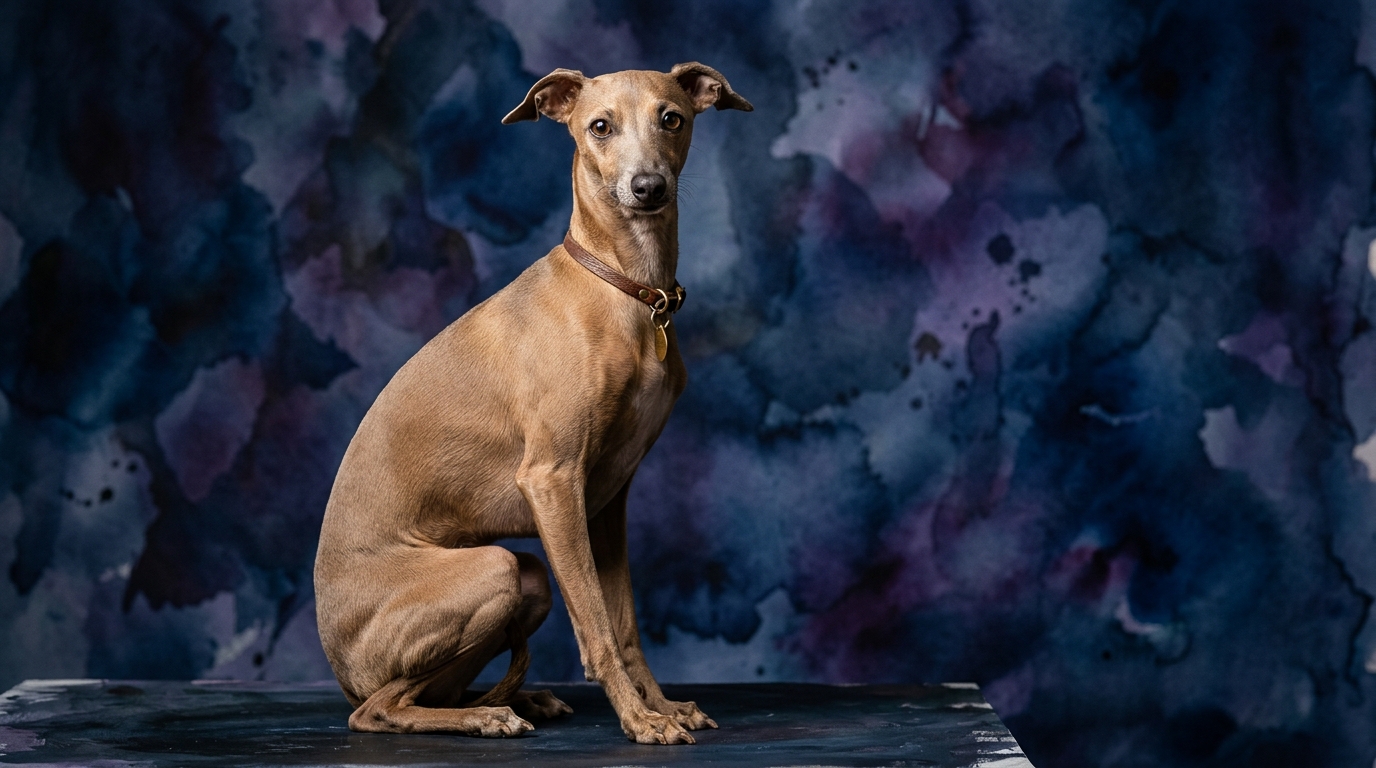
Side-by-Side IQ Profile: Basset Hound vs. Italian Greyhound
While both breeds are rated 3/5 across all cognitive dimensions, this numerical equivalence often masks fascinating differences in how these capacities are expressed and prioritized. Understanding these nuances is key to appreciating their unique mental landscapes.
Problem Solving (3/5): For the Basset Hound, problem-solving often manifests as a deliberate, persistent effort to decipher and follow complex scent trails, navigating obstacles by relying heavily on their olfactory senses to reach a perceived source. The Italian Greyhound, conversely, applies its problem-solving acumen to navigating intricate social dynamics within the home, finding optimal comfort spots, or devising clever strategies to solicit attention and treats from their human companions.
Training Speed (3/5): A Basset Hound's training speed, despite its moderate 3/5 rating, is frequently influenced by their profound independent streak and their nose's powerful allure; they learn effectively with patience and high-value rewards but can be easily distracted by compelling scents. The Italian Greyhound, also rated 3/5, learns quickly with gentle, positive reinforcement but can be sensitive to harsh methods and may demonstrate selective hearing if the task isn't sufficiently engaging or comfortable.
Social Intelligence (3/5): Basset Hounds exhibit social intelligence through their understanding of pack hierarchy and their generally affable, though sometimes reserved, interactions within their family unit, communicating needs and contentment through a range of vocalizations and body language. Italian Greyhounds display their social intelligence by forming deep, often singular bonds with their primary human, showing remarkable sensitivity to mood changes and using subtle cues to express affection or seek comfort and security.
Instinctive Drive (3/5): The Basset Hound's 3/5 instinctive drive is overwhelmingly dominated by their powerful scenting ability, compelling them to meticulously follow trails with single-minded focus, a trait deeply rooted in their historical hunting purpose. For the Italian Greyhound, their 3/5 instinctive drive surfaces as a keen visual prey drive for small, fast-moving objects, coupled with an innate desire for warmth, comfort, and close physical contact within their safe domestic environment.
Memory (3/5): Basset Hounds possess a strong memory for scent associations, recalling specific odors and the complex routes previously taken during exploration or hunting, allowing them to retrace steps or anticipate familiar olfactory experiences. Italian Greyhounds demonstrate memory through their recall of daily routines, the locations of preferred napping spots, and the specific individuals who offer the most comforting interactions or reliable sources of treats and affection.
Where the Basset Hound Wins Cognitively
The Basset Hound truly shines in areas demanding deep olfactory processing and unwavering persistence, a cognitive strength uniquely tied to their ancestral role. Their extraordinary nose, acting as a primary cognitive tool, allows them to dissect and interpret complex scent data in ways few other breeds can, making them unparalleled in tracking and trailing activities. This isn't merely an automatic reaction; it's a sophisticated form of environmental problem-solving where they methodically follow a scent puzzle, often for extended periods, demonstrating impressive mental stamina and a singular focus on their chosen task, ignoring other stimuli.
Where the Italian Greyhound Wins Cognitively
Conversely, the Italian Greyhound excels in cognitive domains requiring swift perception, spatial awareness, and nuanced social responsiveness within their immediate environment. Their slender build and agility are complemented by a sharp visual acuity, enabling them to quickly process environmental changes and react with speed, whether to chase a perceived 'prey' or navigate a crowded room with graceful precision. Furthermore, their finely tuned social intelligence, particularly within their immediate human family, allows them to read and respond to subtle human cues, often anticipating needs or moods with remarkable sensitivity, demonstrating a deep empathetic connection beyond simple learned behaviors.
Which is Easier to Train and Why
Despite identical 3/5 scores in training speed, the practical experience of training a Basset Hound versus an Italian Greyhound presents distinct challenges and rewards, rooted in their breed-specific motivations and temperaments. The Basset Hound's training journey is often characterized by their independent streak and profound dedication to their nose; once a captivating scent is engaged, external commands can temporarily become secondary, requiring consistent, high-value rewards and immense patience to redirect their focus. Their learning isn't slow, but their application of learned commands is heavily influenced by environmental stimuli and their own strong motivations, often demanding a handler who appreciates their methodical nature and can make training feel like a collaborative hunt for rewards. The Italian Greyhound, by contrast, responds best to gentle, positive reinforcement and shorter, engaging sessions, as their sensitive nature can make them prone to shutting down if training feels too harsh or repetitive. Their learning is quick when motivated by praise and comfort, but their independent 'toy dog' spirit means they might choose to comply only when it suits them, or if the reward is sufficiently enticing, often finding creative ways to avoid tasks they deem uninteresting. Therefore, neither is inherently 'easier,' but rather they demand different training approaches: persistence and scent-management for the Basset, and sensitivity with engaging, positive reinforcement for the Italian Greyhound.
Which Suits Active Owners vs. Relaxed Owners
When considering lifestyle compatibility, these two breeds, despite their shared IQ scores, cater to very different owner profiles. The Basset Hound, while not built for marathons, requires owners who appreciate and can manage their substantial need for scent-work and exploration; they thrive on long, meandering walks where their nose can lead, demanding a relaxed but dedicated owner who enjoys observing their dog's methodical investigation of the world and is prepared for their independent 'hound' decision-making. Their calm indoor demeanor belies their outdoor drive, making them suitable for owners who enjoy a quiet companion at home but are willing to commit to daily, purposeful outdoor scent adventures. The Italian Greyhound, however, is an ideal match for owners who desire a highly interactive, affectionate companion capable of bursts of activity followed by extensive periods of lounging. They suit owners who can provide secure spaces for their energetic zoomies and appreciate a dog that is equally content snuggled on a lap as they are briefly chasing a toy. Their delicate build and sensitivity mean they flourish in a gentle, consistent home environment, making them perfect for those seeking a devoted, low-impact exercise partner for indoor play and short, brisk walks, valuing companionship above all else.
The Verdict
Choose the Basset Hound if you appreciate a dog with an unparalleled sense of smell, a methodical approach to problem-solving, and a charmingly independent spirit that thrives on scent-driven exploration, perfect for owners who enjoy patient, deliberate outdoor adventures.
Opt for the Italian Greyhound if you seek a highly affectionate, visually perceptive, and agile companion who excels in social interactions within the home, ideal for owners who value close bonding, indoor play, and a sensitive, elegant presence.
🧠 Find Your Pet's IQ Score
Our Pet IQ Lab assessment covers 25+ tests across 5 cognitive dimensions — personalized to your breed.
Take the Full IQ Test →Frequently Asked Questions
Are Basset Hounds difficult to train?
Basset Hounds are not inherently difficult, but their strong scent drive and independent nature mean training requires significant patience and consistency. High-value rewards and management of environmental distractions are key to successful learning and compliance.
Do Italian Greyhounds need a lot of exercise?
Italian Greyhounds enjoy short bursts of intense activity like sprinting and playing, often referred to as 'zoomies,' but they are equally content with long periods of rest and snuggling indoors. Daily short walks and secure play areas are generally sufficient for their exercise needs.
How do Basset Hounds and Italian Greyhounds interact with children?
Basset Hounds are generally tolerant and good-natured with children, though their size and floppy nature mean supervision is always wise to prevent accidental tumbles. Italian Greyhounds are more delicate and sensitive, often preferring older, respectful children who understand how to interact gently with a small, fragile dog.