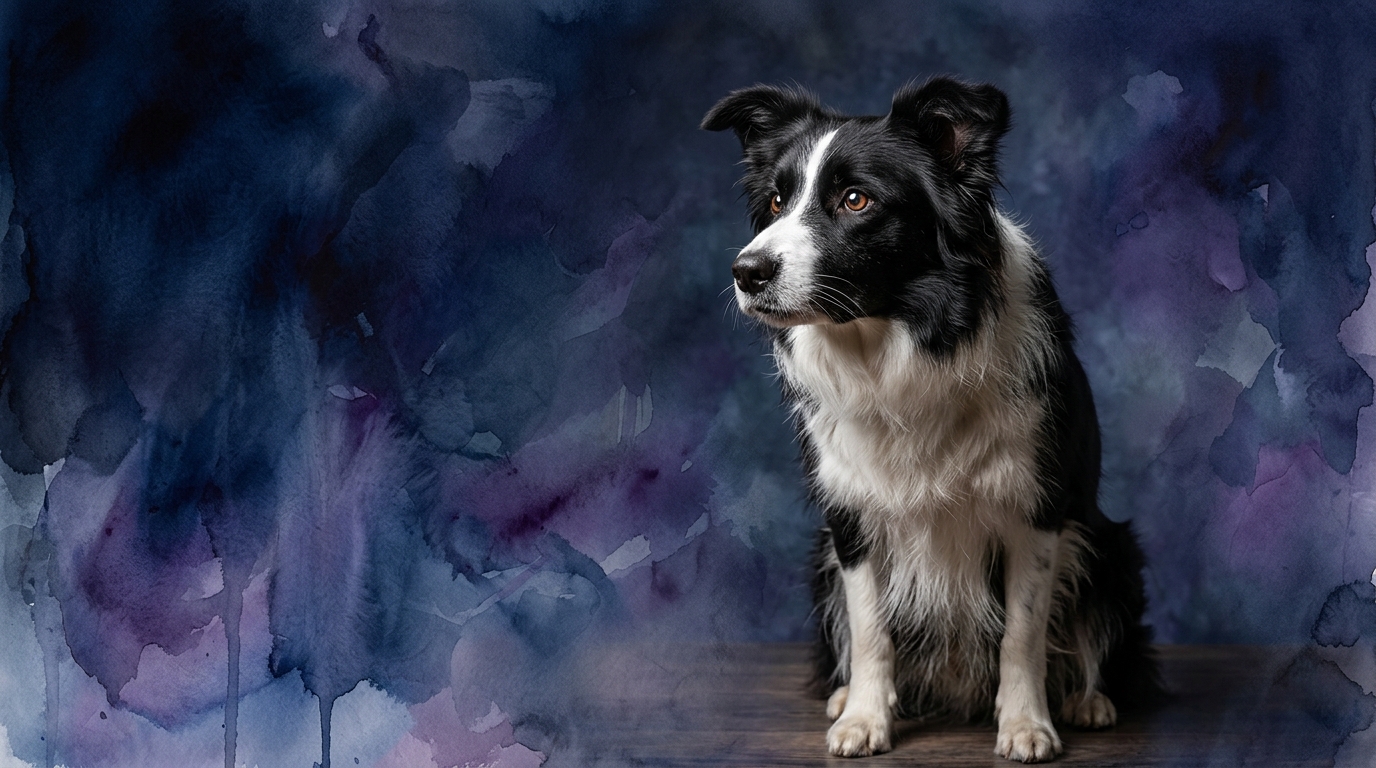

Side-by-Side Cognitive Profiles
The Border Collie, holding a Coren rank of #1, showcases a cognitive architecture optimized for complex partnership and dynamic problem-solving within a herding context. Their Problem Solving is rated 5/5, indicating an exceptional capacity for understanding multi-step commands, adapting strategies, and even conceptualizing abstract relationships. This breed's Training Speed is also 5/5, reflecting their rapid acquisition of new behaviors and an eagerness to engage in structured learning.
Their Social Intelligence, at 4/5, highlights a deep, cooperative bond with their primary handlers, often demonstrating a keen ability to read subtle human cues, though they can be more reserved with strangers. An Instinctive Drive of 5/5 speaks to their profound herding impulse and an inherent motivation for purpose-driven activity. Finally, their Memory, also 5/5, allows them to retain vast repertoires of commands, sequences, and environmental information over extended periods.
In contrast, the Basset Hound, with a Coren rank of #71, presents a cognitive profile built around specialized sensory processing and independence. Their Problem Solving is rated 3/5; while capable, their approach is often more persistent and sensory-driven, particularly in following scent trails, rather than abstract manipulation or rapid strategic adaptation to novel human-set tasks. Their Training Speed is 3/5, meaning they can learn, but often require more repetition and patience, as their attention is frequently drawn by environmental stimuli.
The Basset Hound's Social Intelligence is 3/5; they are generally amiable and affectionate with their family, yet they exhibit a more independent social dynamic, less inclined towards constant cooperative engagement and more prone to following their own interests. Their Instinctive Drive, rated 3/5, is powerfully focused on scenting, which can overshadow other motivations. Their Memory, also 3/5, is strong for familiar routines and, crucially, for complex scent pathways, but less so for extensive, arbitrary command sequences taught by humans.
Where the Border Collie Excels Cognitively
The Border Collie's cognitive prowess is most evident in its capacity for generalized learning and abstract reasoning. They demonstrate an unparalleled ability to interpret and execute complex, sequential commands, often anticipating the next step in a task. This breed doesn't merely memorize; they understand the 'why' behind actions, allowing them to adapt learned behaviors to novel situations with remarkable flexibility.
Their superior problem-solving extends to understanding spatial relationships, navigating obstacles, and even learning the names of hundreds of objects. This cognitive agility, coupled with their intense focus and desire to work in partnership, makes them adept at tasks requiring intricate planning and rapid decision-making, from competitive obedience to search and rescue operations. Their memory for elaborate behavioral chains and their quick processing speed enable them to operate effectively in highly dynamic environments.
Where the Basset Hound Excels Cognitively
The Basset Hound's cognitive strengths lie in their exquisitely refined olfactory intelligence and remarkable persistence. While their general problem-solving might not match a Border Collie's, their ability to process, discriminate, and follow complex scent trails is extraordinary. This isn't merely instinct; it involves sophisticated neural processing to filter irrelevant smells, track subtle changes in scent concentration, and maintain focus over long durations and challenging terrains.
Their specialized memory for scent pathways allows them to retrace steps or follow a trail with unwavering determination. This single-minded focus, often perceived as stubbornness, is a cognitive advantage in its own right, enabling them to complete scent-driven tasks where other breeds might give up due to distraction or waning interest. Their calm demeanor, a cognitive trait, also allows for sustained, low-stress engagement in their primary drive.
Training: A Study in Motivation and Focus
When it comes to ease of training, the Border Collie presents a significantly different experience than the Basset Hound, largely due to fundamental differences in their motivational drivers and attentional focus. Border Collies possess a 5/5 Training Speed and a powerful drive to engage mentally with their human partners. They thrive on structure, positive reinforcement, and the mental challenge of learning new commands and behaviors. Their high problem-solving capacity means they often grasp concepts quickly, generalizing lessons from one context to another with minimal repetition.
The Border Collie's eagerness to please and inherent work ethic simplify training, as they actively seek to understand and comply. Conversely, training a Basset Hound, with a 3/5 Training Speed, requires a different approach. Their primary motivation is often their nose, making them easily distracted by environmental scents. While they are capable of learning, their independent nature means they are less consistently driven by a desire for human partnership in the same way a Border Collie is.
Basset Hounds can appear 'stubborn' not out of defiance, but because their attention is genuinely elsewhere, captivated by a scent. Successful training with a Basset Hound demands immense patience, highly motivating rewards (often food-based), and an understanding that their engagement may be sporadic. While they can learn commands, their execution might be slower, and their recall, especially off-leash, can be unreliable when a compelling scent trail is present.
Lifestyle Compatibility: Active Engagement vs. Relaxed Companionship
The cognitive profiles of these two breeds dictate vastly different ideal living environments and owner commitments. A Border Collie thrives with an owner who can provide extensive daily mental and physical stimulation. Their high instinctive drive (5/5) and problem-solving capacity (5/5) mean they require a 'job' – whether it's agility, competitive obedience, herding, or complex puzzle games. Without sufficient outlets for their sharp minds and boundless energy, they are prone to developing destructive behaviors, such as excessive barking, incessant nipping, or obsessive tendencies, as they seek to create their own mental challenges.
They are best suited for active individuals or families who are committed to structured training, consistent engagement, and providing ample opportunities for their dog to think and move. In contrast, the Basset Hound is a better match for more relaxed owners. While they do require regular, moderate exercise, primarily in the form of leisurely walks where they can indulge their powerful sniffing instincts, their energy levels are considerably lower than a Border Collie's. They are content with long naps, comfortable lounging, and gentle companionship. Their independent social intelligence (3/5) means they appreciate affection but do not constantly demand intense interaction, making them well-suited for a quieter household where their primary 'activity' might be following an intriguing scent in the yard.
The Verdict
Choose the Border Collie if you seek an active, working partner eager for complex mental challenges and a deep, cooperative bond.
Choose the Basset Hound if you appreciate a calm, amiable companion content with leisurely exploration and a focused, independent pursuit of scent.
🧠 Find Your Pet's IQ Score
Our Pet IQ Lab assessment covers 25+ tests across 5 cognitive dimensions — personalized to your breed.
Take the Full IQ Test →Frequently Asked Questions
Can a Basset Hound learn complex tricks?
Yes, Basset Hounds can learn tricks, but they typically require more patience and repetition than a Border Collie. Their motivation is often food-driven, and their independent nature means they may not always perform on cue if a more interesting scent is present.
Are Border Collies good family dogs?
Border Collies can be excellent family dogs, especially for active families who understand their need for mental and physical engagement. They may not tolerate rough play from young children well and can exhibit herding behaviors towards them if not properly managed and socialized.
What's the biggest challenge with a Basset Hound?
The most significant challenge with a Basset Hound is managing their powerful scent drive and independent nature, which can lead to wandering or selective deafness when on a trail. Consistent training and a securely fenced yard are essential to keep them safe and responsive.