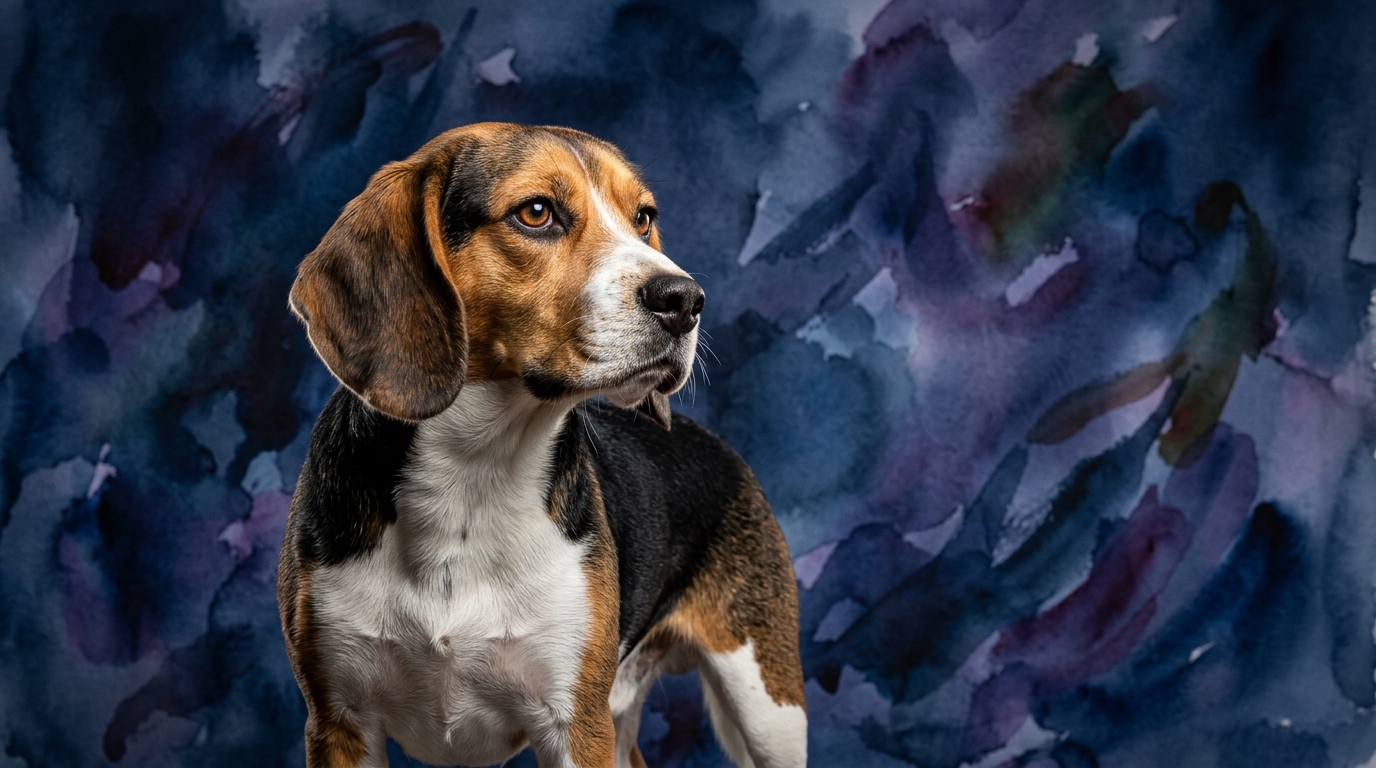

Side-by-Side IQ Profile: Beagle vs. Dogue de Bordeaux
The Beagle, a spirited Hound breed, brings a distinct set of cognitive strengths to our lab. Ranked #72 in Coren's obedience intelligence, their profile highlights a remarkable Problem Solving ability of 4/5, primarily centered around their olfactory prowess and navigating complex scent trails. Their Training Speed is rated 2/5, reflecting a strong independent streak and a tendency to prioritize instinct over human directives. Social Intelligence stands at 3/5; while generally friendly, their focus can often be diverted by an enticing smell. Instinctive Drive is an undeniable 5/5, a testament to their deep-seated hunting heritage, while Memory scores a solid 4/5, particularly for retaining intricate scent information and environmental cues relevant to their primary drive.
In contrast, the Dogue de Bordeaux, a robust Working breed, presents a different cognitive blueprint. Without a specific Coren ranking, we analyze their intrinsic qualities. Their Problem Solving capability is rated 3/5, indicating a practical intelligence focused on their environment and family's needs rather than abstract puzzles. Training Speed is 3/5; they are capable learners but require consistency and motivation. Social Intelligence also registers at 3/5, characterized by a deep devotion to their immediate family and a discerning wariness towards strangers. Instinctive Drive is 3/5, primarily expressed through protective and guarding behaviors, rather than a strong prey or scent drive. Their Memory is rated 3/5, demonstrating a reliable capacity for remembering routines, family members, and established boundaries.
Where the Beagle Wins Cognitively
The Beagle's cognitive triumphs are deeply rooted in their specialized sensory world. Their Problem Solving (4/5) truly shines in scenarios demanding olfactory deduction; they are exceptional at unraveling intricate scent puzzles, tracking trails over varied terrain, and locating hidden objects through smell alone. This isn't about solving a Rubik's Cube, but rather navigating a sensory labyrinth with unparalleled precision, a skill few other breeds can rival.
Furthermore, their Instinctive Drive (5/5) is an overwhelming cognitive asset. This isn't just a physical urge; it's a profound mental commitment to the hunt, making them relentlessly focused and determined when pursuing a scent. This drive translates into an incredible capacity for endurance and sustained mental effort in scent-related tasks. Coupled with this is their remarkable Memory (4/5) for scent profiles; a Beagle can recall and differentiate between countless smells, remembering where a particular scent was encountered and its significance, often over long periods. This specific type of memory is a cornerstone of their hunting success and a key cognitive strength.
Where the Dogue de Bordeaux Wins Cognitively
The Dogue de Bordeaux's cognitive strengths lean towards practical application and social bonding within their human family unit. Their Problem Solving (3/5), while not as flashy as the Beagle's scent work, is highly effective in contextual situations. This breed excels at understanding the dynamics of their home environment, assessing potential threats, and responding appropriately to protect their loved ones. Their intelligence is geared towards understanding the 'why' behind actions within their immediate world, rather than abstract exploration.
Their Social Intelligence (3/5), though not overtly expressive, is characterized by a profound, nuanced understanding of their primary human's emotional state and intentions. They possess an innate ability to gauge moods and react with comforting presence or protective vigilance, forming deep, almost intuitive bonds. This sensitivity allows for a unique form of communication and partnership. Additionally, in terms of Training Speed (3/5), once a Dogue de Bordeaux grasps a command and perceives its purpose or connection to their handler, they can be remarkably consistent in execution. Their desire to please their family, combined with a steady temperament, means they often offer more reliable obedience in established routines compared to the Beagle's more independent spirit.
Which is Easier to Train and Why?
When considering ease of training, the Dogue de Bordeaux generally presents a more straightforward path for the average owner, particularly concerning foundational obedience. Their moderate Training Speed (3/5) is complemented by a deep-seated desire to please their primary handler and a less distracting primary drive. They respond well to consistent, positive reinforcement methods, and their often-sensitive nature means harsh training is counterproductive. While their sheer size demands early and thorough socialization and training, their willingness to cooperate and their steady temperament make them amenable to learning commands that build a strong human-canine partnership. They are less likely to abandon a learned command for an external stimulus once they understand the expectation.
The Beagle, with its Training Speed of 2/5, presents a more significant challenge. Their overwhelming Instinctive Drive (5/5) for scent work means that any interesting smell can instantly override human commands, making recall particularly difficult in an open environment. Their independent nature, stemming from centuries of working autonomously on a trail, means they often prioritize their nose over your voice. Training a Beagle requires immense patience, creativity, and often needs to be integrated with their scenting instincts rather than fighting against them. High-value rewards are essential, and owners must understand that a Beagle's 'stubbornness' is often a strong prioritization of their innate drives, not a lack of cognitive capacity.
Which Suits Active Owners vs. Relaxed Owners?
The Beagle is unequivocally suited for active owners who are prepared to engage with their dog's profound mental and physical needs. Their persistent energy and intense scent drive mean they require significant daily stimulation beyond simple walks. Owners must be willing to engage in 'sniffaris,' scent work, tracking games, or other activities that channel their instinctual prowess. A bored Beagle is prone to destructive behaviors, excessive barking, or escape attempts as they seek to fulfill their innate desires. They thrive with owners who appreciate their curious, independent spirit and are dedicated to providing consistent, engaging mental and physical outlets.
Conversely, the Dogue de Bordeaux, while requiring regular exercise, is a better fit for owners who appreciate a more relaxed pace. They are not built for endurance and prefer moderate daily walks combined with ample time spent lounging with their family. Their exercise needs are more about maintaining health and preventing restlessness than channeling high energy. However, 'relaxed' does not mean sedentary; they still need consistent, positive training and socialization from a young age due to their formidable size and protective instincts. They are ideal for owners who seek a loyal, devoted companion that enjoys being a constant, calm presence within the home, valuing companionship over high-intensity activity.
The Verdict
Choose a Beagle if you are an active, patient owner eager to engage in scent work or tracking, appreciating a dog with an independent, curious spirit and committed to providing consistent, engaging mental stimulation.
Opt for a Dogue de Bordeaux if you seek a loyal, protective companion who thrives as part of the family, and you can provide consistent, gentle training, moderate daily exercise, and appreciate a dog with a steady, devoted temperament.
🧠 Find Your Pet's IQ Score
Our Pet IQ Lab assessment covers 25+ tests across 5 cognitive dimensions — personalized to your breed.
Take the Full IQ Test →Frequently Asked Questions
Are Beagles difficult to train?
Yes, Beagles can be challenging to train due to their powerful independent scent drive, which often leads them to prioritize smells over human commands. They require consistent, high-value reward-based training and significant patience to channel their instincts effectively.
Is the Dogue de Bordeaux a good family dog?
Absolutely, Dogue de Bordeaux are known for their deep devotion and protective nature towards their family members. While early socialization is crucial due to their size and guarding instincts, they form strong bonds and are typically very gentle and patient with children.
Do Beagles need a lot of exercise?
Beagles require significant mental stimulation, especially through scent-based activities, and regular walks to satisfy their hunting instincts and prevent boredom. While not endurance runners, they need consistent engagement to keep their active minds and bodies healthy.