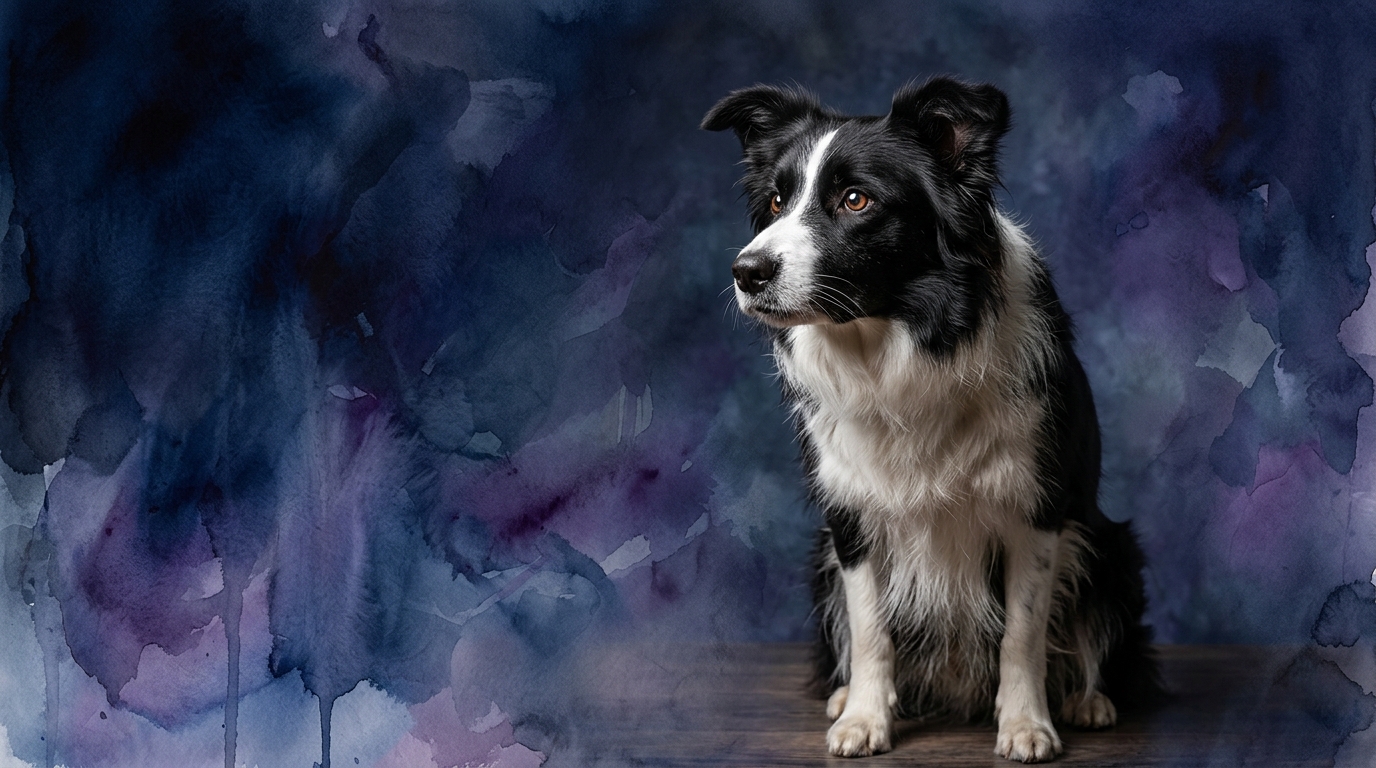
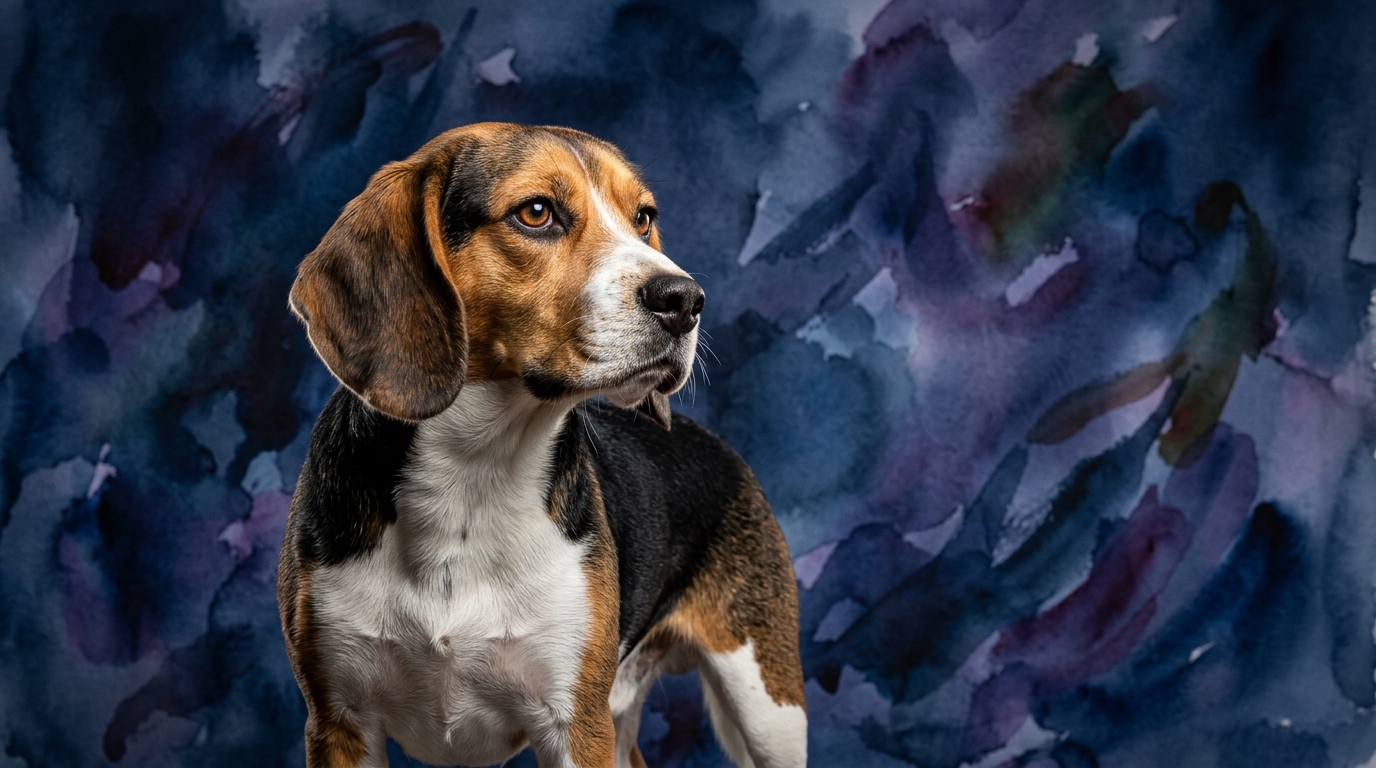
Side-by-Side IQ Profile: Herding Precision vs. Olfactory Acuity
The Pet IQ Lab's framework evaluates canine intelligence across five key dimensions, offering a nuanced view beyond simplistic 'smart' labels. For the Border Collie, a Coren rank of #1 indicates a profound aptitude for understanding human commands and problem-solving within a structured environment. Their Problem Solving is rated 5/5, reflecting an exceptional capacity for complex tasks, abstract reasoning, and adapting strategies to new challenges. Training Speed also stands at 5/5, signifying their rapid comprehension of new cues and eagerness to comply. Social Intelligence, at 4/5, shows strong awareness of human social cues and emotional states, crucial for cooperative work. An Instinctive Drive of 5/5 manifests as an intense desire to herd and control movement, channeling their energy into purposeful activity. Memory, rated 5/5, highlights their ability to recall a vast repertoire of commands and experiences over extended periods, making them consistent performers.
In contrast, the Beagle, with a Coren rank of #72, presents a different cognitive profile, optimized for their ancient role as scent hounds. Their Problem Solving is rated 4/5, demonstrating strategic thinking primarily within the context of tracking and navigating complex scent puzzles, rather than human-devised logical challenges. Training Speed, at 2/5, indicates a more deliberate learning pace, often requiring extensive repetition and high motivation, particularly when competing with their primary sensory input. Social Intelligence is 3/5, suggesting a friendly but sometimes independent nature, less focused on anticipating human intent and more on their immediate environment. An Instinctive Drive of 5/5 is paramount for Beagles, manifesting as an overwhelming compulsion to follow scents, often to the exclusion of other stimuli. Their Memory, rated 4/5, is robust for recalling scent trails and locations, though perhaps less focused on a broad range of verbal commands.
Where the Border Collie Excels Cognitively
The Border Collie's cognitive strengths are evident in their unparalleled ability to process and act upon complex information rapidly. Their 5/5 Problem Solving means they can quickly analyze novel situations, devise solutions to overcome obstacles, and even anticipate a handler's next move. This isn't just about following orders; it's about understanding the underlying goal and adjusting their approach. For instance, a Border Collie might learn a sequence of 10 distinct commands in a single session, then apply that sequence to herd sheep through an unfamiliar gate configuration, demonstrating fluid intelligence and adaptive reasoning. Their superior memory (5/5) allows them to retain an extensive vocabulary of verbal and non-verbal cues, enabling them to execute intricate routines without error, even after long breaks. Furthermore, their high social intelligence (4/5) coupled with intense instinctive drive (5/5) means they are profoundly attuned to their handler's subtle signals, processing these cues as part of their herding drive, resulting in highly coordinated and responsive partnerships in tasks demanding precision and quick mental shifts.
Where the Beagle Shines Cognitively
While their Coren rank might suggest a lower overall cognitive capacity, the Beagle possesses specialized cognitive prowess that is profoundly effective within their specific domain. Their 5/5 Instinctive Drive is not merely a physical compulsion but a sophisticated cognitive process. This drive fuels an extraordinary olfactory problem-solving ability (4/5). A Beagle can distinguish between minute scent variations, follow a cold trail for miles with unwavering focus, and effectively filter out countless environmental distractions to concentrate solely on the target scent. This requires immense cognitive stamina and highly specialized sensory processing. For example, a Beagle can learn to differentiate between specific human scents or detect subtle changes in air currents to locate a hidden object, tasks that a Border Collie, despite its general problem-solving acumen, would struggle with due to a different sensory hierarchy. Their memory (4/5) is particularly strong for recalling scent patterns and geographical locations associated with past successful hunts, allowing them to navigate complex terrains based on olfactory cues alone, showcasing a unique form of spatial and sensory memory.
Training Dynamics: A Tale of Two Drives
When it comes to training, the behavioral differences between these breeds are stark, largely stemming from their divergent instinctive drives and problem-solving approaches. The Border Collie's 5/5 Training Speed and 5/5 Problem Solving make them exceptionally eager and quick learners. They thrive on mental challenges and quickly grasp new concepts, often requiring only a few repetitions to master a command. Their instinctive drive (5/5) is channeled into working cooperatively, making them highly receptive to structured training and eager to engage in tasks that provide a sense of purpose. Real behavioral differences include their intense focus on the handler, their ability to generalize learned behaviors to new situations, and their strong desire for intellectual stimulation, which makes positive reinforcement highly effective.
The Beagle's training journey is often characterized by a different set of challenges, primarily due to their overriding 5/5 Instinctive Drive for scent. While they are capable of learning, their 2/5 Training Speed means they require more patience, consistency, and innovative motivation. A Beagle's nose can be a powerful distraction; once a compelling scent is detected, their cognitive focus shifts entirely to tracking it, often overriding any previously learned commands. This can be interpreted as stubbornness, but it's a deep-seated behavioral imperative. Effective training for a Beagle often involves incorporating scent work, using high-value rewards to compete with environmental smells, and understanding that their independent, nose-driven problem-solving (4/5) means they are constantly assessing their environment for olfactory opportunities rather than always deferring to human instruction. Their social intelligence (3/5) means they are friendly, but their primary engagement is often with the world of smells rather than solely with human interaction.
Matching Breeds to Lifestyles: Active Engagement vs. Scent-Driven Exploration
Choosing between a Border Collie and a Beagle often comes down to aligning their intrinsic needs with an owner's lifestyle and capacity for engagement. Border Collies are supremely suited for active owners who can provide consistent, high-level mental and physical stimulation. Their profound problem-solving abilities and intense instinctive drive demand outlets like agility, obedience, herding trials, or complex trick training. Owners must be prepared for daily, vigorous exercise and hours of engaging their minds to prevent boredom, which can manifest as destructive behaviors. They thrive in environments where they have a 'job' and an active partner in their human.
Beagles, while also needing regular exercise, have different primary drives. They are excellent companions for owners who appreciate their independent, scent-driven nature and can provide opportunities for exploration and nose work. A relaxed owner might find the Beagle's lower training speed (2/5) less demanding in terms of complex command learning, but they must be prepared for their strong instinctive drive (5/5) to follow a scent, requiring secure yards and leashed walks. Owners who enjoy long, sniff-filled walks, engage in scent games, or even participate in tracking sports will find a Beagle a rewarding partner. While they enjoy play, their mental stimulation often comes from processing the world through their nose, making them suitable for owners who can facilitate this type of enrichment without requiring constant, high-intensity human-directed tasks.
The Verdict
Choose a Border Collie if you are an active, dedicated owner seeking a highly cooperative, mentally agile partner for advanced training, sports, and constant intellectual engagement.
Opt for a Beagle if you appreciate an independent, scent-driven companion, are patient with training, and can provide ample opportunities for olfactory exploration in a secure environment.
🧠 Find Your Pet's IQ Score
Our Pet IQ Lab assessment covers 25+ tests across 5 cognitive dimensions — personalized to your breed.
Take the Full IQ Test →Frequently Asked Questions
Do Border Collies require more mental stimulation than Beagles?
Yes, Border Collies typically require significantly more mental stimulation. Their high problem-solving and training speed mean they thrive on complex tasks, structured learning, and constant engagement to prevent boredom and behavioral issues, whereas a Beagle's mental stimulation is often fulfilled through scent work and independent exploration.
Can a Beagle be trained for complex obedience tasks like a Border Collie?
While Beagles can learn obedience, their training speed (2/5) and strong instinctive drive for scent make them less naturally inclined for complex, precision obedience tasks compared to a Border Collie. They require more patience, consistency, and highly motivating rewards to achieve a good level of obedience, often performing best when training incorporates their natural scenting abilities.
Which breed is better for a first-time dog owner?
For a first-time dog owner, a Beagle might be a more manageable choice due to their generally less demanding need for constant, high-level mental engagement from their human. A Border Collie's intense cognitive needs and drive can be overwhelming for those new to dog ownership, requiring significant time and expertise to manage effectively.