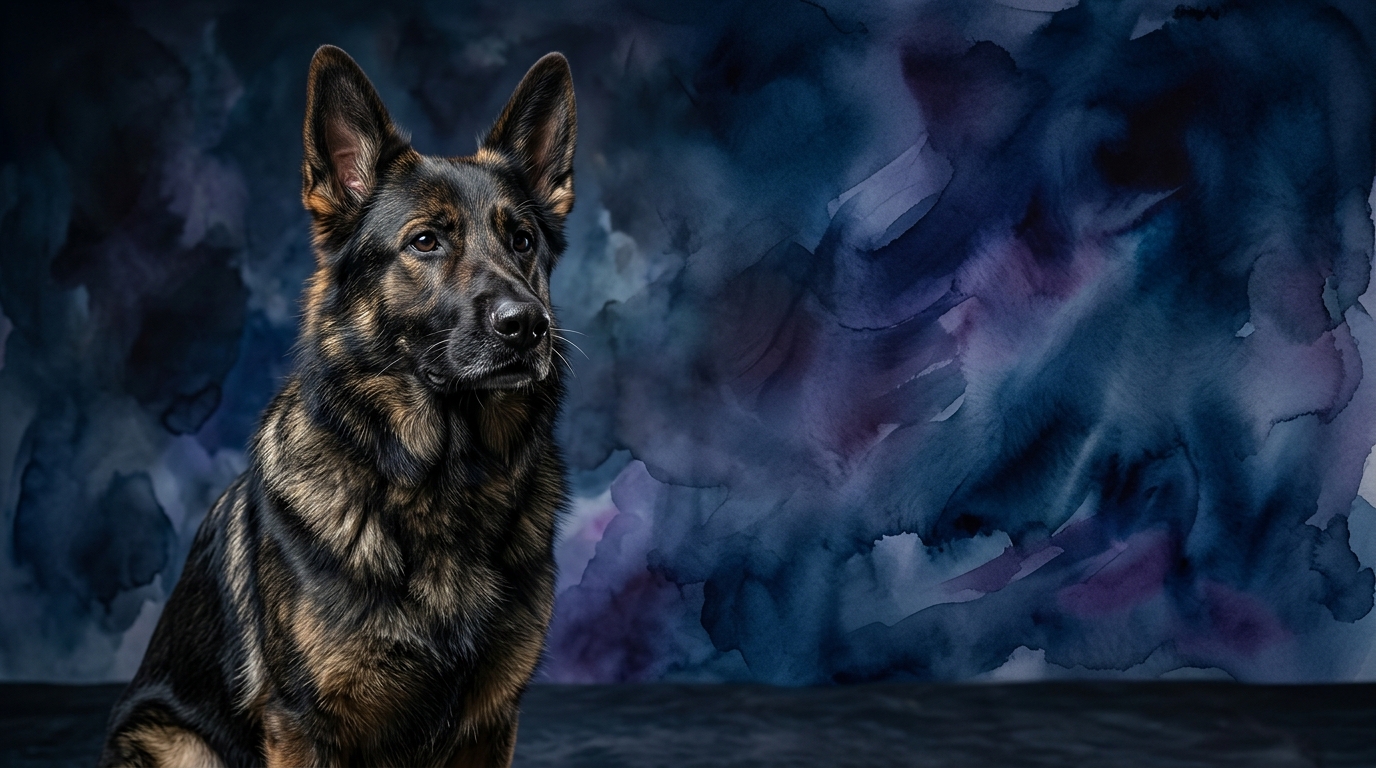
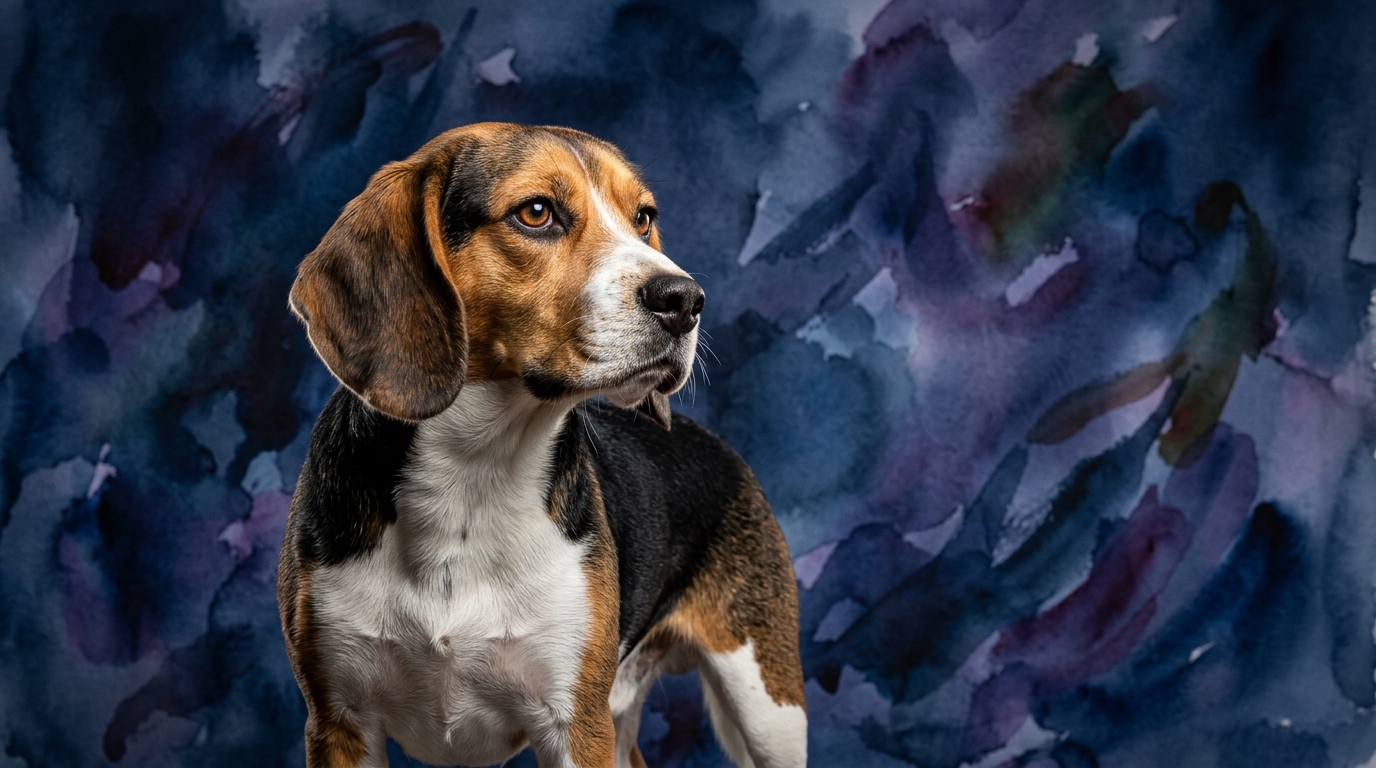
Side-by-Side IQ Profile: German Shepherd vs. Beagle
The Cosmic Pet Pet IQ Lab provides a detailed breakdown of cognitive dimensions, revealing the distinct mental architectures of these two breeds. The German Shepherd, ranking #3 on the Coren scale, registers a perfect 5/5 across all five measured IQ dimensions: Problem Solving, Training Speed, Social Intelligence, Instinctive Drive, and Memory. This comprehensive cognitive strength reflects its origins as a versatile working dog, capable of understanding complex commands, adapting to varied situations, and retaining vast amounts of information. Their high social intelligence allows for deep bonding and understanding of human cues, crucial for their roles in service and protection.
The Beagle, with a Coren rank of #72, presents a different cognitive blueprint. It scores 4/5 in Problem Solving and Memory, 3/5 in Social Intelligence, and 2/5 in Training Speed, while matching the German Shepherd with a 5/5 in Instinctive Drive. These scores highlight a breed whose mental faculties are acutely tuned to its primary instinct – scent tracking. While capable of solving puzzles, their approach is often driven by olfactory clues, and their training can be a more deliberate process due to their independent nature.
Both breeds exhibit a powerful Instinctive Drive at 5/5, yet the manifestation of this drive differs significantly. For the German Shepherd, it fuels their herding, protection, and task-oriented work, reflecting a drive to cooperate and perform a job alongside their human. For the Beagle, this drive is almost entirely dedicated to olfactory exploration, propelling them to follow scent trails with unwavering focus and persistence, often independently of human direction.
Where the German Shepherd Excels Cognitively
The German Shepherd's cognitive profile demonstrates a clear advantage in areas demanding broad, multi-faceted mental engagement. Their 5/5 in Problem Solving indicates an ability to analyze novel situations and devise effective solutions across various contexts, from navigating complex agility courses to understanding intricate service tasks. This adaptability extends beyond simple learned behaviors, showcasing true situational awareness and the capacity to adjust their approach based on dynamic environmental cues.
Their perfect 5/5 in Training Speed underscores a remarkable capacity for rapid acquisition of new commands and routines. This stems from a combination of eagerness to cooperate, strong focus, and a profound understanding of human communication, facilitated by their superior Social Intelligence (5/5). They process instructions quickly and generalize learned behaviors efficiently, making them exceptionally responsive partners in structured learning environments, whether for obedience, sport, or professional duties.
Furthermore, a 5/5 in Memory ensures that once a lesson is learned, it is retained with precision over extended periods, contributing to their reliability in roles requiring consistent performance. This robust memory, coupled with their high Social Intelligence, allows them to build deep, nuanced relationships with their handlers, anticipating needs and responding to subtle cues that might elude other breeds, fostering a highly collaborative partnership.
Where the Beagle's Cognition Shines Uniquely
While not outscoring the German Shepherd in raw numerical terms across all dimensions, the Beagle's cognitive strength lies in the singular, intense focus of its Instinctive Drive (5/5), specifically its unparalleled olfactory processing. Their problem-solving (4/5) is profoundly channeled through their nose; they excel at unraveling complex scent puzzles, demonstrating a persistence that can overshadow other cognitive tasks. This isn't just a physical act but a sophisticated mental mapping of odors and trajectories, a specialized form of intelligence.
The Beagle's impressive memory (4/5) is particularly adept at recalling scent trails and locations, creating a rich internal “scent library.” This specialized memory allows them to retrace steps or follow faint traces over long distances, showcasing a cognitive dedication to their primary purpose that is truly exceptional. Their determination in tracking, fueled by this drive, represents a unique cognitive triumph, enabling them to ignore distractions that would derail less focused breeds.
Their relative independence, reflected in a lower Social Intelligence (3/5) compared to the German Shepherd, can paradoxically be seen as a cognitive advantage in their specific domain. When locked onto a scent, a Beagle's cognitive resources are almost entirely dedicated to that pursuit, making them less prone to human intervention and more self-reliant in their focused problem-solving. This single-mindedness, while challenging for general obedience, is a hallmark of their success as scent hounds, allowing them to operate effectively on their own terms when pursuing a trail.
Training Dynamics: German Shepherd vs. Beagle
Based on The Cosmic Pet Pet IQ Lab's data, the German Shepherd is unequivocally easier to train, scoring a perfect 5/5 in Training Speed compared to the Beagle's 2/5. This significant difference stems from the German Shepherd's inherent desire to work collaboratively and their acute social intelligence, which makes them highly attuned to human commands and intentions. They possess a strong drive to cooperate and thrive on structured learning, quickly grasping new concepts and executing them with precision.
The Beagle, while capable of learning, approaches training with a different cognitive priority. Their powerful instinctive drive for scent (5/5) often overrides the desire for human-directed tasks. This means that during training, a fascinating smell can be a far more compelling “problem” to solve than a handler's request to sit or stay. Their lower social intelligence (3/5) indicates they are less intrinsically motivated by human approval and can be more independent thinkers, making consistent, focused training sessions more challenging.
Real behavioral differences manifest in their responsiveness. A German Shepherd often requires fewer repetitions to master a command and will perform it reliably in varied environments due to their strong memory and focus. A Beagle, while eventually learning, may require more patience, creativity in motivation (often scent-based rewards), and a greater understanding from the owner that their nose will frequently dictate their immediate attention, making proofing behaviors in distracting environments a longer process.
Matching Breeds to Lifestyles: Active vs. Relaxed Owners
For active owners seeking a highly engaged and mentally stimulating companion, the German Shepherd is an exceptional fit. Their perfect scores across all IQ dimensions mean they require substantial mental exercise in addition to physical exertion. This breed thrives on complex tasks, advanced obedience, agility, protection sports, or service work, which fulfill their innate problem-solving capabilities, social intelligence, and strong instinctive drive for purposeful activity. An owner who can dedicate time to consistent training and varied cognitive challenges will find a deeply rewarding partnership.
Relaxed owners might find the German Shepherd's intense cognitive needs overwhelming without significant lifestyle adjustments. While they enjoy physical activity, their mental demands are paramount; a German Shepherd without sufficient mental engagement can become bored and channel their energy into less desirable behaviors. They need a job, whether formal or informal, to truly flourish, and an owner prepared to provide this consistent engagement.
The Beagle, with its 5/5 instinctive drive, also suits active owners, but their activity is primarily focused on scent exploration. Owners who enjoy long walks, hiking, or participate in scent work or tracking sports will find the Beagle a fantastic partner. While they don't demand the same level of complex obedience training or abstract problem-solving as a German Shepherd, they absolutely need outlets for their powerful nose and endurance. A “relaxed” owner who doesn't provide consistent, engaging outdoor opportunities for sniffing will likely encounter a bored and potentially destructive Beagle, as their cognitive strength is their nose, and it needs to be used.
The Verdict
Choose a German Shepherd if you seek a highly trainable, versatile working partner eager for complex mental challenges and deep social engagement, capable of excelling in a wide array of disciplines.
Choose a Beagle if you value an independent, persistent companion driven by an unparalleled sense of smell, perfect for owners who enjoy extensive outdoor exploration and scent-based activities.
🧠 Find Your Pet's IQ Score
Our Pet IQ Lab assessment covers 25+ tests across 5 cognitive dimensions — personalized to your breed.
Take the Full IQ Test →Frequently Asked Questions
Do German Shepherds require more mental stimulation than Beagles?
Yes, German Shepherds generally require a broader range of complex mental stimulation. Their perfect scores in problem-solving, social intelligence, and memory mean they thrive on learning intricate commands, engaging in strategic games, and participating in purposeful work. Beagles, while needing mental engagement, primarily focus their cognitive energy on scent-based exploration and tracking.
Can Beagles be trained for complex tasks like German Shepherds?
Beagles can learn tasks, but their training speed (2/5) and social intelligence (3/5) mean they typically don't achieve the same level of complex, generalized obedience or rapid skill acquisition as German Shepherds (5/5 across these dimensions). Their independent nature and powerful scent drive often make them less inclined towards human-directed complex tasks, preferring to follow their nose.
How does the Beagle's scent drive affect its overall trainability?
The Beagle's 5/5 instinctive drive, primarily for scent, significantly impacts its trainability. While it makes them exceptional at tracking, it can also make them highly distractible during general obedience training, as a compelling scent often overrides human commands. This requires owners to be patient, creative with rewards, and understand that their Beagle's nose will always be a powerful, independent cognitive force.