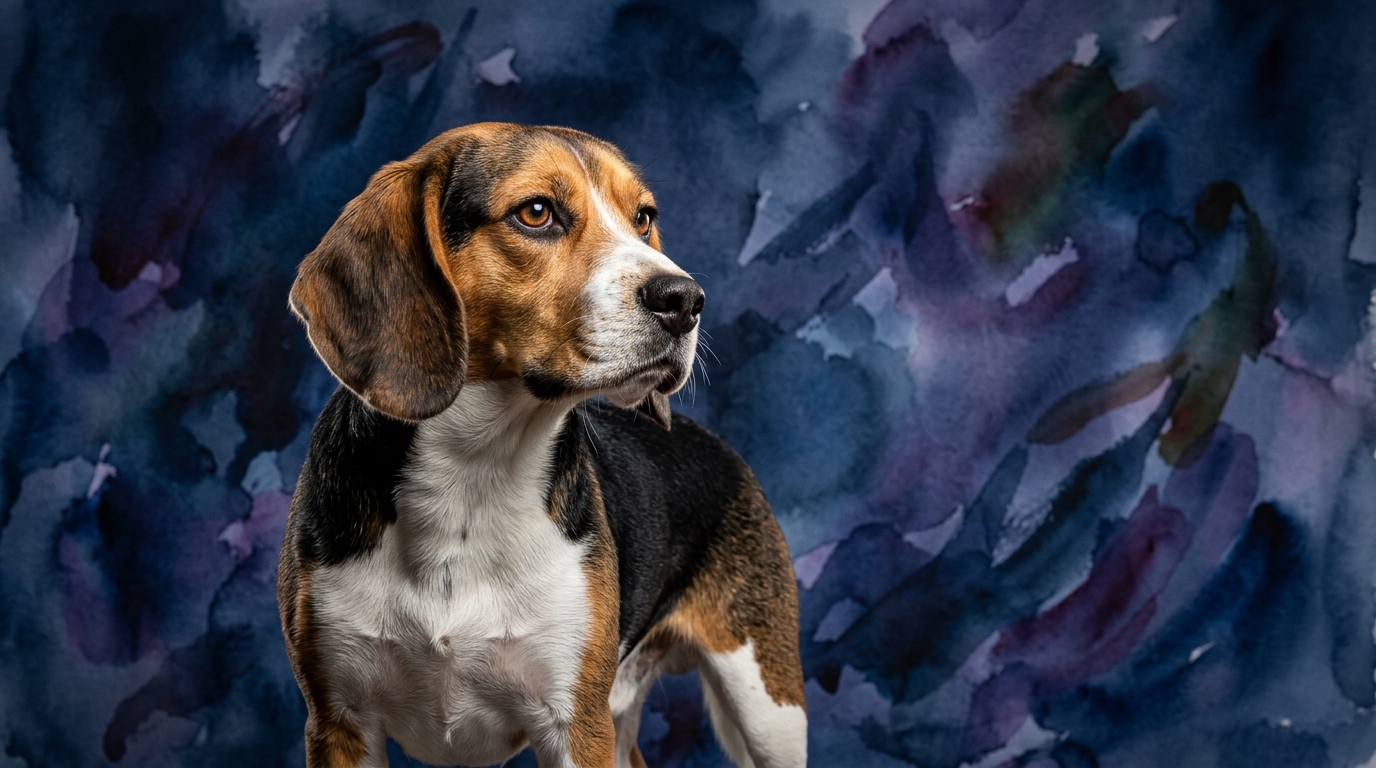

Side-by-Side IQ Profile
The Cosmic Pet Pet IQ Lab employs a multi-faceted approach to evaluate canine intelligence, moving beyond simple obedience scores to assess various cognitive strengths. For the Beagle, ranked #72 by Coren, its profile shows a Problem Solving score of 4/5, indicating a resourceful mind, often applied to navigating complex scent trails. However, its Training Speed is 2/5, reflecting a challenge in consistently applying human-directed commands when its powerful natural instincts intervene. Social Intelligence stands at 3/5, suggesting a generally agreeable nature but not one overly focused on human emotional cues, while its Instinctive Drive is a perfect 5/5, showcasing an unparalleled commitment to scent-driven tasks. Memory for the Beagle is 4/5, particularly strong for locations and the intricate details of a scent path.
In contrast, the English Cocker Spaniel, with a significantly higher Coren rank of #18, presents a different cognitive blueprint. Its Problem Solving ability also scores 4/5, demonstrating an adaptable mind capable of figuring out tasks, though often with a focus on human interaction rather than independent scent exploration. Training Speed is a robust 4/5, indicating a quick grasp of new commands and a strong desire to cooperate. Social Intelligence matches the Beagle at 3/5, signifying a friendly disposition, though they can be more sensitive to their owner's mood. Their Instinctive Drive is 3/5, a moderate level that translates into an enjoyment of retrieving and flushing but without the Beagle's singular focus. The English Cocker Spaniel's Memory is an exceptional 5/5, suggesting an outstanding capacity to retain commands, routines, and past experiences.
Where the Beagle Shines Cognitively
The Beagle's cognitive strengths are deeply rooted in its heritage as a scent hound, making it a master of olfactory detection and persistent pursuit. Its Problem Solving score of 4/5 is often manifested in its ability to decipher intricate scent puzzles, navigating varied terrain and obstacles to follow a trail with unwavering determination. This isn't about solving abstract human problems, but rather an innate, practical intelligence geared towards its primary function. Its Instinctive Drive, a perfect 5/5, fuels this relentless focus; once a scent is engaged, the Beagle's mind becomes singularly dedicated to its source, often tuning out environmental distractions or human commands.
Furthermore, the Beagle's Memory, rated 4/5, is particularly acute for environmental details relevant to its tracking work. It remembers specific locations where interesting scents were found, the layout of a familiar hunting ground, or the most efficient routes to follow a trail. This memory isn't necessarily for obedience commands but for practical, survival-oriented information crucial to its hound work. Owners who channel this powerful cognitive capacity into activities like scent work, tracking, or nose games will find a Beagle's mind truly engaged and fulfilled, demonstrating a unique form of working intelligence that few other breeds can rival.
Where the English Cocker Spaniel Excels Cognitively
The English Cocker Spaniel’s cognitive profile highlights its biddability and excellent retention, making it a standout in cooperative tasks. Its Training Speed, a robust 4/5, reflects a dog that quickly connects actions with desired outcomes, eager to please and responsive to guidance. This rapid learning curve is a significant advantage for owners seeking a companion that will readily absorb a wide range of commands, from basic obedience to complex tricks or agility sequences. This breed processes information efficiently, making training sessions productive and rewarding for both dog and handler.
Coupled with its exceptional Memory score of 5/5, the English Cocker Spaniel demonstrates an outstanding capacity to recall learned behaviors and routines over extended periods. This superior memory contributes significantly to its reputation as a reliable working dog and a responsive family member. They remember past training cues, social interactions, and household rules with remarkable consistency, leading to a dog that anticipates expectations and performs reliably. Their Problem Solving ability, also 4/5, often manifests in figuring out how to achieve a desired outcome through interaction with their handler, such as retrieving a toy from a tricky spot or navigating an obstacle course with precision, often driven by the reward of praise or a treat from their human companion.
Training Ease: A Tale of Two Drives
When it comes to training ease, the Beagle and English Cocker Spaniel present a stark contrast, primarily due to their differing Instinctive Drives and how these impact their Training Speed. The English Cocker Spaniel, with a Training Speed of 4/5 and a Memory of 5/5, is generally a far more straightforward student. Their moderate Instinctive Drive (3/5) means they are less likely to be completely consumed by external stimuli, allowing them to remain focused on their handler and the task at hand. They thrive on positive reinforcement and clear communication, quickly associating commands with actions and retaining them long-term. Their desire to work cooperatively makes them highly receptive to varied training methods, from clicker training to lure-reward, and they genuinely enjoy the mental stimulation of learning.
The Beagle, however, with a Training Speed of 2/5, offers a greater challenge for the novice trainer. Its profound Instinctive Drive (5/5) for scent often overrides any desire to follow human commands, especially outdoors. A Beagle catching an interesting scent will prioritize tracking it over performing a “sit” or “stay,” making recall particularly difficult in stimulating environments. Training a Beagle requires immense patience, creativity, and high-value rewards to compete with their natural inclinations. Owners must understand that a Beagle’s “stubbornness” is not defiance, but rather an intense focus on its primary cognitive function: scent work. Incorporating scent games and tracking into their routine can channel this drive positively, but traditional obedience will always require more consistent effort and understanding of their unique motivational landscape.
Lifestyle Match: Active vs. Relaxed Owners
Choosing between a Beagle and an English Cocker Spaniel also means aligning with their distinct activity and engagement needs, impacting whether they suit an “active” or “relaxed” owner. The Beagle, despite its smaller size, requires an owner who embraces an active, engagement-focused lifestyle, particularly one that caters to its powerful Instinctive Drive (5/5). These dogs need consistent opportunities for scent exploration, long walks where they can follow their nose, or structured scent work like K9 Nose Work. A “relaxed” owner who prefers minimal outdoor activity or expects a passive companion will likely find a Beagle's persistent vocalizations and determined escape artistry challenging. Their Problem Solving (4/5) applied to scent often means they are adept at finding ways to pursue interesting smells, which can translate into digging under fences or slipping leashes if their cognitive needs aren't met.
The English Cocker Spaniel, while still an active breed that enjoys regular exercise, offers more versatility for owners. Their moderate Instinctive Drive (3/5) means they enjoy walks, fetching, and playing, but aren't typically driven to the same singular, all-consuming pursuit as a Beagle. Their high Memory (5/5) and Training Speed (4/5) make them excellent candidates for various dog sports like agility, obedience, or flyball, which provide both physical and mental stimulation. An owner who enjoys daily walks, active play, and consistent training will find an English Cocker Spaniel thrives. While they appreciate activity, they are also content to settle down for cuddles, making them more adaptable to a household that balances periods of activity with relaxed companionship, provided their core needs for engagement are met.
The Verdict
Choose a Beagle if you are an active, patient owner who appreciates a dog with an unparalleled drive for scent work and is prepared to channel that instinct into constructive activities like tracking or nose games. They suit individuals who find joy in a persistent, independent spirit and can manage a dog whose primary motivation lies in the world of smell.
Opt for an English Cocker Spaniel if you seek a highly trainable, intelligent companion eager to learn and participate in varied activities, from obedience to dog sports. They are ideal for owners who enjoy consistent engagement, appreciate a dog with excellent recall and memory, and desire a cooperative partner in daily life.
🧠 Find Your Pet's IQ Score
Our Pet IQ Lab assessment covers 25+ tests across 5 cognitive dimensions — personalized to your breed.
Take the Full IQ Test →Frequently Asked Questions
Which breed is more adaptable to different living situations?
The English Cocker Spaniel tends to be more adaptable due to its lower instinctive drive and higher biddability, making it generally content in various home environments as long as its needs for companionship and moderate activity are met. Beagles require more specific outlets for their powerful scent drive, which can be challenging in certain urban or confined settings without dedicated effort.
Do Beagles or English Cocker Spaniels require more mental stimulation?
Both breeds benefit from mental stimulation, but the type differs. Beagles need stimulation that engages their powerful sense of smell and problem-solving, like scent games and tracking. English Cocker Spaniels thrive on varied training, puzzle toys, and interactive play that leverages their excellent memory and desire to learn commands.
Is one breed more prone to independent thinking during training?
Yes, the Beagle is significantly more prone to independent thinking during training, particularly when its instinctive drive to follow a scent is engaged. Its lower Training Speed score reflects this tendency to prioritize its natural instincts over human commands. The English Cocker Spaniel, with its higher Training Speed and strong desire to please, is generally much more attentive and cooperative during training sessions.