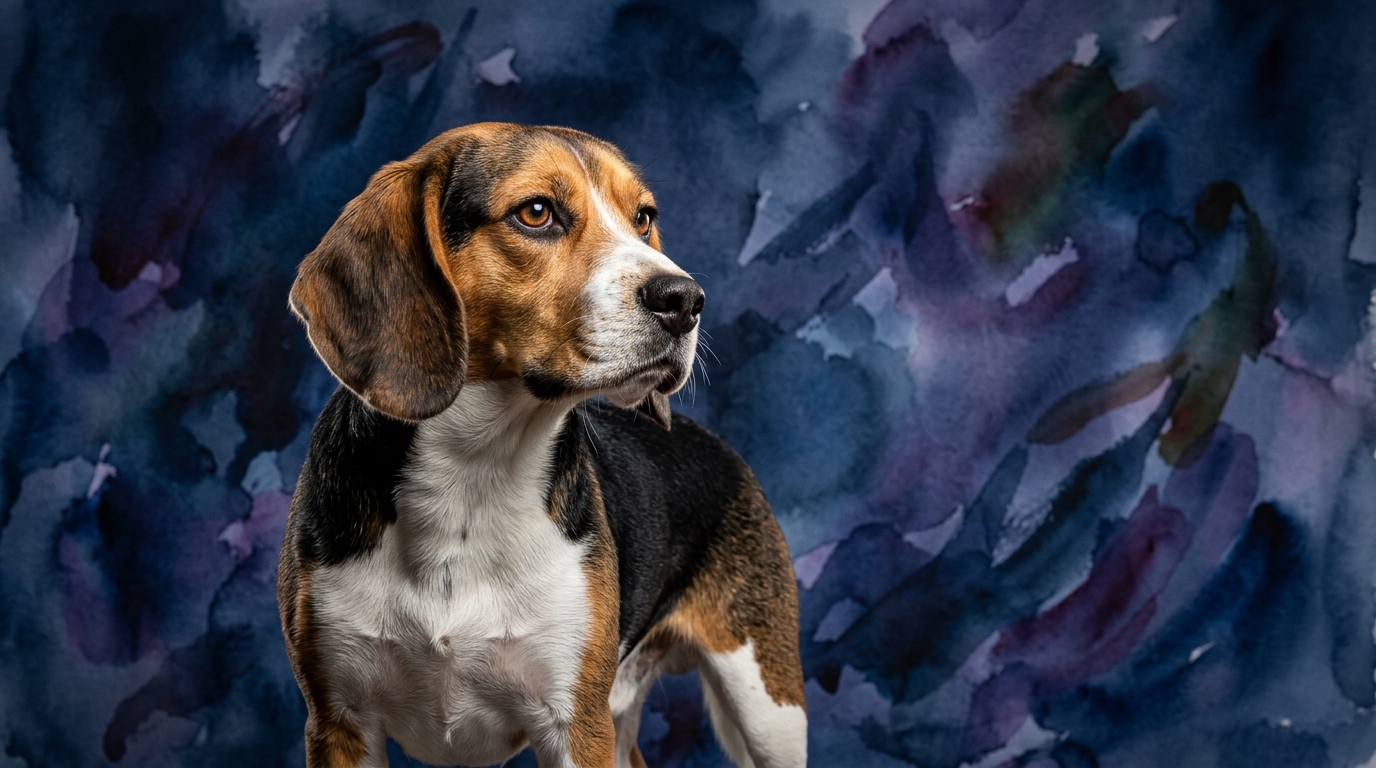

Side-by-Side Cognitive Profiles
At The Cosmic Pet Pet IQ Lab, we evaluate canine intelligence across five key dimensions, providing a granular view of how breeds process the world. The Beagle, a robust Hound, holds a Coren rank of #72, indicating a respectable capacity for learning and obedience, while the English Toy Spaniel, a charming Toy breed, is not Coren-ranked, suggesting its cognitive strengths lie in different areas than traditional working dog metrics. Let's delve into their individual scores and what they signify.
The Beagle's profile reveals a dog whose mind is powerfully oriented towards its ancestral purpose. Its Problem Solving is rated at 4/5, reflecting its exceptional ability to navigate complex environments and persistent tracking to achieve a goal, primarily related to scent. Training Speed is 2/5, indicating that while capable of learning, its strong independent nature and sensory distractions can make the process slower than some other breeds. Social Intelligence is 3/5; Beagles interact well with their pack, both human and canine, but their focus can easily shift to an intriguing odor rather than solely to social cues. Instinctive Drive is a commanding 5/5, a testament to their unwavering commitment to scent work, making them relentless in pursuit of a trail. Finally, Memory is 4/5, particularly for recalling intricate scent maps and the locations associated with successful hunts.
In contrast, the English Toy Spaniel presents a profile more attuned to companionship and subtle interaction. Its Problem Solving score is 3/5, demonstrating a moderate capacity to figure out puzzles, often with a reliance on human guidance or cues rather than independent exploration. Training Speed is 3/5; these dogs are generally eager to please their human companions, which can facilitate learning, although their sensitive nature means training must be gentle and positive. Social Intelligence also scores 3/5, highlighting their deep attunement to human emotions and their desire for close connection, making them excellent at reading moods and seeking comfort or attention. Instinctive Drive is 3/5, a balanced score reflecting a lower prey drive compared to hunting breeds, with their primary drive being companionship. Memory is rated at 3/5, indicating a good recall for routines, familiar faces, and pleasant experiences, rather than complex environmental navigation.
Where the Beagle's Cognition Excels
The Beagle's mental prowess truly shines in domains where its olfactory senses are paramount. Their 4/5 Problem Solving score is almost entirely dedicated to scent-related challenges. They demonstrate an extraordinary capacity for scent discrimination, able to differentiate between countless odors and follow a specific trail with astonishing focus. This isn't just about sniffing; it involves complex cognitive mapping, where they can build and retain an intricate mental blueprint of an area based purely on scent data, a skill that few other breeds can match.
Furthermore, their 5/5 Instinctive Drive fuels a remarkable cognitive persistence. Once a Beagle locks onto a scent, their brain activates a singular objective, filtering out other stimuli. This sustained focus, coupled with their robust memory for trails, allows them to navigate vast and varied terrains, often independently, until their olfactory mission is accomplished. Their problem-solving isn't about opening a cabinet for treats, but about deciphering the invisible world of odors to locate a target, a highly specialized form of intelligence that is deeply rooted in their hound heritage.
Where the English Toy Spaniel's Cognition Shines
While the English Toy Spaniel may not boast the high scores in traditional problem-solving or instinctive drive, its cognitive strengths lie in areas of emotional intelligence and adaptability to human social structures. Their 3/5 Social Intelligence, though numerically equal to the Beagle's, manifests differently; it's less about independent social navigation and more about deep empathy and attunement to their human companions. They excel at reading subtle human cues, understanding vocal tones, and interpreting body language, often predicting their owner's needs or moods before they are explicitly expressed.
The English Toy Spaniel's problem-solving, while rated 3/5, often involves subtle communication strategies to achieve comfort or attention. For instance, they might figure out the most effective way to solicit a lap cuddle or initiate a gentle play session, using their charm and understanding of human interaction. Their moderate Memory (3/5) is particularly strong for social routines and positive associations with family members, creating a stable and predictable world centered around companionship. This breed's cognition is finely tuned to the nuances of cohabitation, making them masters of domestic harmony and emotional support.
Training: A Tale of Two Temperaments
When considering ease of training, the Beagle and English Toy Spaniel present distinct challenges and opportunities, largely driven by their core motivations. The Beagle, with its 2/5 Training Speed and overwhelming 5/5 Instinctive Drive, can be a more challenging student. Their independent nature, honed over generations of hunting, means they're not always looking to their human for direction when a compelling scent calls. A Beagle on a scent trail is notoriously difficult to recall, as their cognitive focus is entirely consumed by the pursuit. Training requires immense patience, extremely high-value rewards (often food-based due to their strong appetites), and consistent, engaging methods that can compete with the allure of outdoor smells. Behavioral differences like their tendency to bay when excited or on a trail also require specific training to manage in a home environment.
The English Toy Spaniel, conversely, often proves easier to train with its 3/5 Training Speed. Their strong desire to please their human companions, coupled with a lower distraction threshold compared to a scent hound, makes them more receptive to instruction. They respond particularly well to positive reinforcement, praise, and gentle encouragement. However, their sensitive nature means that harsh corrections or impatient training methods can be counterproductive, leading to shut-down or anxiety. Their problem-solving (3/5) and memory (3/5) are sufficient for learning a wide range of commands and tricks, especially when training is framed as a fun, bonding activity. Their cognitive makeup favors understanding human intent and adapting to household rules over independent exploration, making them generally more pliable in a training context.
Matching Canine Cognition to Lifestyle
The cognitive profiles of the Beagle and English Toy Spaniel naturally lend themselves to different owner lifestyles. The Beagle, with its high instinctive drive (5/5), robust problem-solving (4/5) geared towards exploration, and substantial memory (4/5) for environmental details, is ideally suited for active owners. These are individuals or families who enjoy regular outdoor adventures, long walks, hiking, or engaging in scent work and dog sports that channel their natural abilities. A Beagle thrives when its mind is stimulated by new smells and challenges, requiring secure outdoor spaces where they can safely explore without succumbing to their powerful urge to follow a trail. Owners who appreciate a dog's independent spirit and are prepared for consistent, engaging mental and physical exercise will find a fulfilling partnership.
The English Toy Spaniel, with its moderate instinctive drive (3/5), social intelligence (3/5) focused on companionship, and problem-solving (3/5) that often involves human interaction, is a perfect fit for more relaxed owners. They are content with indoor play, short daily walks, and, most importantly, ample cuddle time on the sofa. Their cognitive makeup is geared towards forming deep bonds and enjoying a calm, predictable home environment. Owners seeking a devoted lap companion who is highly attuned to their emotions and requires less strenuous physical activity will find the English Toy Spaniel to be an ideal match. They are particularly well-suited for apartment living or for individuals who prefer a quieter, more intimate canine relationship, valuing emotional connection over high-octane adventure.
The Verdict
Choose the Beagle for an adventurous companion who thrives on exploration and scent work, and for owners ready to engage their powerful instincts with consistent training and ample outdoor activity.
Choose the English Toy Spaniel for a gentle, devoted lap companion who cherishes quiet moments and human connection, perfect for those seeking a calm presence and less demanding exercise needs.
🧠 Find Your Pet's IQ Score
Our Pet IQ Lab assessment covers 25+ tests across 5 cognitive dimensions — personalized to your breed.
Take the Full IQ Test →Frequently Asked Questions
Are Beagles easily distracted?
Yes, Beagles possess an extremely powerful scent drive, making them highly prone to distraction when a compelling scent crosses their path. This natural instinct often overrides commands, requiring diligent training in varied environments.
Do English Toy Spaniels need much exercise?
English Toy Spaniels have moderate exercise needs, content with short daily walks and indoor play sessions. Their small size and preference for companionship mean they generally don't require extensive outdoor activity.
Is a Beagle a good family dog?
Beagles are typically affectionate and good-natured, making them suitable for families. They enjoy the company of children and other pets, though their boisterous nature and strong scent drive mean they need consistent training and supervision.