Side-by-Side Cognitive Profiles
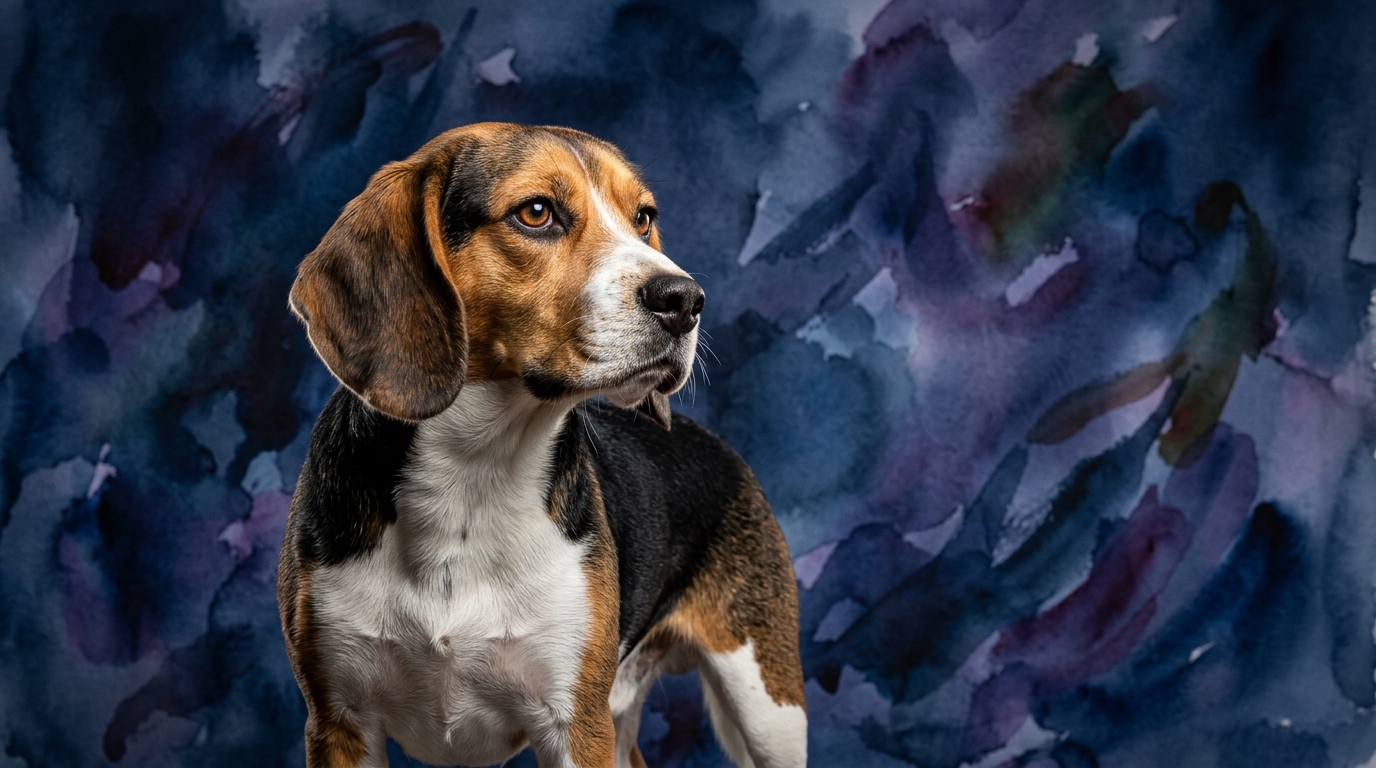
The Cosmic Pet Pet IQ Lab provides a nuanced look at canine intelligence across five dimensions. Let's examine the Beagle's cognitive strengths and challenges first, a breed ranked #72 by Coren.
For the Beagle:
Problem Solving (4/5): The Beagle exhibits a robust ability to navigate complex scent trails, often requiring intricate deduction to locate a hidden source or follow a winding path over varied terrain. Their problem-solving is highly specialized, excelling in tasks that engage their primary sense of smell and demand persistence in following a logical sequence of olfactory cues. This isn't abstract reasoning but rather a sophisticated application of their sensory data, methodically working through environmental puzzles to achieve scent-related goals.
Training Speed (2/5): Their strong independent drive and singular focus on scent can make Beagles less inclined to readily comply with human commands if a compelling scent distraction is present. While they are certainly capable of learning, their intrinsic motivation to follow their nose often outweighs the desire to please, leading to a slower acquisition of obedience commands without consistent, high-value reinforcement and clever techniques leveraging their natural drives.
Social Intelligence (3/5): Beagles are generally amiable and enjoy company, both canine and human, displaying a moderate understanding of social cues within their pack or family unit. They form strong bonds with their families and are typically good-natured, though their intense focus on scent can sometimes make them appear less attuned to subtle human social signals.
Instinctive Drive (5/5): This is the Beagle's defining cognitive trait. Their drive to track scents is profound and virtually unyielding, underpinning their entire behavioral repertoire. This powerful instinct fuels their exceptional persistence, stamina, and unwavering focus in the field, making them dedicated workers when their noses are engaged, often to the exclusion of other stimuli.
Memory (4/5): Beagles possess an impressive memory for locations, routes, and particularly for specific scents, which is crucial for their tracking prowess. They can recall complex scent patterns and the paths associated with them over considerable periods, aiding their ability to return to a starting point or continue a specific hunt, demonstrating a highly specialized spatial and olfactory recall.
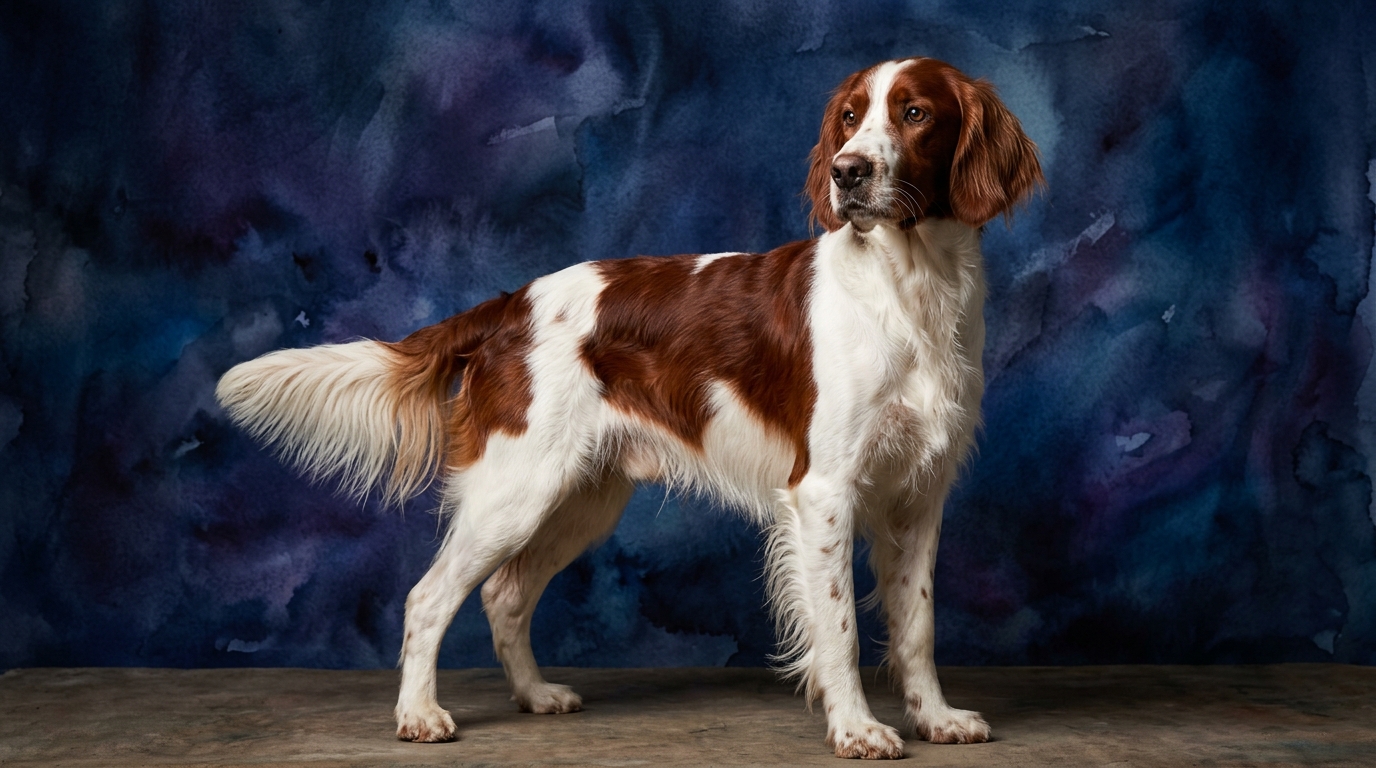
Now, let's turn our attention to the Irish Red and White Setter, a sporting breed not ranked by Coren but with its own distinct cognitive makeup.
For the Irish Red and White Setter:
Problem Solving (3/5): The Irish Red and White Setter demonstrates a moderate capacity for problem-solving, typically excelling in tasks related to their sporting heritage, such as efficiently locating birds in varied terrain, navigating obstacles during a retrieve, or understanding the mechanics of a new puzzle toy. Their approach is often more direct and less specialized than a Beagle's scent-driven deduction, focusing on practical environmental solutions.
Training Speed (3/5): With a balanced disposition and a clear desire to work collaboratively, the Irish Red and White Setter generally learns new commands at a moderate pace. They are receptive to instruction and respond well to positive reinforcement, showing a willingness to engage with their human partners in training exercises, making them a rewarding breed to teach with consistency.
Social Intelligence (3/5): These setters are known for their gentle and friendly nature, displaying a solid understanding of social dynamics within a family setting and with other animals. They are typically good with people and other animals, capable of forming strong, affectionate bonds and responding appropriately to various social cues, making them adaptable companions.
Instinctive Drive (3/5): Their instinctive drive centers on their role as a bird dog, exhibiting a natural inclination to hunt, point, and retrieve. While present, this drive is more controlled and cooperative than the Beagle's, allowing for a greater balance with human direction during activities. They are driven to perform sporting tasks but are also amenable to handler input.
Memory (3/5): The Irish Red and White Setter possesses a reliable memory for learned commands, established routines, and the locations of game during a hunt. Their recall is sufficient for their working roles and daily life, allowing them to retain training effectively and navigate familiar environments, though not as specialized or intensely focused on singular sensory input as a scent hound's.
Where the Beagle Wins Cognitively
The Beagle undeniably shines in areas directly tied to its ancestral purpose. Its Problem Solving score of 4/5, combined with a Memory of 4/5, means it excels at intricate, multi-stage tasks involving scent discrimination and trail following. While a Setter might follow a direct path, a Beagle can unravel a complex olfactory puzzle, remembering specific scent markers and the sequence of a trail even hours later, demonstrating advanced sequential reasoning through smell. Furthermore, its Instinctive Drive of 5/5 is a cognitive powerhouse; this profound, unwavering motivation to track means Beagles will persist in a task long after other breeds might lose interest, demonstrating an unparalleled focus and resilience when their nose is engaged, making them exceptional for scent-based challenges.
Where the Irish Red and White Setter Wins Cognitively
Where the Irish Red and White Setter edges ahead is in its balanced cognitive profile, particularly in its Training Speed (3/5) compared to the Beagle's 2/5. This suggests a greater innate willingness and capacity to absorb and respond to human-initiated commands with moderate repetition, making general obedience training more straightforward. Unlike the Beagle, whose intense instinctive drive can sometimes override human directives, the Setter's more moderate Instinctive Drive (3/5) allows for a smoother integration of learned behaviors and a greater attentiveness to its handler. This balance contributes to its adaptability in various roles beyond its primary hunting function, showcasing a more versatile cognitive engagement with its environment and human companions, making them more pliable for diverse training goals.
Which is Easier to Train and Why
Considering their respective IQ profiles, the Irish Red and White Setter generally presents as the easier breed to train for general obedience and household manners. Its Training Speed of 3/5, coupled with a moderate Instinctive Drive, means it's more receptive to learning new cues and less likely to be completely consumed by external distractions. Setters often display a cooperative spirit, eager to engage with their handlers, which facilitates a smoother training process. In contrast, the Beagle’s lower Training Speed (2/5) is compounded by its powerful Instinctive Drive (5/5). A Beagle on a scent trail is notoriously difficult to recall; their brain is so singularly focused on that olfactory input that human commands can become mere background noise. Training a Beagle demands immense patience, creativity, and a consistent use of high-value rewards to compete with the allure of a captivating smell, making it a more challenging endeavor for many owners.
Which Suits Active Owners vs. Relaxed Owners
For owners seeking a highly active companion, both breeds offer engaging possibilities, but with different nuances. The Beagle, with its boundless stamina fueled by its 5/5 Instinctive Drive, thrives with owners dedicated to providing consistent outlets for its scenting abilities, such as scent work games, long sniffy walks, or even specialized tracking sports. A 'relaxed' owner who cannot meet this intense mental and physical need may find a Beagle restless and prone to undesirable behaviors. The Irish Red and White Setter also requires significant daily exercise to satisfy its sporting heritage, but its more balanced Instinctive Drive (3/5) allows for a broader range of activities beyond pure scent work. They enjoy brisk runs, fetch, and hiking, and while active, their cognitive engagement is often more collaborative. Therefore, while both demand active lifestyles, the Setter might suit an active owner who appreciates a more versatile activity partner, whereas the Beagle is best for an active owner specifically passionate about fulfilling a profound scenting instinct.
The Verdict
Choose a Beagle if you are a dedicated owner who embraces a dog with an unparalleled scenting drive, willing to invest significant time into managing its independent nature and providing outlets for its profound olfactory capabilities.
Opt for an Irish Red and White Setter if you seek an active, cooperative companion that trains with moderate ease and thrives on a balance of physical activity and collaborative engagement, fitting well into an an active family lifestyle.
🧠 Find Your Pet's IQ Score
Our Pet IQ Lab assessment covers 25+ tests across 5 cognitive dimensions — personalized to your breed.
Take the Full IQ Test →Frequently Asked Questions
Do Beagles struggle with recall due to their strong scent drive?
Yes, Beagles often present challenges with recall, especially when they have picked up an interesting scent. Their 5/5 Instinctive Drive means their focus becomes singularly dedicated to tracking, making it exceptionally difficult to divert their attention with commands. Consistent, high-value reward training from a young age is crucial, often requiring a long lead or secure area for off-leash exercise.
Is the Irish Red and White Setter a good choice for first-time dog owners?
The Irish Red and White Setter can be a suitable choice for a first-time owner, provided they are committed to providing ample exercise and consistent positive reinforcement training. Their moderate Training Speed (3/5) and cooperative nature make them more manageable than some breeds, but their need for activity and mental engagement still requires dedication.
How do their problem-solving abilities differ in a home environment?
In a home, a Beagle's 4/5 Problem Solving might manifest as cleverly figuring out how to access forbidden food by scent, while a Setter's 3/5 Problem Solving might involve more generalized tasks like opening a gate or figuring out a new puzzle toy. The Beagle's ingenuity is often scent-driven, whereas the Setter's is more broadly applied to its immediate environment.