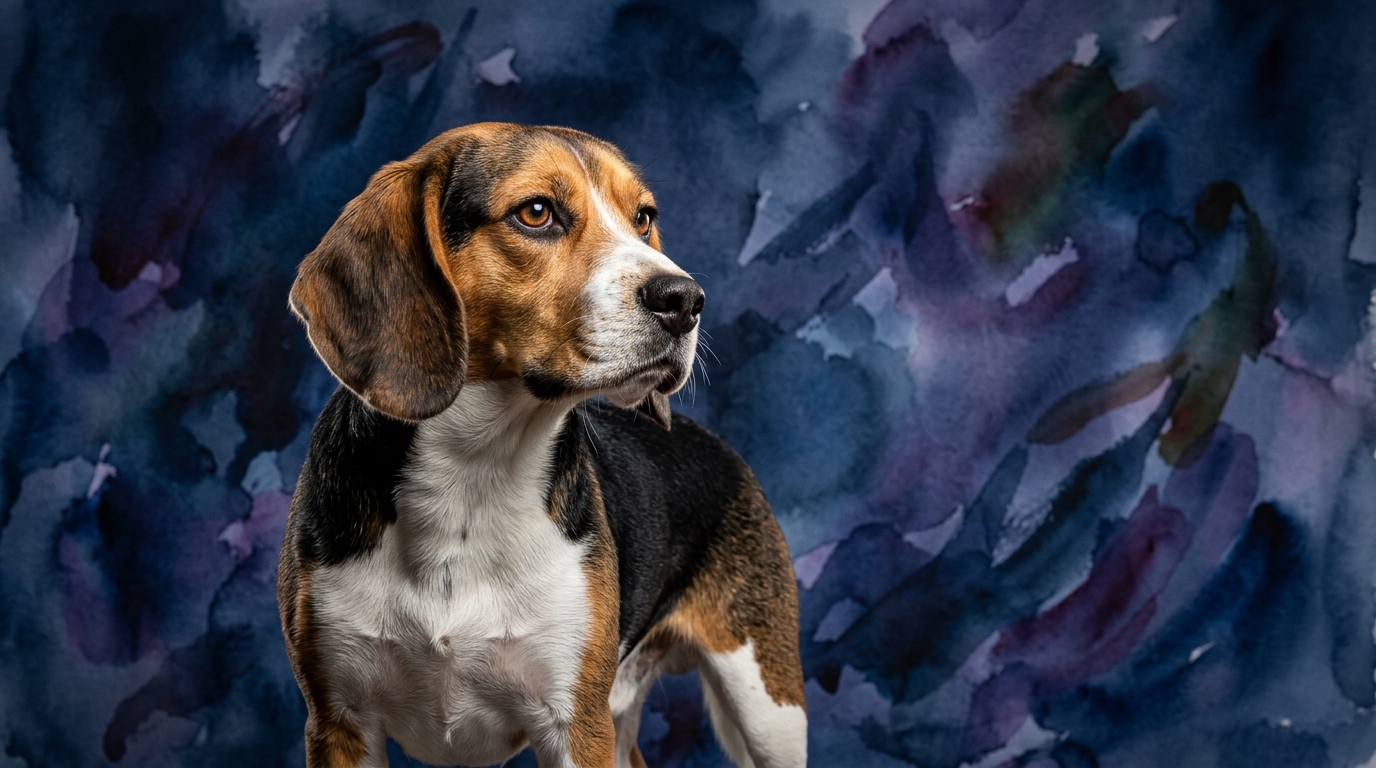

Side-by-Side IQ Profile: Beagle vs. Toy Fox Terrier
The Cosmic Pet Pet IQ Lab's framework offers a lens to dissect the unique mental architectures of these two breeds, illuminating their distinct cognitive strengths and challenges. The Beagle, a scent hound ranked #72 by Coren, presents a profile deeply rooted in its ancestral purpose: its Problem Solving scores an impressive 4/5, primarily driven by its ability to unravel complex scent puzzles and navigate intricate environments using its nose. Its Training Speed, however, registers a lower 2/5, reflecting a tendency for its powerful instincts to override human commands. Social Intelligence sits at a moderate 3/5, indicating competence in pack dynamics but also a degree of independence. The Beagle's Instinctive Drive is an unparalleled 5/5, a testament to its relentless pursuit of scent, and its Memory stands at 4/5, particularly robust for retaining scent trails and associated locations.
In contrast, the Toy Fox Terrier, a spirited toy breed not included in Coren's ranking, exhibits a more generalized cognitive makeup. Its Problem Solving is rated 3/5, demonstrating a decent capacity for figuring out everyday challenges. Training Speed is a more amenable 3/5, suggesting a quicker uptake of commands compared to the Beagle. Social Intelligence also scores 3/5, indicating adaptability within its human family unit but potentially selective engagement beyond that. Its Instinctive Drive is a moderate 3/5, still present but less specialized, and its Memory is a consistent 3/5, sufficient for routines and basic learned behaviors.
Where the Beagle Wins Cognitively
The Beagle's cognitive superiority shines brightest in domains directly linked to its evolution as a scent hound. Its Problem Solving, rated 4/5, is a testament to its complex problem-solving abilities when presented with olfactory challenges. This isn't about manipulating levers for a treat, but rather deciphering intricate scent pathways, following faint traces across varied terrains, and effectively "mapping" a scent's origin – a sophisticated form of spatial and sensory reasoning. Furthermore, the Beagle's Instinctive Drive, a perfect 5/5, isn't just a physical trait; it underpins a profound cognitive focus. This relentless drive means an almost singular dedication to a task once a compelling scent is engaged, allowing for sustained mental effort over long periods in pursuit of its objective. Complementing this is its Memory, a strong 4/5, which allows Beagles to recall specific scent signatures, remember the locations where interesting smells were found, and trace complex routes they have previously followed, making them exceptional at tracking and recall of environmental details relevant to their primary sensory input.
Where the Toy Fox Terrier Wins Cognitively
While the Beagle excels in specialized olfactory cognition, the Toy Fox Terrier demonstrates distinct cognitive advantages in areas that benefit general domestic integration. Its Training Speed, rated 3/5 compared to the Beagle's 2/5, is a significant cognitive win. This indicates a quicker neural processing of commands and a swifter association between actions and consequences, making the initial phases of obedience training less protracted and more rewarding for both dog and owner. This moderate training speed, combined with a less overwhelming Instinctive Drive (3/5), means the Toy Fox Terrier is generally less prone to deep-seated distractions that can derail learning. Their problem-solving, while rated 3/5, often manifests in a broader, more adaptable manner within a home environment, such as figuring out how to access a coveted toy or navigating household obstacles, rather than being singularly focused on one sensory input. This often translates to a perception of being more 'biddable' in day-to-day interactions, as their cognitive focus is more readily directed by human cues.
Which is Easier to Train and Why
Based on their cognitive profiles, the Toy Fox Terrier is generally easier to train than the Beagle. The Toy Fox Terrier's Training Speed of 3/5 indicates a quicker ability to form associations between commands and actions. They typically respond well to positive reinforcement methods and consistent cues, making them receptive learners for basic obedience and even tricks. Their moderate instinctive drive means fewer internal distractions competing with the training process; while they possess terrier tenacity, it's generally more manageable than a Beagle's overwhelming scent imperative. In stark contrast, the Beagle's Training Speed of 2/5 reflects a significant challenge. Their powerful 5/5 Instinctive Drive means that once a compelling scent is detected, their neurocognitive pathways are almost entirely dedicated to its pursuit. This makes holding their attention for training incredibly difficult, often requiring extraordinary patience, high-value rewards, and creative strategies to compete with their nose. While Beagles can and do learn, their training journey is often longer, more demanding, and requires a deep understanding of their unique sensory world to achieve consistent results.
Suitability for Active vs. Relaxed Owners
The distinct cognitive and behavioral drives of these breeds dictate their suitability for varying owner lifestyles. Active owners, particularly those who relish outdoor adventures and engaging with a dog's natural instincts, will find a profoundly rewarding companion in the Beagle. Their 5/5 Instinctive Drive demands significant physical and mental exercise, ideally incorporating scent-based activities like tracking, long exploratory walks in secure areas, or participation in canine nose work. An under-stimulated Beagle, with its potent cognitive drive unfulfilled, can channel its problem-solving abilities into undesirable behaviors like excessive vocalization or destructive chewing. Conversely, more relaxed owners, or those seeking a lively companion whose exercise needs are more readily met within a typical home environment, might find the Toy Fox Terrier a better fit. While energetic and playful, their moderate 3/5 Instinctive Drive and smaller stature mean their daily exercise requirements are less intense. Regular walks, indoor games, and mental puzzles are usually sufficient to keep a Toy Fox Terrier content, making them well-suited for suburban or even apartment living, provided their cognitive need for engagement is met through interaction and training.
The Verdict
For owners who are prepared to embrace and channel a dog's profound natural instincts, delight in outdoor exploration, and commit to a patient, creative training approach, the Beagle is an unmatched companion. They thrive when their powerful olfactory and problem-solving abilities are engaged in purposeful activities.
Conversely, the Toy Fox Terrier suits owners seeking a spirited, highly interactive, and more readily trainable companion for a moderately active lifestyle, appreciating a dog whose quick wit and desire for engagement are more easily directed within a domestic setting.
🧠 Find Your Pet's IQ Score
Our Pet IQ Lab assessment covers 25+ tests across 5 cognitive dimensions — personalized to your breed.
Take the Full IQ Test →Frequently Asked Questions
Are Beagles difficult to train?
Yes, relative to many breeds, due to their profound 5/5 instinctive scent drive which often overrides commands. Training requires immense patience, creativity, and high-value rewards to capture and hold their attention effectively.
Do Toy Fox Terriers need a lot of exercise?
No, their exercise needs are moderate. Daily walks, indoor play sessions, and mental stimulation through training or puzzles are usually sufficient to keep them content and prevent boredom.
Which breed is better for apartment living?
The Toy Fox Terrier is generally better suited for apartments due to their smaller size and more manageable exercise requirements, provided they receive consistent daily mental and physical stimulation. Beagles can adapt, but demand significant outdoor time and active engagement to prevent behavioral issues.