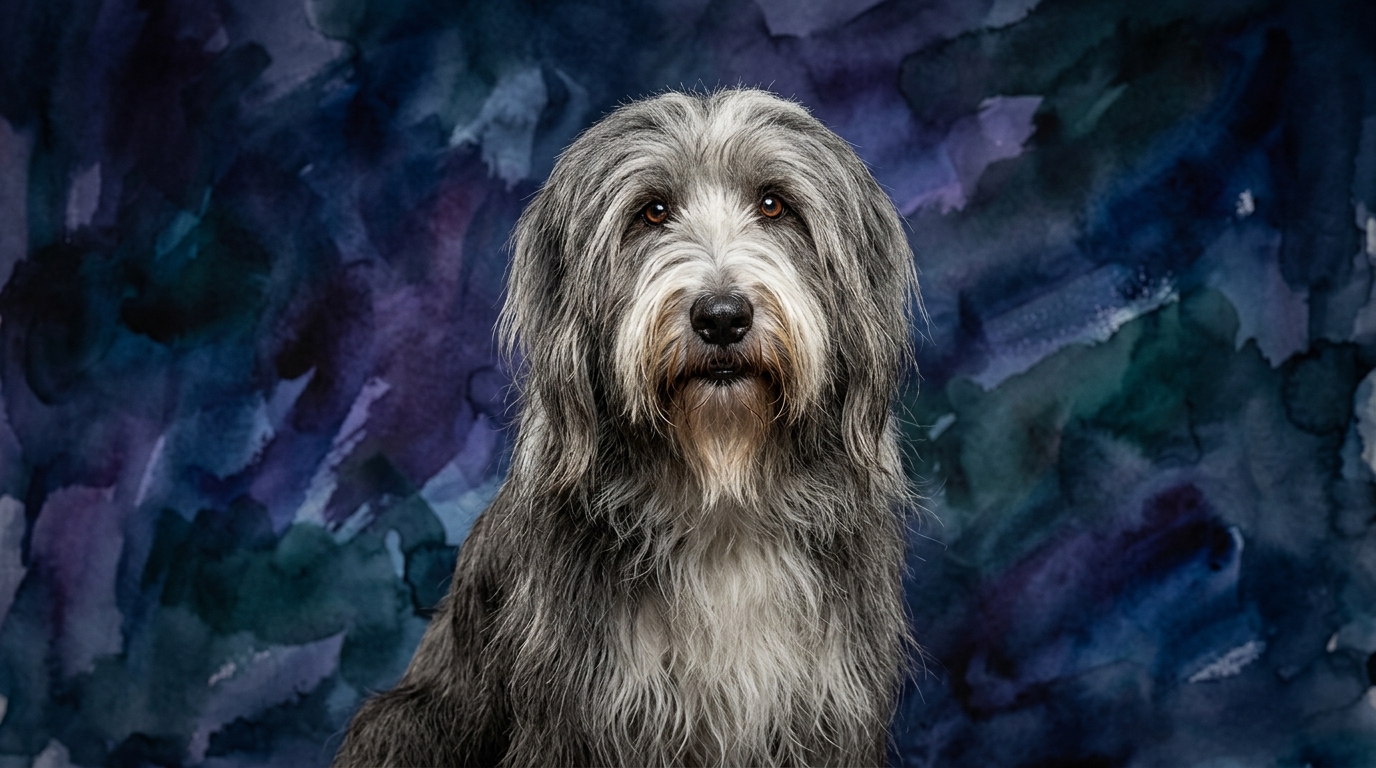
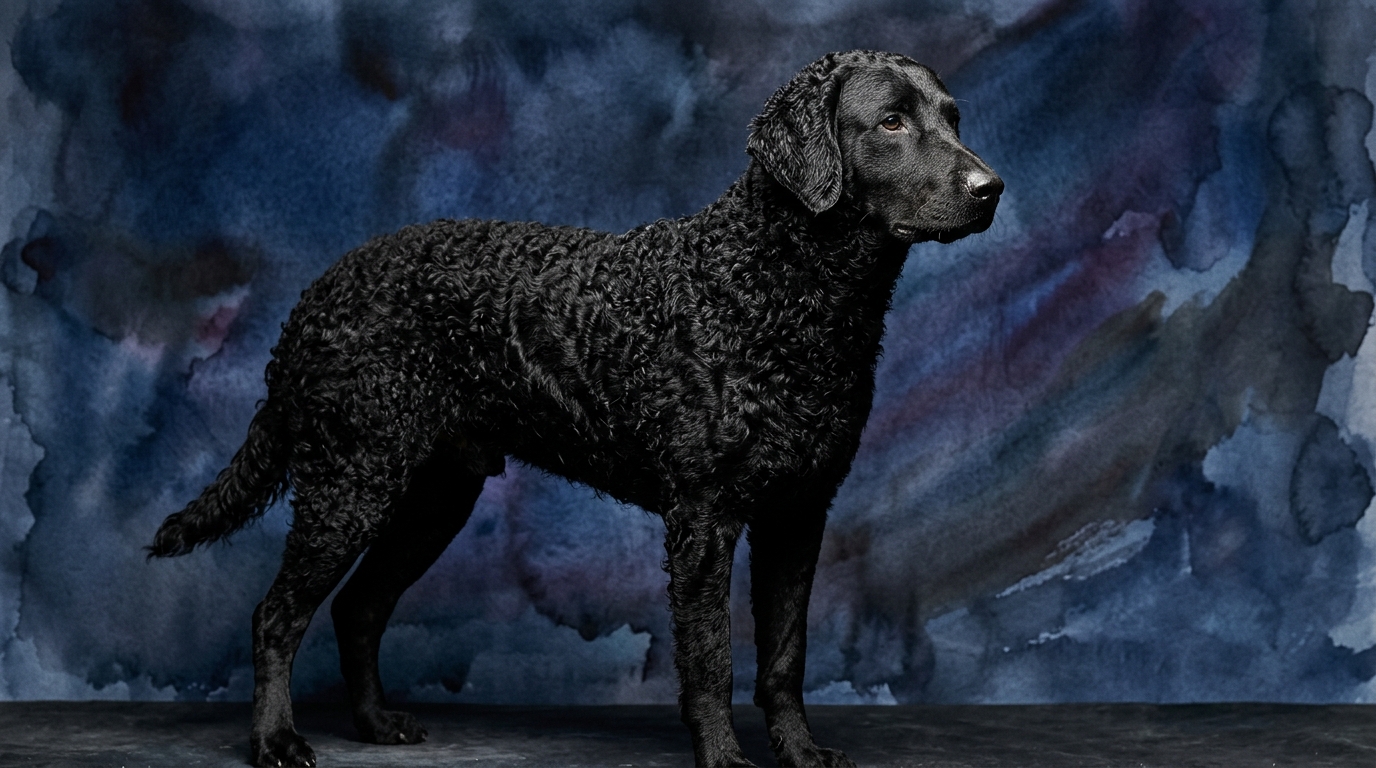
Side-by-Side Cognitive Profiles: Bearded Collie vs. Curly-Coated Retriever
The Pet IQ Lab provides a unique lens through which to examine the distinct mental aptitudes of these two breeds. Understanding their individual strengths across five key dimensions offers prospective owners clarity on what to expect from their canine companion.
The **Bearded Collie (Coren rank #34)**, originating from herding lines, possesses a cognitive makeup optimized for independent decision-making and rapid learning in dynamic environments.
**Problem Solving (4/5):** Bearded Collies exhibit a strong capacity for independent thought and strategic thinking, often devising clever solutions to perceived obstacles. This score reflects their historical role in managing livestock, where quick, adaptive thinking was crucial for navigating changing flock dynamics and terrain.
**Training Speed (4/5):** With a high aptitude for grasping new commands and routines, Bearded Collies typically learn quickly, demonstrating an eagerness to engage in structured learning sessions. Their responsiveness makes them generally receptive to consistent, positive reinforcement training methods.
**Social Intelligence (3/5):** While affectionate with their families, Bearded Collies possess a moderate social intelligence, meaning they are generally attuned to human emotions and social cues but might not always prioritize human direction over their own instincts in complex situations. They can be discerning with strangers.
**Instinctive Drive (3/5):** Their herding heritage grants them a moderate instinctive drive, manifesting as a desire to gather, chase, and control movement, even if it's just family members or toys. This drive is present but typically manageable within a domestic setting with appropriate outlets.
**Memory (4/5):** Bearded Collies boast an excellent memory, retaining learned commands, routines, and experiences over long periods. This strong recall contributes significantly to their overall trainability and ability to navigate complex environments or repeat learned behaviors reliably.
The **Curly-Coated Retriever (Coren rank #41)**, a versatile sporting dog, showcases a cognitive profile geared towards steadfast execution and robust recall, essential for its traditional roles in the field and water.
**Problem Solving (3/5):** The Curly-Coated Retriever demonstrates a practical approach to problem-solving, preferring direct action and learned sequences over abstract strategic planning. Their intelligence is geared towards understanding and executing specific tasks, particularly those related to retrieving.
**Training Speed (3/5):** Curly-Coated Retrievers learn at a steady pace, requiring consistent, patient training to solidify new commands and behaviors. While not as quick to pick up novel concepts as some breeds, they are diligent and reliable once a lesson is thoroughly understood and reinforced.
**Social Intelligence (3/5):** Similar to the Bearded Collie, Curly-Coated Retrievers show a moderate social intelligence, forming strong bonds with their families and being generally aware of their human companions' moods. They tend to be more reserved with strangers but are loyal and attentive to their inner circle.
**Instinctive Drive (3/5):** Their sporting heritage means they possess a moderate instinctive drive, primarily focused on retrieving, swimming, and exploring. This drive translates into a persistent desire to work and bring objects back, making them excellent partners for field activities.
**Memory (4/5):** Curly-Coated Retrievers exhibit a robust memory, especially for learned tasks and their environment. This strong recall allows them to remember complex retrieving sequences, scent trails, and spatial layouts, which is crucial for their working roles.
Where the Bearded Collie Cognitively Excels
The Bearded Collie's cognitive edge becomes apparent in its superior Problem Solving (4/5) and Training Speed (4/5) scores. This breed demonstrates a remarkable ability to think on its feet, adapting quickly to new situations or challenges without explicit human instruction. For instance, a Bearded Collie might independently figure out how to open a gate or devise a novel way to retrieve a toy stuck under furniture, showcasing their inherent ingenuity. Their quicker grasp of commands and eagerness to learn new tasks means they typically require fewer repetitions to achieve proficiency, making them particularly responsive to intricate training regimens like agility or competitive obedience, where rapid concept acquisition is paramount. This quick processing speed allows them to excel in dynamic environments where swift, independent decisions are often rewarded.
Where the Curly-Coated Retriever Cognitively Excels
While the Curly-Coated Retriever has slightly lower scores in Problem Solving and Training Speed, its cognitive strengths lie in its unwavering focus and application of its excellent Memory (4/5) to purpose-driven tasks. Unlike the Bearded Collie's independent problem-solving, the Curly excels at internalizing and executing complex, multi-step sequences related to its retrieving work, recalling specific locations of fallen birds or navigating challenging terrain to bring an item back. Their steady and reliable learning style, coupled with their strong recall, means that once a task is learned thoroughly, it is performed with remarkable consistency and precision. This breed's intelligence is geared towards steadfast execution and dedication to a job, making them exceptionally dependable in their specialized roles, where consistency often outweighs spontaneous innovation.
Ease of Training: Behavioral Differences
Based on their respective Pet IQ Lab profiles, the Bearded Collie (Training Speed 4/5) generally proves easier to train than the Curly-Coated Retriever (Training Speed 3/5). The Bearded Collie's higher score indicates a quicker understanding of new commands and a more pronounced eagerness to engage with human instruction, often requiring fewer repetitions to master a task. Their inherent desire to work cooperatively and their quick mental processing allow them to grasp concepts rapidly, making them highly responsive to positive reinforcement and eager to please. In contrast, the Curly-Coated Retriever, while certainly trainable, typically requires more patience and consistency. Their learning style is often described as steady rather than swift; they absorb information diligently, but it might take more time and repetition for a new behavior to become ingrained. This difference isn't about one breed being 'smarter,' but rather about distinct learning paces and approaches to human guidance.
Matching Breed to Lifestyle: Active vs. Relaxed Owners
Both breeds are generally suited for active owners, though their energy expressions differ significantly. The Bearded Collie, with its herding background and higher Problem Solving/Training Speed, thrives with owners who can provide ample mental stimulation alongside physical exercise. These dogs benefit from activities like herding trials, agility, or advanced obedience, which tap into their quick minds and desire for purpose. An active owner for a Bearded Collie means someone who enjoys interactive training, puzzle toys, and varied outdoor adventures that challenge both body and brain. For a more relaxed owner, the Bearded Collie’s inherent drive and need for mental engagement could lead to boredom and potentially undesirable behaviors, manifesting as creative mischief.
The Curly-Coated Retriever, with its sporting heritage, also requires significant physical activity, particularly opportunities to run, swim, and retrieve. Their excellent Memory and Instinctive Drive (3/5) mean they excel in activities like field trials, dock diving, or long hikes that allow them to utilize their natural retrieving and exploring instincts. An active owner for a Curly-Coated Retriever is someone who enjoys regular, vigorous outdoor exercise and can provide outlets for their retrieving drive, perhaps through structured play or specific working tasks. While they can be calm indoors once adequately exercised, a truly relaxed owner might struggle to meet their needs for consistent physical exertion and purpose, leading to a restless companion. Neither breed is ideal for a truly sedentary lifestyle, as both require consistent engagement to be content.
The Verdict
Choose the Bearded Collie if you are an engaged owner seeking a highly responsive companion eager for complex training, mental challenges, and a partner who demonstrates independent problem-solving in daily life.
Opt for the Curly-Coated Retriever if you appreciate a steadfast, loyal companion with a robust memory, suited for consistent outdoor activities, especially those involving retrieving, and value a dog that excels in performing learned tasks reliably.
🧠 Find Your Pet's IQ Score
Our Pet IQ Lab assessment covers 25+ tests across 5 cognitive dimensions — personalized to your breed.
Take the Full IQ Test →Frequently Asked Questions
Do Bearded Collies need more mental stimulation than Curly-Coated Retrievers?
Yes, generally. With a higher Problem Solving score, Bearded Collies thrive on mental challenges like puzzle toys, complex obedience, or agility, which satiate their quick-thinking minds and prevent boredom. While Curly-Coated Retrievers also need stimulation, theirs often focuses on physical tasks like retrieving.
Are Curly-Coated Retrievers difficult to train because of their lower training speed score?
Not difficult, but they require more patience and consistency. Their training speed (3/5) indicates they might take longer to grasp new concepts compared to a Bearded Collie, but with persistent, positive reinforcement, they become reliable and well-trained companions, solidifying their robust memory.
How do their social intelligence scores (3/5 for both) impact their family life?
Both breeds are moderately socially intelligent, meaning they are attuned to their family members and form strong bonds, but might not be overly demonstrative or immediately friendly with strangers. They will be loyal and aware companions within their trusted household, observing family dynamics keenly.