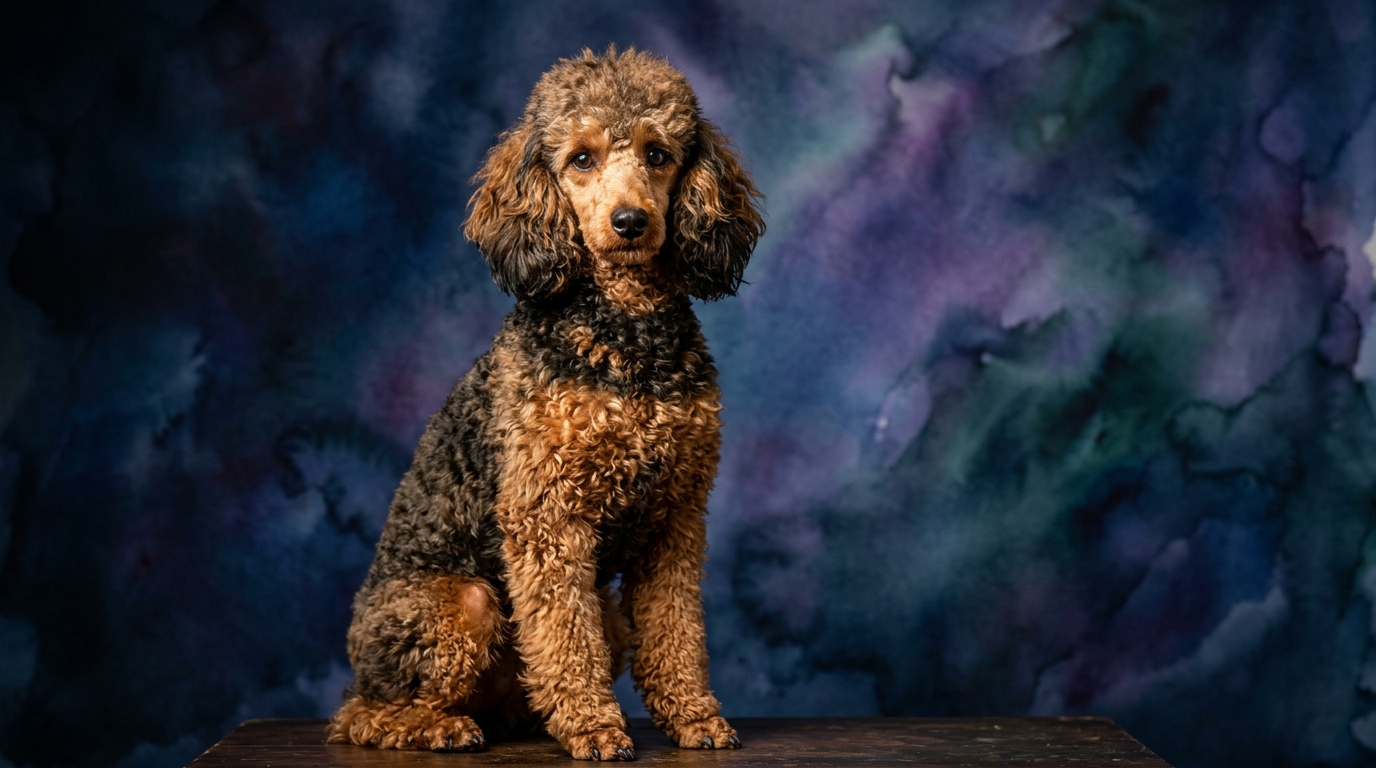
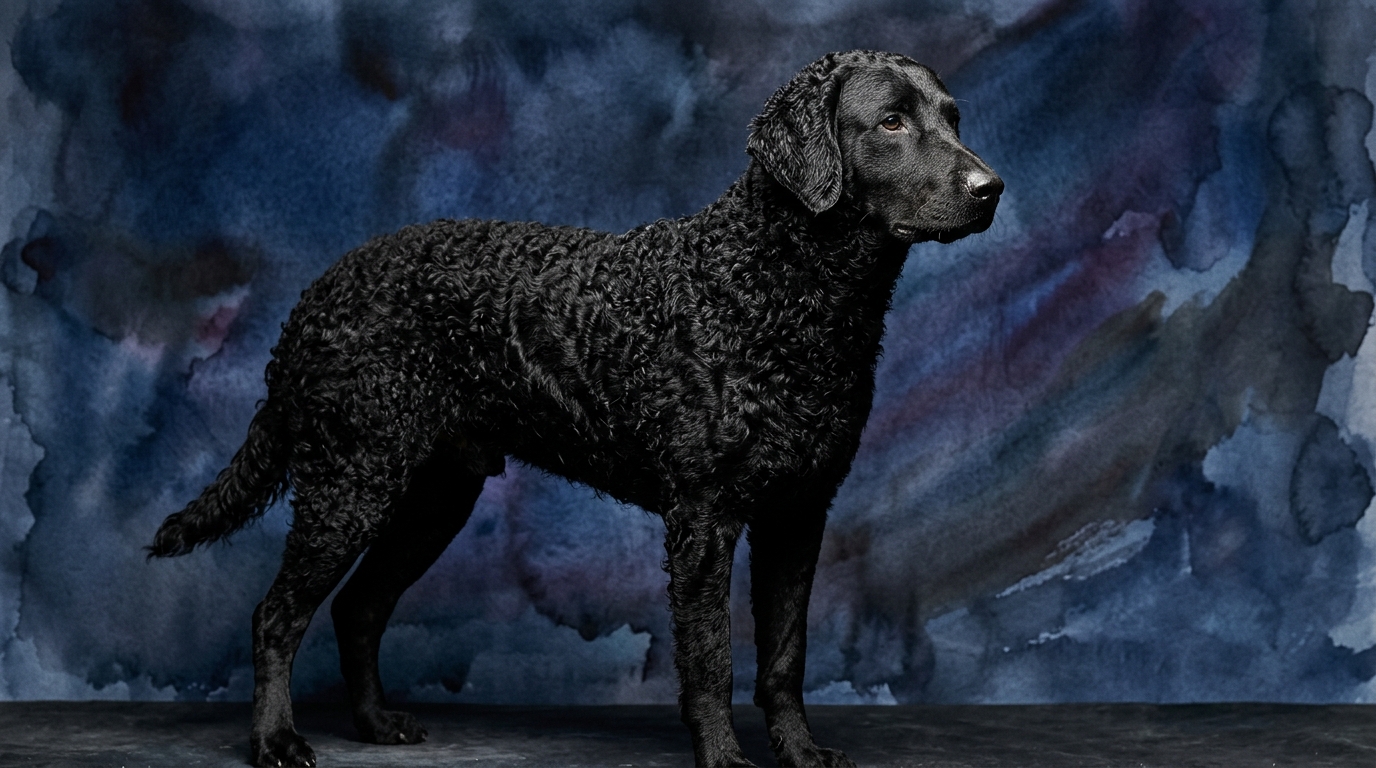
Side-by-Side IQ Profile: Poodle (Standard) vs. Curly-Coated Retriever
**Poodle (Standard)**
**Problem Solving (5/5):** This breed demonstrates exceptional analytical capabilities, quickly assessing novel situations and devising effective solutions. They excel at figuring out complex puzzles or navigating intricate environments with minimal guidance.
**Training Speed (5/5):** Standard Poodles acquire new commands and complex sequences with remarkable rapidity. Their ability to grasp concepts after very few repetitions makes them highly responsive to instruction.
**Social Intelligence (5/5):** Profoundly attuned to human emotions and subtle social cues, Standard Poodles often anticipate needs or react appropriately to mood shifts. They form deep, nuanced bonds with their human companions.
**Instinctive Drive (4/5):** While adaptable, they possess a strong, channelable drive for activities like retrieving, agility, and companionship. This drive fuels their engagement in various tasks.
**Memory (5/5):** Standard Poodles exhibit long-term retention of learned behaviors, intricate routes, and complex associations. Once a lesson is learned, it is rarely forgotten, contributing to their consistent performance.
**Curly-Coated Retriever**
**Problem Solving (3/5):** Curly-Coated Retrievers are capable of solving straightforward problems, particularly those related to their working heritage. However, they may require more structured guidance and repetition for abstract or highly complex cognitive challenges.
**Training Speed (3/5):** This breed learns at an average pace, necessitating consistent repetition and positive reinforcement to solidify new commands. Patience and clear communication are key to their training success.
**Social Intelligence (3/5):** Curly-Coated Retrievers understand basic social cues and are capable of forming strong, affectionate bonds with their families. Their social interactions tend to be more direct compared to the Poodle's nuanced responses.
**Instinctive Drive (3/5):** They possess a robust drive for retrieving and fieldwork, often coupled with an independent streak. This drive is typically focused on their specific working tasks, sometimes leading them to prioritize their instincts over immediate human direction.
**Memory (4/5):** Curly-Coated Retrievers demonstrate good retention of training and past experiences. They will remember commands and routines, though perhaps not with the near-perfect recall seen in breeds with a 5/5 memory rating.
Where Poodle (Standard) Wins Cognitively
The Standard Poodle consistently outshines in several cognitive dimensions, making them a formidable presence in fields requiring high mental acuity and adaptability. Their **Problem Solving (5/5)** capabilities are particularly striking. Where a Curly-Coated Retriever might require repeated demonstrations or simplified steps, a Standard Poodle often intuitively grasps the underlying principle of a task, such as opening a complex treat puzzle or navigating an unfamiliar obstacle course. They don't just memorize solutions; they actively analyze and generalize, applying learned concepts to entirely new scenarios with impressive fluidity. This analytical prowess allows them to excel in activities demanding strategic thinking, from competitive obedience routines to intricate scent work.
Furthermore, their **Training Speed (5/5)** is unparalleled in this comparison. Standard Poodles process and internalize new commands with astonishing swiftness, often requiring only a handful of repetitions to achieve mastery. This rapid acquisition translates directly into efficiency, enabling them to progress through training levels at an accelerated pace and embrace complex multi-step instructions that might overwhelm other breeds. Their **Social Intelligence (5/5)** also provides a distinct advantage. Standard Poodles are exceptionally perceptive of human emotions and intentions, often adjusting their behavior in response to subtle shifts in tone or body language. This deep emotional attunement facilitates a remarkably collaborative training dynamic, as they actively seek to understand and please their human partners. Finally, their **Memory (5/5)** reinforces all these strengths. A Standard Poodle’s recall of learned commands, intricate routes, or specific associations is exceptionally robust. Once a behavior is ingrained, it tends to stick, allowing for reliable performance even after extended periods without practice, providing a consistent foundation for advanced learning.
Where Curly-Coated Retriever Wins Cognitively
While the numerical scores might suggest a broad cognitive advantage for the Poodle, the Curly-Coated Retriever possesses distinct cognitive strengths that align perfectly with its historical purpose and specific temperament. Their **Instinctive Drive (3/5)**, though numerically lower than the Poodle's versatile 4/5, manifests as a highly focused and resilient cognitive trait when it comes to their primary function: retrieving. Unlike the Poodle's generalized drive which can be channeled into many activities, the Curly's drive is deeply rooted in its retrieving heritage, enabling a single-minded determination in the field. This specific drive fuels a robust mental stamina, allowing them to tirelessly search, retrieve, and return game, even in challenging conditions where other breeds might lose focus.
Moreover, their independent nature, often tied to their instinctive drive, can be interpreted as a cognitive advantage in certain working contexts. While it might translate to a lower **Training Speed (3/5)** in formal obedience, this independence means they are capable of making decisions and problem-solving autonomously in the field without constant human direction. A Curly might not solve a puzzle box as quickly as a Poodle, but its ability to navigate a complex cover, mark a fall, and retrieve with minimal handler input demonstrates a practical, self-reliant intelligence crucial for a working retriever. This cognitive self-sufficiency, combined with their good **Memory (4/5)**, allows them to remember specific hunting locations, scent trails, and retrieve patterns, making them highly effective partners in their chosen domain. Their resilience and ability to work through distractions, driven by their deep-seated purpose, represent a unique cognitive triumph.
Which is Easier to Train and Why
Evaluating ease of training requires a look beyond raw intelligence scores to consider how cognitive traits interact with temperament and motivation. Without question, the **Standard Poodle** presents a significantly easier training experience for most owners. Their **Training Speed (5/5)** means they absorb new information rapidly, often understanding a new command after just a few repetitions. This isn't merely about rote memorization; their exceptional **Problem Solving (5/5)** skills allow them to grasp the *concept* behind a command, enabling them to generalize and apply it consistently in various situations. For example, teaching a 'stay' command to a Poodle often involves fewer repetitions before they understand the expectation across different distances and distractions. Their high **Social Intelligence (5/5)** also plays a crucial role; Poodles are highly motivated by human interaction and praise, making them eager participants in training sessions and quick to adjust their behavior based on handler feedback. Their flawless **Memory (5/5)** ensures that once a lesson is learned, it tends to stick, reducing the need for constant review.
The **Curly-Coated Retriever**, by contrast, presents a more nuanced training challenge. Their **Training Speed (3/5)** suggests an average learning pace, meaning owners must be prepared for more repetitions and a slower progression through training stages. Where a Poodle might pick up a complex sequence in a session or two, a Curly might require several weeks of consistent practice. Their **Problem Solving (3/5)** ability is practical but less abstract, meaning they might struggle with novel, non-instinctive tasks without clear, step-by-step guidance. The Curly's inherent independence, a facet of its **Instinctive Drive (3/5)**, is perhaps the most significant factor influencing training difficulty. They are not inherently driven to please in the same effusive way as a Poodle; instead, they often possess a 'what's in it for me?' attitude, requiring owners to be creative and highly consistent with positive reinforcement. This independence, while valuable in the field, can manifest as a perceived stubbornness in formal obedience, as they might choose to follow their own instincts rather than a handler's command if not sufficiently motivated. Training a Curly demands patience, consistency, and a deep understanding of their resilient and self-reliant nature, making them less suited for novice trainers seeking immediate results.
Which Suits Active Owners vs. Relaxed Owners
When considering lifestyle compatibility, both breeds require significant engagement, but their needs diverge in emphasis. The **Standard Poodle** is an excellent match for **active owners** who seek a versatile canine partner for a wide array of activities. While they thrive on physical exercise, their profound cognitive abilities mean they also demand substantial mental stimulation. Owners who enjoy competitive dog sports like agility, obedience, rally, or even dock diving will find a Poodle to be an eager and capable participant, often excelling due to their problem-solving skills and rapid learning. They are adaptable companions, happy to engage in long hikes or runs, but equally content with intricate puzzle toys, training sessions, or engaging interactive play within the home. For **relaxed owners**, the Standard Poodle can be a *more manageable* option compared to many working breeds, provided their mental needs are met. While not a couch potato, their adaptability means that an occasional day with less vigorous physical activity can be compensated with intensive brain games or training, making them suitable for owners who might have varying energy levels but can consistently provide intellectual engagement.
The **Curly-Coated Retriever**, on the other hand, is unequivocally suited for **active owners** who embrace a robust outdoor lifestyle. This breed was developed for demanding fieldwork, and their physical and mental well-being are intrinsically tied to regular, vigorous exercise, ideally involving their retrieving instincts. Long walks are insufficient; they need opportunities to run, swim, and engage in purposeful activity like fetching, scent work, or field trials. Owners who are avid hikers, runners, swimmers, or hunters will find an ideal companion in the Curly. Their resilient nature and focus on their task make them excellent partners for endurance activities in varied environments. For **relaxed owners**, the Curly-Coated Retriever is generally *not a suitable choice*. Their strong instinctive drive and need for physical exertion, combined with their independent streak, can lead to boredom, frustration, and destructive behaviors if their needs are not adequately met. They are happiest when they have a 'job' to do, and a sedentary lifestyle will not fulfill their inherent purpose or temperament.
The Verdict
Choose the Standard Poodle if you seek a highly adaptable, swift-learning canine partner for a diverse range of activities, from competitive dog sports to sophisticated companion tasks, and can provide consistent mental enrichment.
Opt for the Curly-Coated Retriever if you are an active individual who values an independent, resilient outdoor companion, particularly for retrieving-focused activities, and are committed to a patient, consistent training approach.
🧠 Find Your Pet's IQ Score
Our Pet IQ Lab assessment covers 25+ tests across 5 cognitive dimensions — personalized to your breed.
Take the Full IQ Test →Frequently Asked Questions
Do Standard Poodles shed?
Standard Poodles have a single coat that sheds minimally, making them a popular choice for individuals with allergies; however, their coat requires regular professional grooming to prevent matting.
Are Curly-Coated Retrievers good with children?
Curly-Coated Retrievers can be good family dogs and are generally patient with children, but their active nature means they thrive in homes where children understand how to interact respectfully with a dog.
Which breed requires more grooming?
Both breeds require significant grooming. The Standard Poodle's non-shedding coat necessitates frequent brushing and professional clipping every 4-8 weeks, while the Curly's unique coat needs regular brushing and occasional stripping to maintain its health and appearance.