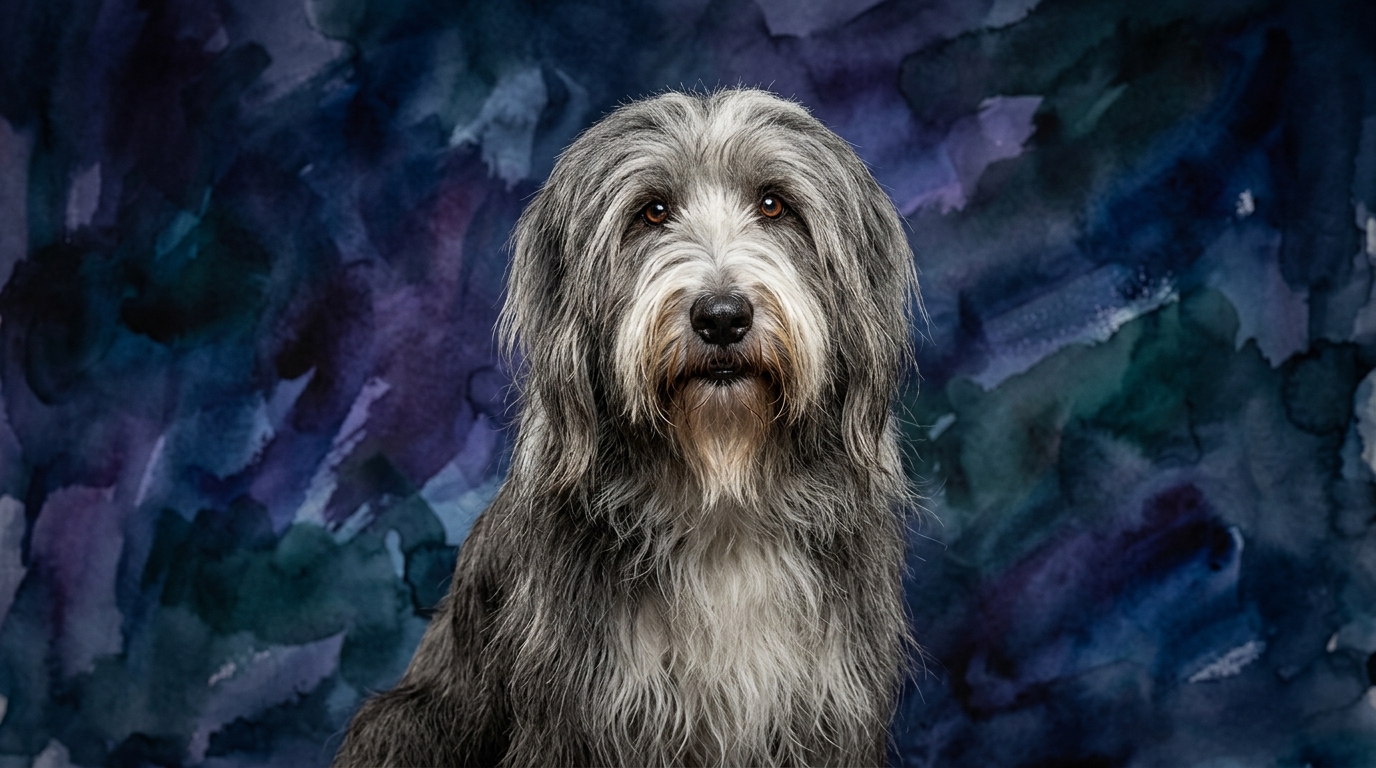
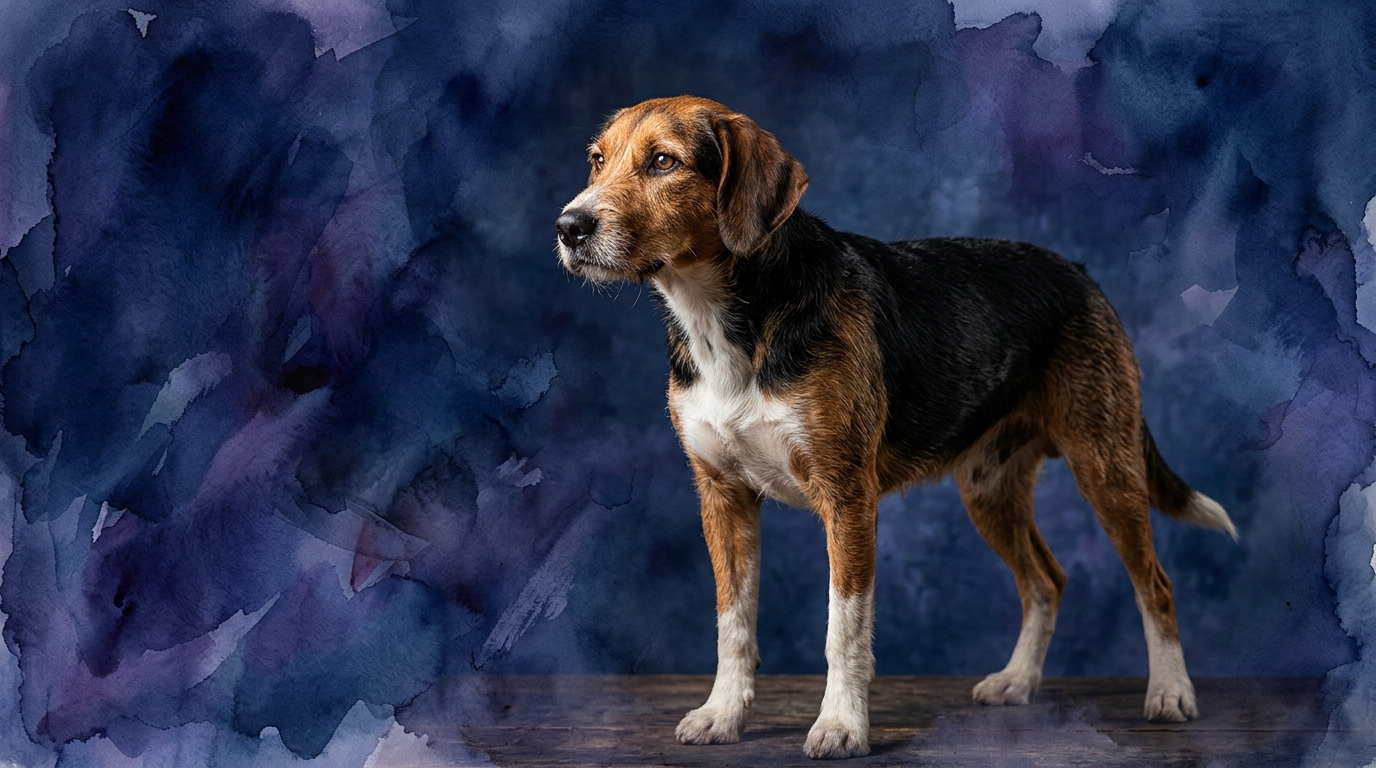
Side-by-Side Cognitive Profiles: Bearded Collie vs. Harrier
At The Cosmic Pet Pet IQ Lab, we evaluate canine intelligence across five key dimensions to provide a nuanced understanding of each breed's cognitive strengths. This detailed comparison between the Bearded Collie and the Harrier illuminates their distinct mental frameworks, shaped by centuries of selective breeding for specific roles.
The Bearded Collie, a member of the Herding Group, demonstrates a strong aptitude for complex tasks and learning. Their Problem Solving is rated 4/5, indicating a significant capacity for independent thought, strategic planning, and navigating novel situations. Training Speed scores 4/5, highlighting their quick grasp of new commands and routines, often requiring fewer repetitions. Social Intelligence stands at 3/5, suggesting a moderate ability to interpret both canine and human social cues, making them generally adaptable companions. Their Instinctive Drive is 3/5, reflecting a manageable level of innate herding behaviors that can be channeled effectively. Finally, Memory is rated 4/5, showcasing excellent retention of learned behaviors, people, and environments.
In contrast, the Harrier, a robust member of the Hound Group, exhibits cognitive strengths geared towards its ancestral role of scent tracking and endurance. Their Problem Solving registers at 3/5, indicating a practical, task-oriented approach, particularly adept at challenges related to scent and terrain navigation rather than abstract puzzles. Training Speed is 3/5, meaning they learn at a steady pace but often require more consistent repetition and focused motivation. Social Intelligence also scores 3/5, showing a moderate understanding of social dynamics, particularly within a pack, valuing companionship. Their Instinctive Drive is 3/5, characterized by a potent and persistent prey drive, primarily focused on following scent trails. Memory is 3/5, providing a functional recall for scents and established routines pertinent to their hunting work, though potentially less robust for general commands when a compelling scent is present.
Where the Bearded Collie Excels Cognitively
The Bearded Collie's cognitive advantages are evident in its superior capacity for strategic thinking and adaptability. With a Problem Solving score of 4/5, this breed can more readily analyze complex situations, devise multi-step solutions, and generalize learned concepts to entirely new challenges. For instance, a Bearded Collie is more likely to independently figure out how to open a novel latch or understand a sequence of commands without explicit prior training for that exact scenario, demonstrating a flexible and innovative mind.
Furthermore, the combination of its 4/5 Training Speed and 4/5 Memory makes the Bearded Collie a remarkably efficient learner and retainer of information. They grasp new commands and routines with impressive speed and recall them reliably over extended periods. This cognitive efficiency makes them exceptional candidates for advanced obedience, agility, rally, and other intricate dog sports, where understanding complex instructions and executing them flawlessly is paramount. Their ability to quickly form associations and retain them significantly streamlines the training process, allowing for rapid progression to more challenging tasks.
While both breeds possess instinctive drives, the Bearded Collie's 3/5 drive, paired with its higher problem-solving and training speed, translates into greater versatility in task engagement. Their herding instincts can be readily channeled and integrated into a wider array of activities that demand intricate cognitive effort, rather than being solely focused on one specific innate behavior. This allows them to excel in diverse roles, from therapy work to competitive sports, demonstrating a broad application of their cognitive prowess.
Where the Harrier Shines Cognitively
Despite numerically lower scores in general cognitive dimensions, the Harrier possesses highly specialized cognitive strengths that are paramount to its identity as a scent hound. Its 'win' lies in an unparalleled, focused scent-driven problem-solving capability. While its general problem-solving is 3/5, this breed exhibits a singular dedication to discriminating, following, and interpreting complex scent trails over vast distances and varied terrains. This is not about solving abstract puzzles but about solving the intricate 'puzzle' of a lost trail with unwavering concentration and persistence, a cognitive feat few breeds can replicate.
The Harrier's Instinctive Drive (3/5) is inextricably linked to its physical and cognitive endurance. Their ability to maintain intense focus on a scent for hours, often ignoring environmental distractions, represents a distinct cognitive fortitude essential for their original purpose. This sustained mental effort, primarily guided by instinct, allows them to pursue a goal tirelessly, showcasing a mental resilience vital for long-duration tracking or hunting endeavors.
Moreover, while their Social Intelligence is 3/5, within a working pack environment, Harriers exhibit a nuanced understanding of cooperative hunting strategies and pack hierarchy. Their cognitive strengths here are geared towards group cohesion and shared effort, which can manifest as synchronized movement, communication, and mutual support during a hunt. This inter-canine operational intelligence, focused on collaborative success, is a unique cognitive adaptation distinct from the human-centric social cues often measured in other breeds.
Trainability: Which is Easier and Why?
When it comes to general trainability, the Bearded Collie holds a distinct advantage. Their higher scores in Problem Solving (4/5), Training Speed (4/5), and Memory (4/5) collectively mean they are quicker to grasp new commands, understand the underlying intent behind instructions, and recall them reliably over time. Bearded Collies typically enjoy the mental engagement of training, often seeking to please their handlers and proactively offering behaviors. Their moderate instinctive drive means that while herding impulses exist, they are generally manageable and can be directed or integrated into training without overwhelming distraction, allowing them to maintain focus on human instruction and complex sequences more readily.
The Harrier, conversely, requires a different approach and significantly more patience from its trainer. Their 3/5 scores in Training Speed and Memory indicate that new concepts will require more repetitions and consistent reinforcement to become ingrained. The most significant factor influencing Harrier trainability is their potent Instinctive Drive (3/5), specifically their overwhelming scent drive. Once a Harrier catches a compelling scent, their cognitive focus shifts entirely to tracking, making recall or redirection incredibly challenging. Training must be highly rewarding, exceptionally consistent, and often initially conducted in low-distraction environments, gradually building up to more complex scenarios. Their problem-solving (3/5) is highly task-specific; they may not generalize commands as quickly as a Bearded Collie, necessitating specific training for various contexts.
Suitability for Active vs. Relaxed Owners
Both the Bearded Collie and the Harrier thrive with active owners, though their needs for activity stem from different cognitive and physical requirements. The Bearded Collie, with its higher problem-solving and memory capabilities, requires not just physical exercise but substantial mental stimulation. They excel when learning new tricks, participating in dog sports like agility or obedience, and having engaging 'jobs' or puzzle toys that challenge their intellect. An owner who provides consistent, vigorous daily exercise combined with regular mental enrichment will find a content and well-adjusted Bearded Collie. A relaxed owner who neglects these mental demands might find their Bearded Collie invents its own (potentially undesirable) mental challenges, leading to destructive behaviors or excessive vocalization.
The Harrier, on the other hand, absolutely demands active owners primarily for its intense physical exertion needs and an outlet for its formidable scent drive. Bred for endurance and long-distance tracking, Harriers require extensive daily exercise, including long walks, runs, or opportunities for off-leash exploration in secure areas where they can indulge their passion for following scents. Their mental stimulation largely comes from this scent exploration and physical activity rather than complex abstract puzzles. A relaxed owner who cannot provide consistent, vigorous physical activity would likely struggle immensely with a Harrier's boundless energy, which, if not properly channeled, can manifest as restlessness, destructive chewing, or incessant barking. Neither breed is suitable for truly sedentary lifestyles, but the Harrier's physical demands are particularly non-negotiable.
The Verdict: When to Choose Each Breed
The Verdict
If you seek a canine partner eager for complex training, enjoys problem-solving games, and can adapt its keen intellect to a variety of dog sports or tasks, the Bearded Collie is an excellent fit. They thrive with owners who appreciate mental engagement and can provide consistent, stimulating activities.
Opt for a Harrier if your lifestyle involves extensive outdoor activity, a love for long walks or runs, and you appreciate a dog whose primary joy is following a scent trail with tireless dedication. They are best suited for owners who understand and can accommodate their strong hound instincts and high endurance needs.
🧠 Find Your Pet's IQ Score
Our Pet IQ Lab assessment covers 25+ tests across 5 cognitive dimensions — personalized to your breed.
Take the Full IQ Test →Frequently Asked Questions
Can a Harrier be trained for advanced obedience like a Bearded Collie?
While Harriers can certainly learn obedience, their scent-driven nature and moderate training speed mean achieving the same level of precision and rapid response as a Bearded Collie will require significantly more patience, consistency, and highly motivating rewards. Their focus can be easily diverted by compelling odors, making advanced, distraction-proof obedience a greater challenge.
Which breed is better for a first-time dog owner?
The Bearded Collie, with its higher trainability and adaptability to various living situations, generally presents fewer challenges for a first-time owner committed to consistent training and mental stimulation. The Harrier's robust exercise needs and potent prey drive, combined with its independent nature, can be overwhelming for those new to dog ownership without prior experience managing hound-specific traits.
Do Bearded Collies need to herd to be happy?
While herding is their innate purpose, Bearded Collies don't necessarily need actual livestock to be content. Their happiness stems from having their cognitive abilities engaged through activities like agility, obedience, rally, puzzle toys, and learning complex tasks, which effectively channel their herding instincts into productive and mentally stimulating outlets.