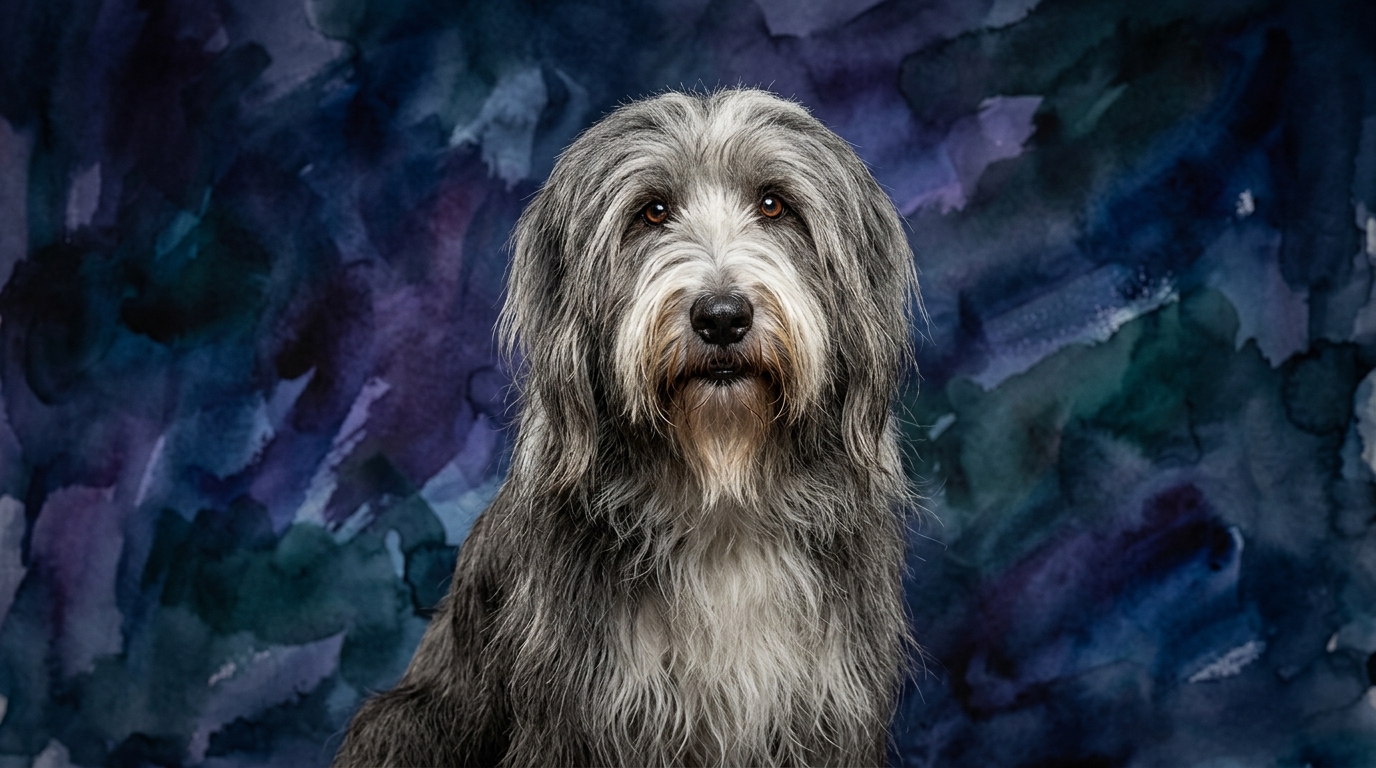
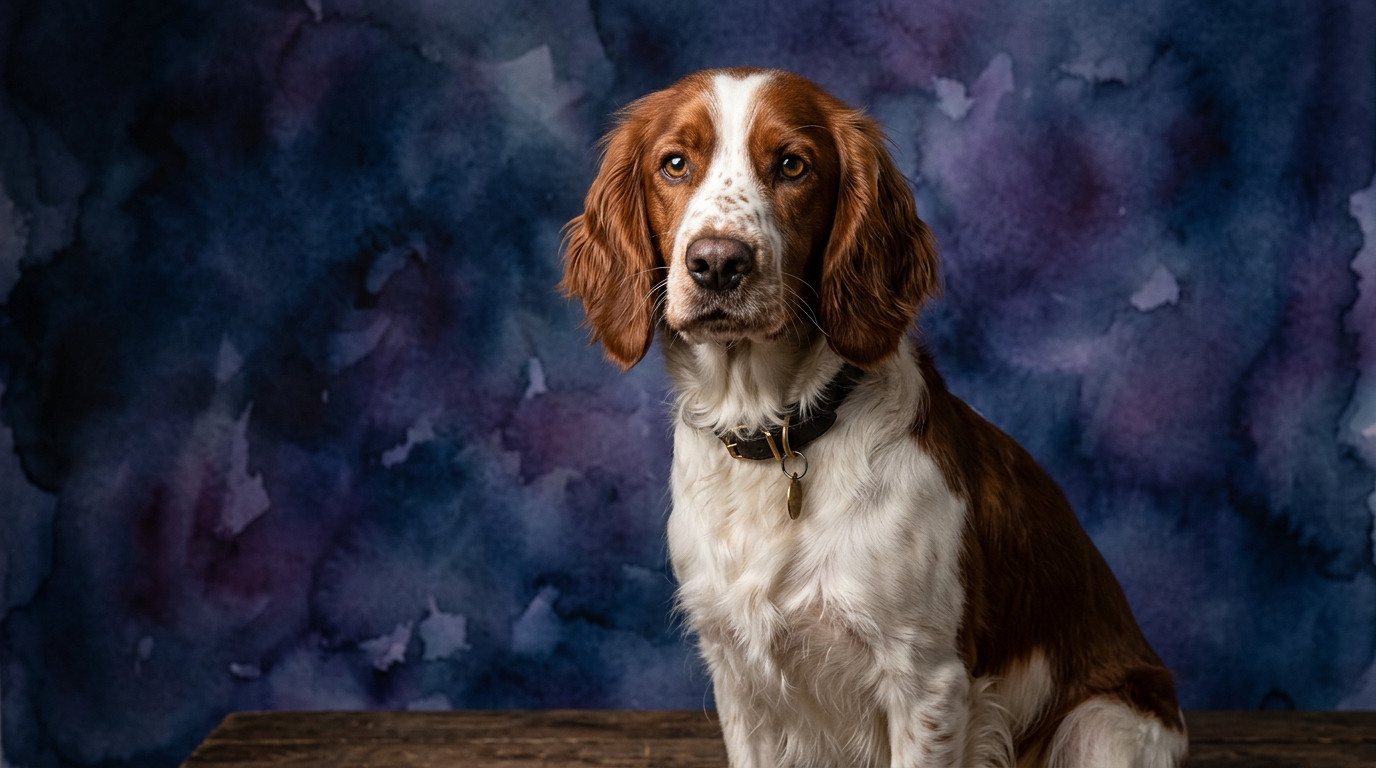
Side-by-Side Cognitive Profile: Bearded Collie vs. Welsh Springer Spaniel
At first glance, the Coren ranks for these two breeds are remarkably close – the Welsh Springer Spaniel at #31 and the Bearded Collie at #34 – both indicating a high capacity for working and obedience intelligence. Our IQ Lab assessment further highlights their cognitive parallels, with identical scores across five crucial dimensions: Problem Solving (4/5), Training Speed (4/5), Social Intelligence (3/5), Instinctive Drive (3/5), and Memory (4/5). Despite these numerical similarities, the *application* of these cognitive strengths differs significantly, shaped by their ancestral responsibilities.
**Problem Solving (4/5):** For the Bearded Collie, this score reflects an inherent capacity to independently strategize and overcome obstacles, often seen in their original role of gathering and moving livestock across varied terrains. Their solutions might involve anticipating animal movements or navigating complex environments with a keen understanding of spatial dynamics. The Welsh Springer Spaniel, also scoring 4/5, demonstrates its problem-solving prowess through tasks like locating hidden game in dense cover, navigating challenging terrain during a flush, or figuring out the quickest way to retrieve an object. Their cognitive efforts are highly focused on the immediate task of hunting and retrieving, requiring quick, adaptive thinking in dynamic, scent-rich situations.
**Training Speed (4/5):** Both breeds learn new commands and behaviors with impressive alacrity, indicating a strong desire to engage and a quick grasp of concepts. The Bearded Collie's 4/5 training speed is often linked to their need to understand and respond to complex herding commands, requiring them to process information rapidly and execute actions precisely, often without direct supervision. For the Welsh Springer Spaniel, a 4/5 rating reflects their eagerness to please and strong motivation to perform tasks for their handler, making them highly receptive to training, particularly when it involves their natural instincts like retrieving or scent work.
**Social Intelligence (3/5):** A score of 3/5 suggests both breeds possess a solid understanding of social cues, though perhaps not the extreme sensitivity or people-focus of some companion breeds. The Bearded Collie's social intelligence is often directed towards understanding their handler's subtle signals and the dynamics of their flock, allowing them to work effectively as a team member while maintaining a degree of independent judgment. The Welsh Springer Spaniel's 3/5 social intelligence manifests in their cooperative nature with their human companions during hunts, reading body language and intentions to work in tandem towards a shared goal, often showing a strong desire for companionship within their working relationship.
**Instinctive Drive (3/5):** The Bearded Collie's 3/5 instinctive drive is primarily rooted in their ancestral herding instincts — the innate desire to gather, control, and move. This drive, while not overwhelming, provides a powerful internal motivation for work and can manifest in attempts to 'herd' family members or other pets if not given appropriate outlets. The Welsh Springer Spaniel's 3/5 instinctive drive is distinctly geared towards their sporting heritage, encompassing a strong desire to hunt, flush, and retrieve. This drive fuels their enthusiasm for outdoor activities and their persistence in pursuing scents or objects, making them tireless workers in the field.
**Memory (4/5):** Both breeds exhibit excellent memory capabilities, crucial for their respective historical roles. The Bearded Collie's 4/5 memory allows them to recall complex routes, specific commands, and the locations of their flock, aiding in efficient and consistent work over large areas and varied conditions. For the Welsh Springer Spaniel, a 4/5 memory is vital for remembering where game was flushed, the precise location of retrieved items, and intricate scent trails, enabling them to be exceptionally effective and reliable partners in the field, often recalling details over extended periods.
Where the Bearded Collie Shines Cognitively
Despite identical numerical scores, the Bearded Collie’s cognitive strengths often lean into a nuanced form of strategic thinking. Their herding legacy imbues them with a remarkable capacity for anticipating movements and understanding spatial relationships, not just of individuals but of an entire group. This means their problem-solving (4/5) often involves multi-faceted scenarios, requiring them to think several steps ahead to manage a changing environment or group dynamic, demonstrating a sophisticated form of predictive intelligence. While their instinctive drive is 3/5, it’s a drive for *control and management*, suggesting a cognitive advantage in tasks requiring calculated intervention rather than pure pursuit. Their memory (4/5) is particularly adept at recalling complex sequences of actions or specific commands that form part of a larger, evolving task, making them exceptional at intricate pattern recognition and application, especially in dynamic, open environments. Their social intelligence, while a 3/5, is finely tuned to subtle handler cues, allowing for complex, collaborative work that requires independent judgment.
Where the Welsh Springer Spaniel Shines Cognitively
The Welsh Springer Spaniel excels in a different cognitive domain, primarily driven by their sporting instincts. Their problem-solving (4/5) is acutely focused on sensory input, particularly scent. They demonstrate a superior ability to process and interpret olfactory information, using it to track and locate with remarkable precision, often navigating complex scent puzzles. This translates into a highly developed cognitive mapping based on scent, allowing them to navigate and search efficiently and persistently. Their instinctive drive (3/5) is a relentless pursuit and retrieval drive, implying a cognitive edge in sustained focus and perseverance towards a specific, tangible goal, showing remarkable tenacity. Their memory (4/5) is particularly robust for recalling the precise location of objects or the intricacies of a scent trail, making them exceptionally effective at tasks requiring detailed spatial and sensory recall in varied environments, remembering specific spots where game was last seen or scent was strongest. Their social intelligence, a 3/5, is strongly geared towards cooperative partnership in the field, making them highly attuned to working alongside their human companion.
Which is Easier to Train and Why
Both breeds boast an impressive Training Speed score of 4/5, indicating they learn new commands quickly and efficiently. However, the *approach* to training and the *type* of motivation that yields the best results can differ due to their inherent behavioral patterns. The Bearded Collie's herding background means they often possess an independent streak and a keen analytical mind. They thrive on mental engagement and can become bored or mischievous if not sufficiently stimulated. Training them requires consistency, variety, and an understanding that their problem-solving ability might lead them to experiment with boundaries. They respond exceptionally well to positive reinforcement and engaging, game-like training sessions that channel their innate desire to work and think. Their 'why' in training is often the challenge itself and the satisfaction of a job well done.
The Welsh Springer Spaniel, while equally quick to learn, often exhibits a more eager-to-please temperament rooted in their cooperative hunting heritage. They are typically highly motivated by food, toys, and the opportunity to retrieve, making them very biddable for specific tasks. Their strong prey drive and focus can make them exceptionally trainable for activities like obedience, agility, and scent work, where their enthusiasm and stamina are assets. However, their high energy and sometimes boisterous nature require consistent, firm, and fun training that channels their boundless enthusiasm. Their 'why' in training is often the joy of working alongside their human companion and the reward of a successful retrieve or task completion.
Suitability for Active vs. Relaxed Owners
Neither the Bearded Collie nor the Welsh Springer Spaniel are suited for truly relaxed owners; both breeds demand significant physical and mental engagement. They are active, working dogs at heart, requiring more than just a daily stroll to thrive. An active owner seeking a partner for complex activities will find both breeds rewarding, but for different reasons. The Bearded Collie thrives with owners who can provide consistent mental stimulation through dog sports like agility, obedience, rally, or even simulated herding tasks. Their need to 'think' and 'manage' requires an owner willing to engage their independent problem-solving abilities daily, making them excellent companions for those who enjoy intricate training and dog sports. They are not dogs that will be content with minimal interaction; they seek partnership in intellectual and physical pursuits.
The Welsh Springer Spaniel is an ideal match for active owners who enjoy robust outdoor adventures such as hiking, running, swimming, and especially activities involving scent work or retrieving. Their boundless energy and stamina mean they can keep pace with very active lifestyles, and they thrive when given a 'job' that utilizes their natural hunting instincts. They are generally more direct in their energy output compared to the Collie's more mentally intricate demands, often content with vigorous physical exercise followed by a good rest. While also intelligent, their energy is often more easily channeled into specific, high-intensity physical activities rather than requiring the constant, nuanced mental engagement a Bearded Collie might seek out around the home. Owners who enjoy field work or competitive dog sports centered around speed and retrieving will find the Welsh Springer Spaniel an enthusiastic and tireless partner.
The Verdict: When to Choose Each
The Verdict
Choose the Bearded Collie if you seek a thinking partner who thrives on complex mental challenges, enjoys intricate training, and can provide consistent, varied mental stimulation for an independent, strategic problem-solver.
Opt for the Welsh Springer Spaniel if you are an active owner who enjoys vigorous outdoor pursuits, scent work, and retrieving, appreciating an enthusiastic, biddable companion with a strong, focused work ethic for specific tasks.
🧠 Find Your Pet's IQ Score
Our Pet IQ Lab assessment covers 25+ tests across 5 cognitive dimensions — personalized to your breed.
Take the Full IQ Test →Frequently Asked Questions
Are Bearded Collies good family dogs?
Bearded Collies can be wonderful family dogs, known for their playful and affectionate nature. However, their 3/5 social intelligence means they thrive with consistent socialization and benefit from a family that understands their need for mental stimulation and provides outlets for their herding instincts, rather than just companionship.
Do Welsh Springer Spaniels require a lot of grooming?
Welsh Springer Spaniels have a medium-length coat that requires regular grooming to prevent matting, especially around their ears, feathering, and tail. Weekly brushing and occasional trimming are typically sufficient to keep their coat healthy and tidy, especially after outdoor adventures.
Which breed is better for first-time dog owners?
Neither breed is typically recommended for completely novice owners due to their high energy levels and working dog mentalities. However, a first-time owner committed to extensive training, socialization, and providing ample physical and mental exercise could succeed with either, provided they seek guidance and understand the significant time commitment required.