
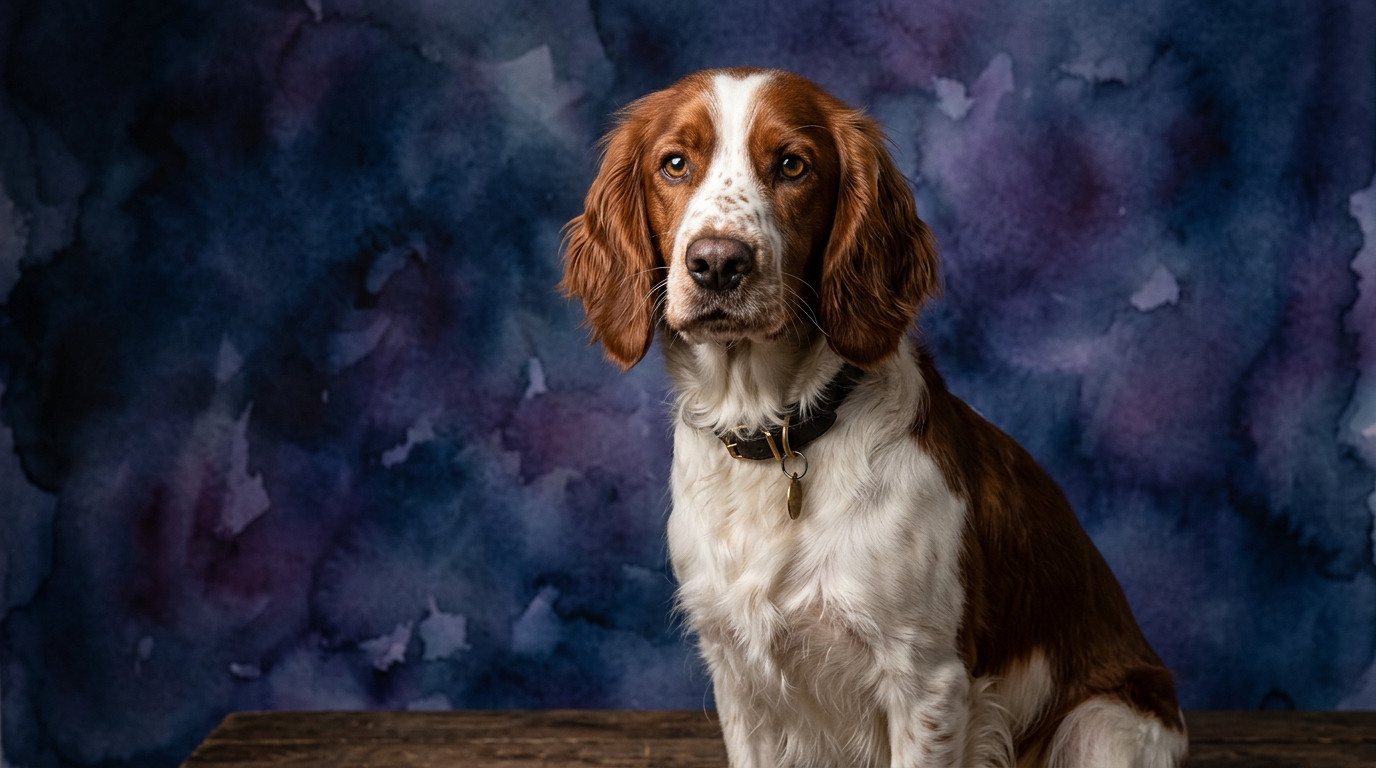
Side-by-Side IQ Profile: German Shepherd vs. Welsh Springer Spaniel
The German Shepherd, ranked #3 by Coren, showcases an exceptional cognitive toolkit, scoring a perfect 5/5 across all five dimensions. Their problem-solving ability is top-tier, allowing them to quickly assess complex situations and devise effective solutions, a trait crucial for their roles in police work or search and rescue. Training speed is equally impressive; they absorb new commands and routines with remarkable efficiency, often requiring very few repetitions. Social intelligence at 5/5 means they are highly attuned to human cues and social hierarchies, making them responsive and cooperative partners. Their instinctive drive, also a 5/5, is a powerful engine for purpose-driven work, fueling their relentless pursuit of tasks. Finally, a 5/5 memory ensures they retain learned information and experiences over long periods, building a robust behavioral repertoire.
The Welsh Springer Spaniel, with a Coren rank of #31, presents a capable and enthusiastic cognitive profile, reflecting their heritage as a flushing and retrieving gun dog. Their problem-solving aptitude stands at a strong 4/5, indicating a good capacity for navigating challenges and learning from experience, though perhaps not always with the rapid, complex strategizing of a German Shepherd. Training speed is also rated 4/5, meaning they are eager and generally quick to learn, responding well to consistent, positive reinforcement. Social intelligence scores 3/5; they are affectionate and bond well with their families but might be less intensely focused on human direction or subtle social cues compared to breeds with higher scores, often displaying an independent streak when on scent. An instinctive drive of 3/5 signifies a strong, purpose-driven motivation, primarily focused on hunting and retrieving, rather than the broader, intense drive seen in herding or protection breeds. Their memory, at 4/5, allows them to recall learned commands and experiences effectively, supporting their role in repetitive tasks like retrieving.
Where the German Shepherd Excels Cognitively
The German Shepherd’s cognitive architecture provides a clear advantage in scenarios demanding multi-faceted mental engagement and rapid adaptability. Their 5/5 problem-solving skill means they excel at tasks requiring abstract thought, such as navigating complex obstacle courses or understanding multi-step commands without direct guidance. This analytical prowess, combined with a 5/5 training speed, allows them to master intricate skill sets, like scent detection or personal protection, far quicker than most other breeds. Furthermore, their 5/5 social intelligence makes them exceptionally responsive to human leadership and subtle cues, enabling seamless communication in high-pressure situations. The sheer intensity of their 5/5 instinctive drive translates into an unwavering commitment to a task, making them tireless workers in fields ranging from assistance dog roles to competitive obedience. Their superior memory ensures that once a lesson is learned or an experience processed, it is deeply ingrained, building a reliable foundation for future performance.
Where the Welsh Springer Spaniel's Cognitive Profile Shines
While the German Shepherd boasts higher scores across the board, the Welsh Springer Spaniel’s cognitive profile is uniquely suited for its specific working heritage and can be a distinct advantage for certain owners. Their 4/5 problem-solving ability means they are certainly not lacking in cognitive capacity; they can independently figure out how to navigate varied terrain to flush game or locate a hidden toy, demonstrating practical intelligence rather than purely abstract problem-solving. A 4/5 training speed ensures they are responsive and enjoyable to teach, particularly for tasks related to their sporting instincts like retrieving or agility, absorbing lessons with enthusiastic engagement. The 3/5 social intelligence, while lower than a German Shepherd’s, can mean they possess a more independent spirit, less prone to constant human seeking and potentially more comfortable with periods of self-entertainment, appealing to owners who appreciate a dog with a bit more autonomy. Their 3/5 instinctive drive, though less broad than a German Shepherd’s, is intensely focused on their sporting tasks, making them tenacious and effective in the field without the overwhelming need for constant, highly structured mental work that a 5/5 drive might demand. This focused drive, coupled with a 4/5 memory, makes them excellent at repetitive, task-specific work, consistently recalling where to search or how to execute a retrieve.
Training Aptitude: Which Breed is Easier to Teach?
The German Shepherd is unequivocally easier to train for a wider array of complex tasks, primarily due to their perfect 5/5 scores in both problem-solving and training speed. Their exceptional ability to grasp new concepts quickly means fewer repetitions are needed for command acquisition, making the training process efficient and rewarding. When faced with novel situations or unexpected obstacles during training, their superior problem-solving allows them to adapt and learn on the fly, often figuring out the desired behavior with minimal human intervention. This cognitive agility, combined with their 5/5 social intelligence, means they are highly motivated to please and readily attune to their handler's instructions and expectations.
In contrast, while the Welsh Springer Spaniel’s 4/5 training speed is commendable, they might require more consistent repetition and clearer guidance to solidify new behaviors. Their 4/5 problem-solving, while good, means they may take longer to generalize learned behaviors to new contexts or might struggle more with abstract concepts, necessitating a more structured and patient approach from the trainer. The Welsh Springer Spaniel’s 3/5 social intelligence suggests they might be more prone to following their nose or independent thought, especially in stimulating environments, which can present a greater challenge for maintaining focus during training compared to the intensely human-focused German Shepherd.
Matching Breeds to Lifestyles: Active vs. Relaxed Owners
Active owners seeking a profound partnership in demanding activities will find the German Shepherd an ideal match. Their 5/5 instinctive drive demands significant physical and mental engagement, making them thrive in roles like competitive sports, advanced obedience, or as working dogs. Owners who enjoy long, vigorous hikes, intricate training sessions, and providing complex enrichment puzzles will meet the German Shepherd’s intrinsic need for purpose and stimulation. A relaxed owner, however, might quickly become overwhelmed by the sheer cognitive and physical demands of a German Shepherd, potentially leading to boredom-induced destructive behaviors if their needs are not met.
The Welsh Springer Spaniel, with its 3/5 instinctive drive, still requires considerable activity, making them suitable for active owners who enjoy regular walks, retrieves, and perhaps field work or agility. They are not a sedentary breed and will benefit from daily exercise and mental stimulation, but their drive is generally more focused and less universally intense than a German Shepherd’s. They can adapt to a slightly less rigorous daily schedule, as long as their core needs for exercise and companionship are met, making them a good fit for active families who appreciate a dog with a keen outdoor spirit but perhaps without the constant need for high-level intellectual tasks.
The Verdict
Opt for a German Shepherd if you are an experienced, dedicated owner prepared to provide extensive mental stimulation, rigorous training, and a clear leadership role for a highly capable and driven partner. They are best suited for individuals or families who embrace challenging dog sports, working roles, or advanced obedience, and can consistently channel their intense cognitive capabilities.
Select a Welsh Springer Spaniel if you desire an affectionate, active companion who enjoys outdoor adventures and moderate training, appreciating a dog with a spirited independence and a focused sporting drive. They are ideal for active families who can provide consistent exercise and positive reinforcement without necessarily needing a dog for highly complex, multi-faceted tasks.
🧠 Find Your Pet's IQ Score
Our Pet IQ Lab assessment covers 25+ tests across 5 cognitive dimensions — personalized to your breed.
Take the Full IQ Test →Frequently Asked Questions
Can a Welsh Springer Spaniel be a good family dog despite a 3/5 social intelligence?
Absolutely. A 3/5 social intelligence indicates they bond well with their family but might be less intensely focused on human direction than a 5/5 breed. They are affectionate and loyal companions, often forming strong bonds with all family members, especially if socialized well from a young age.
Does a German Shepherd's high instinctive drive make them difficult to live with?
A German Shepherd's 5/5 instinctive drive means they possess a powerful internal motivation for work and purpose, which can be challenging if not properly channeled. With consistent training, ample mental and physical exercise, and a clear structure, this drive becomes a tremendous asset, making them highly capable and engaged partners rather than difficult.
Are German Shepherds always better at problem-solving than Welsh Springer Spaniels?
Based on their respective scores, German Shepherds generally demonstrate a higher aptitude for complex, abstract problem-solving (5/5) compared to Welsh Springer Spaniels (4/5). While both breeds are capable, the German Shepherd is likely to devise solutions more rapidly and for a broader range of intellectual challenges, whereas the Welsh Springer's problem-solving is often more practical and context-specific to their sporting tasks.