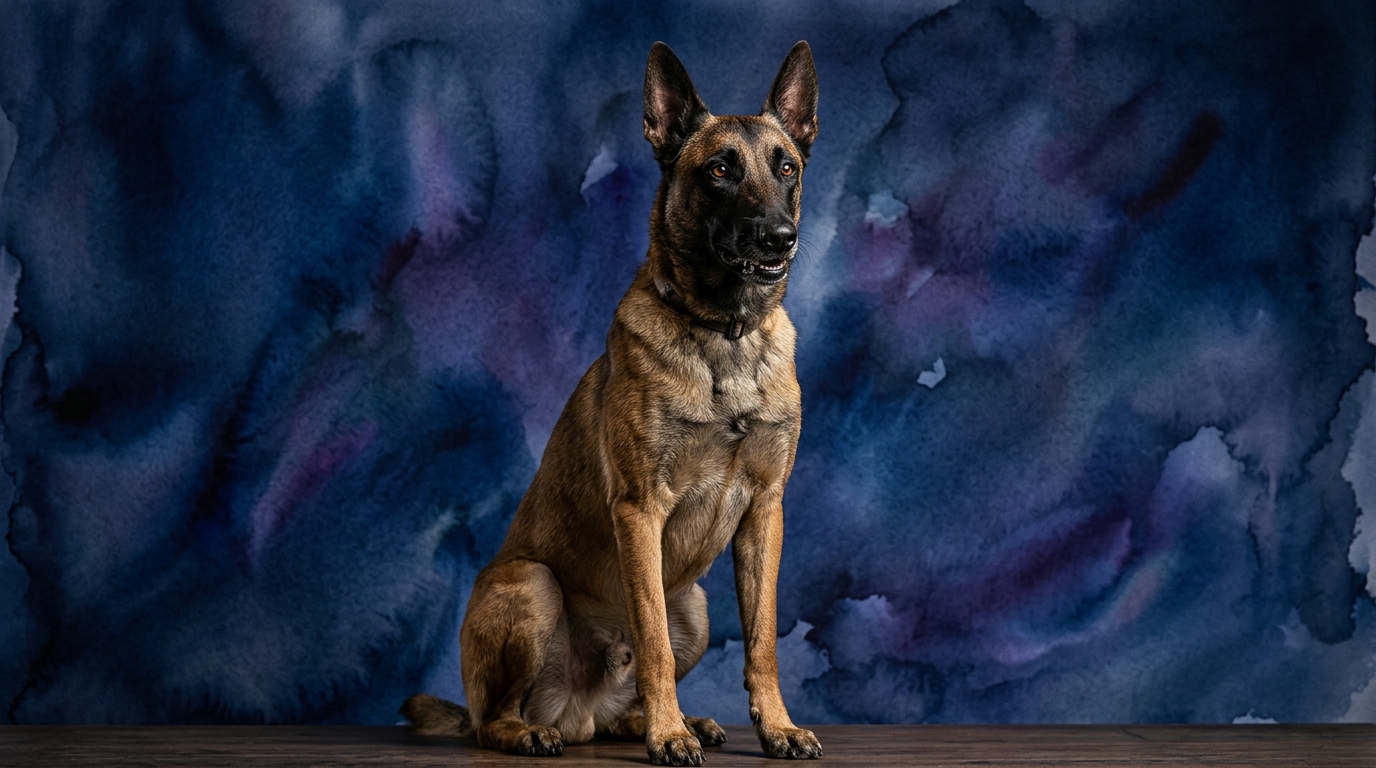
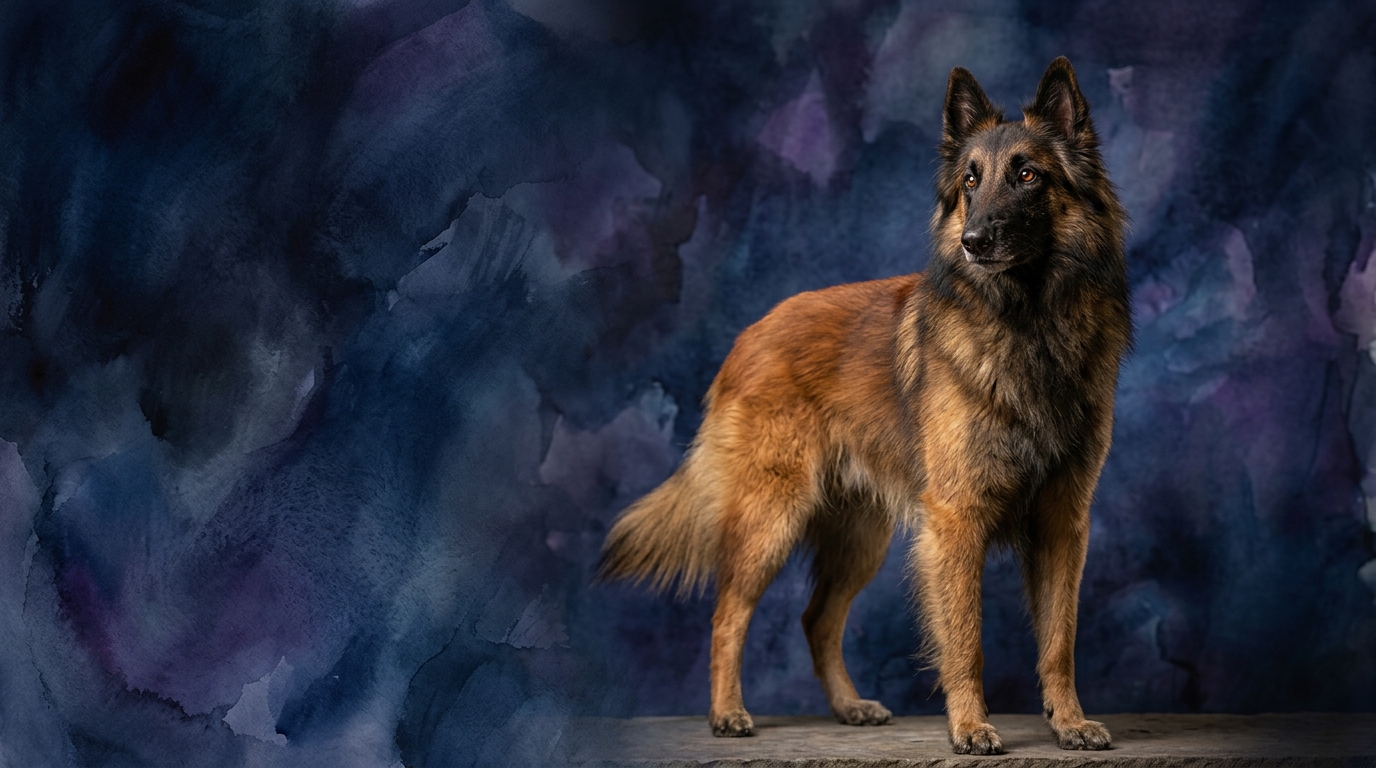
Side-by-Side IQ Profile: Unpacking the Cognitive Dimensions
At The Cosmic Pet Pet IQ Lab, we analyze canine intelligence across five critical dimensions to provide a detailed cognitive fingerprint for each breed. For the Belgian Malinois and the Belgian Tervuren, a close examination reveals both striking similarities and key divergences that shape their overall intellectual makeup.
Both breeds achieve a perfect 5/5 in **Problem Solving**, indicating an exceptional capacity to navigate novel situations, strategize, and learn from experience to achieve desired outcomes. This means they are adept at figuring out complex puzzles, overcoming obstacles, and adapting to new challenges with remarkable mental agility. Similarly, their **Training Speed** is rated 5/5, signifying that both the Malinois and Tervuren grasp new commands and concepts with incredible rapidity, often requiring very few repetitions to solidify a learned behavior. This swift comprehension makes them highly responsive and a joy for experienced trainers.
Where the cognitive profiles begin to diverge significantly is in **Social Intelligence** and **Instinctive Drive**. The Belgian Malinois boasts a 4/5 in Social Intelligence, suggesting a strong attunement to human emotional cues and a nuanced understanding of social dynamics within its pack, be it human or canine. The Belgian Tervuren, while still capable, scores a 3/5 in this dimension, indicating a slightly more independent or less overtly expressive social interpretation. In terms of **Instinctive Drive**, the Malinois stands out with a formidable 5/5, reflecting an intense, almost insatiable urge to work, herd, or pursue tasks driven by deep-seated instincts. The Tervuren registers a 3/5 in this category, possessing a robust drive, but one that is generally less relentless or all-consuming than its Malinois cousin. Finally, both breeds share a perfect 5/5 in **Memory**, demonstrating an excellent ability to recall learned commands, experiences, and social interactions over extended periods, contributing to their consistent performance and reliability. It's also worth noting the Coren ranks: the Tervuren is ranked #14, while the Malinois is #22, suggesting the Tervuren has a slight edge in general obedience and working intelligence based on Stanley Coren's methodology.
Where the Belgian Malinois Excels Cognitively
The Belgian Malinois's cognitive strengths truly shine in its profound **Instinctive Drive** and superior **Social Intelligence**. With a 5/5 in drive, the Malinois possesses an unparalleled intensity and focus for tasks. This isn't just about raw energy; it's a cognitive engine that allows them to sustain concentration on complex objectives, whether it's tracking a scent, apprehending a target, or executing a precise agility course. Their drive fuels a relentless pursuit of goals, making them exceptionally durable and determined partners in demanding roles. They process tasks not just as commands, but as deeply satisfying outlets for their innate urges, resulting in a highly motivated and consistent performance.
Furthermore, the Malinois's 4/5 Social Intelligence provides a critical cognitive advantage in high-stakes environments. This means they are often more adept at reading subtle human body language, vocal inflections, and emotional states, allowing for more precise and responsive communication with their handler. In complex police or military work, where split-second decisions and seamless handler-dog synchronicity are paramount, this acute social awareness enables the Malinois to interpret and react to nuanced cues, creating an almost telepathic bond. Their ability to anticipate a handler's next move or adjust their behavior based on a subtle shift in human demeanor is a testament to their refined social cognition, making them highly adaptable and effective team members in dynamic situations.
Where the Belgian Tervuren Shines Cognitively
The Belgian Tervuren, with its Coren rank of #14 compared to the Malinois's #22, subtly differentiates itself in a way that points to a specific cognitive advantage in overall **Obedience and Working Intelligence**. While both breeds are 5/5 in Problem Solving and Training Speed, the Tervuren's higher Coren ranking suggests a slightly more generalized aptitude for understanding and executing novel commands with fewer repetitions across a broader range of contexts. This isn't necessarily about intensity, but about a slightly more efficient processing of new obedience concepts, perhaps making them marginally quicker at grasping the *intent* behind a new command in a non-specialized setting.
The Tervuren's slightly lower Instinctive Drive (3/5 vs Malinois's 5/5) can, paradoxically, be a cognitive strength in certain roles. While the Malinois's intense drive is unmatched for specific working tasks, the Tervuren's more moderated drive allows for a broader cognitive flexibility. They are less singularly focused on prey or protection instincts, which can make them more adaptable to a wider variety of activities that require thought and cooperation rather than pure, unadulterated drive. This means they might be more inclined to engage in complex obedience routines, intricate agility courses, or creative problem-solving games that require a balance of focus and nuanced thinking, without the constant need for an 'off switch' that can accompany extreme drive. Their cognitive energy might be more evenly distributed across different learning modalities, making them excellent candidates for diverse canine sports and family integration where a less 'hard-wired' response is sometimes preferable.
Which is Easier to Train and Why: Behavioral Nuances
Determining which breed is 'easier to train' is less about inherent cognitive capacity and more about managing their distinct behavioral drivers. Both the Malinois and Tervuren score a perfect 5/5 in Training Speed, meaning they both absorb new commands and behaviors with remarkable alacrity. However, the *application* and *management* of this learning speed differ significantly due to their other cognitive profiles, particularly their Instinctive Drive and Social Intelligence.
The Belgian Malinois, with its 5/5 Instinctive Drive, learns commands rapidly and applies them with an intense, unwavering focus. This makes them incredibly responsive to consistent, structured training, as they possess an innate desire to work and please their handler. The 'why' they are easy to train stems from this profound work ethic and their high Social Intelligence (4/5), allowing them to quickly understand and comply with handler expectations. However, this same drive means they require *more* training, and training of a higher caliber, to channel their energy appropriately. An untrained or under-stimulated Malinois will inevitably create its own 'job,' which often manifests as undesirable behaviors. Their ease of training is contingent on an owner's ability to provide constant mental and physical challenges and to manage their powerful instincts.
The Belgian Tervuren, also with a 5/5 Training Speed, is equally quick to learn. Its slightly lower Instinctive Drive (3/5) means that while they are eager to engage, they might not possess the same relentless intensity for repetitive, high-pressure tasks as a Malinois. This can make them seem 'easier' for owners who are not seeking a professional working dog, as their drive, while still substantial, is less likely to overwhelm a novice handler. Their Social Intelligence (3/5) means they might be slightly less attuned to subtle handler cues compared to a Malinois, potentially requiring clearer communication, but they are generally more forgiving of minor inconsistencies in training. They thrive on variety and positive reinforcement, and while they demand consistent effort, their overall temperament can be more adaptable to a broader range of training styles without the same risk of becoming frustrated or redirecting energy if not perfectly engaged.
Active Owners vs. Relaxed Owners: Finding the Right Fit
Understanding the cognitive and behavioral profiles of these two breeds is crucial for matching them with the right lifestyle. Neither the Belgian Malinois nor the Belgian Tervuren are suitable for truly 'relaxed' owners; both are demanding breeds that require significant engagement, but the *intensity* and *nature* of that engagement differ.
The Belgian Malinois is unequivocally a dog for the **highly active and experienced owner**. Its 5/5 Instinctive Drive and 5/5 Problem Solving mean it requires constant, rigorous mental and physical stimulation. This breed thrives when given a 'job' – be it advanced obedience, agility, protection sports, or professional working roles. Owners must be prepared for daily, structured exercise that goes beyond a simple walk, often involving complex training sessions, long runs, or intense play. A Malinois under-stimulated cognitively and physically is prone to destructive behavior, anxiety, or hypervigilance. They demand an owner who is not only active but also confident, consistent, and capable of providing firm, positive leadership and a highly structured environment. This is not a breed that will be content to lounge on the couch for extended periods; their minds are always active, seeking engagement.
The Belgian Tervuren, while still demanding, suits an **active owner** who is dedicated but perhaps not seeking the extreme intensity of a Malinois. With its 3/5 Instinctive Drive, the Tervuren still requires substantial daily exercise and mental challenges, including regular training, canine sports like agility or obedience, and engaging puzzle toys. However, its drive is generally more manageable, making it a good fit for active families or individuals who enjoy outdoor adventures, hiking, and a variety of dog sports without needing to meet the professional working dog standard. While they can adapt to a slightly less rigid routine than a Malinois, they are still not for casual owners. They need consistent interaction, training, and outlets for their energy and problem-solving abilities. A Tervuren will thrive with an owner committed to integrating them into an active lifestyle, providing companionship, and fostering their cognitive development through varied activities.
The Verdict
The Belgian Malinois is an excellent choice for experienced handlers seeking an unwavering partner for high-level sports, protection work, or demanding professional roles, thriving on intense structure and continuous engagement.
For active families or individuals who appreciate a thinking dog with a slightly less intense drive than its Malinois cousin, the Belgian Tervuren offers a highly trainable companion adept at obedience, agility, and varied activities, requiring consistent mental and physical stimulation.
🧠 Find Your Pet's IQ Score
Our Pet IQ Lab assessment covers 25+ tests across 5 cognitive dimensions — personalized to your breed.
Take the Full IQ Test →Frequently Asked Questions
Do both Belgian Malinois and Belgian Tervuren require extensive daily exercise?
Yes, both breeds require extensive daily exercise and mental stimulation to prevent boredom and destructive behaviors. While the Malinois demands a more intense and structured regimen, the Tervuren still needs significant physical activity and cognitive challenges to thrive.
Are Belgian Malinois and Belgian Tervuren generally good family dogs?
Both breeds can be good family dogs with proper socialization, training, and exercise, but they are not typically recommended for novice owners. Their high energy and strong drives mean they do best with experienced owners who can provide consistent leadership and integrate them fully into family life, often excelling with older, respectful children.
What are the main differences in their personalities, beyond intelligence scores?
Beyond intelligence scores, Malinois are often described as more intense, driven, and singularly focused, with a strong protective instinct and a profound need for purpose. Tervurens tend to be somewhat more sensitive, slightly less intense, and possess a more generalized alertness, often described as having a keen awareness without the same overwhelming drive for constant work.