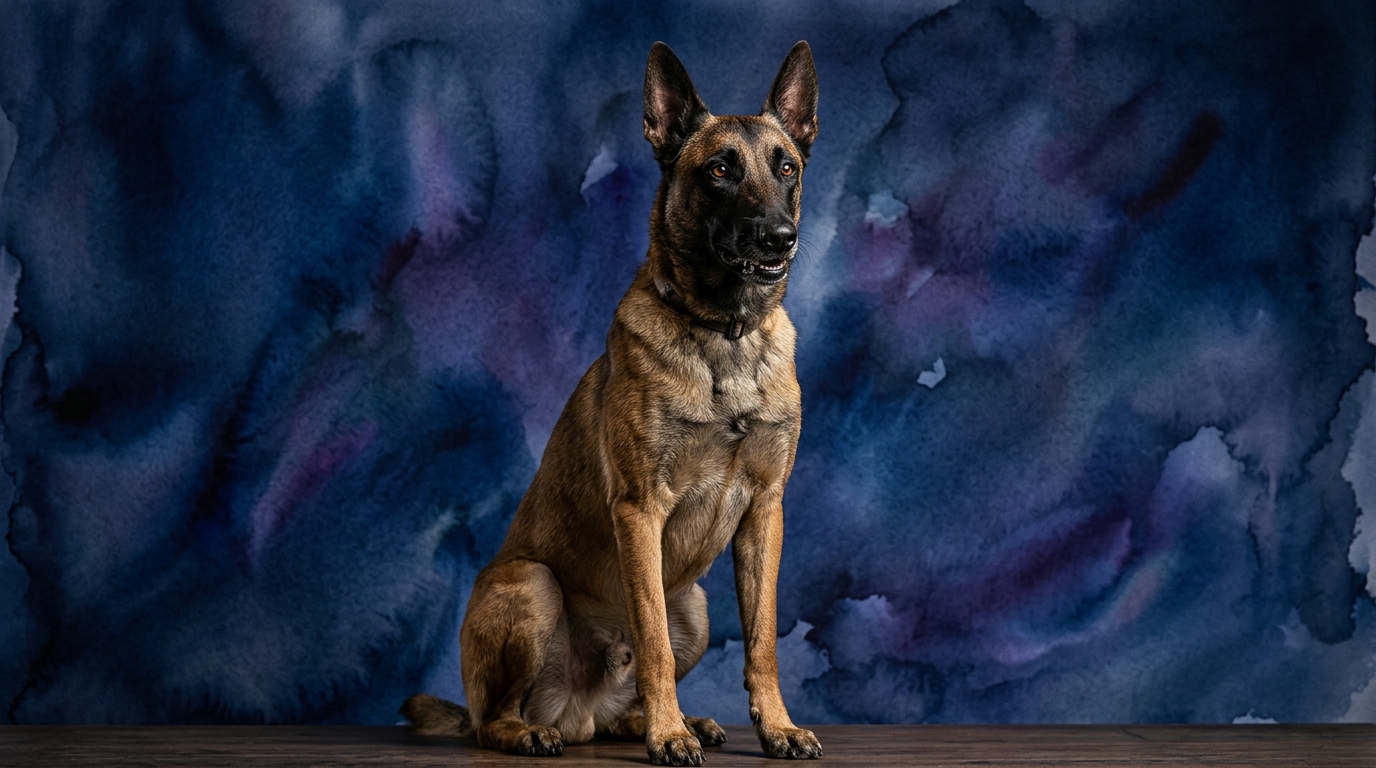
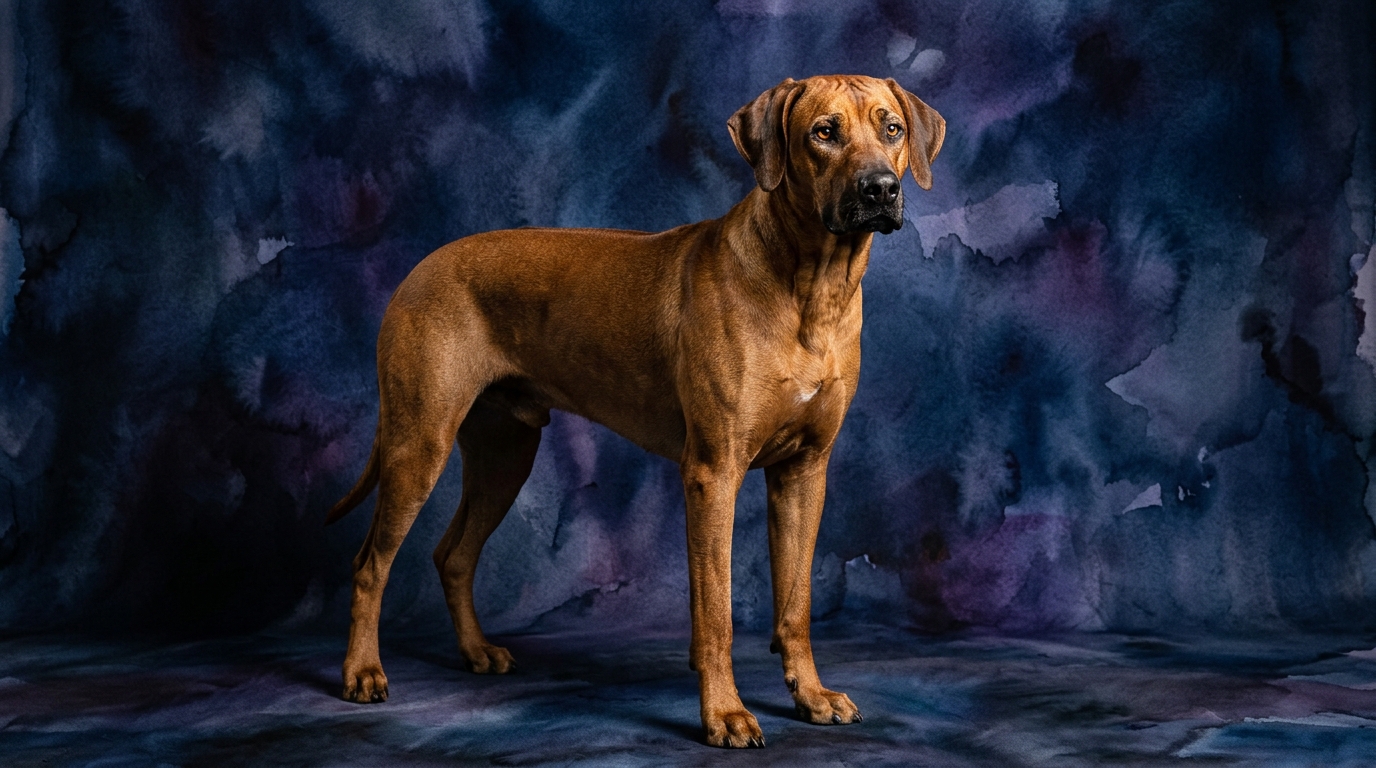
Side-by-Side IQ Profile: Belgian Malinois vs. Rhodesian Ridgeback
**Belgian Malinois (Herding, Coren Rank #22)**
**Problem Solving (5/5):** The Malinois exhibits exceptional capacity to analyze novel situations and devise effective solutions. Their work in protection, detection, and obedience often requires complex sequential thinking, spatial reasoning, and adaptability to changing environmental cues, reflecting a mind that actively processes and strategizes.
**Training Speed (5/5):** This breed picks up new commands and behaviors with remarkable alacrity. Their eagerness to engage and strong desire to work with a handler translates into rapid acquisition of new skills, often requiring fewer repetitions to achieve proficiency and consistency.
**Social Intelligence (4/5):** While intensely focused on their primary handler or task, Malinois possess a strong awareness of social hierarchies and cues within their working environment. They can interpret human intentions and body language effectively, though their social interactions might be more task-oriented than broadly affiliative with strangers.
**Instinctive Drive (5/5):** Possessing a profound work ethic, the Malinois exhibits powerful innate drives for pursuit, protection, and control. This includes a high prey drive, a strong territorial instinct, and an inherent inclination to herd or direct, all deeply ingrained and foundational to their working capabilities.
**Memory (5/5):** Their ability to retain complex sequences of commands, environmental layouts, and learned associations is outstanding. This robust memory contributes significantly to their reliability in high-stakes working roles, allowing them to recall vast repertoires of behaviors and information over extended periods.
**Rhodesian Ridgeback (Hound, Coren Rank #52)**
**Problem Solving (3/5):** Ridgebacks exhibit a moderate aptitude for problem-solving, often approaching new challenges with a thoughtful but sometimes independent perspective. They can navigate complex environments and figure out solutions, particularly if they align with their inherent desires, but may not show the same drive to actively seek and master novel intellectual puzzles.
**Training Speed (3/5):** While capable of learning, the Ridgeback typically requires more patience and repetition during training. Their independent nature means they often need compelling motivation to comply, and their learning curve, while steady, is not as accelerated as breeds with a stronger intrinsic desire to please and work cooperatively with a handler.
**Social Intelligence (3/5):** Ridgebacks are generally reserved with strangers and possess a discerning social radar. They observe and process social cues, forming deep bonds with their family, but their social intelligence is often expressed through a cautious assessment of new individuals and situations rather than an open, eager engagement with a wide social circle.
**Instinctive Drive (3/5):** Their core instinctive drive revolves around their sighthound heritage – keen observation, tracking, and an independent pursuit instinct. While they possess protective instincts, these are typically less overtly expressed as a constant, high-intensity drive compared to a herding or protection breed, manifesting more as watchful guardianship.
**Memory (3/5):** Ridgebacks possess a good memory for routines, their environment, and familiar commands. They can retain learned behaviors, but their memory might not extend to the vast, intricate sequences or the rapid recall of a working Malinois, often preferring consistency and established patterns over constant cognitive challenge.
Where the Belgian Malinois Wins Cognitively
The Belgian Malinois demonstrably surpasses the Rhodesian Ridgeback in several cognitive domains, primarily due to its intense focus and inherent drive for cooperative work. Their problem-solving capacity (5/5) is driven by a deep desire to understand and execute tasks, evident in their ability to quickly adapt to novel situations in protection or detection work. For instance, a Malinois might rapidly learn a new search pattern in an unfamiliar environment, adjusting its strategy based on handler feedback. This breed's superior training speed (5/5) is not just about eagerness but also efficient neural processing, allowing swift association of commands with actions, making them highly responsive to complex conditioning. Their unparalleled memory (5/5) allows them to store and retrieve vast amounts of information, critical for intricate obedience routines or tracking scents over long distances, maintaining high accuracy. The Malinois's instinctive drive (5/5) fuels these cognitive strengths, transforming natural urges into a powerful engine for learning and performance, making them tirelessly engaged in structured tasks.
Where the Rhodesian Ridgeback Wins Cognitively
While not outscoring the Malinois in raw cognitive speed or cooperative drive, the Rhodesian Ridgeback exhibits distinct cognitive strengths rooted in its independence and discerning nature. Its social intelligence (3/5), though rated lower for broad engagement, manifests as a nuanced ability to assess and filter social interactions. A Ridgeback might independently determine whether a stranger poses a threat, relying on subtle cues rather than immediate handler direction, reflecting self-reliant assessment. Their problem-solving (3/5) often involves an autonomous approach; they might figure out how to open a gate through persistent, self-directed exploration rather than seeking a human solution first. This breed's instinctive drive (3/5) is characterized by patient, watchful guardianship and a keen sighthound's observational prowess. They possess an exceptional ability to scan their environment, detect subtle movements, and make independent decisions based on observation, a different form of cognitive processing than the Malinois's handler-focused drive. Their memory (3/5) is particularly robust for spatial awareness and establishing routines, allowing them to navigate their territory with great confidence.
Which is Easier to Train and Why
The Belgian Malinois is unequivocally easier to train for specific tasks and commands due to a combination of factors. Their remarkable training speed (5/5) stems from an innate eagerness to engage with their handler and a powerful desire to perform. They thrive on structure and direction, quickly forming associations between commands and actions. For example, a Malinois will often grasp a new obedience command like “retrieve” in a handful of repetitions, responding with precision and enthusiasm. This is contrasted by the Rhodesian Ridgeback's more independent nature. While capable of learning, a Ridgeback's training speed (3/5) is often slower because they require more compelling motivation to comply, frequently questioning the value of a command if it doesn't align with their own perceived interests. A Ridgeback might understand “stay” but choose to break it if a more enticing scent presents itself, demonstrating a cognitive process that weighs personal interest against compliance. Malinois possess a higher instinctive drive (5/5) for working and pleasing, translating directly into a more pliable and responsive training subject.
Which Suits Active Owners vs. Relaxed Owners
For highly active owners seeking a dedicated partner for sports, work, or extensive outdoor adventures, the Belgian Malinois is an ideal match. Their boundless instinctive drive (5/5) and need for constant mental and physical engagement mean they excel in environments where they are consistently challenged. An owner who enjoys competitive obedience, agility, or vigorous hikes will find the Malinois an eager and tireless companion. Conversely, for owners who prefer a more relaxed pace but still appreciate an active companion, the Rhodesian Ridgeback offers a suitable balance. While they do require regular exercise, their energy levels are generally lower than a Malinois and they are content with a good daily walk, some playtime, and periods of quiet companionship. Their problem-solving (3/5) is often directed towards their own comfort or exploration rather than constant handler engagement, making them less demanding for continuous structured activity. A Ridgeback is more likely to settle calmly at home after sufficient exercise, whereas a Malinois might continue to seek interaction or a “job” even indoors.
The Verdict
Choose the Belgian Malinois if you are an experienced, active owner seeking a dedicated working partner for demanding sports or tasks, valuing rapid learning and intense focus. This breed thrives on constant mental and physical engagement, requiring an owner committed to harnessing their profound drives.
Opt for the Rhodesian Ridgeback if you appreciate an independent, discerning companion that bonds deeply with its family but also values its personal space. This breed suits owners who can provide consistent, patient training and moderate activity, enjoying a loyal guardian with a calmer, watchful demeanor.
🧠 Find Your Pet's IQ Score
Our Pet IQ Lab assessment covers 25+ tests across 5 cognitive dimensions — personalized to your breed.
Take the Full IQ Test →Frequently Asked Questions
How does a Malinois's problem-solving differ from a Ridgeback's?
A Malinois (5/5) actively seeks solutions through strategic thinking and handler cooperation, adapting quickly in complex scenarios like scent detection. A Ridgeback (3/5) often approaches problems with more independence, relying on observation and self-directed exploration, particularly if it aligns with their self-interest or comfort.
Is the Malinois's social intelligence always a benefit?
The Malinois's social intelligence (4/5) is highly task-oriented, making them excellent at reading handler cues in working contexts. While beneficial for directed work, it can also mean they are less broadly social or tolerant of unfamiliar individuals than breeds with a more generally affiliative social drive.
What does the Ridgeback's 'instinctive drive' entail compared to the Malinois?
The Ridgeback's instinctive drive (3/5) is characterized by a sighthound's observational prowess, a watchful guardianship, and a pursuit instinct for moving objects, often leading to independent decisions. The Malinois's drive (5/5) is a powerful, handler-focused work ethic encompassing prey drive, protection, and herding, requiring constant outlets.