
Side-by-Side Cognitive Profiles: Malinois vs. Russian Toy
The Cosmic Pet Pet IQ Lab employs a comprehensive five-dimensional framework to assess canine intelligence, moving beyond simple obedience to encompass a full spectrum of cognitive abilities. Examining these dimensions for the Belgian Malinois and the Russian Toy offers clarity on their inherent mental aptitudes.
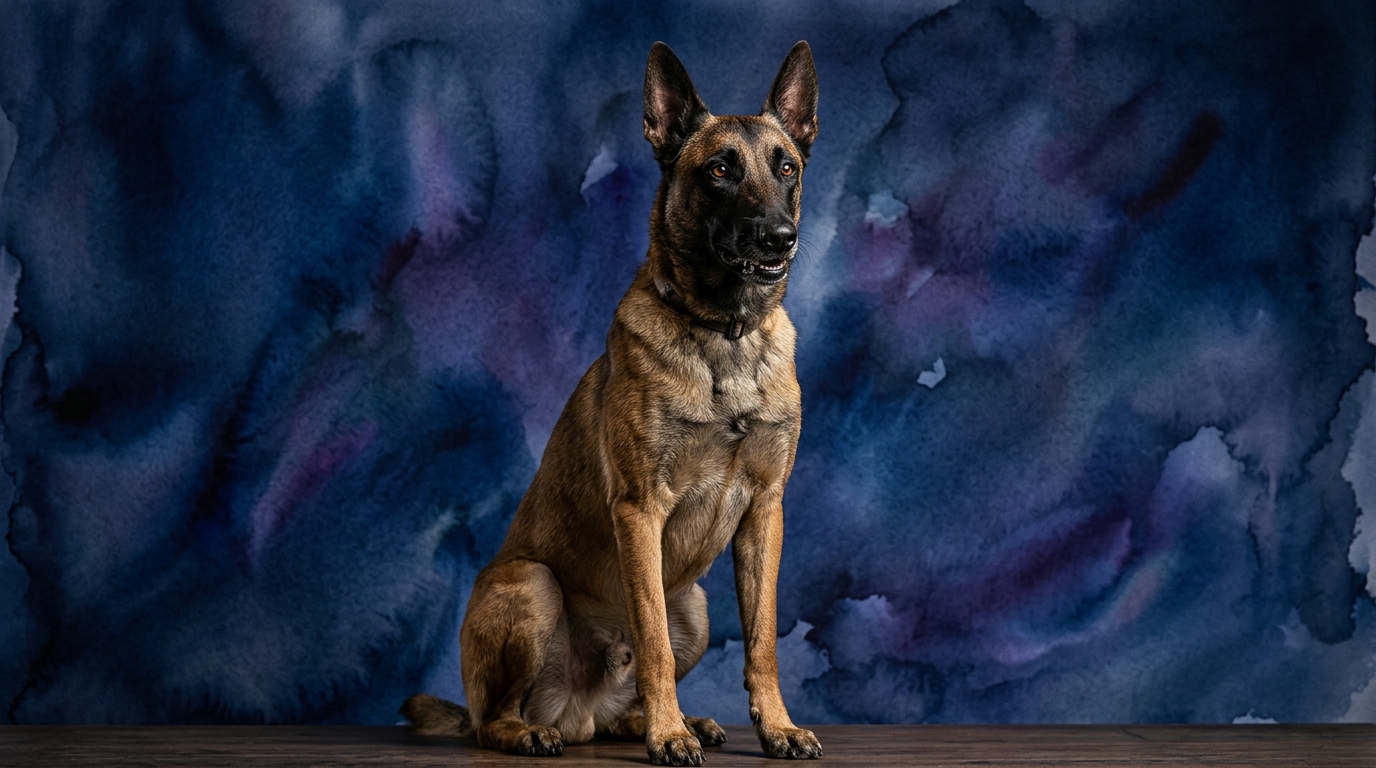
For the **Belgian Malinois**, a breed Coren-ranked at #22, their cognitive profile reflects their heritage as an elite working dog:
**Problem Solving (5/5):** Malinois often demonstrate a profound capacity to analyze complex situations and devise effective solutions, from navigating intricate obstacle courses to understanding multi-step commands in dynamic environments. They are adept at learning causal relationships quickly, applying past experiences to new challenges, and often anticipating handler intentions, making them exceptional at adaptive reasoning.
**Training Speed (5/5):** This breed typically grasps new commands and routines with exceptional speed, often requiring only a handful of repetitions to solidify a behavior. Their intense focus, eagerness to work, and intrinsic motivation to perform contribute significantly to this rapid acquisition, making them highly responsive and efficient subjects for structured, advanced training.
**Social Intelligence (4/5):** While primarily oriented towards their primary handler and task, Malinois possess a robust understanding of social cues, both canine and human. They can interpret subtle body language, vocalizations, and environmental shifts, adapting their behavior accordingly, though their intense focus on a job might sometimes overshadow broader social nuances.
**Instinctive Drive (5/5):** Characterized by an incredibly strong prey drive, territorial instincts, and a profound desire to herd or protect, the Malinois's actions are often powered by these deep-seated, genetically encoded urges. This formidable drive fuels their relentless work ethic, persistence, and determination in pursuing objectives, whether it's tracking, bite work, or agility.
**Memory (5/5):** Their memory for commands, routines, and complex sequences of behaviors is typically outstanding. They retain intricate patterns and specific details of past events over long periods, which is crucial for their demanding working roles where precision and recall are paramount.
In contrast, the **Russian Toy**, a smaller companion breed not typically included in Coren's rankings, presents a distinct cognitive makeup more suited to its role within a home environment:
**Problem Solving (3/5):** Russian Toys exhibit a moderate ability to solve problems, capable of learning basic puzzles or navigating simple environmental challenges like figuring out how to retrieve a toy under furniture. While not typically inclined towards complex analytical tasks, they can effectively apply trial-and-error to achieve desired outcomes, particularly those related to comfort or attention.
**Training Speed (3/5):** They learn new commands at a moderate pace, often requiring more repetitions than a working breed to master a behavior consistently. Their training success relies heavily on positive reinforcement, patience, and making the learning process enjoyable, as they can be sensitive and easily distracted by their surroundings or desire for affection.
**Social Intelligence (3/5):** Russian Toys are generally attuned to their human companions' moods and social cues, often forming strong, perceptive bonds within their trusted circle. They can be reserved or cautious with strangers but typically understand appropriate social interactions with familiar individuals, though their primary focus is often on seeking comfort and companionship.
**Instinctive Drive (3/5):** While they retain some innate terrier-like qualities such as a moderate prey drive for small critters or a tendency to alert bark, their overall instinctive drives are less pronounced and less dominant than those of working breeds. Their primary drive often centers around seeking warmth, security, and proximity to their human family.
**Memory (3/5):** They possess a good memory for routines, familiar people, and places, remembering where treats are kept or which family member offers the best lap. While they may not retain intricate sequences of commands with the same precision or long-term recall as a working dog, they consistently remember learned behaviors and important social connections.
Where the Belgian Malinois Wins Cognitively
The Belgian Malinois demonstrably excels in areas demanding intense cognitive processing and sustained mental effort. Their perfect 5/5 scores in Problem Solving, Training Speed, Instinctive Drive, and Memory signify a dog engineered for complex, high-stakes tasks. This breed's cognitive superiority lies in its capacity for rapid pattern recognition and predictive behavior, such as anticipating a handler's next command in a protection routine or understanding the trajectory of a decoy. They don't just learn a command; they grasp the underlying system and apply it dynamically. Their ability to maintain unwavering focus on a task, even amidst distractions, and to execute multi-stage plans with precision is a direct result of their exceptional working memory and problem-solving acumen. This allows them to master advanced obedience, scent detection, and intricate agility courses with a level of understanding and efficiency rarely seen in other breeds.
Where the Russian Toy Wins Cognitively
While the Russian Toy's cognitive scores are moderate, their strengths are uniquely suited to their primary role as a devoted companion. Their social intelligence, rated 3/5, is often expressed through a profound emotional attunement to their owners, a subtle yet powerful form of cognitive strength for a companion animal. They often excel at reading micro-expressions of their owner's mood, adapting their behavior to provide comfort or solicit attention, demonstrating a nuanced understanding of human-canine social dynamics within their intimate circle. Their problem-solving, though moderate, is frequently applied to their immediate environment for personal comfort and security, such as figuring out the warmest spot for a nap or manipulating their owner for extra cuddles, showcasing practical application of their cognitive resources for their well-being. Their memory, while not for complex work tasks, is excellent for remembering routines, people, and places crucial for their emotional stability and sense of belonging.
Which is Easier to Train and Why?
Determining which breed is 'easier' to train depends entirely on the owner's goals and experience. The Belgian Malinois, with its 5/5 Training Speed and powerful instinctive drives, is remarkably easy to train for complex tasks and advanced obedience. They possess an inherent desire to work, a rapid learning curve, and an intense focus that allows them to absorb and execute intricate commands with minimal repetitions. Their eagerness to please a handler and their robust memory mean that once a behavior is learned, it is typically retained for life. However, this intensity can be a double-edged sword; their high cognitive demands and powerful drives require an experienced, consistent handler who can channel their energy constructively. Without proper training and mental stimulation, a Malinois can quickly become challenging to manage, prone to destructive behaviors or hyper-vigilance born of boredom or misdirected energy.
The Russian Toy, conversely, is easier to train for basic manners and house-training if approached with consistency and positive reinforcement. Their smaller size and generally lower instinctive drives mean they are less likely to engage in destructive behaviors driven by excess energy or intense working instincts. While their Training Speed is moderate (3/5), they are eager to please their beloved owners and respond well to gentle, reward-based methods. Their potential for sensitivity and shorter attention span means training sessions need to be kept brief, fun, and engaging, avoiding harsh corrections which can cause them to shut down. For an owner seeking a well-mannered companion for a relaxed home, the Russian Toy's training demands are often perceived as 'easier' because they require less physical exertion and advanced skill from the trainer, focusing more on patience and positive interactions rather than channeling raw power.
Which Suits Active Owners vs. Relaxed Owners?
The **Belgian Malinois** is unequivocally suited for highly active and experienced owners. This breed demands extensive daily physical exercise, far beyond simple walks, coupled with constant, challenging mental stimulation. Owners need to be prepared for advanced training, engagement in competitive dog sports like agility, obedience, or protection work, or even a professional working role. A Malinois thrives when given a job to do, and their cognitive intensity requires an outlet that engages their problem-solving, memory, and instinctive drives. They are not a breed for a sedentary lifestyle or for owners who cannot commit significant time and energy to their development; their unfulfilled cognitive and physical needs can lead to behavioral issues.
The **Russian Toy**, on the other hand, is an ideal match for relaxed owners who desire a devoted and affectionate companion. While they enjoy regular walks and playful indoor activities, their exercise needs are moderate and easily met. They thrive on companionship, cuddles, and being an integral part of family life. Owners who appreciate a sensitive, charming lap dog and can provide consistent, gentle attention and basic training will find the Russian Toy to be a wonderful fit. Their cognitive needs are primarily met through social interaction, comfort, and routine, without the demand for strenuous physical or complex mental challenges.
The Verdict
Choose a Belgian Malinois when seeking a highly capable working partner for demanding roles like protection, sport, or advanced obedience, and you possess the experience, time, and dedication to channel their intense cognitive drive and physical energy into productive, structured outlets.
Choose a Russian Toy when desiring a charming, affectionate companion for a quieter home environment, where their moderate cognitive needs can be met through consistent basic training, companionship, and gentle play, without the demand for strenuous physical or complex mental challenges.
🧠 Find Your Pet's IQ Score
Our Pet IQ Lab assessment covers 25+ tests across 5 cognitive dimensions — personalized to your breed.
Take the Full IQ Test →Frequently Asked Questions
Do Russian Toys ever participate in dog sports?
Yes, Russian Toys can certainly enjoy dog sports like agility or obedience at a recreational level. While their instinctive drive and training speed are moderate, their eagerness to please and bond with their owner can make these activities rewarding with patient, positive training methods.
What kind of mental stimulation does a Belgian Malinois need daily?
A Belgian Malinois requires significant daily mental stimulation beyond physical exercise, including advanced obedience, puzzle toys, scent work, protection training, or competitive dog sports like schutzhund. They need tasks that challenge their problem-solving and memory to prevent boredom and destructive behaviors.
Is the Coren ranking the only measure of a dog's intelligence?
No, the Coren ranking primarily assesses 'working and obedience intelligence' based on trainability. The Pet IQ Lab considers a broader spectrum, including problem-solving, social intelligence, instinctive drive, and memory, providing a more holistic view of a breed's cognitive profile, acknowledging that different breeds excel in different areas.