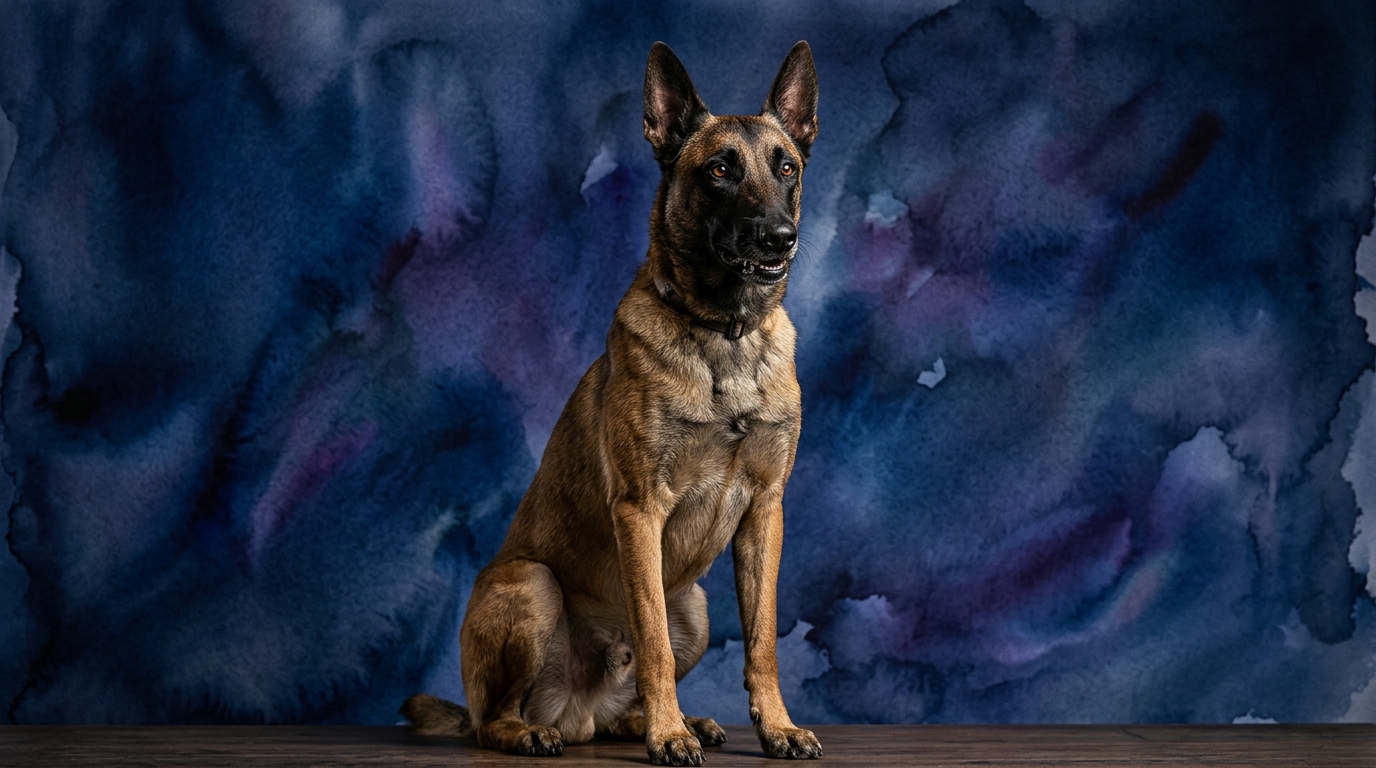
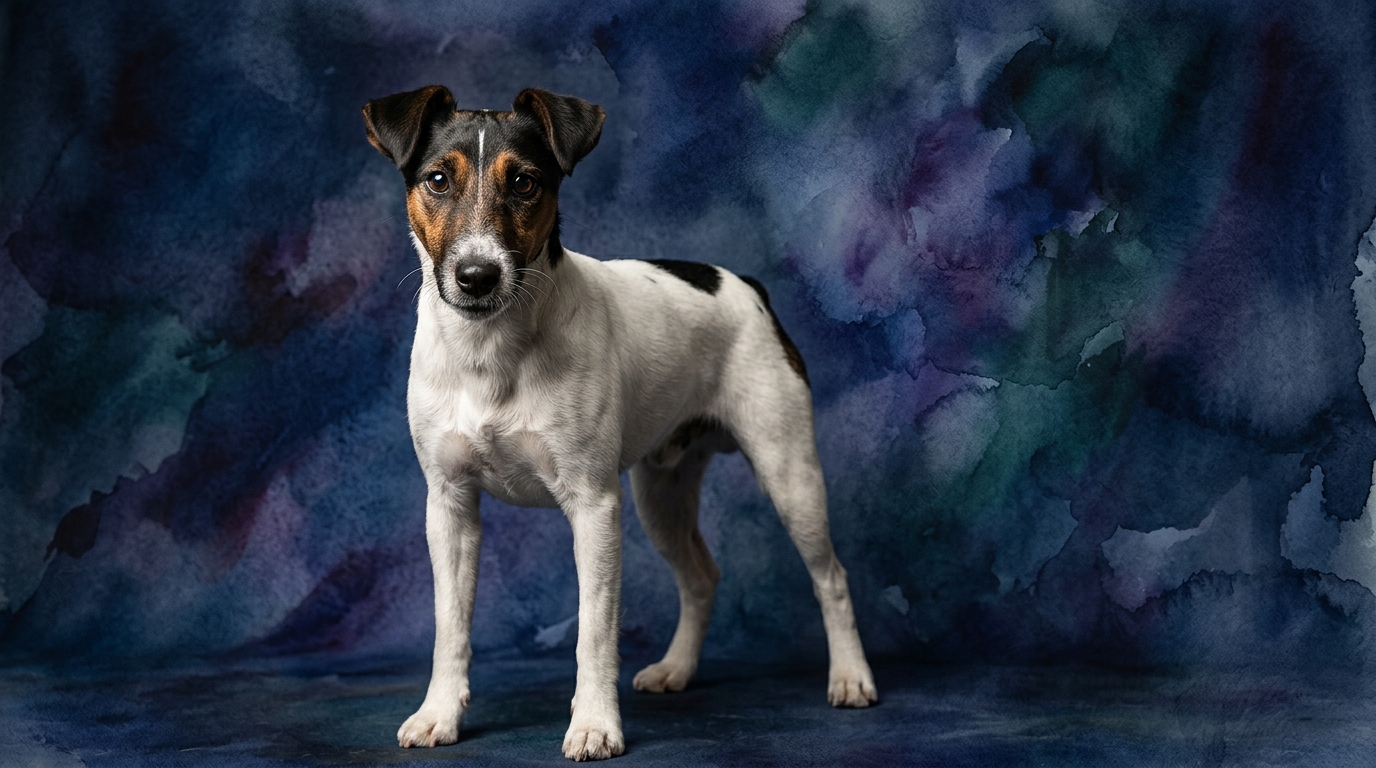
Side-by-Side IQ Profile: Precision vs. Persistence
The Cosmic Pet Pet IQ Lab employs five core dimensions to map a breed's cognitive architecture, providing a nuanced view beyond simplistic 'smart' labels. Let's examine how the Belgian Malinois and the Smooth Fox Terrier stack up.
The Belgian Malinois, a Herding breed, registers a Coren rank of #22, reflecting its capacity for rapid learning and command retention. Its Problem Solving score is an exceptional 5/5, indicating an innate ability to decipher complex situations and strategize solutions, whether tracking a scent or navigating an obstacle course. Training Speed also hits a perfect 5/5, showcasing its eagerness and aptitude for absorbing new commands with remarkable efficiency. Social Intelligence, at 4/5, denotes a strong understanding of human cues and pack dynamics, crucial for its collaborative working roles. An Instinctive Drive of 5/5 highlights its profound internal motivation for tasks like herding, protection, or sport, making it tirelessly dedicated. Finally, Memory at 5/5 means it not only learns quickly but retains vast amounts of information, from specific commands to intricate routines, over long periods.
In contrast, the Smooth Fox Terrier, a Terrier breed, is not Coren-ranked, suggesting a different cognitive emphasis. Its Problem Solving is rated 3/5, indicating competence in tackling challenges but perhaps with less abstract reasoning than a Malinois. This translates to effective, direct solutions, often driven by instinct. Training Speed also sits at 3/5; while trainable, it may require more repetition and creative motivation due to its independent nature. Social Intelligence, at 3/5, suggests it understands human interaction but might prioritize its own agenda over constant deference to human direction. An Instinctive Drive of 3/5 points to a strong, but perhaps more focused and less broadly applicable, drive — particularly for hunting and exploring. Memory, at 3/5, means it learns and remembers, but perhaps not with the same depth or breadth of complex sequences as its Herding counterpart, often retaining information relevant to its immediate environment and objectives.
Where the Belgian Malinois Wins Cognitively
The Belgian Malinois's cognitive strengths are undeniably geared towards complex, multi-faceted tasks requiring sustained mental effort and precision. Its 5/5 Problem Solving and Memory scores allow it to excel in scenarios demanding intricate decision-making and recall of extensive command sets. For instance, a Malinois can learn and execute a multi-stage protection routine, distinguishing between threats and bystanders, or master an agility course involving dozens of sequential obstacles with split-second timing. This capacity for sophisticated procedural memory and fluid situational analysis is where it truly shines. Moreover, its 5/5 Training Speed means it can acquire new skills at an astonishing rate, adapting to novel challenges and learning from minimal repetitions, making it an unparalleled candidate for evolving working roles like search and rescue or detection work. The breed's high Social Intelligence (4/5) further enhances its ability to interpret subtle human cues, allowing for seamless communication and partnership in these demanding fields, where understanding a handler's intent is paramount to success.
Where the Smooth Fox Terrier Wins Cognitively
While the Malinois thrives on complex obedience, the Smooth Fox Terrier's cognitive advantages lie in a different domain: independent, tenacious problem-solving rooted in its terrier heritage. Its 3/5 Problem Solving, coupled with its instinctive drive, makes it exceptionally adept at tasks requiring self-reliance and persistence in pursuit of a goal, particularly those involving scent and digging. A Fox Terrier doesn't wait for detailed instructions; it assesses its environment for opportunities to engage its prey drive, demonstrating a focused determination to locate and extract. This breed excels at figuring out how to get into (or out of) tight spaces, or how to manipulate objects to reach a desired target. Its cognitive 'win' is often in its ability to entertain itself and pursue its own agenda with singular focus, requiring less constant external direction than breeds bred for collaboration. This independence, while challenging for traditional obedience, is a cognitive asset in environments where a dog needs to think for itself and persist through obstacles without human intervention, such as vermin control or exploring a complex outdoor space.
Which is Easier to Train and Why?
Based on their IQ profiles, the Belgian Malinois is demonstrably easier to train for traditional obedience and complex tasks. Its 5/5 Training Speed and 5/5 Memory mean it absorbs and retains commands with minimal repetition. Malinois possess an inherent desire to work collaboratively and please their handler, driven by a powerful instinctive drive (5/5) that can be channeled into productive tasks. They exhibit sustained focus and a natural aptitude for understanding sequential commands, making multi-step behaviors relatively straightforward to teach. Their high social intelligence also means they are finely tuned to their handler's body language and verbal cues, facilitating a responsive training dynamic. This breed doesn't just learn commands; it seeks to understand the 'why' and 'how' of its role, resulting in a dog that is not merely compliant but actively engaged in the learning process.
The Smooth Fox Terrier, with a 3/5 Training Speed and 3/5 Memory, presents a different training experience. Their independence and strong, focused instinctive drive mean they often have their own ideas about what constitutes a priority. While capable of learning, they may require more patience, creativity, and motivational strategies (like high-value rewards) to maintain focus and overcome their inherent distractibility, especially when a tempting scent or movement grabs their attention. Their lower social intelligence score suggests they might be less inclined to constantly check in with their handler for direction, preferring to explore or pursue their own interests. Training a Fox Terrier is less about rapid acquisition of complex routines and more about consistent, engaging, and reward-based methods that respect their spirited and sometimes stubborn nature, channeling their drive rather than trying to suppress it entirely.
Which Suits Active Owners vs. Relaxed Owners?
The Belgian Malinois is unequivocally suited for highly active owners who are prepared to provide extensive mental and physical stimulation daily. Their exceptional problem-solving abilities, high instinctive drive, and need for purpose mean they require constant engagement. An owner who can dedicate hours to advanced obedience, dog sports (like agility, protection work, or dock diving), or a working role will find a Malinois to be an incredibly fulfilling partner. A relaxed owner, or one unable to meet these substantial cognitive and physical demands, would likely find a Malinois bored, frustrated, and potentially destructive as it invents its own 'jobs.' Their cognitive architecture demands an outlet for their relentless energy and sharp mind, making them unsuitable for a sedentary lifestyle.
The Smooth Fox Terrier, while certainly an active breed, falls into a different category. Its 3/5 instinctive drive is strong, but often directed towards specific terrier activities like chasing and digging, rather than the broad, complex work of a Malinois. They enjoy vigorous play, long walks, and opportunities to explore and scent. An owner who enjoys regular outdoor activities and can provide structured outlets for their terrier instincts (e.g., earthdog trials, engaging puzzle toys, or consistent fetch sessions) would find a Fox Terrier a spirited companion. However, unlike the Malinois, they are generally better equipped to entertain themselves for periods, and while they thrive on interaction, they don't possess the same relentless need for constant, structured 'work.' They are not suited for entirely relaxed owners who prefer minimal interaction, but they are a more manageable choice for an active owner seeking a lively companion without the specialized demands of a high-drive working breed.
The Verdict
Choose a Belgian Malinois if you are an experienced, active owner seeking a dedicated working partner for advanced training, dog sports, or a specific job role, prepared to commit significant time to their profound cognitive and physical needs.
Opt for a Smooth Fox Terrier if you appreciate an independent, spirited companion for active outdoor pursuits and enjoy consistent, engaging training that caters to their natural terrier instincts, without the extreme demands of a top-tier working breed.
🧠 Find Your Pet's IQ Score
Our Pet IQ Lab assessment covers 25+ tests across 5 cognitive dimensions — personalized to your breed.
Take the Full IQ Test →Frequently Asked Questions
Is the Belgian Malinois good for first-time dog owners?
Generally, no. Their intense drive, high cognitive demands, and need for consistent, experienced handling make them challenging for first-time owners. They require an owner who understands advanced training principles and can provide substantial mental and physical outlets.
Do Smooth Fox Terriers get along with other pets?
Smooth Fox Terriers can coexist with other pets, especially if socialized from a young age. However, their strong prey drive means they may not be ideal with small, rodent-like pets. Introductions should always be supervised and managed carefully.
What kind of mental stimulation does a Malinois need daily?
A Malinois requires daily mental stimulation that includes complex obedience drills, puzzle toys, scent work, agility training, or specific task-oriented work like protection or herding. Simple walks are insufficient; their minds need to be challenged with problem-solving activities to remain content.