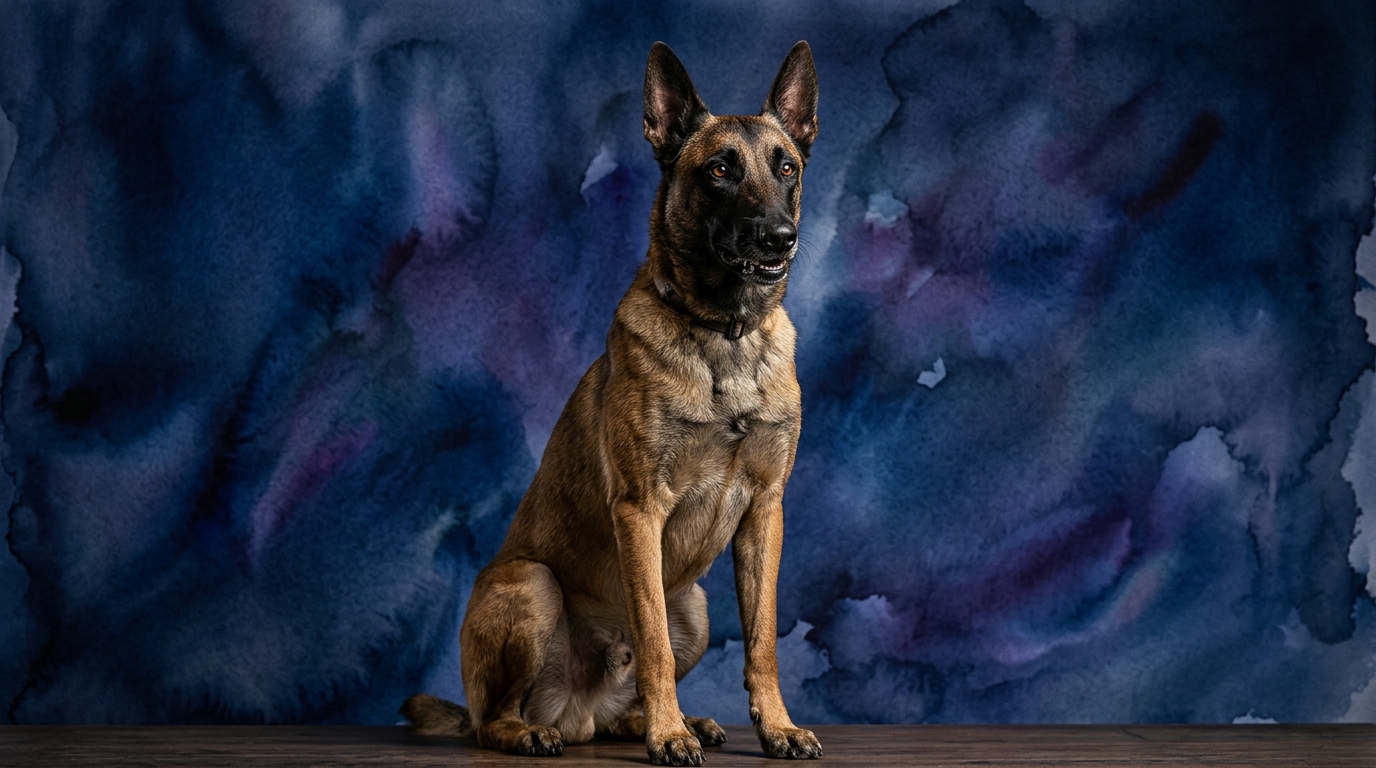

Side-by-Side IQ Profile: Belgian Malinois vs. Wire Fox Terrier
At The Cosmic Pet Pet IQ Lab, we assess canine intelligence across five key dimensions. The Belgian Malinois, a Herding breed, consistently ranks high, with a Coren ranking of #22. In contrast, the Wire Fox Terrier, a Terrier breed, is not Coren-ranked, reflecting a different cognitive emphasis.
For the Belgian Malinois, Problem Solving is rated 5/5, indicating an exceptional ability to dissect complex situations, devise novel solutions, and quickly adapt strategies. Training Speed is also 5/5, meaning they learn new commands and complex sequences with remarkable rapidity, often requiring only a few repetitions. Their Social Intelligence scores 4/5, showing adeptness at reading human cues and understanding cooperation within a working unit, though intense focus on tasks can sometimes overshadow subtle social nuances. Instinctive Drive is a perfect 5/5, reflecting powerful, highly channelable herding and prey drives that fuel motivation for demanding tasks. Finally, Memory is 5/5, signifying that learned information, commands, and experiences are retained over long periods with precision.
The Wire Fox Terrier presents a different cognitive landscape. Their Problem Solving is rated 3/5; they approach challenges with enthusiasm and tenacity, often relying on persistent trial-and-error, particularly for instinct-driven tasks, but may need more guidance for abstract problems. Training Speed is 3/5; they learn at a moderate pace, but their independent nature and occasional stubbornness mean consistent, engaging methods are crucial, and repetition is often needed. Social Intelligence is 3/5; generally sociable and alert, they can read basic human intentions but might prioritize their own interests or instincts over nuanced social cues when highly motivated. Instinctive Drive is 3/5, characterized by a strong prey drive and digging instincts that fuel exploration rather than easily directed complex obedience. Memory is 3/5; they are capable of remembering commands and experiences, but consistent reinforcement helps maintain recall, especially for tasks that might conflict with their natural inclinations.
Where the Belgian Malinois Wins Cognitively
The Belgian Malinois's cognitive strengths are profoundly tied to their working heritage. Their 5/5 problem-solving and memory, combined with a 5/5 training speed, allow them to master multi-stage commands and intricate routines far beyond many other breeds. This manifests in their ability to excel in highly complex scenarios like advanced scent detection, intricate agility courses, or demanding protection work, where precision and sequential execution are paramount.
A significant cognitive advantage is their capacity for directed focus and drive. The Malinois’s 5/5 instinctive drive is not just powerful; it is highly channelable towards human-defined objectives. They possess an unparalleled ability to sustain intense focus on a given task, effectively filtering out distractions, making them exceptional for roles requiring prolonged concentration and high stakes.
Furthermore, their high social intelligence, coupled with their problem-solving acumen, enables a form of anticipatory learning. They can often predict handler intentions and anticipate environmental changes, responding proactively rather than merely reactively. This foresight is a crucial asset in dynamic working environments where split-second decisions and seamless partnership are essential.
Their perfect memory score also ensures reliable recall and retention. Once a command or behavior is learned, it is deeply ingrained, ensuring high reliability in critical situations where immediate and accurate responses are vital for success and safety.
Where the Wire Fox Terrier Wins Cognitively
While the Wire Fox Terrier's IQ scores differ from the Malinois, they possess unique cognitive strengths perfectly suited to their terrier nature. Their 3/5 problem-solving is bolstered by incredible independent persistence. A Wire Fox Terrier will tenaciously pursue a goal, such as investigating a fascinating scent or digging to explore, often for extended periods without needing human intervention, showcasing a powerful, self-driven cognitive focus.
Their environmental awareness and adaptability are also notable. The Wire Fox Terrier’s 3/5 social intelligence, combined with innate curiosity, makes them acutely attuned to their immediate surroundings. They quickly assess new situations and adapt their behavior to explore or investigate, often with a bold and fearless approach, which is an asset for a companion navigating various settings.
Another cognitive 'win' lies in their self-sufficiency in play and engagement. Unlike the Malinois, who often requires human direction for structured engagement, a Wire Fox Terrier can readily create its own entertainment. Their 3/5 instinctive drive translates into inventive play and exploratory behaviors, making them less reliant on constant handler input for mental stimulation within a home environment.
Finally, their robustness in varied social settings is a strength. Their social intelligence, while not geared for complex teamwork, allows them to navigate diverse social interactions with a confident and often charming demeanor. They are generally outgoing and adaptable to new people and places, relying on their innate boldness rather than needing extensive social training for basic interactions.
Which is Easier to Train and Why
For complex tasks and obedience, the Belgian Malinois is demonstrably easier to train. Their 5/5 training speed means they grasp new concepts with astonishing rapidity, frequently after just a few repetitions. This is powerfully supported by a 5/5 memory, ensuring that learned behaviors are retained reliably over extended periods. Their 5/5 instinctive drive is profoundly amenable to being channeled into human-directed work, as they are inherently motivated to engage and cooperate with their handler in a working context, thriving on structure and clear communication.
The Wire Fox Terrier, with its 3/5 training speed and memory, presents a different training experience. Their independent nature and strong terrier instincts mean that while they are certainly capable of learning, they often require more patience, creativity, and consistency from their owner. They are less inherently driven to cooperate on human-centric tasks if those tasks conflict with their intrinsic motivations, such as chasing small animals or exploring interesting scents. Their 3/5 social intelligence suggests they might prioritize their own curiosity or drive in a given moment, making sustained attention more challenging without highly engaging and varied rewards and a strong bond.
Which Suits Active Owners vs. Relaxed Owners
Both the Belgian Malinois and the Wire Fox Terrier demand active owners, but the *nature* of that activity differs significantly. The Belgian Malinois requires an owner committed to rigorous, structured mental and physical exercise, often involving dedicated training, dog sports (like obedience, agility, protection sports), or a specific working role. Their intense drive and profound cognitive capacity mean they need a consistent 'job' or purpose to prevent boredom and potential destructive behaviors. This isn't merely about daily walks; it's about channeling their deep intellect and boundless energy into productive outlets.
Neither breed is suitable for truly relaxed or sedentary owners. A Wire Fox Terrier, while not demanding the same level of structured 'work' as a Malinois, still needs regular, robust exercise to satisfy its energetic and curious nature. This includes daily walks, off-leash exploration in secure areas, and engaging play to fulfill their exploratory and chasing instincts. Their cognitive profile, though lower scoring in some areas, still implies a strong need for mental engagement to prevent them from finding their own (potentially undesirable) entertainment. Owners who prefer a less demanding companion might find both breeds too intense, but an active owner who appreciates independent outdoor adventures over highly structured obedience might find the Wire Fox Terrier a more fitting companion than the Malinois.
The Verdict
Opt for a Belgian Malinois if you are an experienced, dedicated owner prepared to provide extensive structured training, a clear working purpose, and intense daily mental and physical stimulation.
Select a Wire Fox Terrier if you appreciate a spirited, independent companion with boundless energy for outdoor adventures, and you are prepared for patient, creative training to harness their unique terrier drive.
🧠 Find Your Pet's IQ Score
Our Pet IQ Lab assessment covers 25+ tests across 5 cognitive dimensions — personalized to your breed.
Take the Full IQ Test →Frequently Asked Questions
Can a Wire Fox Terrier excel in dog sports like agility?
Yes, Wire Fox Terriers can certainly excel in dog sports like agility, thanks to their athleticism, quickness, and natural enthusiasm. While their training speed might be moderate, their agility and drive to chase make them formidable competitors with consistent, positive reinforcement training.
Are Belgian Malinois good family dogs?
Belgian Malinois can be good family dogs for experienced households that understand their need for a 'job' and intense socialization from an early age. Their strong protective instincts and drive require careful management and training to ensure they integrate safely and happily into a family setting.
How much mental stimulation does a Wire Fox Terrier need daily?
A Wire Fox Terrier requires a good amount of daily mental stimulation to prevent boredom and destructive behaviors, perhaps 30-60 minutes of engaging play, puzzle toys, or short training sessions. While not requiring the same complex 'work' as a Malinois, their curiosity and problem-solving nature thrive on varied challenges and exploration.