
Side-by-Side Cognitive Profile
To understand these breeds, The Cosmic Pet Pet IQ Lab employs a five-dimensional cognitive framework. This framework assesses specific aspects of canine cognition, providing a nuanced view beyond general descriptors.
The **Belgian Sheepdog (Groenendael)** presents a profile indicative of a very capable learner and problem-solver. Their Problem Solving score is 5/5, suggesting an exceptional capacity to analyze complex situations and devise solutions, often independently. This translates to figuring out intricate puzzle toys, anticipating human actions, or even strategically navigating obstacles. Their Training Speed is also 5/5, meaning they acquire new commands and routines with remarkable rapidity, often needing only a few repetitions to grasp concepts; they thrive on structured learning and integrate new information quickly. Social Intelligence for the Groenendael is 3/5, indicating a moderate ability to read and adapt to varied social cues from humans and other animals, often preferring familiar interactions over novel ones and occasionally displaying a reserved demeanor. Their Instinctive Drive is 3/5, reflecting a balanced level of innate herding and protective instincts which, while present, are generally manageable and can be channeled with appropriate guidance. Finally, their Memory is 5/5, signifying an outstanding recall for learned commands, routines, and experiences, both positive and negative, retaining information over long periods, making consistency crucial for their development.
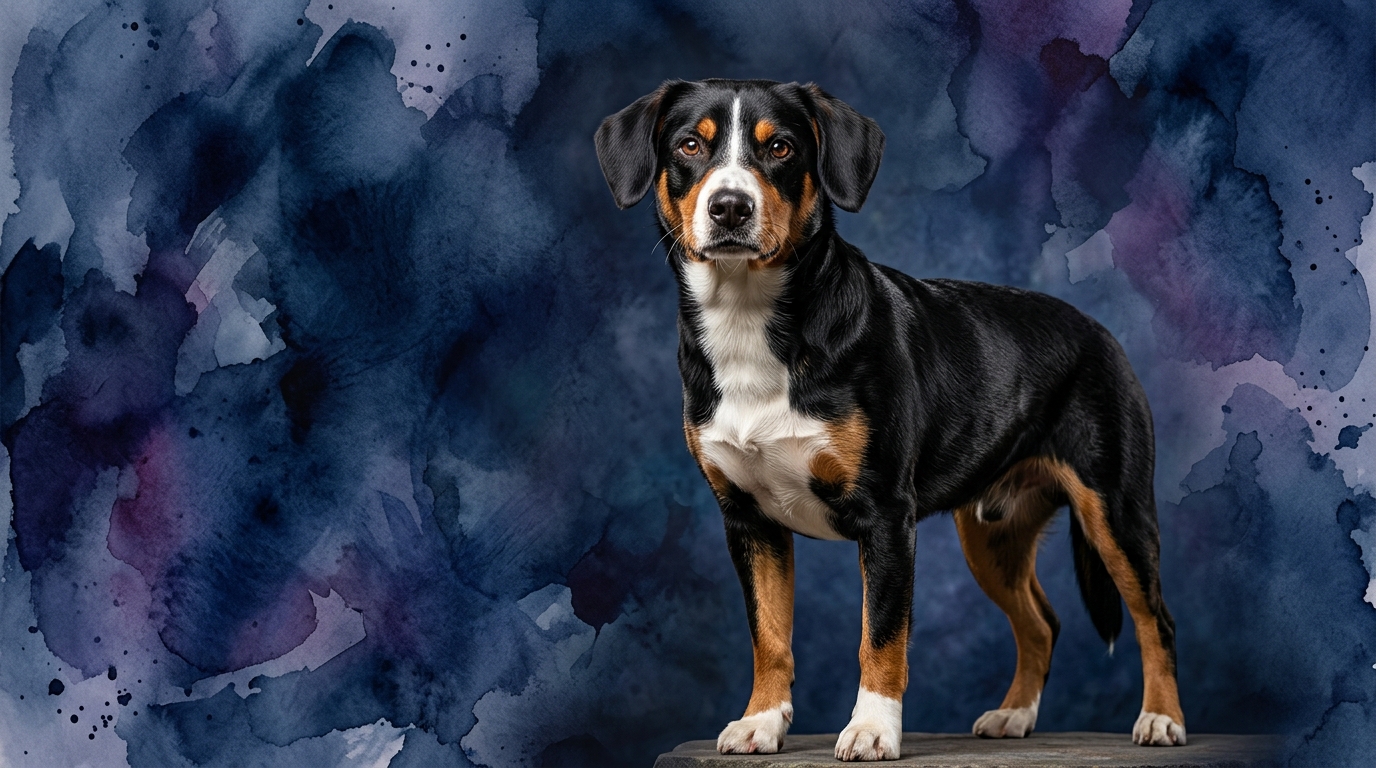
The **Entlebucher Mountain Dog**, while also a herding breed, exhibits a different cognitive emphasis. Their Problem Solving score is 3/5, meaning they are competent in navigating familiar challenges but may require more guidance for novel or abstract problems; their approach to solutions leans towards practical, physical engagement within their environment. Their Training Speed is also 3/5, positioning them as steady learners who require consistent, patient repetition to solidify new commands, absorbing information well but at a more deliberate pace than some breeds. Social Intelligence for the Entlebucher is 3/5, similar to the Groenendael, indicating a moderate capacity for social nuance; they tend to be devoted to their family but can be wary or reserved with strangers, necessitating careful, positive socialization. Their Instinctive Drive is 3/5, exhibiting a moderate level of herding and guarding instincts, typical of their Sennenhund heritage, which can manifest as watchful behavior or a desire to 'gather' family members. Their Memory is 3/5, reflecting good retention of learned behaviors and experiences, though perhaps not with the instantaneous recall of the Groenendael; consistent reinforcement helps solidify their understanding.
Where the Belgian Sheepdog (Groenendael) Excels Cognitively
The Groenendael’s cognitive profile clearly indicates strengths in rapid learning and retention. Their exceptional 5/5 Training Speed combined with a 5/5 Memory means they pick up complex sequences and long chains of commands with remarkable swiftness and hold onto that information for extended periods. This makes them adept at advanced obedience, intricate agility courses, and precise protection work, often mastering tasks that require multiple steps and nuanced understanding.
A significant cognitive advantage for the Groenendael is their independent problem-solving ability, rated at 5/5. This score signifies a dog that doesn't always need human intervention to figure things out. They can analyze a situation, such as an escape route from a yard or a strategy to obtain a desired toy, and execute a plan. This cognitive strength, while impressive, requires an owner who can consistently stay a step ahead, providing appropriate challenges and preventing them from applying their ingenuity to less desirable pursuits.
Their combined cognitive strengths make Groenendaels exceptionally versatile in roles requiring intricate understanding and execution. They excel in fields like service work, search and rescue, or competitive dog sports where rapid decision-making, precise execution, and sustained focus under pressure are paramount. Their ability to process and act upon complex information quickly sets them apart in demanding environments.
Where the Entlebucher Mountain Dog Excels Cognitively
While not scoring as high in abstract problem-solving as the Groenendael, the Entlebucher's 3/5 Problem Solving capacity is often rooted in focused practicality. They excel at tasks requiring persistence and physical engagement within their familiar environment, such as managing livestock or patrolling boundaries. Their cognitive strengths lie in applying their understanding to tangible, real-world scenarios, making them reliable in their traditional roles.
The Entlebucher's 3/5 Training Speed, while not lightning-fast, suggests a dog that learns thoroughly once a concept is grasped. This steady, deliberate learning process can lead to a deeply ingrained and reliable understanding of commands, less prone to fleeting retention if training is consistent and positive. They build their knowledge base solidly, ensuring that what they learn, they truly understand and can perform consistently.
The 3/5 Instinctive Drive in the Entlebucher is often channeled into their watchful, devoted nature, which is a cognitive application of their inherent purpose. They apply their cognitive abilities to protecting their family and territory with a steady, inherent motivation, rather than needing constant external stimuli. Their social intelligence, while moderate, is strongly tied to their family unit, fostering deep and unwavering bonds, making them highly attuned to their immediate human companions.
Ease of Training: Behavioral Differences
The **Belgian Sheepdog (Groenendael)** is generally easier to train for a wide array of tasks due to its 5/5 Training Speed and 5/5 Memory. They process new information quickly and remember it effectively, meaning fewer repetitions are needed to establish a command. For instance, teaching a multi-step retrieve or a complex agility sequence will likely see a Groenendael grasp the concept in a handful of sessions, retaining it for weeks with minimal refreshers. Their eagerness to learn and work with their human contributes significantly to this ease.
However, this cognitive advantage comes with a distinct behavioral caveat: their independent problem-solving (5/5) means they might also quickly learn undesirable behaviors if not consistently guided. A Groenendael left to its own devices might figure out how to open cabinets, escape enclosures, or engage in nuisance barking to get attention, essentially 'training themselves' in ways that are not convenient for their human. Their rapid learning requires an owner who can consistently provide appropriate structure and mental engagement.
The **Entlebucher Mountain Dog**, with its 3/5 Training Speed and 3/5 Memory, requires a more patient and consistent approach. They will learn, but at a more deliberate pace. Teaching a new trick might take more repetitions over several days or weeks to solidify, and occasional refreshers will be beneficial to maintain their understanding. This means training sessions should be shorter, more frequent, and always positive to keep them engaged.
While they are less likely to 'outsmart' their owner by devising complex schemes, their social intelligence (3/5) and instinctive drive (3/5) mean they can be discerning about who they listen to and what tasks they perceive as valuable. Their loyalty is strong, but they need to respect and trust their trainer. Training success hinges on building a strong bond and demonstrating consistent, fair leadership, making the owner the most reliable source of guidance rather than relying solely on their intrinsic drive to please.
Suitability for Active vs. Relaxed Owners
The **Belgian Sheepdog (Groenendael)** aligns better with highly active owners who thrive on engagement and intense mental stimulation. Their 5/5 Problem Solving and 5/5 Training Speed demand consistent mental exercise through advanced training, competitive dog sports, or complex working tasks. An owner who cannot provide this level of engagement may find their Groenendael inventing its own 'jobs,' potentially leading to destructive behaviors, excessive barking, or anxiety out of sheer boredom and under-stimulation. They require an owner who can match their cognitive energy and channel it productively, perhaps into competitive obedience, agility, protection sports, or even service work.
The **Entlebucher Mountain Dog**, while also a working breed, suits active owners who appreciate a dog with a more grounded, steady intelligence. Their 3/5 scores across the board mean they benefit from regular physical activity and consistent mental challenges, but perhaps not the same intensity of abstract problem-solving demanded by a Groenendael. They enjoy hiking, structured walks, and learning new skills, but might be more content with a predictable routine rather than constant novel challenges requiring rapid adaptation. Their protective instincts mean they are observant and derive satisfaction from 'watching over' their family during activities.
It's crucial to note that neither breed is truly suited for a 'relaxed' owner in the sense of minimal interaction or exercise. Both possess significant working drives and thrive on purpose and engagement. A relaxed owner, in this context, would be one who prefers a dog that requires less structured training or intense mental output, which neither of these herding breeds provides without potential behavioral issues. Both demand an owner dedicated to providing consistent exercise and thoughtful engagement tailored to their specific cognitive needs.
The Verdict
Select a Groenendael if you are an experienced, active owner eager to engage in advanced training, competitive dog sports, or demanding working roles, and are prepared for a dog that learns quickly and requires constant mental stimulation.
Opt for an Entlebucher if you seek a loyal, devoted companion for an active lifestyle, are committed to patient and consistent training, and appreciate a dog with a steady, practical intelligence focused on its family.
🧠 Find Your Pet's IQ Score
Our Pet IQ Lab assessment covers 25+ tests across 5 cognitive dimensions — personalized to your breed.
Take the Full IQ Test →Frequently Asked Questions
Do Groenendaels make good family dogs despite their high IQ?
Yes, Groenendaels can be excellent family dogs, forming deep bonds with their human family members, especially if well-socialized from a young age. Their social intelligence of 3/5 means they thrive on structured interaction and clear boundaries within the family unit and can be reserved with strangers.
Is the Entlebucher Mountain Dog suitable for first-time dog owners?
Entlebucher Mountain Dogs can be suitable for dedicated first-time owners who are prepared for consistent training and socialization. Their moderate training speed and social intelligence require an owner willing to invest time in positive reinforcement and building a strong, trust-based relationship.
How do their herding instincts differ in daily life?
Both breeds have an instinctive drive of 3/5, but it manifests differently; the Groenendael's instinct might lean towards strategic gathering or control, while the Entlebucher's often translates to watchful guarding and keeping family members 'together.' Both need outlets for these drives, such as supervised play or training.