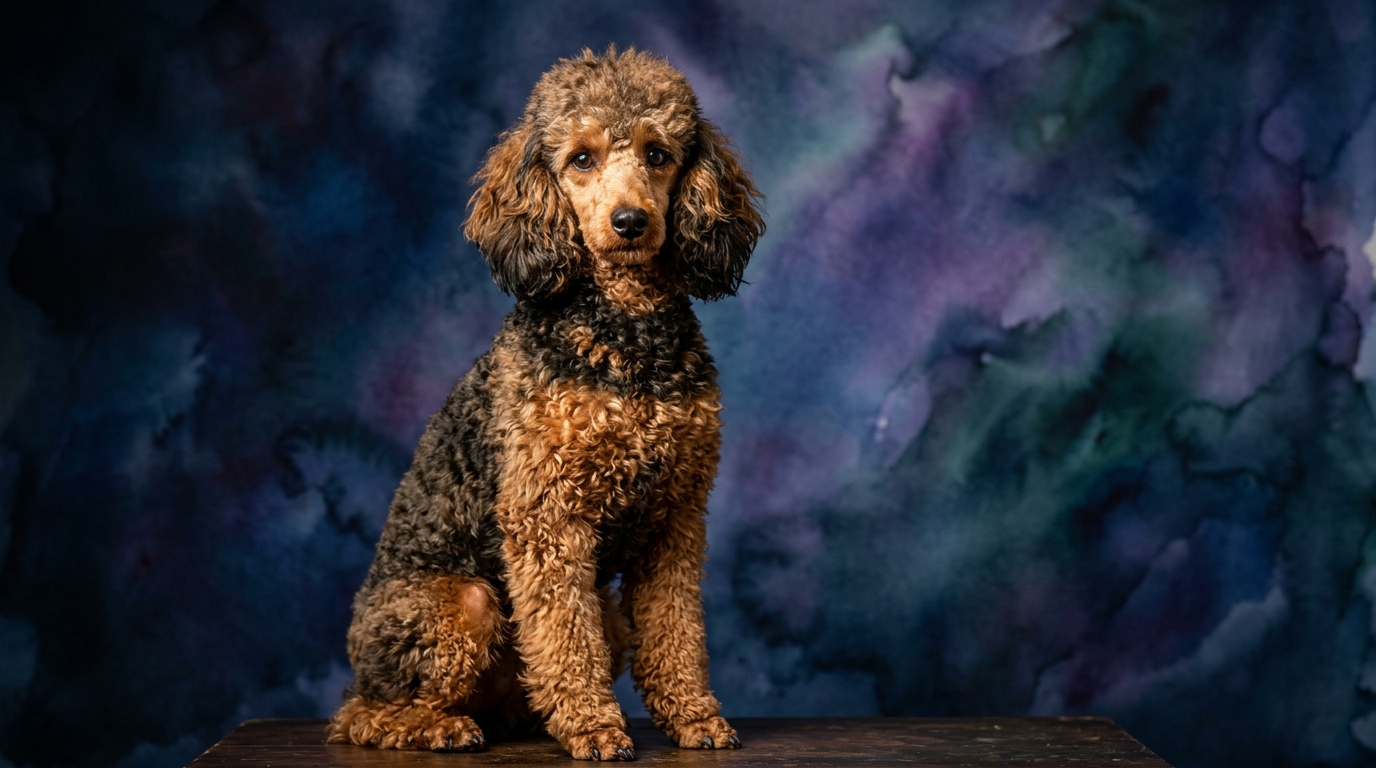
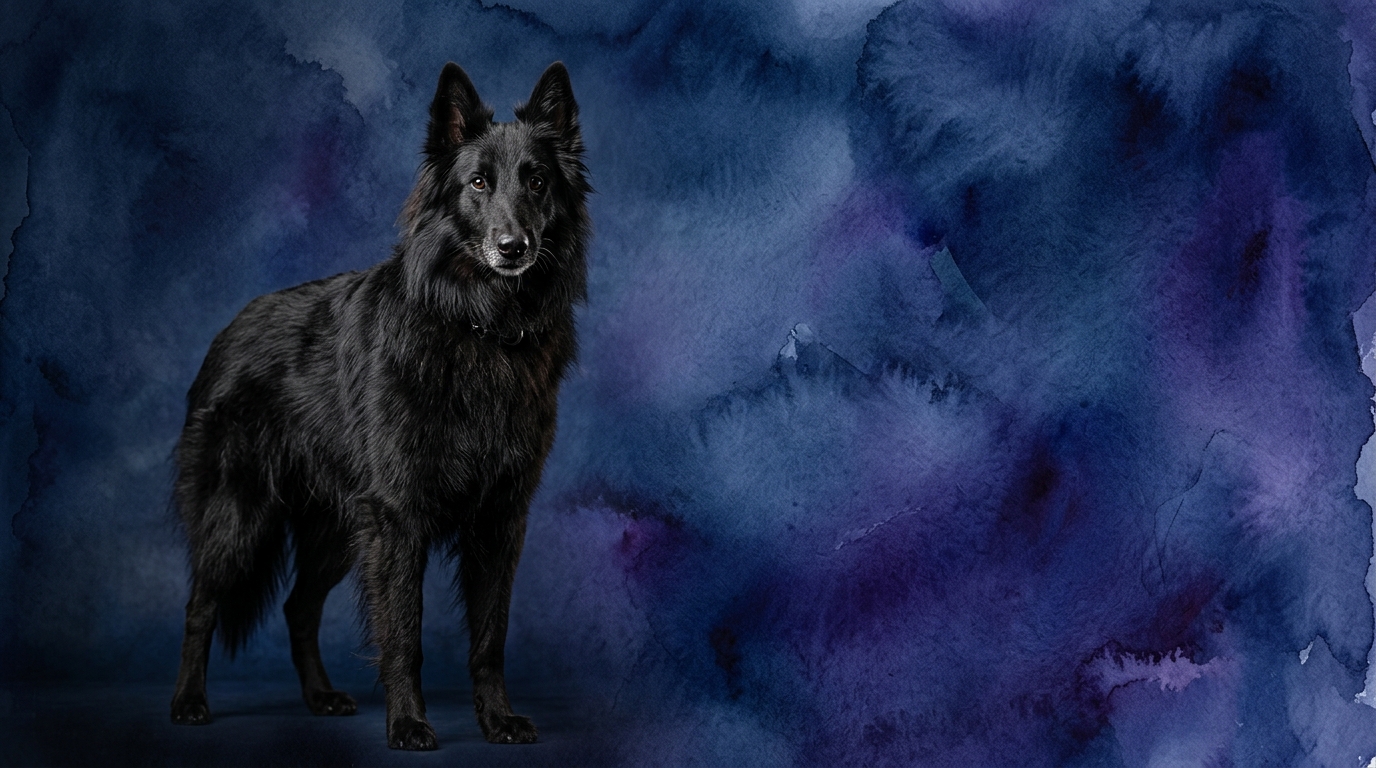
Side-by-Side IQ Profile: Poodle vs. Belgian Sheepdog
The Standard Poodle, a Non-Sporting Group member with a Coren rank of #2, presents a remarkably balanced and robust cognitive profile. Their Problem Solving is rated 5/5, indicating an exceptional capacity to navigate complex challenges and devise solutions independently. Training Speed also scores a perfect 5/5, reflecting their rapid assimilation of new commands and routines. Perhaps their most distinguishing feature is a Social Intelligence of 5/5, demonstrating an acute awareness of human emotions, intentions, and social cues. An Instinctive Drive of 4/5 suggests a strong, yet adaptable, internal motivation for engagement, complemented by a flawless Memory score of 5/5, ensuring long-term retention of learned behaviors and experiences.
In contrast, the Belgian Sheepdog (Groenendael), a Herding Group member ranking #15 on Coren's scale, showcases a profile geared towards purposeful work and precision. Like the Poodle, they achieve a 5/5 in Problem Solving, indicating a formidable ability to analyze and overcome obstacles. Their Training Speed also matches the Poodle at 5/5, signifying quick learning capabilities. However, their Social Intelligence is rated 3/5, suggesting a more independent nature and less inherent attunement to subtle human social dynamics compared to the Poodle. An Instinctive Drive of 3/5 points to a moderate but focused internal motivation, often directed towards their herding heritage, paired with an excellent Memory score of 5/5 for retaining complex sequences and tasks.
Where the Standard Poodle Excels Cognitively
The Standard Poodle's cognitive superiority largely lies in its unparalleled Social Intelligence (5/5). This dimension is not merely about being friendly; it signifies a profound ability to interpret human body language, vocal inflections, and emotional states, allowing them to adapt their behavior with remarkable nuance. This makes them exceptionally intuitive companions, often seeming to anticipate their owner's needs or moods, and excelling in roles requiring empathy and connection, such as therapy work.
Furthermore, the Poodle’s balanced cognitive scores, especially their 4/5 Instinctive Drive paired with 5/5 Problem Solving and 5/5 Memory, grants them exceptional adaptability. Their drives are versatile, easily channeled into a broad spectrum of activities from complex obedience to agility, scent work, or even artistic performance. This cognitive flexibility means they can thrive in diverse environments and learning scenarios, readily shifting focus between tasks and mastering new skills with an intrinsic motivation that isn't solely tied to a single purpose or reward system. Their overall profile suggests a breed that doesn't just learn quickly but also understands the context and purpose behind their actions, making them highly engaged and collaborative partners in learning.
Where the Belgian Sheepdog (Groenendael) Shines Cognitively
While the Groenendael's scores might not surpass the Poodle's in every category, their unique combination of high Problem Solving (5/5), Training Speed (5/5), and Memory (5/5), coupled with a more moderate Social Intelligence (3/5) and Instinctive Drive (3/5), positions them to excel in specific cognitive domains. Their problem-solving abilities, rooted in a herding background, often manifest as a systematic and persistent approach to tasks. This means they are adept at breaking down complex challenges into manageable steps, particularly those involving spatial reasoning, pattern recognition, or strategic movement, and will work diligently to find a solution.
The Groenendael's strength also lies in their precision and retention for highly structured, repeatable tasks. Their 5/5 Training Speed and 5/5 Memory make them outstanding candidates for disciplines like competitive obedience, protection sports, or specialized working roles where faultless execution of complex command sequences is paramount. While their instinctive drive might be lower than some other herding breeds, it is often sufficiently directed towards engaging with structured tasks, allowing them to focus intensely without being easily distracted by extraneous social cues. This focused mental stamina enables them to sustain high levels of cognitive effort over extended periods, making them ideal partners for demanding, systematic work.
Which is Easier to Train and Why?
When considering ease of training, the Standard Poodle generally holds an advantage due to its exceptional Social Intelligence (5/5) combined with a perfect Training Speed (5/5). Poodles are not only quick to grasp new concepts and commands but are also acutely attuned to their handler's intentions and emotional states. This makes the training process feel more collaborative and intuitive; they often anticipate what is expected, respond readily to subtle cues, and are highly motivated by positive social interaction and praise. Their eagerness to please and ability to read human feedback means they often adapt quickly to various training methods and can forgive minor handler inconsistencies, making them a more forgiving and adaptable student for owners of all experience levels.
The Belgian Sheepdog (Groenendael), while matching the Poodle in Training Speed (5/5), has a lower Social Intelligence (3/5). This means that while they learn commands with impressive speed and retain them perfectly (Memory 5/5), their motivation might be less intrinsically tied to pleasing their human through social connection alone. Training a Groenendael often requires more clarity, consistency, and a systematic approach. They thrive on precise instructions and structured routines, excelling when tasks are broken down logically. Owners might find that while Groenendaels master tasks quickly, they might be less tolerant of ambiguity or less inclined to offer unsolicited behaviors, necessitating a focused, goal-oriented training style rather than a more free-flowing, socially driven one. Their dedication to a task once learned is profound, but getting them engaged initially might require a more direct, less nuanced approach than with a Poodle.
Which Suits Active Owners vs. Relaxed Owners?
For owners seeking a companion that can seamlessly integrate into a variety of lifestyles, from active pursuits to more relaxed companionship, the Standard Poodle is typically the more adaptable choice. Their balanced Instinctive Drive (4/5) and exceptional Social Intelligence mean they thrive on mental engagement and human interaction, whether that comes from vigorous dog sports, long walks, or simply being involved in daily family activities and intellectual games. While they certainly benefit from regular exercise and mental stimulation, their cognitive flexibility and desire for connection allow them to adjust to periods of lower intensity without developing destructive behaviors, as long as their need for companionship and cognitive challenges is met. They are equally content solving a puzzle toy indoors or excelling in an agility course.
The Belgian Sheepdog (Groenendael), with its Herding Group background, is unequivocally better suited for active owners who can provide consistent, purposeful engagement and mental stimulation. Even with an Instinctive Drive of 3/5, their inherent need for a 'job' is strong. Their high Problem Solving and Memory, paired with their breed history, means they are not content to be merely a decorative companion; they require outlets for their cognitive and physical energy. Owners who enjoy dog sports like obedience, agility, herding trials, or protection work, or who can incorporate structured training and problem-solving into their daily routine, will find a dedicated and enthusiastic partner in a Groenendael. A relaxed owner who cannot provide this level of engagement risks a Groenendael becoming bored, potentially leading to self-directed behaviors like excessive barking, digging, or destructive chewing, as they seek to fulfill their innate drive for activity and purpose.
The Verdict
Choose a Standard Poodle if you seek an exceptionally adaptable, socially perceptive companion who thrives on nuanced interaction and excels in diverse learning environments, fitting seamlessly into various family dynamics.
Opt for a Belgian Sheepdog (Groenendael) if you are an active owner desiring a dedicated, focused partner for structured training, precision sports, or work, prepared to provide consistent direction and ample mental and physical engagement.
🧠 Find Your Pet's IQ Score
Our Pet IQ Lab assessment covers 25+ tests across 5 cognitive dimensions — personalized to your breed.
Take the Full IQ Test →Frequently Asked Questions
Do Standard Poodles require extensive grooming because of their intelligence?
While Standard Poodles do require regular grooming to maintain their coat, this is unrelated to their intelligence. Their high cognitive scores indicate they are quick learners and socially astute, making grooming routines easier to establish and manage through positive reinforcement and consistent training.
Is the Groenendael's lower social intelligence a sign of unfriendliness?
No, a Groenendael's 3/5 social intelligence doesn't mean unfriendliness, but rather a more independent nature compared to the Poodle. They are often devoted to their families but may be more reserved with strangers and less inherently attuned to subtle social cues, preferring clear, consistent interactions over nuanced social navigation.
Can a Belgian Sheepdog Groenendael be a good family dog despite its working background?
Yes, a Belgian Sheepdog Groenendael can be an excellent family dog, provided the family understands and meets its needs for mental and physical activity. Their strong problem-solving and memory make them excellent partners for children involved in dog sports, but they thrive best in an environment that offers structure, consistent training, and purposeful engagement.