
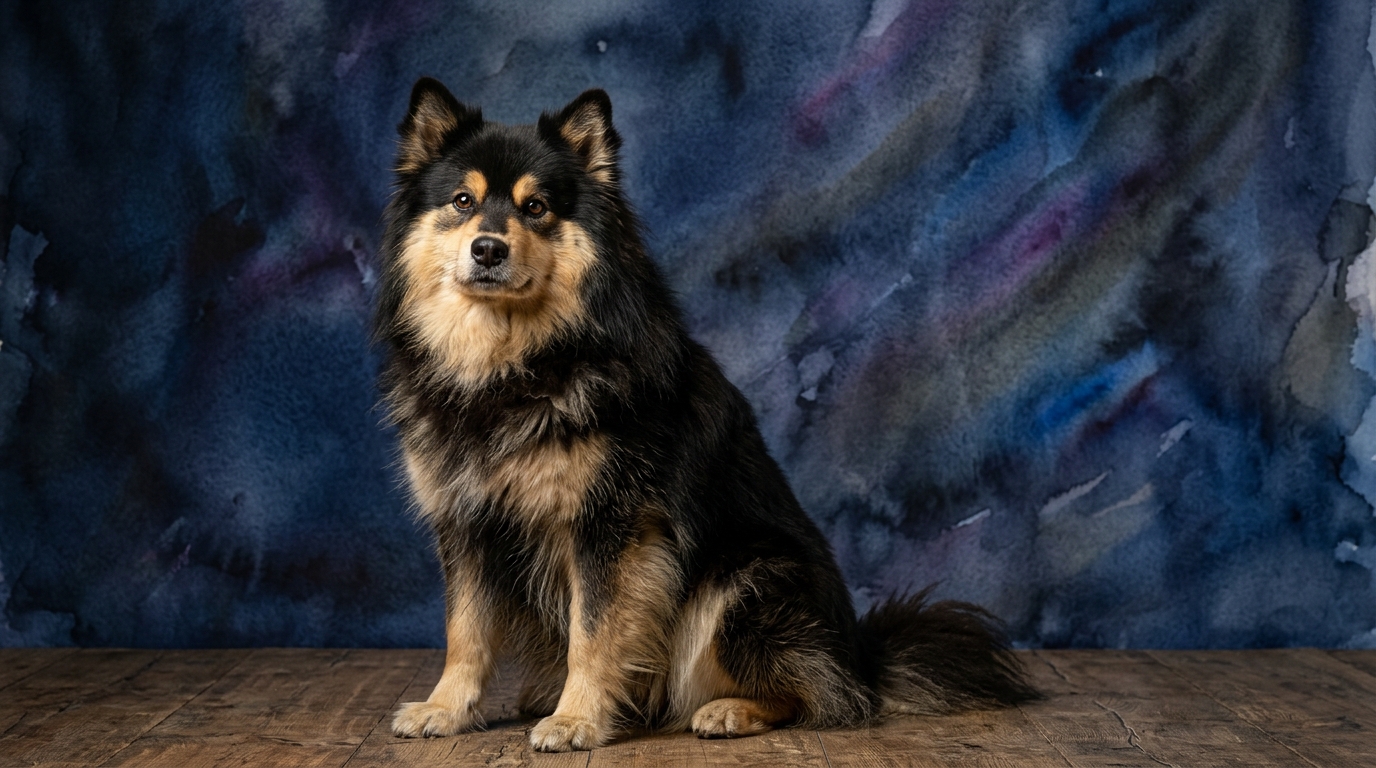
Side-by-Side IQ Profile
At The Cosmic Pet Pet IQ Lab, we evaluate canine intelligence across five key dimensions. For the Belgian Sheepdog (Groenendael), we observe exceptional cognitive capabilities: Problem Solving (5/5), Training Speed (5/5), and Memory (5/5) all score at the highest level. Their Social Intelligence (3/5) and Instinctive Drive (3/5) are moderate, indicating a discerning nature and a manageable herding impulse.
In contrast, the Finnish Lapphund presents a remarkably balanced cognitive profile, scoring 3/5 across all five dimensions: Problem Solving (3/5), Training Speed (3/5), Social Intelligence (3/5), Instinctive Drive (3/5), and Memory (3/5). This consistent moderation suggests a steady, reliable approach to learning and interaction rather than extreme peaks in specific cognitive areas. The Groenendael's Coren rank of #15 further underscores its position among breeds demonstrating superior working and obedience intelligence, while the Finnish Lapphund, though not Coren-ranked, possesses a functional and adaptable intellect suited to its traditional roles.
Where Belgian Sheepdog (Groenendael) Wins Cognitively
The Groenendael's primary cognitive advantage lies in its exceptional Problem Solving (5/5) and Training Speed (5/5), complemented by a flawless Memory (5/5). This trifecta means they can quickly analyze complex situations, devise effective strategies, and retain these solutions for future application with remarkable consistency. For instance, a Groenendael can be taught a multi-step obedience routine in fewer repetitions and execute it flawlessly even after a long break, or independently figure out how to open a complex crate latch after observing it a few times. Their capacity for abstract thought allows them to generalize learning from one context to another with minimal prompting, making them adept at advanced tasks like competitive obedience, protection work, or intricate agility courses where independent decision-making within a framework is crucial.
Where Finnish Lapphund Wins Cognitively
While the Finnish Lapphund's scores are consistently moderate (3/5 across the board), this balanced profile represents a distinct cognitive strength: adaptability and resilience within a manageable framework. Their Social Intelligence (3/5) and Instinctive Drive (3/5) are not overwhelming, meaning they are less likely to be overly sensitive or intensely driven by a single impulse. This balance fosters a stable, less demanding cognitive presence compared to a breed that might constantly seek complex challenges. Lapphunds excel in environments where consistent, calm application of learned behaviors is valued over rapid, independent problem-solving. Their moderate scores suggest a dog less prone to overthinking or developing complex behavioral quirks stemming from unmet intellectual demands. This breed's strength lies in its steady, reliable nature; they are not easily flustered and can maintain focus on a task, even if it takes a few more repetitions to learn.
Which is Easier to Train and Why
Based on their respective Training Speed scores, the Belgian Sheepdog (Groenendael) is distinctly easier to train in terms of initial skill acquisition. A Groenendael will typically grasp a new command or concept in fewer repetitions, often demonstrating understanding after just a handful of trials, which translates to a rapid progression through obedience levels or specialized tasks. Their high Memory score (5/5) ensures that once learned, these behaviors are retained with exceptional longevity, reducing the need for constant re-teaching. For example, a Groenendael might learn to “stay” for several minutes in a busy park after only a few short training sessions and remember it weeks later.
The Finnish Lapphund, with a Training Speed of 3/5, requires more patience and consistency. While perfectly capable of learning, they benefit from shorter, more frequent training sessions and more repetitions to solidify new information. Their Memory (3/5) is functional, but regular reinforcement is more crucial to prevent skills from fading. A Lapphund might take longer to master the “stay” command in a distracting environment and could benefit from periodic refreshers. However, their Instinctive Drive (3/5) being less intense than some working breeds means that while they might not learn as fast, they are also less likely to be constantly pushing boundaries or inventing their own solutions, which can simplify the training process in a different way – by reducing the frequency of unexpected behaviors.
Which Suits Active Owners vs Relaxed Owners
The Belgian Sheepdog (Groenendael) is an ideal match for highly active owners who thrive on engaging with a dog that mirrors their energy and intellect. With a Problem Solving score of 5/5 and Training Speed of 5/5, Groenendaels demand consistent mental stimulation beyond just physical exercise. They flourish in environments where they can participate in advanced obedience, agility, protection sports, or even complex scent work. Owners who enjoy teaching intricate tricks, solving puzzles, or engaging in competitive dog sports will find the Groenendael an eager and capable partner. Their cognitive architecture means that without sufficient mental outlets, they can become restless or channel their intellectual energy into less desirable behaviors, making them unsuitable for passive companionship.
The Finnish Lapphund, with its balanced 3/5 scores across the board, is better suited for owners who appreciate a steady, amiable companion without the intense cognitive demands of a top-tier working breed. While they still require daily exercise and engagement appropriate for a herding dog, their mental needs are more straightforward. Owners who enjoy regular walks, basic obedience, and consistent routines will find the Lapphund a delightful fit. They are content with moderate activity and do not constantly seek out complex challenges. Their Social Intelligence (3/5) means they are generally friendly but not overly boisterous, allowing them to integrate smoothly into a relaxed family dynamic, appreciating calm companionship rather than constant high-stakes mental tasks.
The Verdict
Opt for the Groenendael if you are an experienced owner seeking a highly responsive, intellectually demanding partner for advanced training, competitive dog sports, or a working role, and are prepared to meet their profound need for mental engagement.
Select the Finnish Lapphund if you desire a steady, amiable companion for a moderately active household, appreciating a dog with a balanced temperament and manageable cognitive needs that thrives on consistent routines and family life.
🧠 Find Your Pet's IQ Score
Our Pet IQ Lab assessment covers 25+ tests across 5 cognitive dimensions — personalized to your breed.
Take the Full IQ Test →Frequently Asked Questions
Are Groenendaels difficult to live with due to their high intelligence?
Groenendaels are not inherently difficult, but their exceptional cognitive capacity requires significant mental engagement. Without consistent training, enrichment, and a clear leadership structure, they can become bored and channel their problem-solving abilities into undesirable behaviors, necessitating an owner committed to their intellectual needs.
Does the Finnish Lapphund's moderate IQ mean it's harder to train?
Not harder, but different. Lapphunds learn at a steady pace, requiring more repetition and patience than a Groenendael. Their moderate scores suggest they are less prone to overthinking or developing complex behavioral quirks, making them very trainable for owners who appreciate consistency and a calm approach.
How do their herding instincts differ in a home environment?
Both have a 3/5 instinctive drive, meaning their herding instincts are present but manageable. Groenendaels might display more direct herding behaviors due to their higher problem-solving, potentially attempting to “gather” family members. Lapphunds tend to be more adaptable, with their herding drive manifesting more subtly or being easily redirected with consistent training.