
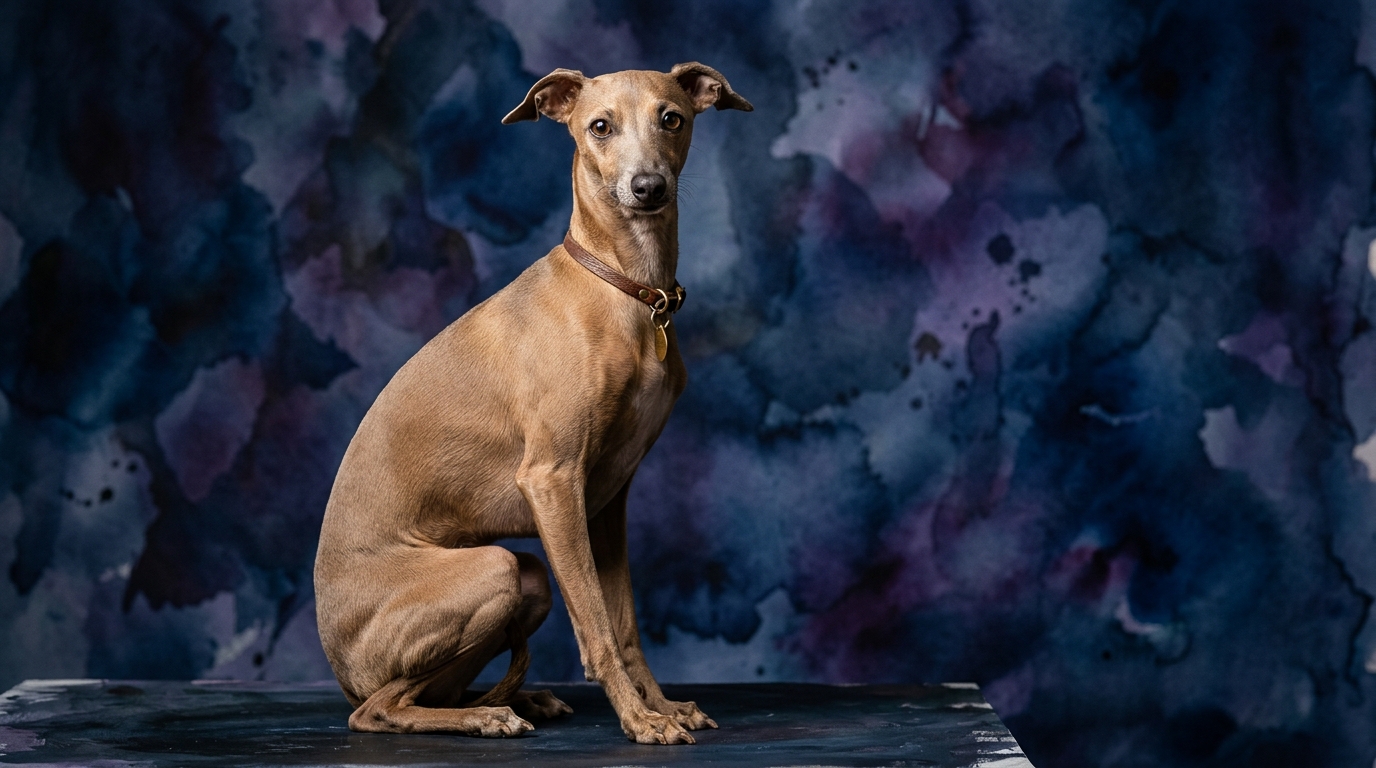
Side-by-Side IQ Profile: Groenendael vs. Italian Greyhound
The Cosmic Pet Pet IQ Lab employs a five-dimensional framework to assess canine intelligence, offering a nuanced understanding beyond simple rankings. Let's explore how the Belgian Sheepdog (Groenendael) and the Italian Greyhound stack up in each cognitive domain.
The Belgian Sheepdog (Groenendael), recognized by Coren's ranking at #15, demonstrates an impressive cognitive architecture. Their Problem Solving is rated 5/5, indicating an exceptional capacity to navigate novel situations, strategize, and independently figure out solutions to complex challenges. Their Training Speed also scores 5/5, meaning they grasp new commands and routines with very few repetitions, often showing an eagerness to learn. Social Intelligence is rated 3/5; while capable of forming strong bonds and understanding human cues, their primary cognitive drive is often task-oriented rather than purely social. Instinctive Drive is 3/5, reflecting a moderate, controllable herding instinct that can be channeled effectively. Finally, their Memory is 5/5, allowing them to retain vast amounts of information, including intricate command sequences and environmental details, over extended periods.
In contrast, the Italian Greyhound, a breed not typically featured in Coren's top rankings, presents a cognitive profile optimized for companionship. Their Problem Solving is rated 3/5, suggesting they can learn to navigate their environment and solve common household dilemmas, but may not actively seek out or excel at complex, multi-step puzzles. Training Speed also sits at 3/5; they are certainly trainable, but require more patience, consistency, and positive reinforcement compared to breeds with higher scores. Social Intelligence is 3/5, similar to the Groenendael, but manifests as a deep sensitivity to human emotions and a strong desire for close physical connection. Their Instinctive Drive is 3/5, encompassing a sighthound's natural inclination to chase, though generally less intense than a working breed's overall drive. Memory is rated 3/5, adequate for daily routines and familiar commands, but perhaps less robust for retaining extensive, complex information over time.
Where the Belgian Sheepdog (Groenendael) Wins Cognitively
The Groenendael's cognitive strengths are undeniably rooted in their heritage as a working dog. They exhibit superior Problem Solving (5/5), effortlessly tackling intricate tasks, whether it's figuring out how to open a child-proof gate or strategizing during advanced agility courses. This breed thrives on mental engagement, often seeking out challenges if not provided. Their exceptional Training Speed (5/5) means they not only learn new commands rapidly but also generalize them to different contexts with ease, making them excellent candidates for competitive obedience, protection work, or service roles that demand quick comprehension and adaptability. They possess an innate drive to understand and execute, often anticipating their handler's next move.
Furthermore, the Groenendael's perfect Memory score (5/5) contributes significantly to their cognitive advantage. They remember extensive sequences of commands, the layout of complex environments, and past experiences with remarkable accuracy. This allows them to build a vast behavioral repertoire and apply learned skills consistently, even after long breaks. Their cognitive framework is built for efficiency and reliability in performance, making them a top choice for owners who enjoy engaging in mentally demanding activities with their canine partners. This breed doesn't just learn; they master.
Where the Italian Greyhound Wins Cognitively
While the Italian Greyhound's cognitive scores are generally lower than the Groenendael's, their wins lie in their specialized application of intelligence for companionship and adaptability to a home environment. Their Social Intelligence (3/5), though numerically equivalent, manifests differently; they are profoundly attuned to human emotions and body language, often serving as sensitive emotional barometers for their owners. This allows them to forge exceptionally deep, empathetic bonds, making them superb comfort companions.
The Italian Greyhound's Problem Solving (3/5) and Memory (3/5) are perfectly suited for navigating the nuances of a domestic setting. They excel at understanding household routines, communicating their needs subtly, and learning the specific preferences of their human family without requiring constant, complex mental stimulation. Their cognitive profile allows them to integrate seamlessly into a quiet, affectionate home life, requiring less active 'work' from their owners to keep them mentally satisfied. Their 'win' is in their efficient use of their cognitive abilities to foster intimate companionship, demonstrating an intuitive understanding of their role as a cherished family member rather than a working partner.
Which is Easier to Train and Why
Without question, the Belgian Sheepdog (Groenendael) is considerably easier to train due to their superior Problem Solving (5/5), Training Speed (5/5), and Memory (5/5). Groenendaels possess an inherent desire to work and please, coupled with a remarkable ability to grasp new concepts rapidly, often requiring only a few repetitions to solidify a command. They thrive on structure, consistency, and engaging challenges, viewing training as a collaborative intellectual exercise. Their capacity for advanced learning means they can progress quickly from basic obedience to intricate tasks, often excelling in sports like agility, obedience, and protection work, where precision and rapid comprehension are paramount. Realistically, a Groenendael will not just learn 'sit,' but will learn 'sit' from across the room, with distractions, and for extended periods, all with minimal fuss.
The Italian Greyhound, with 3/5 in Problem Solving, Training Speed, and Memory, requires a different training approach. While capable of learning, they are not inherently driven by the desire for complex mental engagement in the same way a Groenendael is. They learn best through positive reinforcement, patience, and short, engaging sessions, as their attention span for repetitive tasks can be shorter. They can be sensitive to harsh corrections, which can lead to shutdown or resistance. Behavioral differences include their sighthound nature, which means a strong visual stimulus can override learned commands, requiring consistent proofing in varied environments. Potty training can also be a notorious challenge for the breed, demanding immense consistency and understanding of their delicate bladder. While they can achieve good obedience, it often takes more time, more repetitions, and a gentler, more motivating approach compared to the Groenendael, who often seems to 'get it' almost instantly.
Suitability for Active vs. Relaxed Owners
The Belgian Sheepdog (Groenendael) is an ideal match for active owners who can commit to providing substantial physical exercise and, crucially, consistent mental stimulation. Their high Problem Solving and Training Speed mean they need daily outlets for their cognitive energy, whether through advanced training, puzzle toys, dog sports, or engaging 'jobs' around the house. An owner who enjoys hiking, running, or participating in dog activities like agility or competitive obedience will find the Groenendael a willing and capable partner. Without adequate mental and physical engagement, this breed can become bored, potentially leading to undesirable behaviors as they invent their own 'work.'
Conversely, the Italian Greyhound is a far better fit for relaxed owners seeking a devoted, low-impact companion. While they still require daily walks and opportunities to stretch their legs in a secure area, their overall energy demands are significantly lower than a Groenendael's. They are content with lounging on the sofa, enjoying close physical contact, and participating in gentle play. Their cognitive profile, while not geared for complex problem-solving, is perfectly suited for a quiet home life, making them excellent companions for individuals or families who prefer a calm, affectionate presence without the need for constant, demanding mental challenges. They thrive on companionship and warmth, both literally and figuratively.
The Verdict
Choose the Belgian Sheepdog (Groenendael) if you are an active owner seeking a highly trainable, cognitively driven partner for dog sports, advanced training, or a working role. Their exceptional problem-solving and memory demand consistent mental engagement and a structured lifestyle.
Opt for the Italian Greyhound if you desire a gentle, affectionate, and sensitive companion content with a relaxed home life and moderate exercise. Their specialized social intelligence makes them devoted family members, thriving on close companionship rather than complex tasks.
🧠 Find Your Pet's IQ Score
Our Pet IQ Lab assessment covers 25+ tests across 5 cognitive dimensions — personalized to your breed.
Take the Full IQ Test →Frequently Asked Questions
Do Belgian Sheepdogs (Groenendaels) need a lot of mental stimulation?
Yes, Groenendaels require significant mental stimulation due to their high problem-solving and memory scores. They thrive on learning new commands, engaging in puzzle toys, and participating in dog sports to prevent boredom and channel their cognitive energy constructively.
Are Italian Greyhounds difficult to train because of their lower IQ scores?
Italian Greyhounds are not difficult to train, but they require more patience and consistency than breeds with higher training speed. Their 3/5 training speed means they learn best with positive reinforcement, short sessions, and a gentle approach, rather than relying on their owner's authority for rapid comprehension.
Which breed is better for a first-time dog owner?
The Italian Greyhound is generally more suitable for a first-time dog owner due to their lower demands for complex mental stimulation and physical exercise. The Belgian Sheepdog (Groenendael) requires an owner experienced with working breeds who can dedicate significant time to their training and enrichment needs.