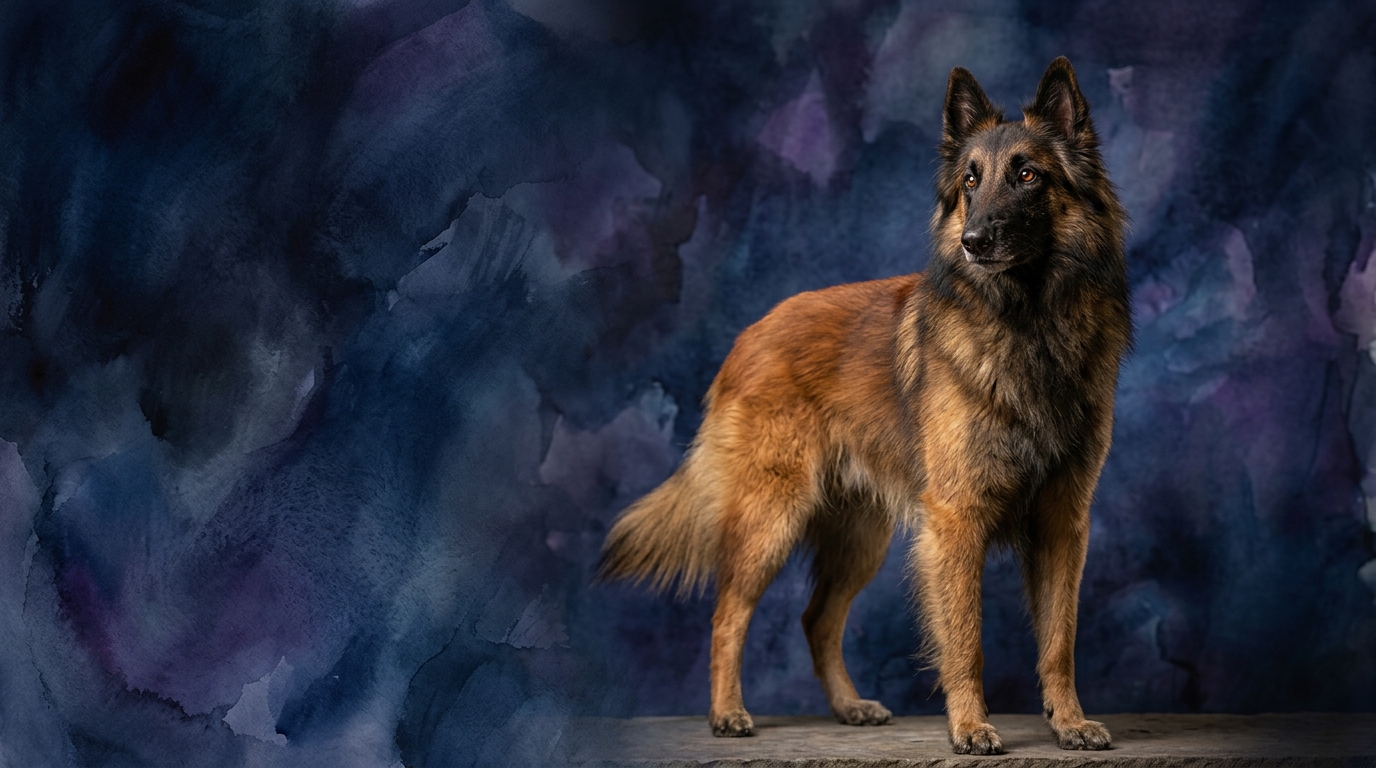

Side-by-Side IQ Profile: Belgian Tervuren vs. Bull Terrier
The Cosmic Pet Pet IQ Lab utilizes a five-dimensional framework to assess canine intelligence, providing a nuanced view of each breed's cognitive strengths. Here's how the Belgian Tervuren and the Bull Terrier stack up:
Belgian Tervuren (Coren Rank: #14): This elegant herding dog consistently demonstrates a profound capacity for learning and problem-solving, a hallmark of its working heritage. Problem Solving: 5/5 – The Tervuren excels at complex tasks, demonstrating an innate ability to analyze situations and devise effective solutions, often anticipating handler cues or environmental changes. Training Speed: 5/5 – This breed picks up new commands and routines with remarkable rapidity, often requiring fewer repetitions than most, a testament to their attentiveness and eagerness to learn structured tasks. Social Intelligence: 3/5 – While capable of forming strong bonds, their social intelligence is typically focused on their immediate pack or family. They are discerning with strangers, often reserved rather than overtly gregarious, and their social cues can be subtle. Instinctive Drive: 3/5 – Their instinctive drive is primarily channeled into herding behaviors – patrolling, gathering, and protecting. This drive manifests as a strong work ethic and a desire for purpose, though it's less about raw prey drive and more about control and order. Memory: 5/5 – Possessing an exceptional memory, the Tervuren retains learned behaviors, past experiences, and even complex sequences of commands over long periods, making them reliable in advanced training and competitive sports.
Bull Terrier (Coren Rank: #66): The Bull Terrier, with its distinctive egg-shaped head and playful demeanor, approaches the world with a unique blend of tenacity and independent spirit, reflecting its terrier origins. Problem Solving: 3/5 – Bull Terriers approach problem-solving with a unique blend of determination and independent thought. They can figure things out, but often through persistence and trial-and-error rather than seeking handler guidance, sometimes opting for unconventional solutions. Training Speed: 3/5 – They learn at a moderate pace, but their training speed is often influenced by their motivation and perceived value of the task. Repetition is generally needed, and consistency is key to solidifying commands, as their attention can wander. Social Intelligence: 3/5 – Bull Terriers are generally affable and enjoy social interaction, often displaying a playful and sometimes boisterous demeanor with those they know. However, their social intelligence can manifest as a selective engagement, choosing when and with whom they wish to interact, rather than a constant desire to please. Instinctive Drive: 3/5 – Their instinctive drive stems from their terrier heritage, encompassing a robust prey drive and a determined persistence. This manifests in digging, chasing, and a strong-willed approach to challenges, requiring careful channeling to prevent undesirable behaviors. Memory: 3/5 – Their memory is adequate for retaining basic commands and routines, but they may require occasional refreshers, especially if tasks aren't regularly reinforced. Past experiences can shape their future reactions, but intricate sequences might fade without consistent practice.
Where the Belgian Tervuren Wins Cognitively
The Belgian Tervuren stands out unequivocally in areas demanding rapid assimilation of information and complex cognitive processing. Their 5/5 rating in both Problem Solving and Training Speed means they not only grasp new concepts almost instantaneously but also apply that understanding to intricate scenarios, often thinking several steps ahead during tasks. This manifests in their ability to quickly learn elaborate obedience routines, master agility courses with precision, or even adapt to new working roles like search and rescue without extensive repetition. Furthermore, their 5/5 Memory ensures that once a lesson is learned or an experience is cataloged, it remains firmly embedded, allowing for consistent performance and reliable recall of even long-dormant commands or past environmental cues. This cognitive architecture makes them exceptionally adept at structured learning and demanding precision work, making them highly responsive partners in various working disciplines.
Where the Bull Terrier Wins Cognitively
While the Bull Terrier's raw speed of learning or memory might not match the Tervuren, their cognitive strengths lie in areas less about precision and more about tenacity and unique problem-solving. Their 3/5 Problem Solving, though lower, reflects a distinct approach: they often tackle challenges with a determined independence, sometimes devising unconventional solutions that might surprise an owner expecting a more direct approach. This isn't about following a script but about finding a way, often through sheer will. Their social intelligence, also rated 3/5, can be a strength in its own right; they form strong, often deeply affectionate bonds, and their playful spirit can make them highly adaptable companions in diverse social settings, even if their motivations aren't always about pleasing. Their instinctive drive, also 3/5, while needing guidance, provides a powerful, persistent energy that, when channeled, can be incredibly focused and resilient in tasks requiring stamina and single-minded pursuit, such as earthdog trials or sustained play.
Which is Easier to Train and Why
When evaluating ease of training, the Belgian Tervuren holds a clear advantage, primarily due to their exceptional Training Speed (5/5) and Memory (5/5), combined with a strong desire to collaborate. A Tervuren typically requires minimal repetitions to master a new command or a complex sequence, and once learned, that knowledge is retained indefinitely. Their herding background instills a natural inclination towards structure and responsiveness to human direction, making them eager participants in training sessions. For instance, teaching a Tervuren a multi-step retrieve often involves demonstrating the task a few times before they perform it flawlessly, then reliably executing it weeks later. In contrast, the Bull Terrier, with its 3/5 ratings in Training Speed and Memory, presents a different training dynamic. While capable of learning, their independent nature means they may require more consistent reinforcement and a greater emphasis on making training engaging and rewarding. Their terrier stubbornness can sometimes lead to a 'what's in it for me?' attitude, meaning owners need to be creative and patient, often breaking down tasks into smaller, more manageable steps. A Bull Terrier might understand 'sit' quickly, but reliably performing it in distracting environments requires significantly more consistent, positive reinforcement than with a Tervuren, whose inherent drive to perform makes them more automatically compliant.
Which Suits Active Owners vs. Relaxed Owners
For owners seeking a partner in an active lifestyle, particularly one involving structured activities, the Belgian Tervuren is an ideal match. Their high Problem Solving, Training Speed, and Memory ratings mean they thrive on mental stimulation as much as physical exertion. Activities like competitive obedience, agility, herding trials, or even complex trick training are not just exercise but vital cognitive outlets for a Tervuren. An owner who enjoys hiking, running, or cycling will find a willing companion, but it's the purposeful activity that truly engages their mind, preventing boredom and potential destructive behaviors. Their need for a 'job' is profound.
Conversely, the Bull Terrier, while certainly possessing energy and a need for regular exercise, might appeal more to an owner who values independent spirit and a more relaxed, yet still engaged, interaction. They enjoy vigorous play sessions and walks, but their cognitive needs are less about mastering complex routines and more about varied experiences and social interaction. A Bull Terrier owner might enjoy casual strolls, dog park visits, or simply interactive games in the yard, rather than rigorous, structured training regimens. Their moderate instinctive drive and problem-solving suggest they can adapt to a less rigidly scheduled life, provided they receive consistent attention and opportunities for fun, independent exploration, and a good dose of human companionship. Their unique personality often shines in a home where their quirky independence is appreciated rather than constantly challenged.
The Verdict
Choose the Belgian Tervuren if you are an experienced owner seeking a highly trainable, mentally agile partner for demanding dog sports, protection work, or a structured, purpose-driven life. They thrive on consistent training, complex challenges, and a close working relationship, excelling in environments where their sharp intellect and memory can be fully utilized.
Opt for the Bull Terrier if you appreciate a dog with a unique, independent personality, a playful spirit, and a tenacious approach to life, and you are prepared for consistent, patient training. They suit owners who enjoy a less rigid routine, can provide ample socialization, and are charmed by a dog that thinks for itself, even if it sometimes means a creative approach to rules.
🧠 Find Your Pet's IQ Score
Our Pet IQ Lab assessment covers 25+ tests across 5 cognitive dimensions — personalized to your breed.
Take the Full IQ Test →Frequently Asked Questions
Are Belgian Tervurens good for first-time owners?
Belgian Tervurens are generally not recommended for first-time owners due to their intense intelligence, high energy, and need for consistent, experienced handling. Their cognitive capabilities demand an owner who can provide ample mental stimulation and structured training to prevent boredom or behavioral issues.
Do Bull Terriers get along with other pets?
Bull Terriers can coexist with other pets, especially if socialized from a young age, but their terrier instincts and sometimes boisterous play style require careful supervision. Their social intelligence allows for bonding, but individual temperament and early exposure are crucial for harmonious multi-pet households.
What kind of mental exercise do Belgian Tervurens need?
Belgian Tervurens require extensive mental exercise, including advanced obedience, agility, puzzle toys, scent work, and learning complex multi-step commands. Their exceptional problem-solving and memory mean they quickly bore with repetitive tasks and need continuous new challenges to keep their minds engaged.