Side-by-Side IQ Profile: Tervuren vs. PWD
To understand the nuanced differences in their cognitive makeup, let’s examine the specific IQ dimensions for both the Belgian Tervuren and the Portuguese Water Dog.
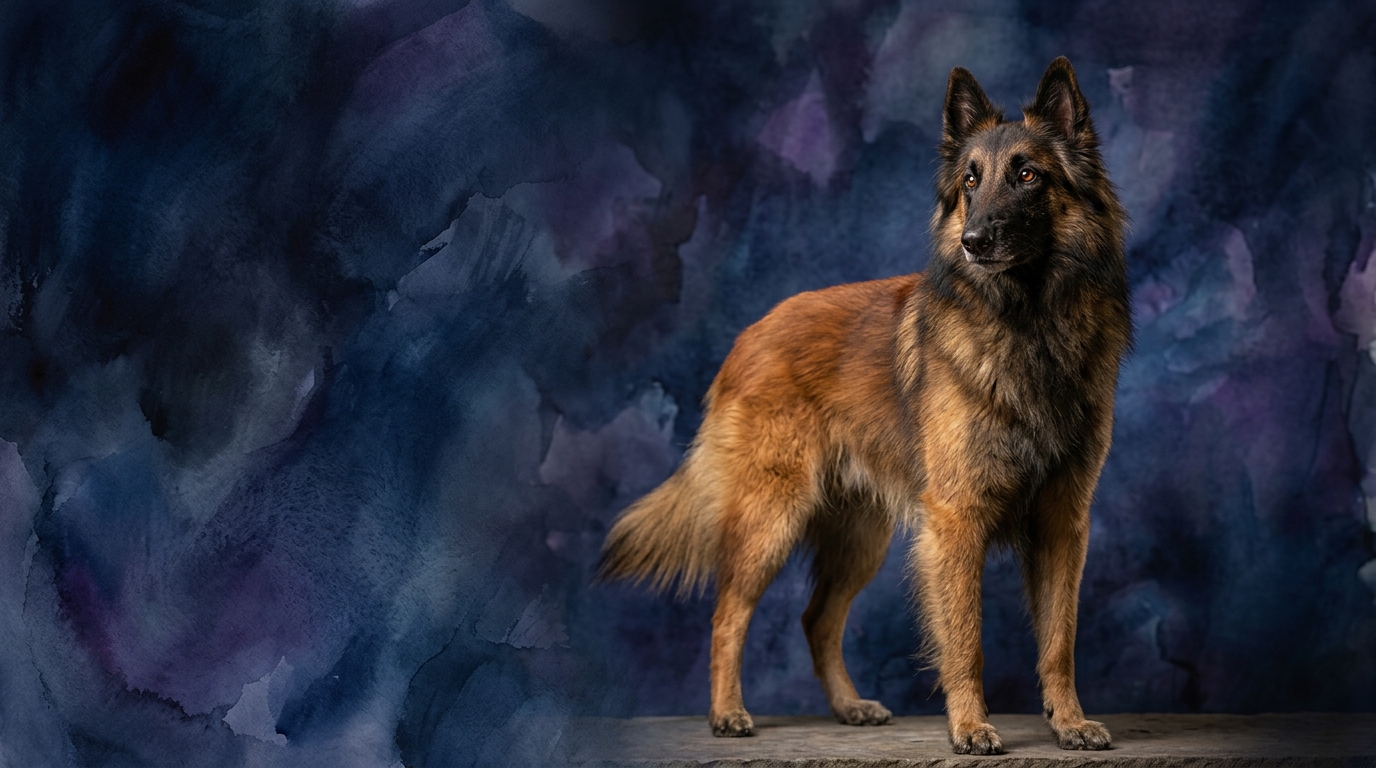
For the **Belgian Tervuren** (Coren rank #14, Herding Group): Problem Solving (5/5): This herding dog demonstrates exceptional aptitude for navigating complex scenarios, quickly devising solutions to challenges, whether it's outsmarting livestock or figuring out intricate puzzle toys. Training Speed (5/5): The Tervuren absorbs new commands and routines with remarkable rapidity, often grasping concepts in very few repetitions due to its sharp focus and eagerness to engage. Social Intelligence (3/5): While capable of forming strong bonds, the Tervuren's social intelligence sits at a moderate level, meaning it understands human cues and social hierarchies adequately but might not possess the same nuanced empathy or broad social adaptability as some other breeds. Instinctive Drive (3/5): Its herding heritage imbues it with a substantial but not overwhelming drive to work; this manifests as a focused determination rather than an all-consuming urge, allowing for versatility in tasks. Memory (5/5): Possessing a formidable memory, the Tervuren retains learned behaviors, past experiences, and environmental layouts with impressive accuracy, making it highly reliable once a lesson is ingrained.
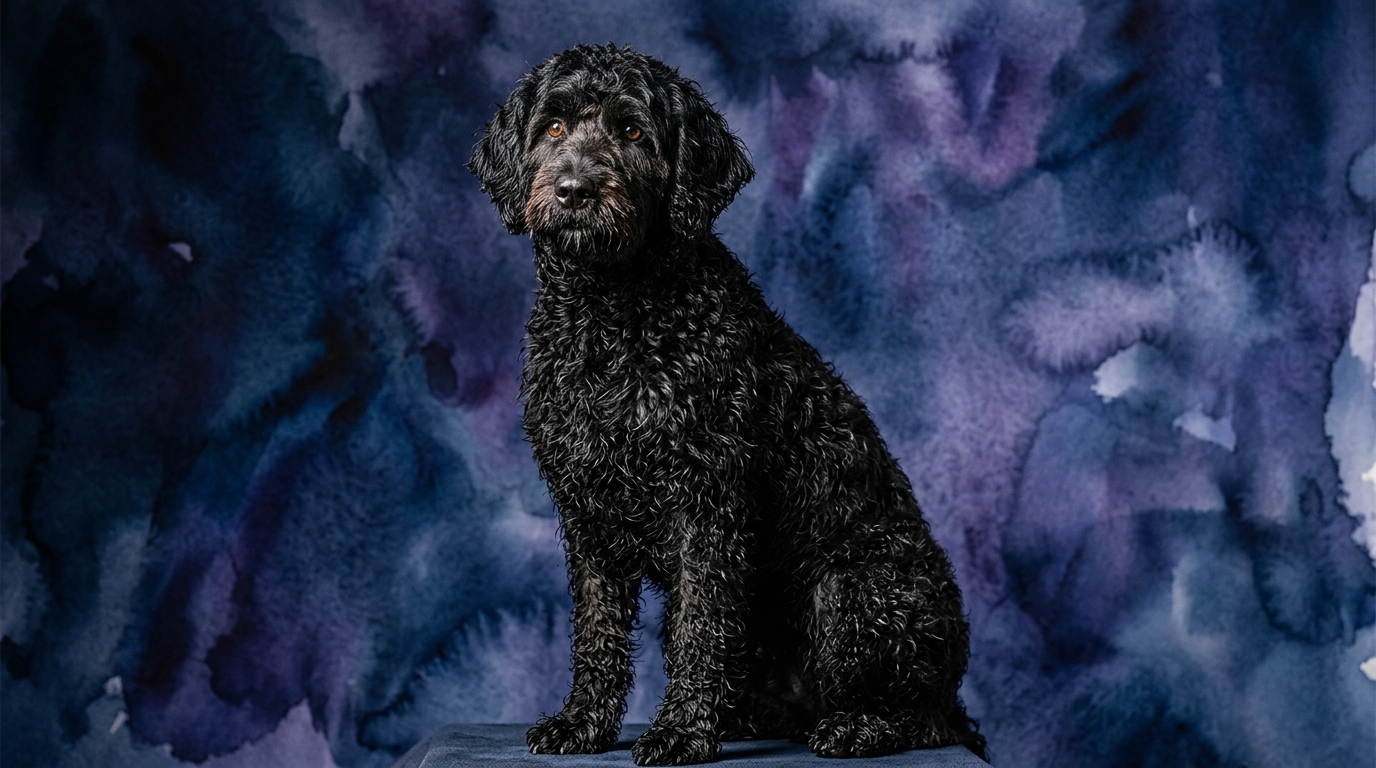
For the **Portuguese Water Dog** (Working Group, Not Coren-ranked): Problem Solving (3/5): The PWD exhibits a practical level of problem-solving, capable of figuring out moderate challenges related to its work or daily life, but perhaps without the same inventive flair or speed as higher-ranked breeds. Training Speed (3/5): This breed learns at a steady, consistent pace, requiring a reasonable number of repetitions to solidify new commands and behaviors, valuing clarity and positive reinforcement. Social Intelligence (3/5): Mirroring the Tervuren, the PWD also possesses a moderate level of social intelligence, allowing it to understand and respond to human emotions and social structures effectively without being overly sensitive or broadly gregarious. Instinctive Drive (3/5): Its working background as a fisherman's assistant provides it with a balanced drive for activity and purpose, sufficient for engaging in tasks without being excessively demanding or single-minded. Memory (3/5): The PWD holds information adequately, remembering commands and routines, though it may not recall past events or environmental details with the same precision or longevity as a breed with a higher memory score.
Where the Belgian Tervuren Wins Cognitively
The Belgian Tervuren consistently demonstrates a clear cognitive advantage in areas demanding rapid learning, intricate problem-solving, and robust memory recall. Its problem-solving score of 5/5 indicates a dog that doesn't just follow instructions but actively analyzes situations, formulating effective strategies for tasks. This manifests in its ability to quickly master complex obedience routines, excel in advanced agility courses, or even figure out multi-step puzzle toys designed for advanced canine minds. Coupled with a 5/5 training speed, the Tervuren absorbs new information at an accelerated rate, requiring fewer repetitions to achieve mastery. This means an owner can introduce novel concepts and skills with the expectation of swift comprehension. Furthermore, its 5/5 memory ensures that once a skill is learned, it is retained with impressive permanence, making its training highly durable and reliable over time. This combination of mental agility, rapid acquisition, and long-term retention positions the Tervuren as a formidable cognitive performer, particularly in disciplines requiring high-level mental engagement and precision.
Where the Portuguese Water Dog Wins Cognitively
While the Portuguese Water Dog may not achieve the peak scores of the Tervuren in individual cognitive dimensions, its strength lies in its balanced and adaptable cognitive profile, particularly in its moderate instinctive drive and problem-solving. With 3/5 across all categories, the PWD presents a unified mental landscape that avoids the potential intensity or single-mindedness sometimes seen in breeds with extreme scores. Its 3/5 problem-solving, while not top-tier, is perfectly adequate for navigating diverse environments and engaging in a variety of activities without becoming overly fixated or prone to 'self-employment' on complex tasks. This balanced approach means a PWD is less likely to constantly seek out mental challenges or to become bored if not continuously stimulated at the highest levels. Its moderate instinctive drive (3/5) allows it to be enthusiastic and purposeful in its work without the overwhelming herding instincts that can sometimes translate into nipping or controlling behaviors in a home setting. For owners seeking a dog with capable intelligence that integrates seamlessly into a varied family life, without requiring constant, high-octane mental engagement, the PWD's balanced cognitive state can be a significant advantage, promoting a more generally agreeable and less demanding mental presence.
Which is Easier to Train and Why
Based on their cognitive profiles, the Belgian Tervuren is unequivocally easier to train, primarily due to its exceptional 5/5 training speed and 5/5 memory. This breed possesses an innate ability to quickly grasp new commands and complex sequences, often needing only a handful of repetitions to understand what is being asked. Their focused attention and eagerness to engage with their handler mean they are highly receptive during training sessions, making the process efficient and rewarding. For instance, teaching a Tervuren a multi-step retrieve or a complex agility course will likely progress much faster, as they not only learn the individual components rapidly but also retain the entire sequence with impressive fidelity. In contrast, the Portuguese Water Dog, with its 3/5 training speed and 3/5 memory, requires a more patient and consistent approach. While certainly trainable, PWDs will generally need more repetitions to solidify new behaviors and may not recall them with the same immediate precision over longer periods. Their training is more about consistent reinforcement and clear communication over time, rather than rapid acquisition. Therefore, for an owner prioritizing speed and efficiency in training complex tasks, the Tervuren offers a more straightforward path to mastery, while the PWD necessitates a more methodical and persistent dedication.
Suitability for Active vs. Relaxed Owners
The choice between a Belgian Tervuren and a Portuguese Water Dog largely hinges on an owner's lifestyle and their capacity for providing consistent engagement. The Belgian Tervuren, with its high problem-solving (5/5), training speed (5/5), and solid instinctive drive (3/5), is undeniably suited for highly active and engaged owners. This is a dog that thrives on having a job, whether it's competitive dog sports like obedience, agility, protection work, or advanced trick training. Its mental faculties demand constant stimulation and challenge; an owner who is prepared to commit significant time daily to structured activities, training sessions, and mentally enriching games will find a Tervuren to be an incredibly rewarding partner. Owners who prefer a more relaxed approach, with only sporadic training or minimal mental exercise, will likely find a Tervuren to be overwhelming, potentially leading to boredom-induced destructive behaviors or excessive self-employment. The Portuguese Water Dog, with its balanced 3/5 scores across all cognitive dimensions, offers a more versatile fit. While still an active working breed that enjoys physical and mental engagement, its moderate drives mean it can adapt more readily to varying levels of activity, making it suitable for active families who enjoy regular walks, hikes, and some training but aren't necessarily seeking a dog for high-level competitive sports. A PWD can certainly excel in activities, but it might not *demand* them with the same intensity as a Tervuren, making it a better choice for owners who are active but also appreciate periods of calm and less structured interaction.
The Verdict
Opt for a Belgian Tervuren if you are an experienced, highly active owner eager to delve into advanced training, competitive dog sports, or demanding working roles, valuing rapid learning and sharp mental acuity.
Select a Portuguese Water Dog if you seek an active, adaptable companion with a balanced cognitive profile for family life, who enjoys consistent engagement but without the intense mental demands of a top-tier working breed.
🧠 Find Your Pet's IQ Score
Our Pet IQ Lab assessment covers 25+ tests across 5 cognitive dimensions — personalized to your breed.
Take the Full IQ Test →Frequently Asked Questions
Does the Coren rank indicate overall intelligence?
While Stanley Coren's ranking primarily assesses 'working and obedience intelligence' based on training speed and command understanding, it doesn't encompass the full spectrum of canine cognition, such as problem-solving or social intelligence. It's a useful indicator for trainability in a formal context.
Can a Portuguese Water Dog still excel in dog sports despite lower scores?
Absolutely. The PWD's balanced cognitive profile (3/5 across the board) means it is perfectly capable of excelling in dog sports like agility, obedience, and dock diving with consistent, patient training. Its scores indicate a capable, trainable dog, just not one that learns at the Tervuren's accelerated pace.
How do instinctive drives impact daily life for these breeds?
A Tervuren's 3/5 instinctive drive, rooted in herding, means it may exhibit behaviors like gathering or controlling family members, requiring appropriate outlets and management. A PWD's 3/5 drive, stemming from water work, often translates to a love for swimming and retrieving, which are generally easier to channel in a home environment.